The Quiet Luxury Interior: How to Design a Home That Whispers Instead of Shouts
There’s a particular feeling you get when you walk into a room that doesn’t try too hard — where everything feels considered, calm, and somehow exactly right. That feeling has a name now, and it’s called quiet luxury, and once you understand it, you’ll never look at your home the same way again.
—
Table Of Content
1. What Quiet Luxury Actually Means (and Why It’s More Than a Trend)
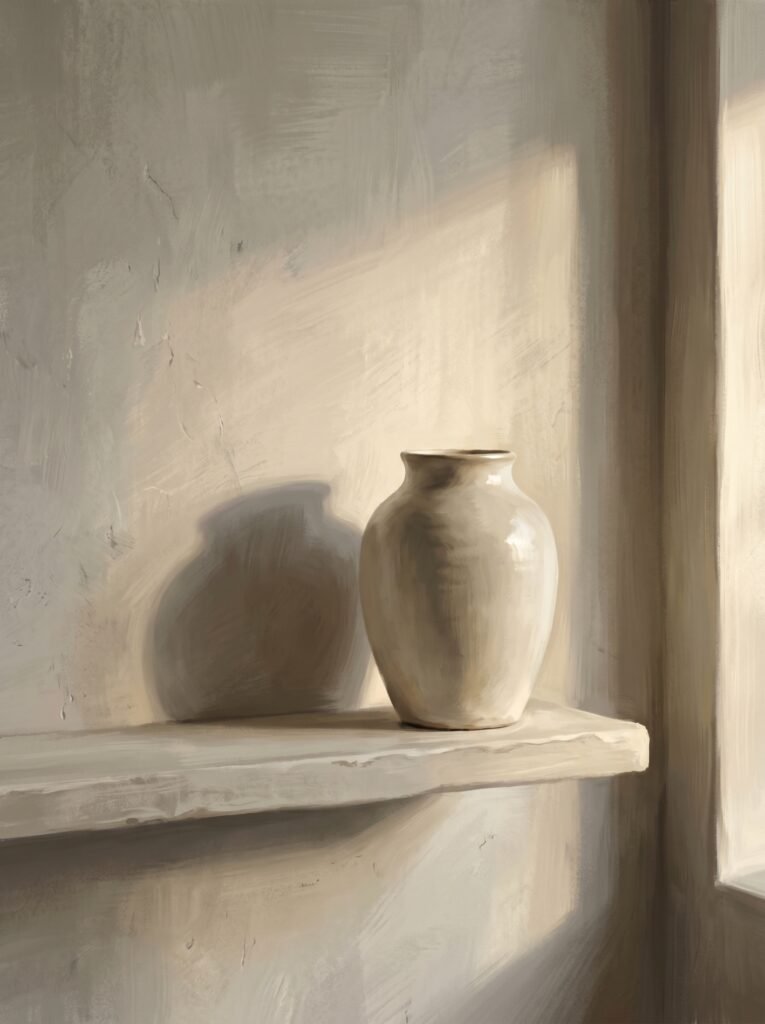
Quiet luxury is not a color palette. It’s not a shopping list. It’s a philosophy about how a space makes you feel — and more specifically, how it allows you to feel yourself inside it. Unlike maximalism, which celebrates abundance, or stark minimalism, which can feel cold and performative, quiet luxury sits in a rare middle ground. It’s warmth without clutter. Restraint without emptiness. Elegance without effort — or at least, the beautiful illusion of effortlessness.
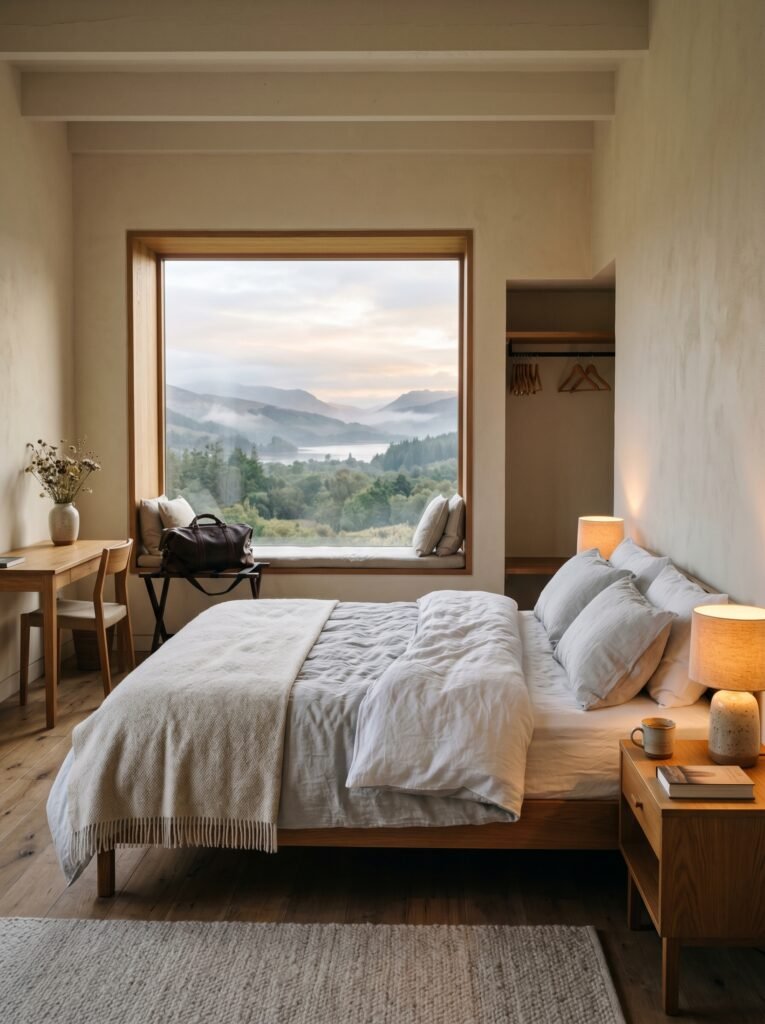
Think about the difference between a hotel room that makes you gasp and one that makes you exhale. The gasping room has a chandelier and gold-trimmed everything. The exhaling room has crisp linen, soft light, and a view you didn’t expect. That second room? That’s quiet luxury in its truest form.
The reason this aesthetic resonates so deeply right now is emotional, not aesthetic. We live in a world of relentless noise — social media feeds, overstimulation, the constant pressure to show off and keep up. Quiet luxury in interior design is essentially a visual exhale. It says: you don’t have to perform here. You can just be.
“A room that whispers will always be louder than one that shouts.”
2. The Colors That Define a Quietly Luxurious Space
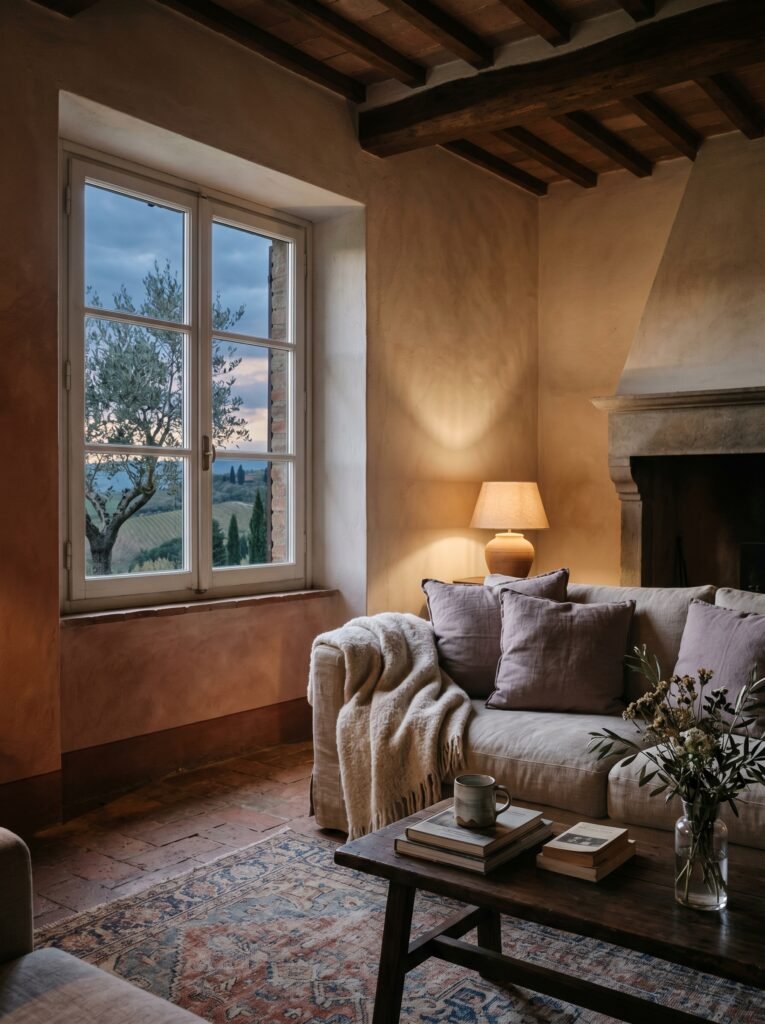
Color is the fastest way to either achieve or destroy the quiet luxury aesthetic, and the palette is very specific. We’re talking about colors that exist in the quiet hours — the gray-beige of morning fog, the warm ivory of aged linen, the soft brown of weathered oak, the muted sage of an olive tree in winter. These aren’t exciting colors. That’s entirely the point.
The quiet luxury palette draws heavily from nature’s most subtle moments rather than its most dramatic ones. No bold jewel tones, no saturated accent walls, no high-contrast black-and-white that feels more like a graphic design project than a home. Instead, think of colors you might find in a Tuscan farmhouse at dusk — warm terracottas muted to near-beige, dusty lavenders so soft they’re almost gray, chalky whites with just enough warmth to feel lived-in.
What makes these colors luxurious rather than simply neutral is their depth. A quiet luxury wall isn’t painted in a flat builder-grade beige — it’s coated in a limewash finish that shifts in the afternoon light, or a deep matte that absorbs the room’s atmosphere rather than bouncing it back. The texture of the color matters as much as the hue itself.
If you’re starting from scratch with paint, look for colors with names like “raw linen,” “chalk stone,” “antique white,” or “warm greige.” These are your foundational anchors for everything that follows.
3. Texture Is the Secret Language of Quiet Luxury
If color sets the tone, texture is what makes a space feel genuinely luxurious rather than simply expensive. This is where so many home decorating attempts go wrong — they spend money on beautiful objects but neglect the sensory layering that makes a room feel alive.
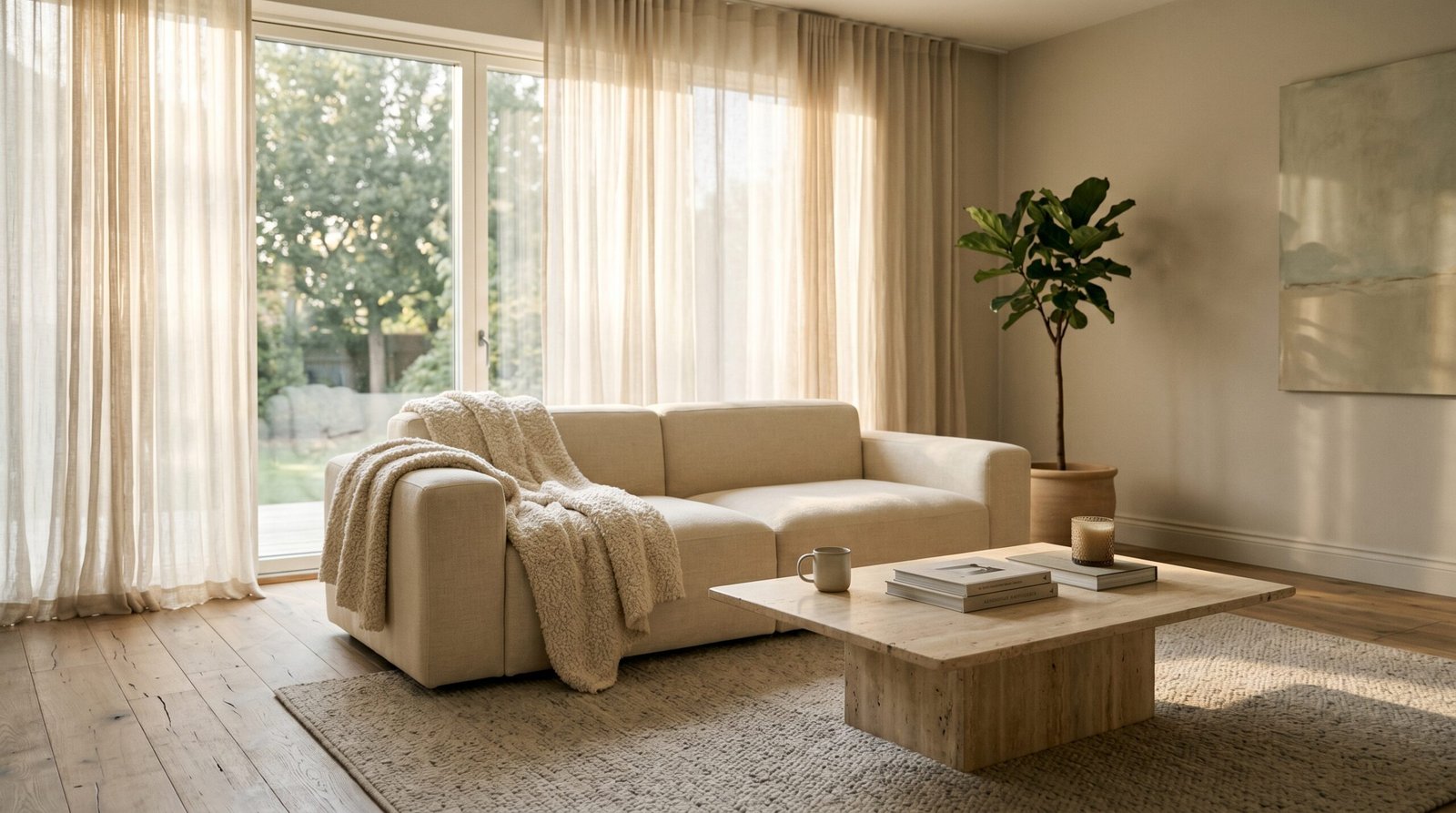
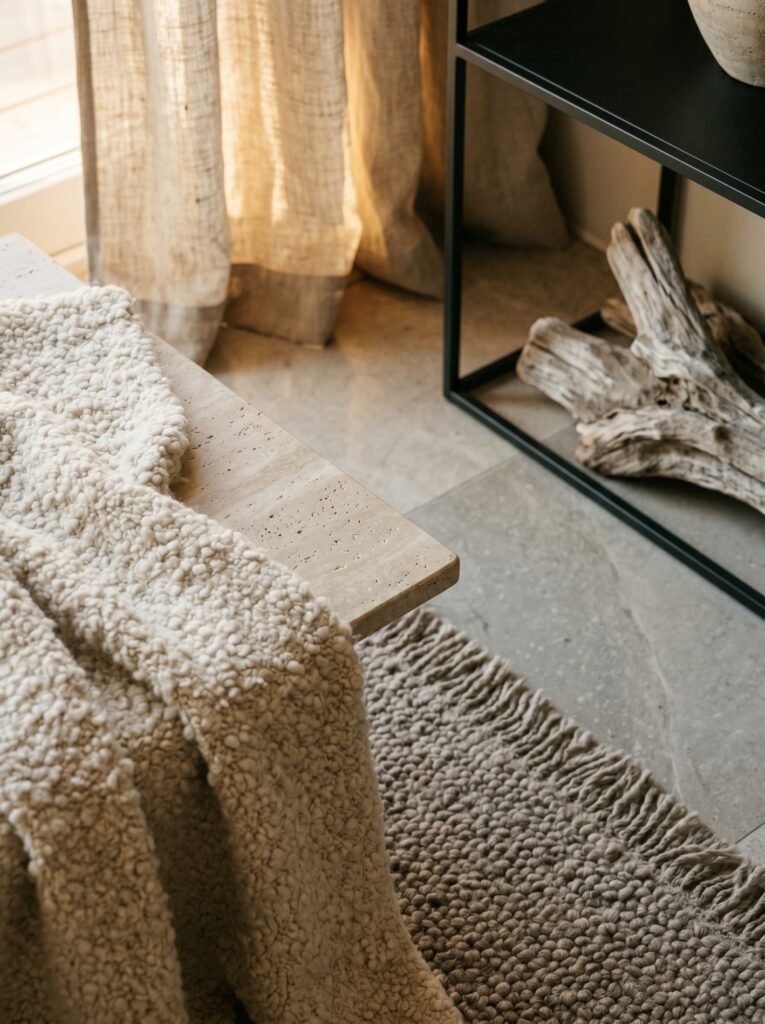
Quiet luxury is deeply tactile. It invites you to touch things. Run your hand along a chunky boucle throw. Press your palm to a cool marble surface. Feel the subtle weave of a Belgian linen curtain. None of these textures scream for your attention, but when you encounter them, something in your body relaxes. That’s not coincidence — it’s intentional design psychology.
The key to layering texture in a quiet luxury space is contrast. Place smooth against rough: a sleek travertine coffee table beside a nubby wool rug. Set matte against glossy: a chalky linen sofa against a lacquered side table. Put organic against structured: a driftwood sculpture next to a sharp-lined architectural shelf. These contrasts create visual interest without any need for color or pattern to do the heavy lifting.
“Texture is what your eyes feel before your hands ever reach out to touch.”
4. Why Furniture Silhouette Matters More Than You Think
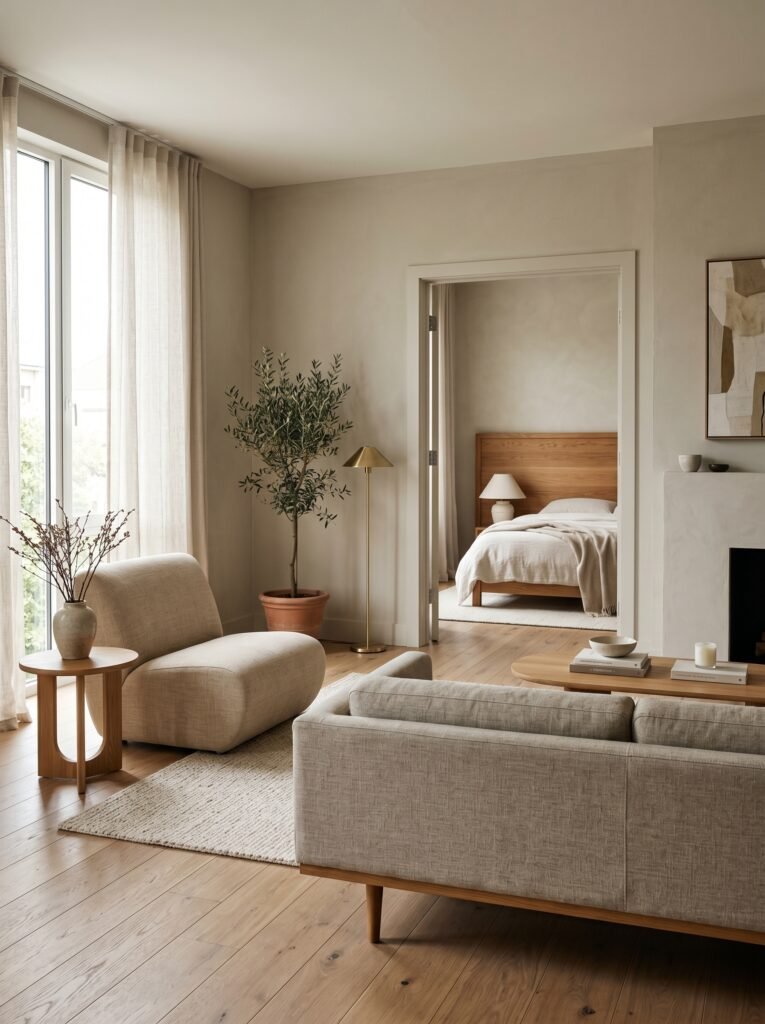
Scroll through any Pinterest board dedicated to quiet luxury interiors and you’ll notice something immediately: the furniture has a very particular shape. Sofas with low, clean profiles. Chairs with tapered legs and gentle curves. Beds with simple, substantial headboards in natural materials. Nothing is ornate. Nothing is chunky or overstuffed. Nothing announces itself.
This is intentional, and it comes from a very specific design principle: in a quiet luxury space, furniture should hold space without dominating it. A sofa in a well-designed room shouldn’t be the first thing you notice — the light, the atmosphere, the overall feeling of the room should hit you first. The furniture supports that experience rather than competing with it.
Look for pieces with what designers call “visual lightness” — furniture with legs rather than bases, which allows the floor to breathe and the room to feel larger. Avoid overstuffed upholstered pieces that sit heavy on the ground. Choose natural materials — wood, stone, leather, linen — over synthetic ones, not because they’re trendy but because they age beautifully and carry a sense of authenticity that elevates the entire room.
5. The Art of Restraint: What You Choose Not to Display
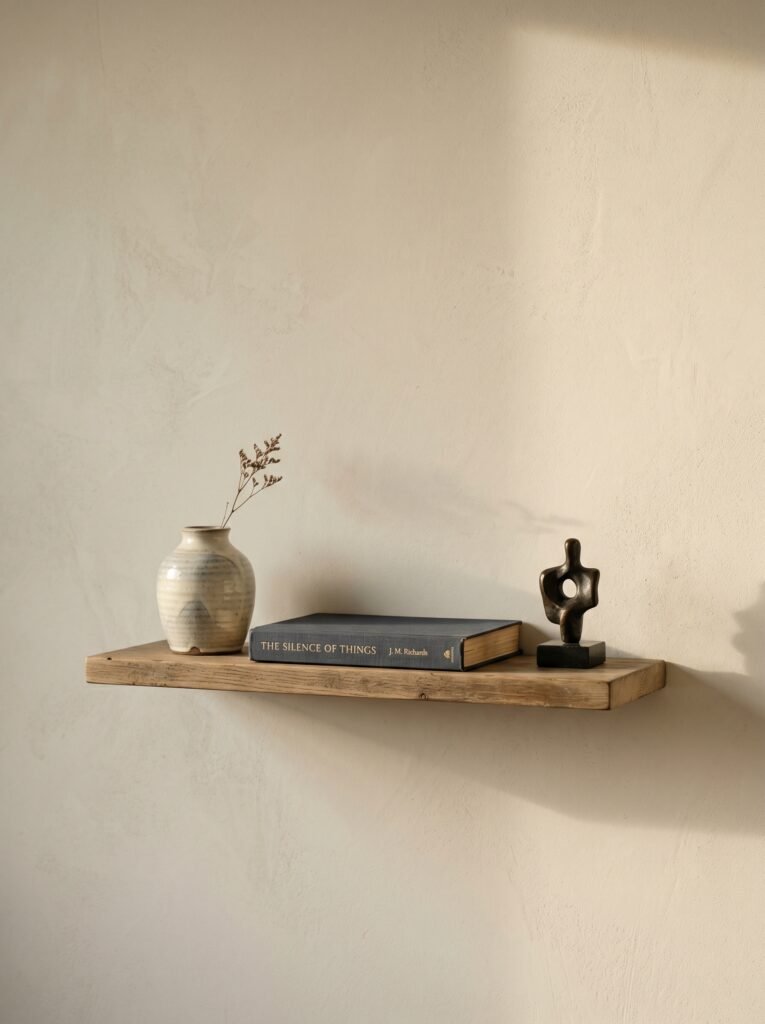
Here is perhaps the most counterintuitive truth about quiet luxury interior design: what you remove from a room is often more important than what you add to it. This aesthetic demands a certain ruthlessness about clutter — but not the cold, empty ruthlessness of strict minimalism. It’s a warmer, more intentional kind of editing.
Think of it like this: a curated shelf with three meaningful objects has more presence than a shelf crowded with twenty things you love. The breathing room around each object gives it significance. When everything is displayed, nothing is. When you choose carefully, the things that remain carry genuine weight.
This doesn’t mean your home should feel like a showroom. Quiet luxury spaces absolutely include personal objects — a beautiful book you’re actually reading, a ceramic vase made by an artisan, a piece of art that genuinely moves you. The difference is intention. Every object in the room should be able to answer the question: why are you here? If it can’t, it probably shouldn’t be.
“Restraint is not emptiness. It’s the discipline to let a few beautiful things breathe.”
6. Lighting: The Single Most Transformative Element in the Room
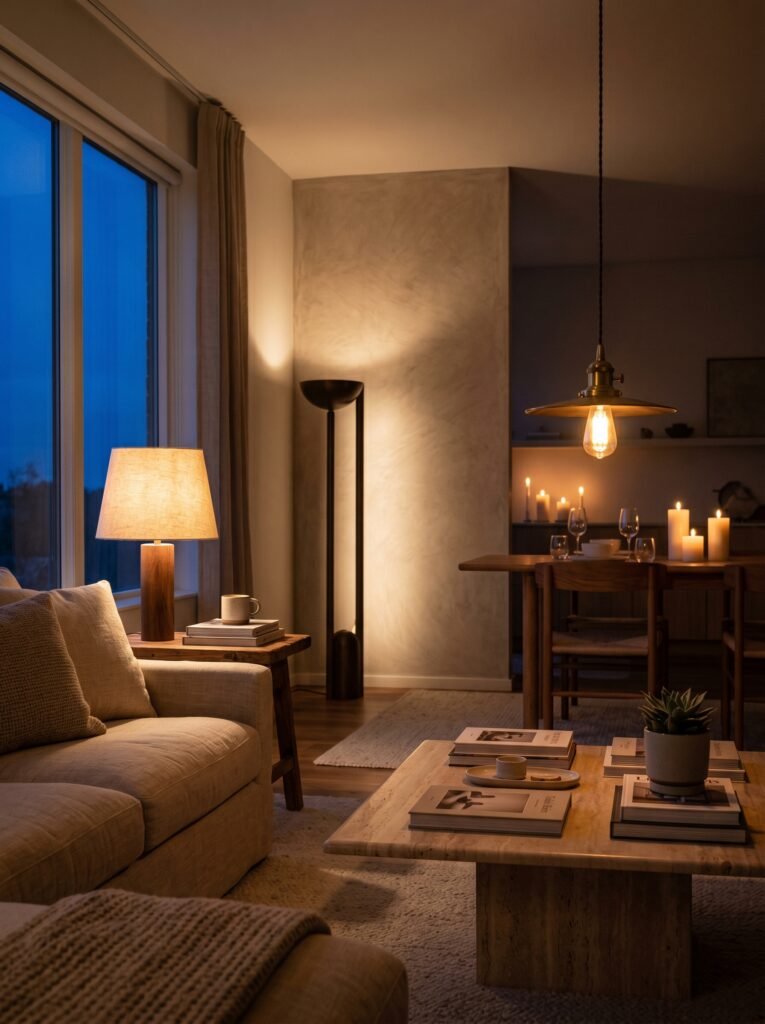
If you could change only one thing in your home to move it toward quiet luxury, it should be the lighting — without question. Most homes are overlit with harsh overhead fixtures that flatten the room and illuminate every flaw. Quiet luxury spaces use light in an entirely different way, treating it as a design material rather than a utility.
The goal is layered, warm, directional light that creates pools of softness rather than flooding the room. Think table lamps with linen shades that glow amber, sculptural floor lamps that cast upward light across a wall, candles on a dining table that make even an ordinary weeknight meal feel significant. Under-cabinet lighting in a kitchen, a single spot on a beautiful piece of art, the warm glow of a dimmable pendant over a coffee table — these small choices cumulatively transform how a room feels at every hour of the day.
Bulb temperature matters enormously here. Switch any cool-white or daylight bulbs in your living spaces to warm white bulbs rated 2700K or lower. The difference is immediate and almost shocking — the room instantly feels warmer, calmer, and more expensive without a single piece of furniture changing.
7. Natural Materials and Why They’re Non-Negotiable
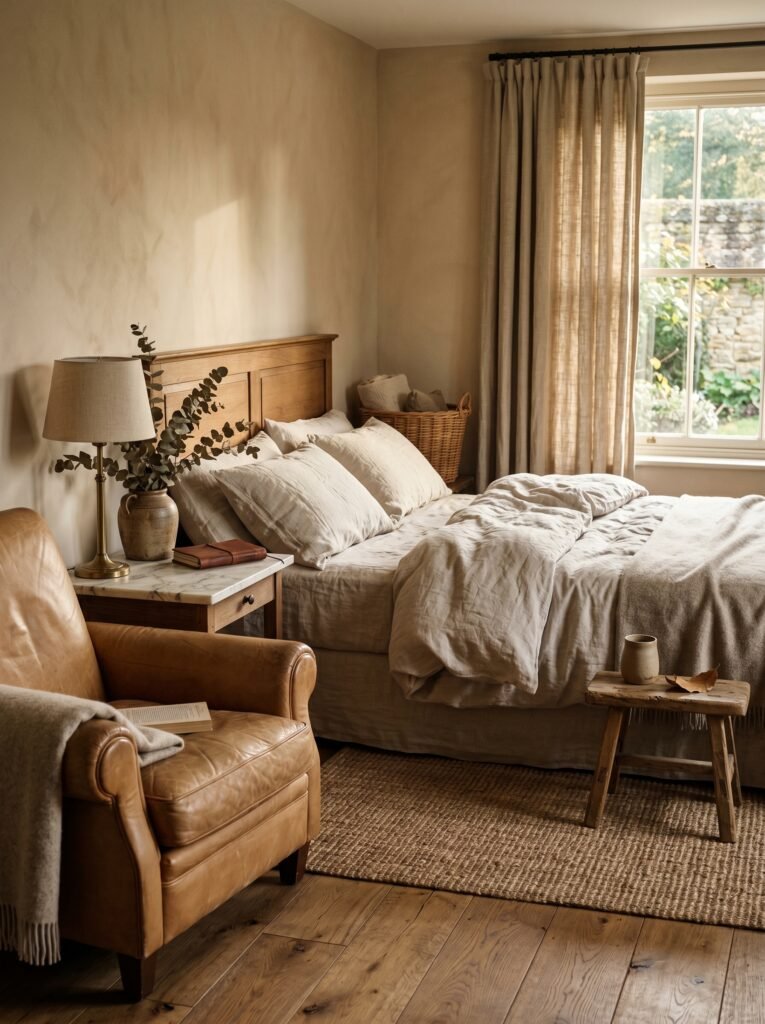
There is something deeply grounding about being surrounded by materials that came from the earth — and quiet luxury leans into this instinct completely. Stone, wood, wool, linen, leather, clay, rattan — these materials carry history, warmth, and a sense of authenticity that manufactured synthetics simply cannot replicate, no matter how well-made.
Natural materials also do something important for the quiet luxury aesthetic: they age gracefully. A marble tabletop develops a patina. A leather sofa softens and conforms to your body. A linen curtain becomes more beautiful after a hundred washes. This built-in biography gives a room character that feels earned rather than staged, which is the entire emotional core of the quiet luxury philosophy.
If budget is a consideration — and for most of us, it always is — prioritize natural materials in the places you touch most often. A natural fiber rug underfoot, linen pillowcases against your skin, a wooden cutting board on the kitchen counter. These are the sensory touchpoints that most affect how luxurious a space feels day to day.
8. The Role of Negative Space in Creating Visual Calm
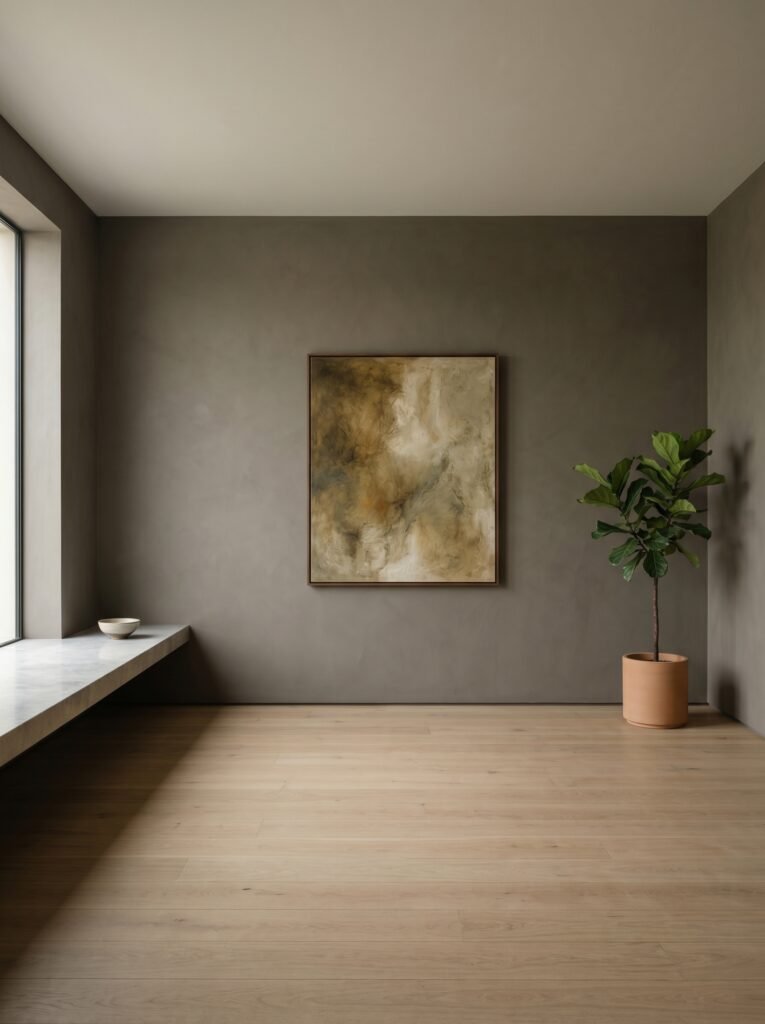
Negative space — the empty, intentional areas in a room — is one of the most misunderstood elements in home design. Many people feel compelled to fill every corner, cover every wall, and maximize every surface. But in a quiet luxury space, the spaces between things are as carefully considered as the things themselves.
A large, bare wall with a single piece of art hung at the right height creates more impact than a gallery wall of twenty prints. An empty corner with one architectural plant has more presence than a corner crowded with furniture. A countertop with nothing on it communicates a kind of visual cleanliness that immediately reads as luxurious.
Negative space gives the eye somewhere to rest. In a world where most visual environments are relentlessly stimulating, a room that offers those moments of visual quiet is genuinely restorative. It’s not laziness in the design — it’s one of the most skilled and intentional choices you can make.
9. Scent and Atmosphere: The Invisible Layers of a Luxury Room
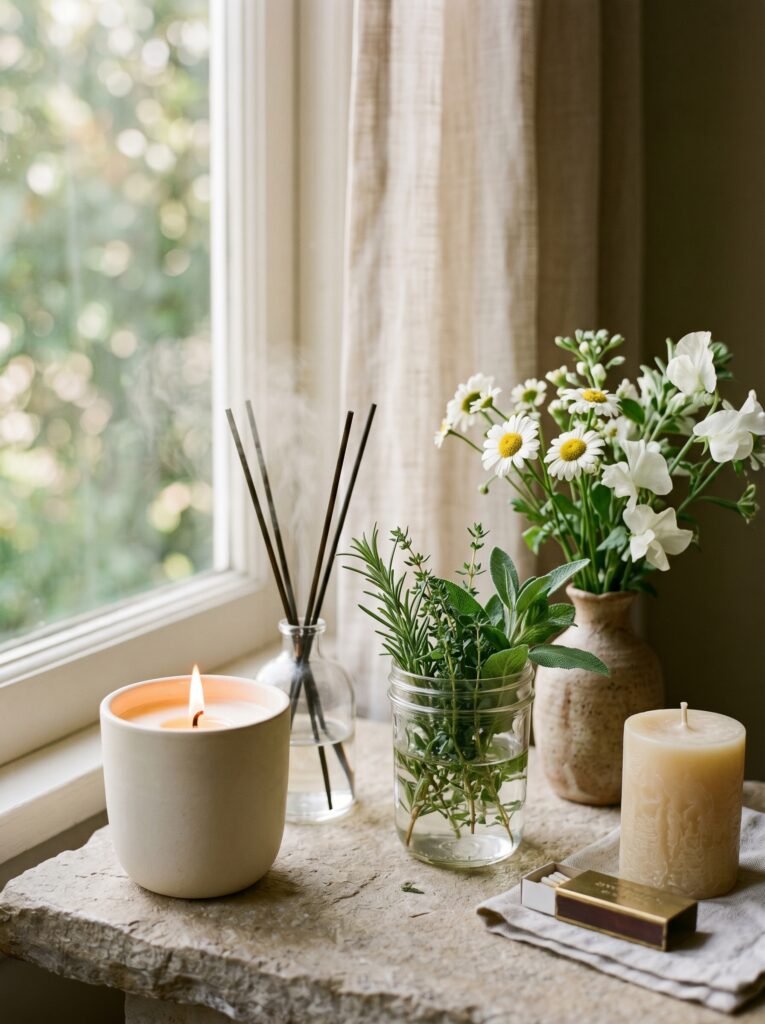
Quiet luxury extends beyond what you can see. The most carefully designed rooms in the world acknowledge that atmosphere is a full-sensory experience — and scent is one of its most powerful and most often overlooked components.
There’s a reason five-star hotels often diffuse a signature scent throughout their lobbies. The smell of a space hits your brain before you’ve consciously registered anything about it, immediately setting your emotional state. In a quiet luxury home, this means considering what your space smells like with the same intention you bring to choosing paint colors.
Natural candles in simple ceramic or glass vessels — scented with cedar, sandalwood, fig, or clean linen — can anchor a room’s atmosphere completely. A diffuser with eucalyptus or vetiver essential oil in a bedroom creates a sensory cue that tells your nervous system it’s time to slow down. Even simple things like fresh flowers, beeswax candles, or a pot of herbal tea on the stove contribute to an invisible layer of atmosphere that makes a home feel genuinely luxurious to inhabit.
“The most luxurious homes don’t just look beautiful — they smell like somewhere you never want to leave.”
10. Quiet Luxury in the Kitchen: Where Function Meets Beauty
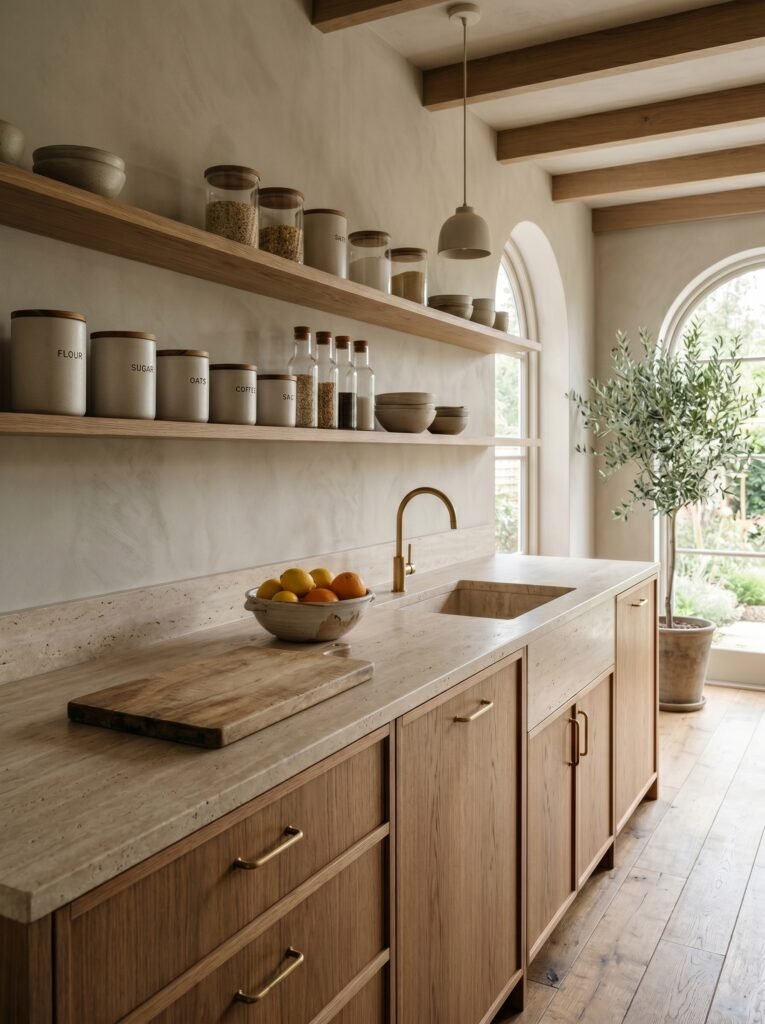
Kitchens are arguably the hardest room to achieve quiet luxury in, because they are fundamentally functional spaces filled with equipment, appliances, and the beautiful chaos of everyday cooking. But the principles translate beautifully when applied thoughtfully.
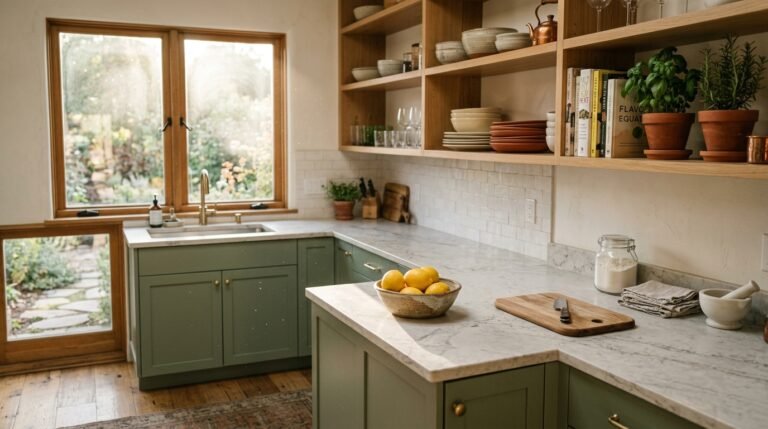
The foundation of a quiet luxury kitchen is concealment — not hiding the fact that you cook, but creating a visual calm by storing things out of sight. Decant your pantry staples into matching ceramic or glass containers. Keep your countertops clear of everything except one or two beautiful, functional objects: a wooden cutting board, a ceramic bowl of citrus fruit, a simple kettle. Store appliances in cabinets. The discipline required is real, but the visual result is transformative.
Material choices matter enormously in a kitchen. Stone countertops in honed (not polished) marble, travertine, or quartzite have a quiet sophistication that high-gloss surfaces lack. Cabinet fronts in natural wood veneer, soft sage green, or warm greige create warmth without being trendy. Hardware in unlacquered brass or brushed bronze develops a patina over time that feels genuinely earned rather than decoratively applied.
11. Building a Quiet Luxury Space on a Real Budget
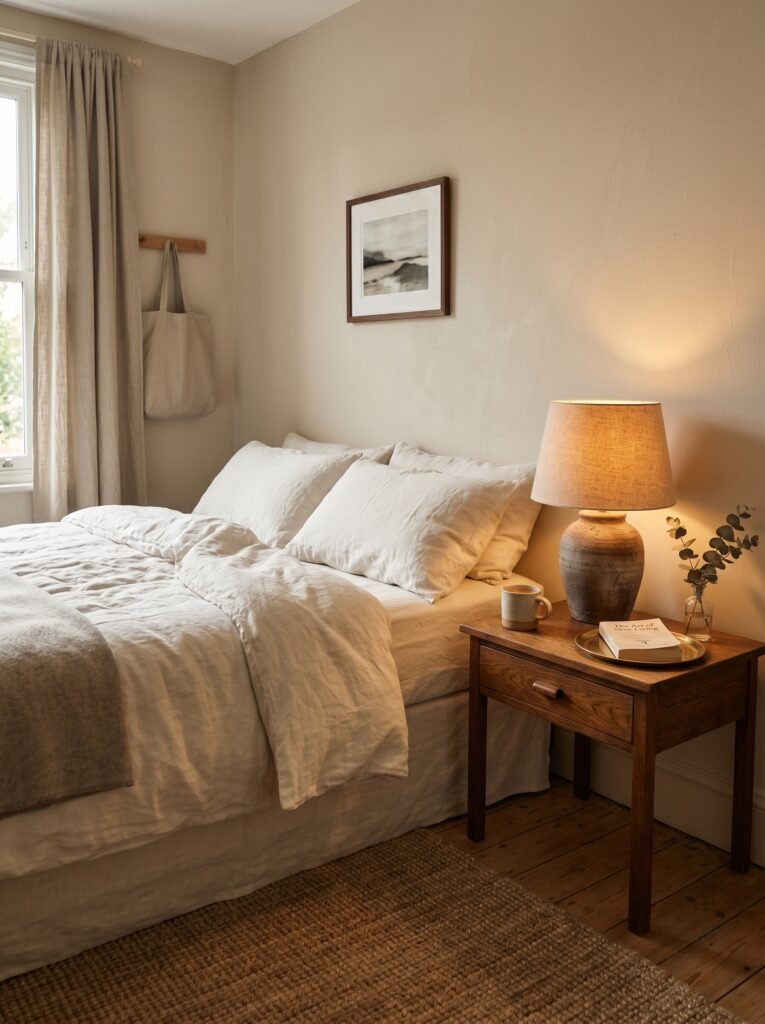
Here is the truth that most design content refuses to acknowledge directly: true quiet luxury is achievable without a designer’s budget, but it requires a fundamentally different approach to shopping. Instead of buying many inexpensive things, you buy fewer, better things — slowly, intentionally, over time.
This means resisting the urge to fill a room immediately. It means shopping secondhand for solid wood furniture that will outlast any flat-pack alternative. It means saving for the one piece that’s genuinely beautiful rather than buying three pieces that are almost right. It means understanding that an empty room is always more elegant than one filled with compromises.
Some specific high-impact, relatively accessible investments to prioritize: quality bedding in natural linen or cotton percale, a genuinely good rug in a natural fiber, one statement lamp, and fresh paint in a considered color. These four changes alone can shift the entire feeling of a primary room — and none requires a renovation budget.
12. The Emotional Payoff: Why This Aesthetic Changes How You Feel at Home
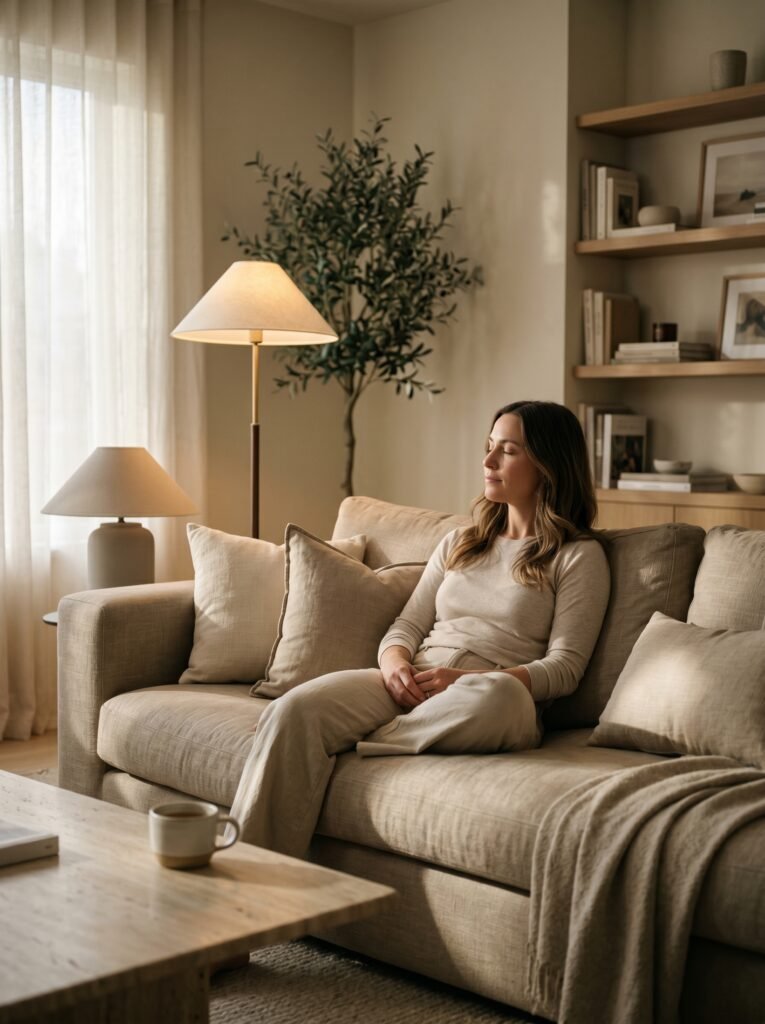
After everything — the color choices, the textures, the editing, the lighting — what quiet luxury interior design ultimately delivers is a feeling. It’s the feeling of coming home to a place that genuinely holds you. Where the visual noise has been turned down, and in that quietness, you remember who you are outside of performance, productivity, and the relentless pressure to be impressive.
Homes designed with quiet luxury principles tend to make people feel calmer, more present, and more grounded in their everyday lives. This isn’t mystical — it’s environmental psychology. When our visual environment is chaotic and overstimulating, our nervous systems remain in a low-grade state of alert. When our environment is calm, considered, and beautiful in a quiet way, we genuinely relax more deeply.
The investment in designing your home this way, then, isn’t really about aesthetics at all. It’s about creating a space that actively supports your wellbeing — a place where restoration, creativity, and genuine rest are possible. That might be the most quietly luxurious thing of all.
—
🌿 How to Bring Quiet Luxury Into Your Home Right Now
You don’t need to renovate or redecorate everything at once. Start with these five changes and notice how your space begins to shift.
First, remove anything from your most-used space that doesn’t serve you functionally or bring you genuine joy — not because clutter is shameful, but because breathing room is a gift you give yourself. Second, change your light bulbs to warm white 2700K options and add at least one lamp to any room that currently relies only on overhead lighting. Third, introduce one natural texture — a linen throw, a jute rug, a wooden bowl — and notice how it changes the sensory temperature of the room. Fourth, bring in a scent element: a simple candle, a diffuser, or fresh herbs in a glass near a window. Fifth, and perhaps most importantly, resist the next impulse purchase and sit with your space a little longer before adding anything new. Patience is one of the defining characteristics of quiet luxury — and it costs nothing.
—
❓ FAQ
Q: Is quiet luxury interior design the same as minimalism? A: They share some values — restraint, intentionality, visual calm — but they’re distinct philosophies. Minimalism often prioritizes function and reduction above all else, sometimes at the expense of warmth. Quiet luxury actively seeks warmth, texture, and a sense of personal story. It’s softer, more layered, and more livable for most people.
Q: Can I achieve quiet luxury in a small apartment? A: Absolutely — in fact, small spaces often benefit most from this approach. The key principles of editing, natural materials, warm lighting, and intentional negative space work beautifully in compact rooms. Focus on fewer, higher-quality pieces, keep surfaces clear, and invest in good window treatments and lighting to make the most of every square foot.
Q: What’s the biggest mistake people make when trying to create a quiet luxury space? A: Buying everything at once. Quiet luxury rooms look considered because they were considered — often over months or years. When you rush to fill a room, it shows, even if every individual piece is beautiful. The most effective approach is to live in a space for a while, notice what it actually needs, and add thoughtfully over time.
—
💭 Final Thought
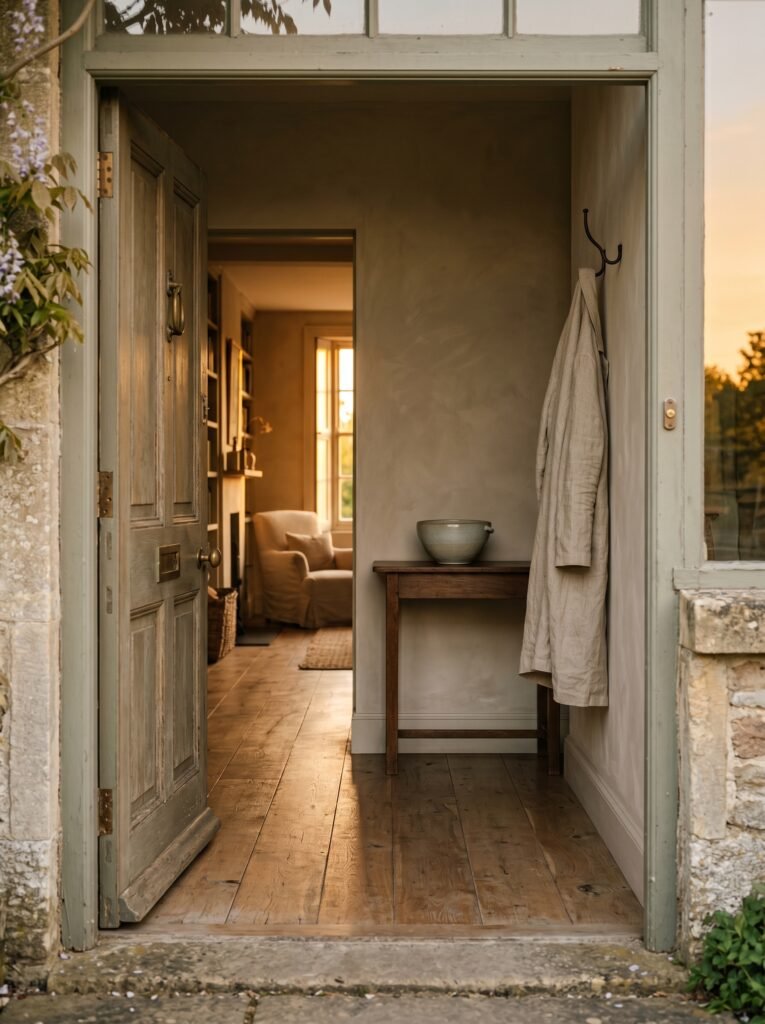
A quiet luxury interior isn’t a destination you arrive at when you finally have the right sofa or the perfect paint color. It’s an ongoing practice of noticing what your home needs to feel like you — unhurried, considered, and genuinely at rest. The most beautiful rooms in the world aren’t the ones that impress visitors most. They’re the ones that make the person who lives there feel, every single day, like they’ve come home to exactly the right place.
So here’s the question worth sitting with: what would you need to remove, soften, or slow down in your home today to make it feel just a little more like the kind of place that lets you breathe?