Gothic Interior Design: How to Make Darkness Feel Like Home
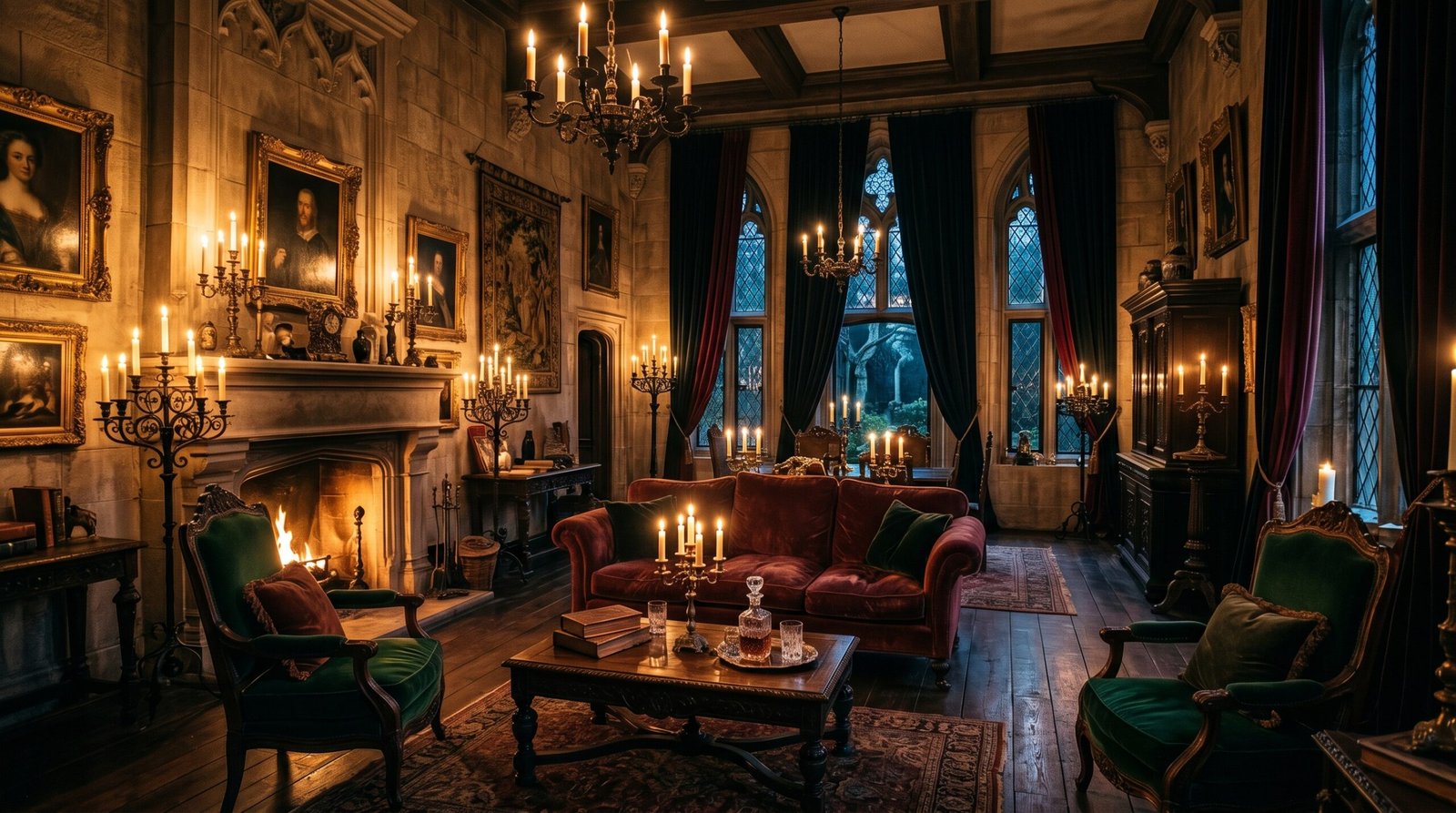
There’s a particular kind of magic that happens when you walk into a room draped in deep velvet, candlelight flickering against stone-textured walls, with arched windows casting long shadows across a worn wooden floor. You feel something shift inside you — a sense of mystery, of depth, of beauty that doesn’t ask for your approval. Gothic interior design has that power, and more people than you’d expect are quietly falling in love with it.
—
Table Of Content
1. Gothic Design Isn’t What Most People Think It Is
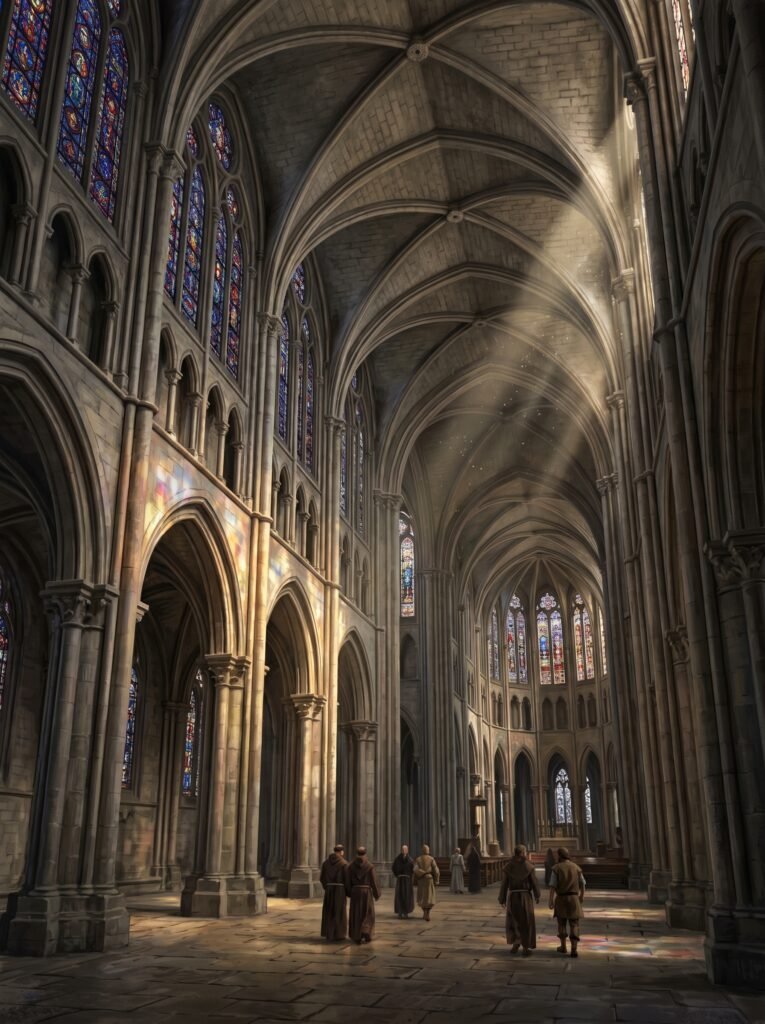
The word “gothic” tends to conjure images of haunted houses, black candles, and plastic cobwebs from a Halloween store. That couldn’t be further from the truth of what gothic interior design actually is. Rooted in the architectural movements of 12th-century medieval Europe — think the soaring cathedrals of France and the stone abbeys of England — gothic design is fundamentally about grandeur, craftsmanship, and emotional atmosphere.
It’s the art of making a space feel significant. Heavy with meaning. Alive with texture and shadow.
“Gothic design doesn’t celebrate darkness for its own sake — it uses shadow to make the light more beautiful.”
The style evolved through centuries, picking up influences from Victorian gothic revival in the 1800s, romantic literature, and eventually modern interpretations that blend the ancient with the contemporary. Today, gothic interior design spans a wide spectrum — from dramatically ornate rooms that feel pulled from a 19th-century manor, to understated, moody spaces that simply trade bland neutrals for something with more soul.
2. The Color Palette That Stops You in Your Tracks

The first thing most people notice about a gothic-inspired room is the color. Rich, saturated tones dominate: deep burgundy, forest green, midnight navy, charcoal grey, and of course, black. But gothic design at its best is never just black. The palette works because of contrast — a jet-black wall becomes a canvas for gilded frames, ivory candles, and emerald velvet cushions.
Warm blacks and deep jewel tones create a sense of enclosure that feels cozy rather than oppressive. Think of it the way a dense forest feels at dusk — not threatening, but intimate. Layering a dark base with metallic accents in bronze, antique gold, or aged silver adds warmth that keeps a room from feeling cold.
If you’re nervous about committing to a full dark room, start with one feature wall in a deep tone like eggplant or slate. The transformation can be quietly extraordinary.
3. Arches, Vaults, and the Architecture of Awe
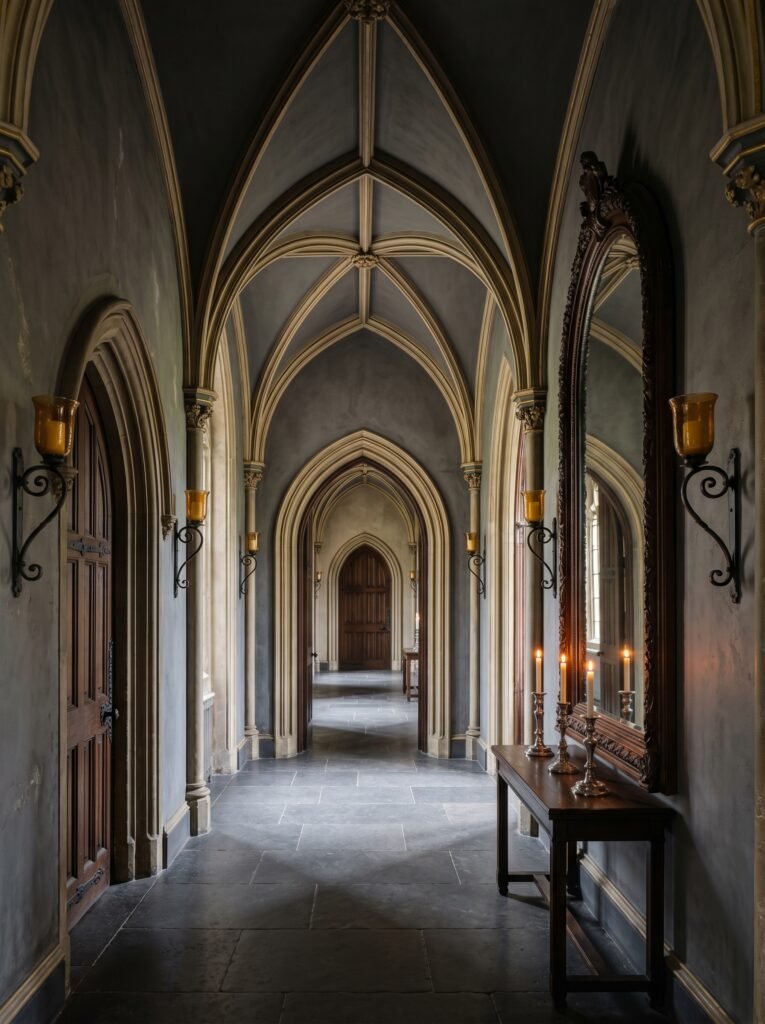
Gothic architecture is defined by a few unmistakable structural features that have carried into interior design seamlessly. The pointed arch is the most iconic — you see it in doorframes, windows, mirror frames, headboards, and decorative panels. There’s something almost musical about a pointed arch; it draws the eye upward, creating a sense of vertical space and cathedral-like calm.
Ribbed vaulting on ceilings, when replicated through plaster detailing or even painted effects, gives a room that unmistakable sense of ecclesiastical grandeur. Even in a modest apartment, adding an arched mirror or a doorframe with gothic molding can anchor the entire design language of a space.
4. Texture Is the Secret Language of Gothic Spaces
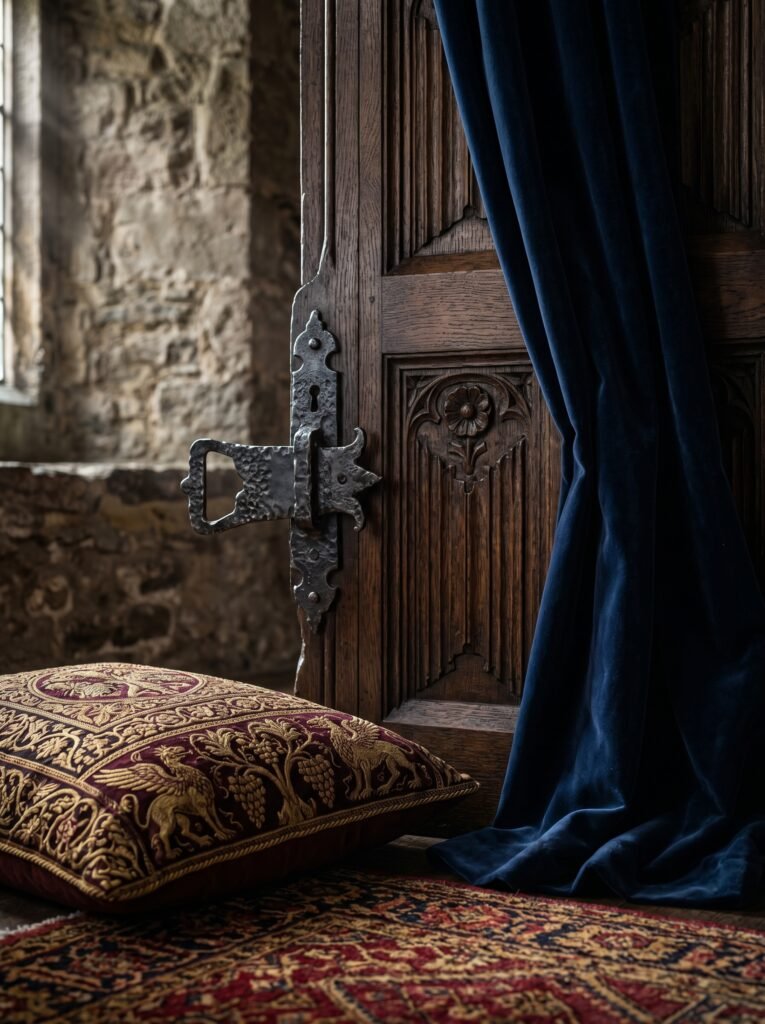
Run your hand across a gothic room in your imagination — what do you feel? Stone and velvet. Carved wood and cold iron. Brocade fabric and tarnished metal. Gothic interiors are a masterclass in layering textures that engage all your senses, not just your eyes.
Heavy drapery in velvet or silk cascades from ceiling to floor, absorbing sound and light in equal measure. Embroidered throw pillows with intricate patterns echo the detailed needlework of medieval tapestries. Wrought iron hardware on doors and cabinets carries the weight of history. Even rugs — Persian-style or richly patterned Oriental designs in deep reds and golds — add a layer of warmth and complexity underfoot.
The rule of thumb: if it feels sumptuous and weighty, it probably belongs in a gothic interior.
5. Furniture That Tells a Story Before You Sit Down
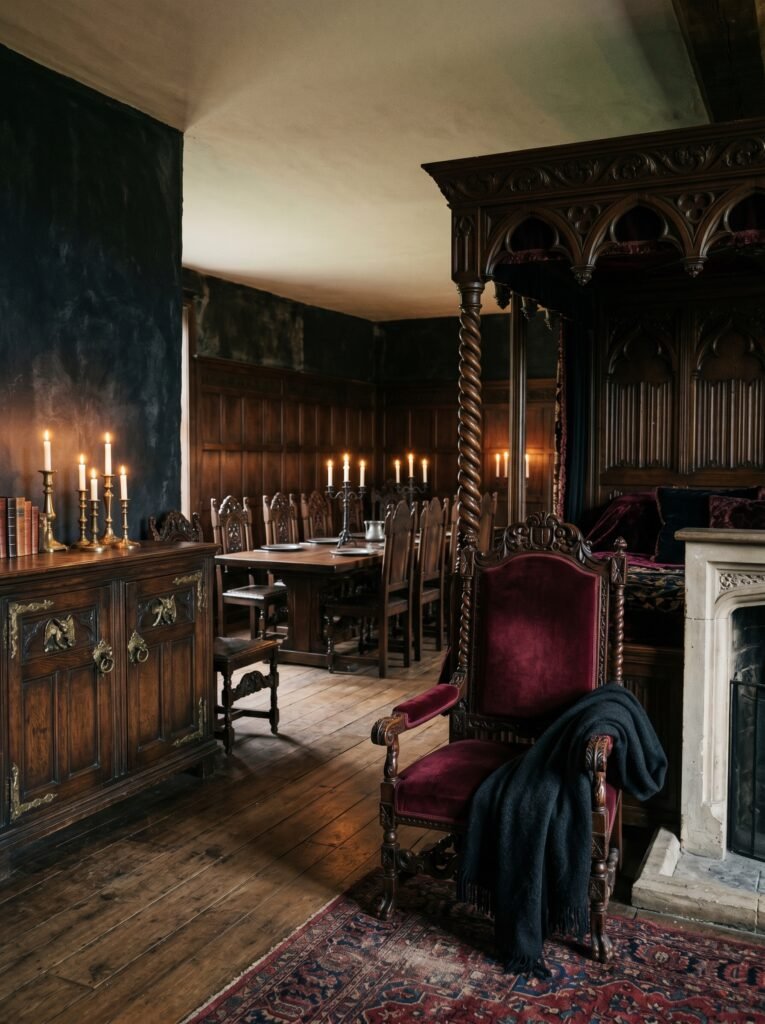
Gothic furniture isn’t merely functional — it’s narrative. A high-backed throne-style chair upholstered in claret velvet doesn’t just offer somewhere to sit; it makes a quiet declaration about how you feel about your own home. Four-poster beds with carved wooden frames, sideboards with gargoyle-inspired hardware, dark walnut dining tables that seat twelve — these pieces carry a sense of occasion that flatpack furniture simply cannot replicate.
Antique shops and estate sales are extraordinary resources for authentic gothic-influenced pieces. But well-crafted modern reproductions from dedicated gothic and dark aesthetic furniture makers can achieve the same effect without requiring a Tudor inheritance.
“Every piece of furniture in a gothic room should feel like it has a past — and possibly a secret.”
6. Lighting: The Element That Makes or Breaks Everything
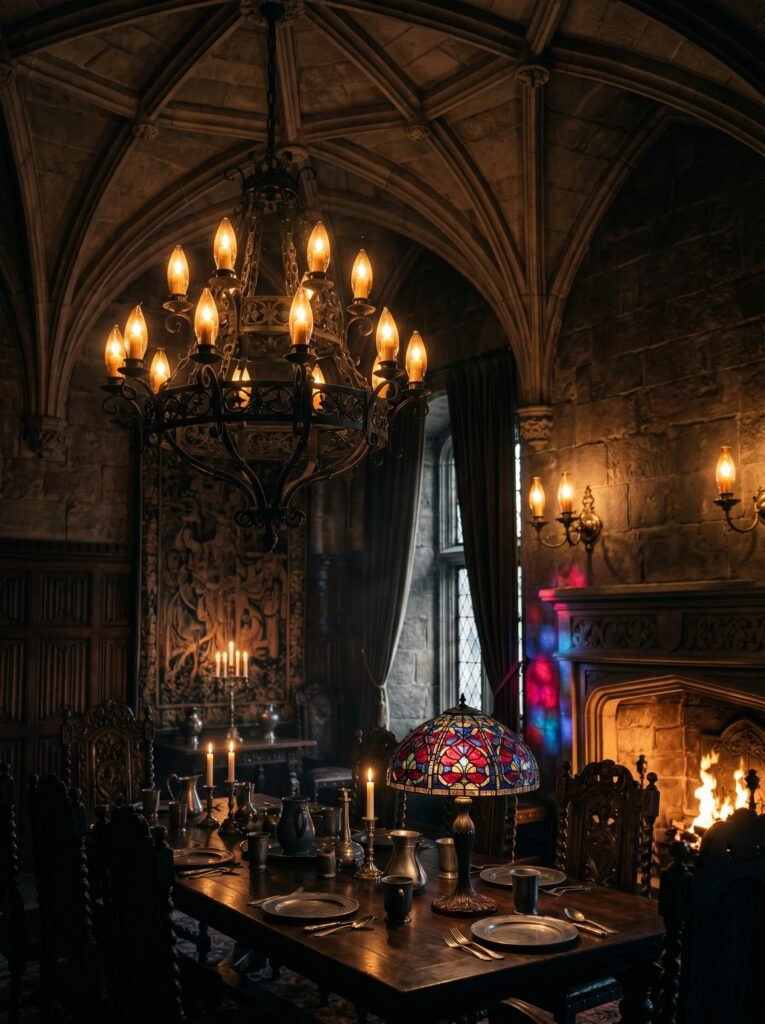
Here is where so many people go wrong with gothic interiors. Flood a dark room with bright white overhead lighting and you’ve killed everything the design was working toward. Gothic spaces demand layered, warm, atmospheric lighting. Think candelabras with actual candles or flickering LED alternatives. Wall sconces with amber bulbs. Table lamps with stained glass shades casting jewel-colored pools of light.
Chandeliers — ideally in wrought iron, antique brass, or black metal with candle-style bulbs — are perhaps the single most impactful lighting choice you can make. They anchor the ceiling, draw the eye upward, and immediately communicate that this room takes beauty seriously.
Dimmer switches are non-negotiable. The ability to shift from practical daytime lighting to candlelit evening atmosphere is what allows gothic design to live comfortably in the modern world.
7. The Art of Dark Walls Done Right
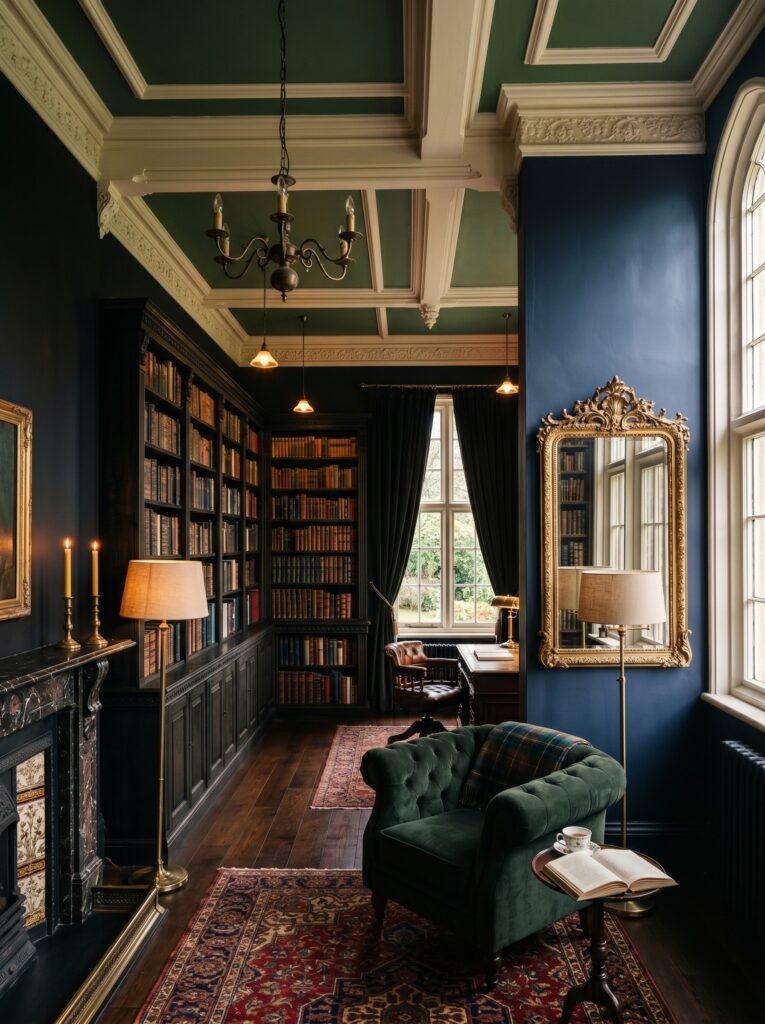
Dark walls have been intimidating homeowners for decades, but the design world has slowly come around to what gothic enthusiasts have known all along: a properly executed dark room feels neither smaller nor sadder. It feels contained — in the best possible sense of that word. Like a library, a cocoon, a place where thought is possible.
The key is finish and light. A matte black wall absorbs light and feels velvety, almost soft. A deep navy in a satin finish has a subtle luminescence that shifts throughout the day. Dark green — particularly shades like hunter or bottle green — brings a sense of the natural world into a moody space without sacrificing depth.
Balance dark walls with lighter ceilings, pale architectural trim, or strategically placed mirrors that bounce light and create dimension.
8. Symbolism and Ornamentation: Where Meaning Lives
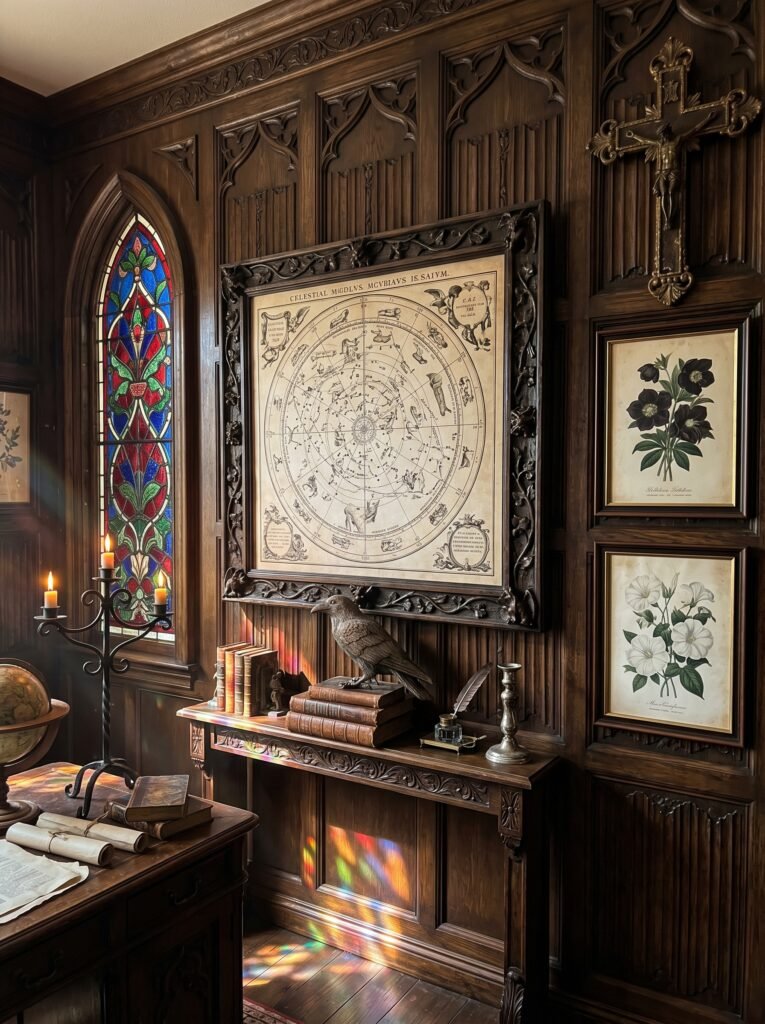
Gothic design has always been deeply symbolic. The original medieval craftsmen who built Europe’s great cathedrals loaded every carving, every window, every arch with layers of meaning. That tradition carries beautifully into interior design. Gothic spaces tend to incorporate symbolic motifs: ravens and owls in artwork, celestial maps and astrology charts as wall decor, antique crucifixes or religious iconography treated as historical artifacts, botanical prints of dark flowers — black roses, belladonna, moonflowers.
Stained glass panels — whether original antiques or contemporary reproductions — catch light in ways that feel nothing short of miraculous. A single stained glass panel hanging in a window can transform the quality of light in an entire room.
9. Gothic Doesn’t Mean Every Room Has to Be a Cathedral
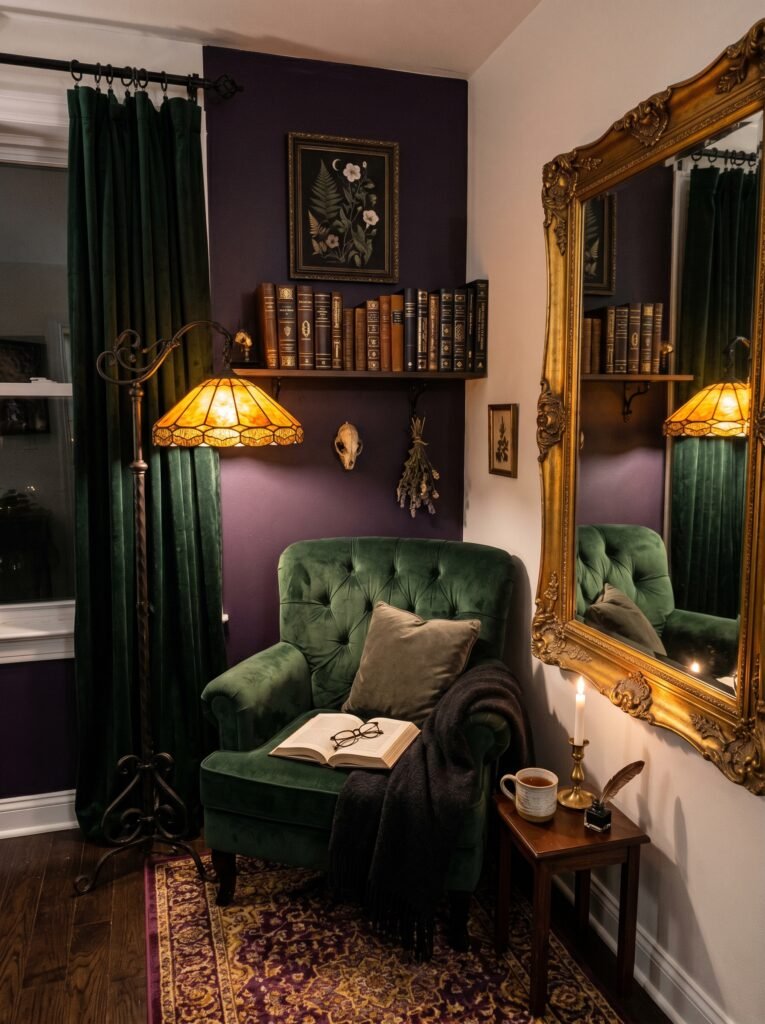
One of the most liberating realizations for anyone drawn to this aesthetic is that gothic design is deeply scalable. You don’t need a Victorian manor or a converted church to live gothically. A single well-curated bedroom can achieve the atmosphere entirely. A reading corner with dark walls, a velvet chair, a dramatic floor lamp, and a curated shelf of leather-bound books communicates the essence of the style completely.
“You don’t need a castle to live with intention and beauty. You just need one room brave enough to be itself.”
Even small apartments respond beautifully to gothic touches — dark accent walls, a statement mirror with an ornate gilded frame, wrought iron curtain rods, a botanical print in a carved wooden frame. The philosophy matters more than the square footage.
10. The Role of Nature in Gothic Interiors
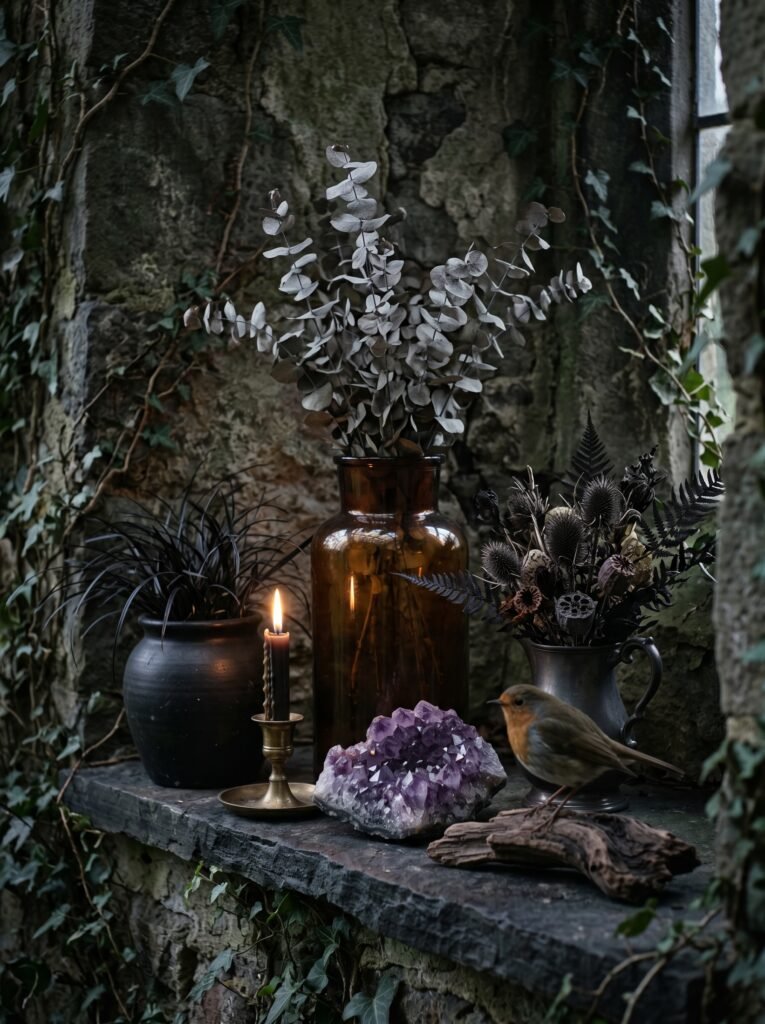
There’s a surprising amount of nature in gothic spaces, though it tends to be nature of a particular mood. Dried botanicals in apothecary jars. Branches of eucalyptus or dark-leafed plants like the black mondo grass or cast iron plant. Taxidermy — when handled tastefully and ethically — has historical roots in Victorian gothic design. Geodes and crystals add natural mineral beauty with an otherworldly edge.
Gothic design reminds us that nature isn’t always soft and pastoral. Sometimes it’s the forest at midnight, the storm over the moors, the ivy slowly reclaiming a stone wall. There’s beauty in that version of nature too, and gothic interiors honor it.
11. Bringing Gothic Into Contemporary Homes
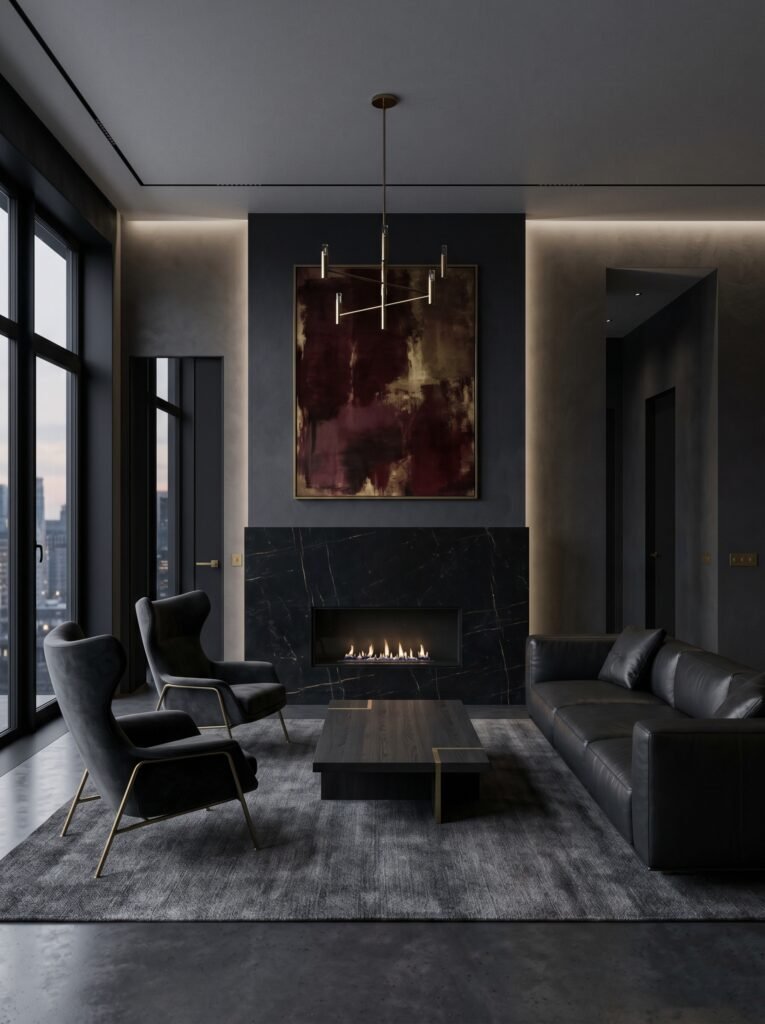
Modern gothic — sometimes called “gothic minimalism” or “dark luxury” — is an increasingly influential design direction that strips away the more theatrical elements of traditional gothic and keeps the essence: dark palette, quality materials, meaningful objects, emotional atmosphere. You might see it in a sleek apartment where the only “gothic” elements are a black marble fireplace surround, deep charcoal walls, and furniture in black leather and aged brass.
This contemporary evolution makes gothic design accessible to people who love its mood but not necessarily its maximalism. And it proves the style’s enduring relevance — gothic design keeps finding new languages to speak in.
12. The Emotional Architecture of a Gothic Home
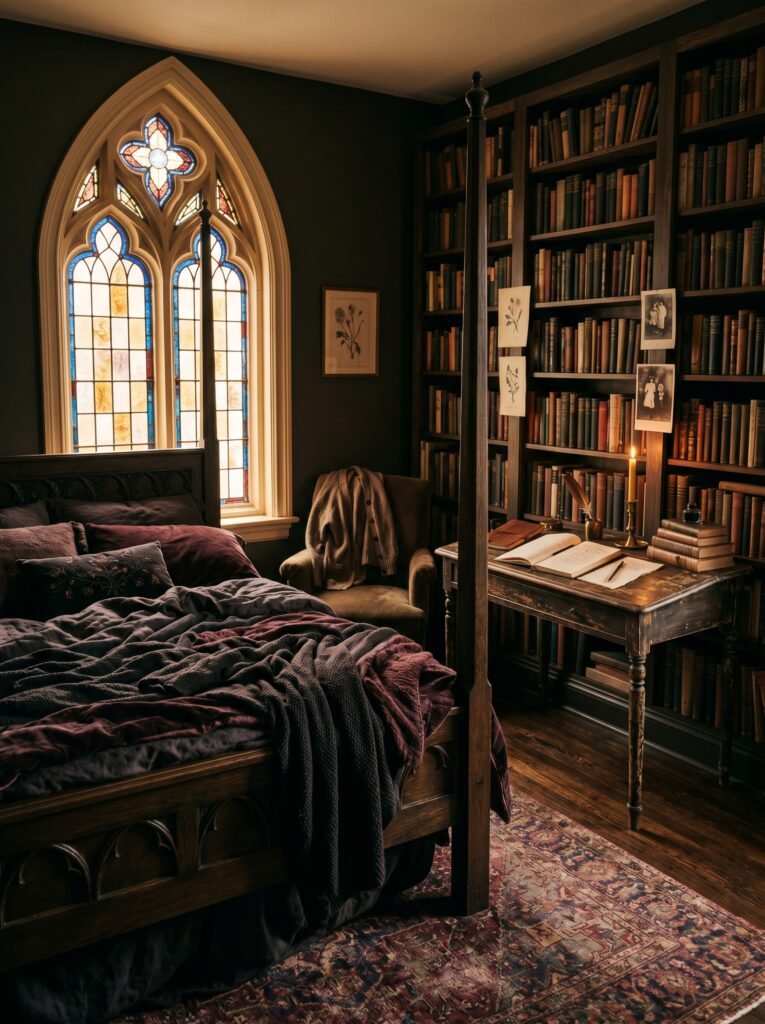
At its heart, gothic interior design is about creating a home that feels emotionally alive. Not sterile. Not performatively cheerful. Not designed to impress visitors so much as to sustain the person who actually lives there. People who are drawn to gothic interiors often describe their homes as places where they can think more deeply, rest more fully, and feel more genuinely like themselves.
There’s a psychological dimension to living with beauty that has weight. Depth. History. When your environment reflects your inner life — when the richness and complexity of who you are shows up in the textures and colors around you — something settles inside you. You feel, perhaps for the first time, truly at home.
—
🌿 How to Take Care of Your Gothic Interior
Living with a gothic-inspired space requires a little thoughtful maintenance to keep it feeling intentional rather than dusty or overwhelming.
Dust regularly and mindfully. Dark surfaces show dust more readily than light ones. Make it a ritual rather than a chore — light a candle, put on music you love, and treat the care of your space as an extension of the love you put into designing it.
Edit continuously. Gothic design works through curation, not accumulation. Every few months, look around your space and ask whether each object is still earning its place. Remove what no longer resonates and give remaining pieces more room to breathe.
Protect dark fabrics from sunlight. Deep velvet and richly dyed textiles can fade with prolonged UV exposure. Use lined curtains and consider UV-filtering window film in particularly sunny rooms.
Keep metals polished selectively. Antique and aged metals are part of the gothic aesthetic, but there’s a difference between beautifully patinated and simply neglected. Occasional light polishing on key pieces keeps the space feeling cared for.
Layer in fresh botanicals occasionally. A new stem of dark flowers, a seasonal dried arrangement, or a living plant in a beautiful pot keeps the space feeling alive and connected to the natural world.
—
❓ FAQ
Q: Is gothic interior design too dark for small spaces? A: Not necessarily. Dark colors can actually make a small space feel more intimate and intentional rather than cramped. The key is strategic lighting — warm, layered artificial light — and at least one mirror to create depth. Many small rooms are transformed beautifully by a gothic approach.
Q: Can gothic design work in a family home with children? A: Absolutely. Gothic design is fundamentally about craftsmanship, beauty, and atmosphere — none of which are incompatible with family life. Common-sense choices like durable velvet blends instead of delicate silk, and keeping fragile decorative objects out of reach, make the style entirely livable for families who love it.
Q: How much does it cost to achieve a gothic interior? A: Gothic interiors can range from very affordable to very expensive depending on your approach. Dark paint is no more costly than any other paint. Thrift stores, estate sales, and antique markets are extraordinary resources for gothic-appropriate furniture and decor at accessible prices. The style rewards patience and selective investment over time far more than it requires a large immediate budget.
—
💭 Final Thought

Gothic interior design is, at its best, an act of courage — the courage to create a home that feels true to you rather than reassuringly conventional. It asks you to trust that beauty can live in shadow, that depth matters as much as brightness, and that a home should feel like a reflection of your interior world, not a curated performance for guests.
In a world that often mistakes lightness for happiness and simplicity for taste, gothic design quietly insists on more. More texture. More meaning. More soul.
So here’s the question worth sitting with: what would your home look like if you designed it entirely for yourself — for the person you actually are, not the person you think you’re supposed to be?