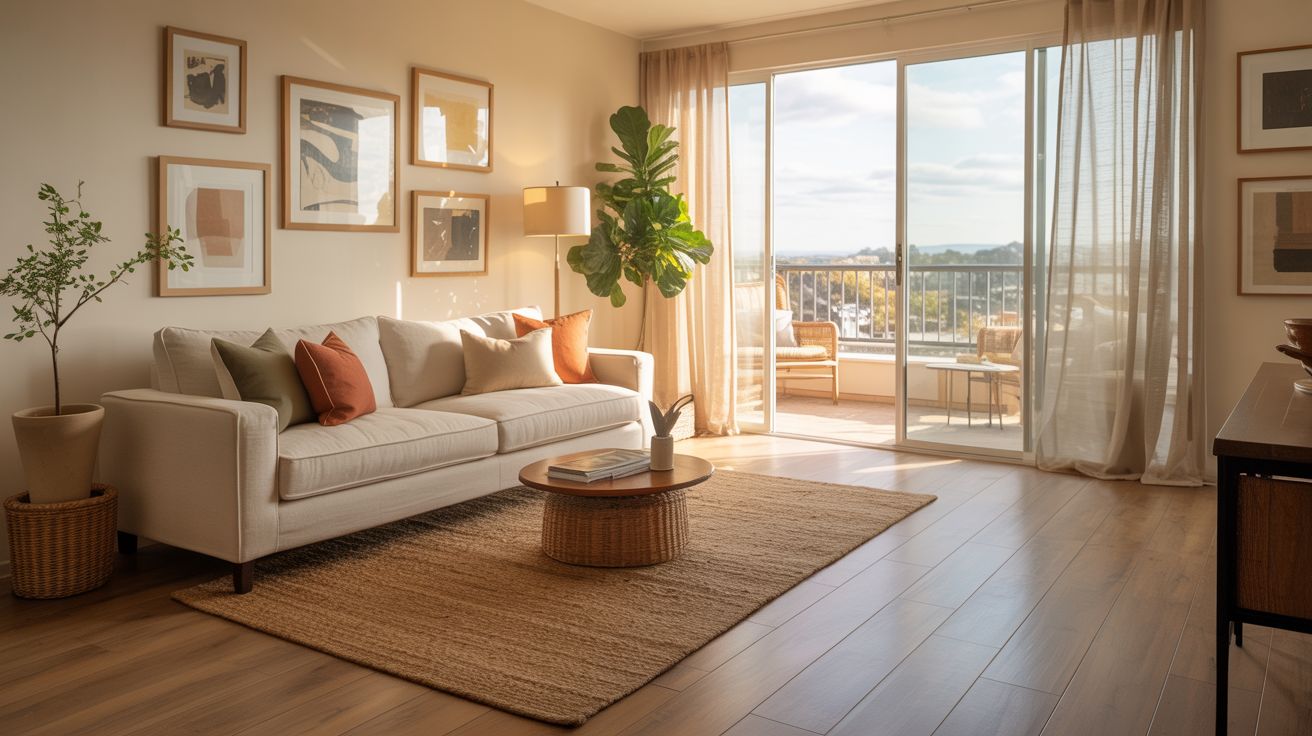
The Renter’s Living Room Glow-Up: Beautiful Spaces That Leave No Trace
You’re standing in a beige box with magnolia walls and a landlord clause that basically says “don’t breathe on anything.” Sound familiar? Here’s the thing — some of the most stunning living rooms I’ve ever seen on Pinterest were rentals. Temporary doesn’t have to mean boring.
—
1. The First Thing Every Renter Gets Wrong About Blank Walls
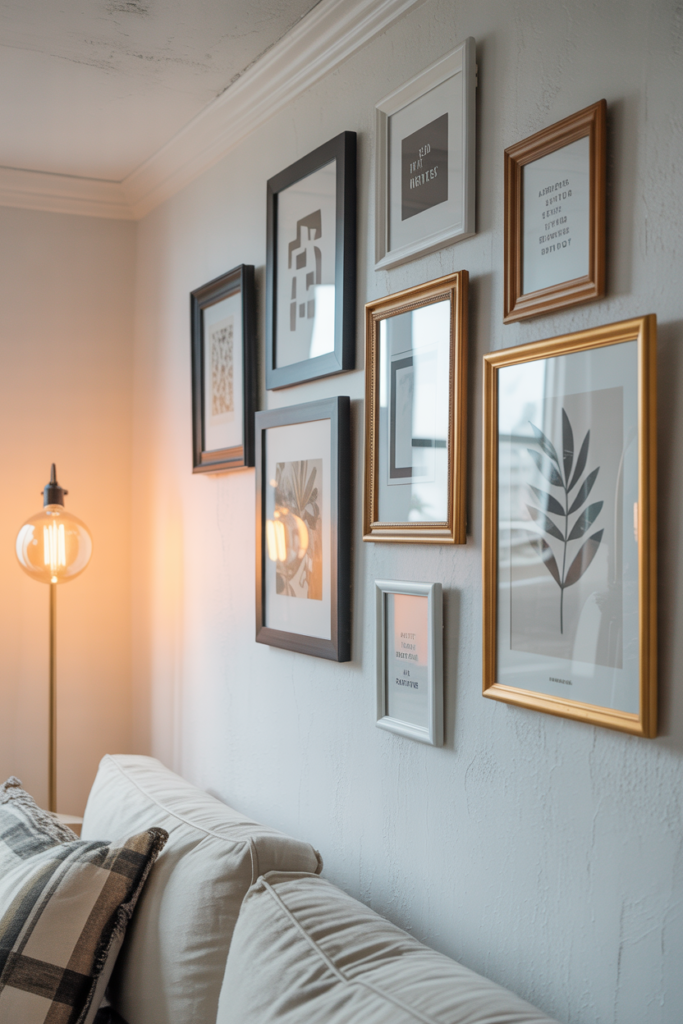
White walls aren’t a prison sentence. They’re a blank canvas — and honestly, most homeowners would kill for them.
The mistake renters make is either going full commitment on things they’ll regret (yes, I’m talking about that removable wallpaper that didn’t actually come off cleanly) or giving up entirely and living in a space that feels like a hotel room with worse Wi-Fi.
The sweet spot is statement without permanence. Large-format art leaned against the wall instead of hung reads as intentional, not lazy — it actually looks more curated than a gallery wall in a lot of cases. Think a big vintage-style print in a chunky frame, slightly off-center against a wall. The lean gives it an editorial quality that feels very collected-over-time rather than ordered-all-at-once.
For actual hanging, 3M Command strips have genuinely changed the renter game. But beyond strips, try picture rail hooks if your building has them — older UK flats especially tend to have these, and they’re completely landlord-friendly. One oversized framed print above a console or sofa does more work than six medium-sized pieces scattered without rhythm. Go big. Go leaned. Go bold.
“Statement without permanence is the whole philosophy of renting beautifully.”
2. The Color That Keeps Showing Up in Every Beautiful Rental Living Room Right Now
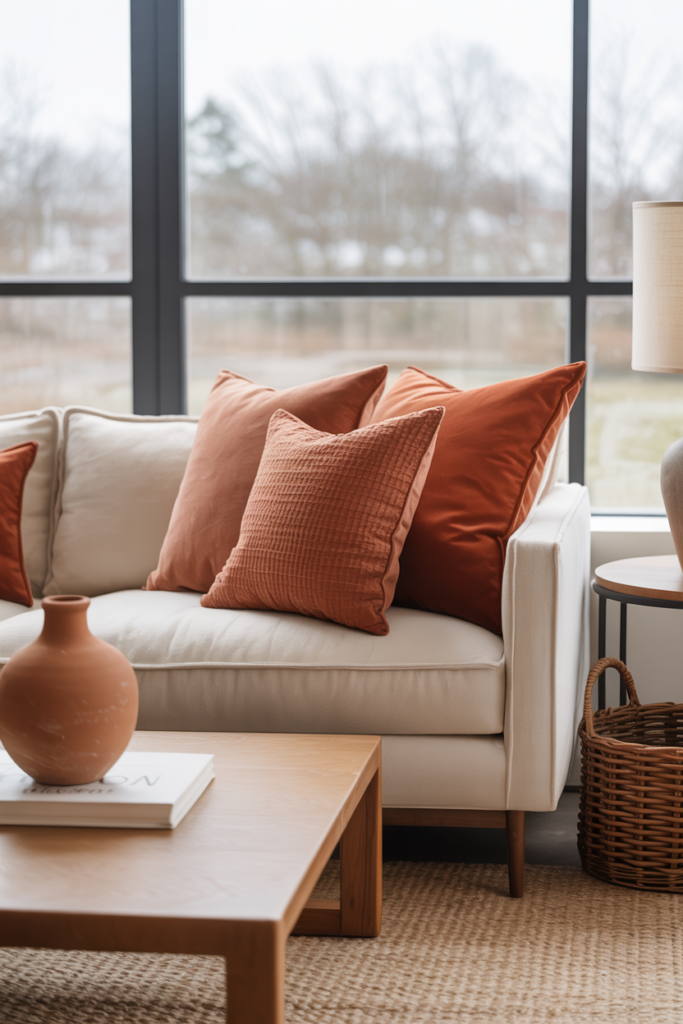
It’s terracotta. Still. And I’m not tired of it.
But more specifically, it’s warm, earthy tones introduced through soft furnishings rather than paint — the thing that makes a rental feel like it has a soul even when the bones are completely generic.
Terracotta cushions on a grey sofa. A rust-toned throw folded over the arm of a cream chair. A burnt orange ceramic vase catching afternoon light on the windowsill. None of these cost the earth, none of them require a drill, and all of them do the same thing: they make the room feel warm before you’ve even switched a lamp on.
In the UK, this palette also plays beautifully against the kind of flat northern light that makes cooler tones feel cold and clinical. In the US, particularly in older apartment buildings in cities like Chicago or New York with those big sash windows, warm tones just glow differently when the late afternoon sun hits them.
If terracotta feels too committed to one trend, try anchoring with neutrals — oatmeal, warm greige, natural linen — and then layering in one or two deeper earthy tones as accents. The goal is a room that feels like autumn feels: cozy, layered, rich without being loud.
3. The One Rule That Makes Any Rental Living Room Feel Intentional
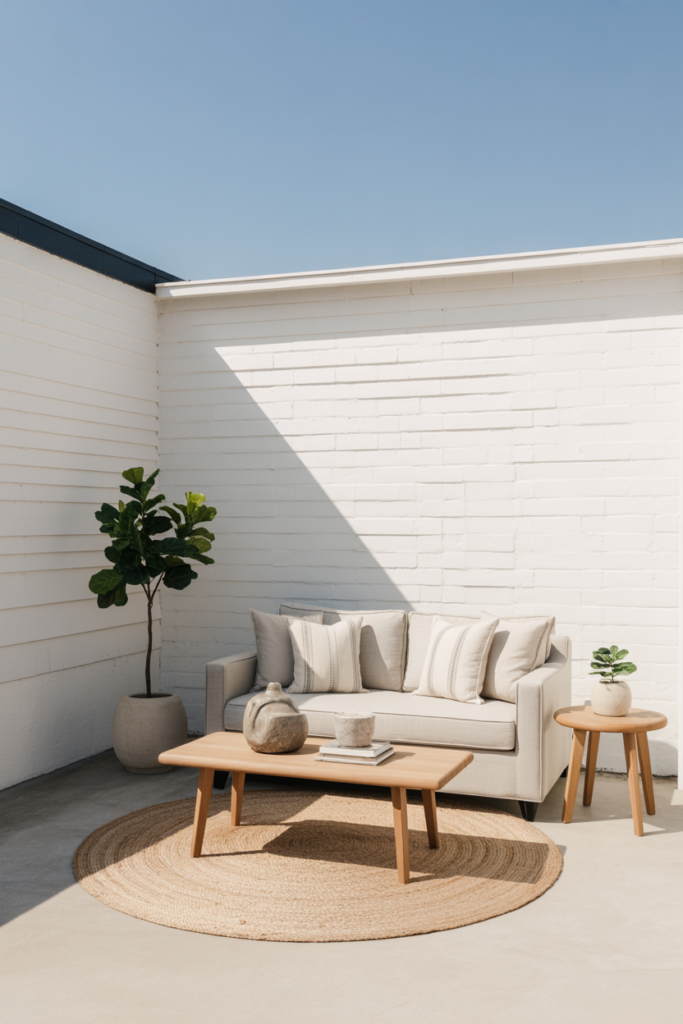
Everything in the room should tell the same story.
That’s it. That’s the rule. But it sounds simple until you’re standing in IKEA at 11am on a Saturday surrounded by six different “aesthetic” options and genuinely cannot decide between Japandi and maximalist cottagecore.
The trick is to pick a feeling rather than a style. How do you want the room to feel at 8pm on a Tuesday when you’ve just come home from work? Calm and airy? Warm and wrapped-in? Slightly eclectic and interesting? Start there — feel first, style second.
Once you have your feeling, every purchase becomes easier to filter. Does this lamp feel calm and airy? Yes? Keep it in the basket. Does this bright graphic rug feel calm and airy? No? Put it back. This isn’t about being rigid — it’s about having an internal compass for the space rather than just buying things you like individually and hoping they’ll get along.
For renters especially, this matters because you’re working with constraints. You can’t change the flooring. You can’t knock down walls. So the story your stuff tells has to carry more weight than it might in a home you own.
4. Rugs Are Doing More Work Than You Think
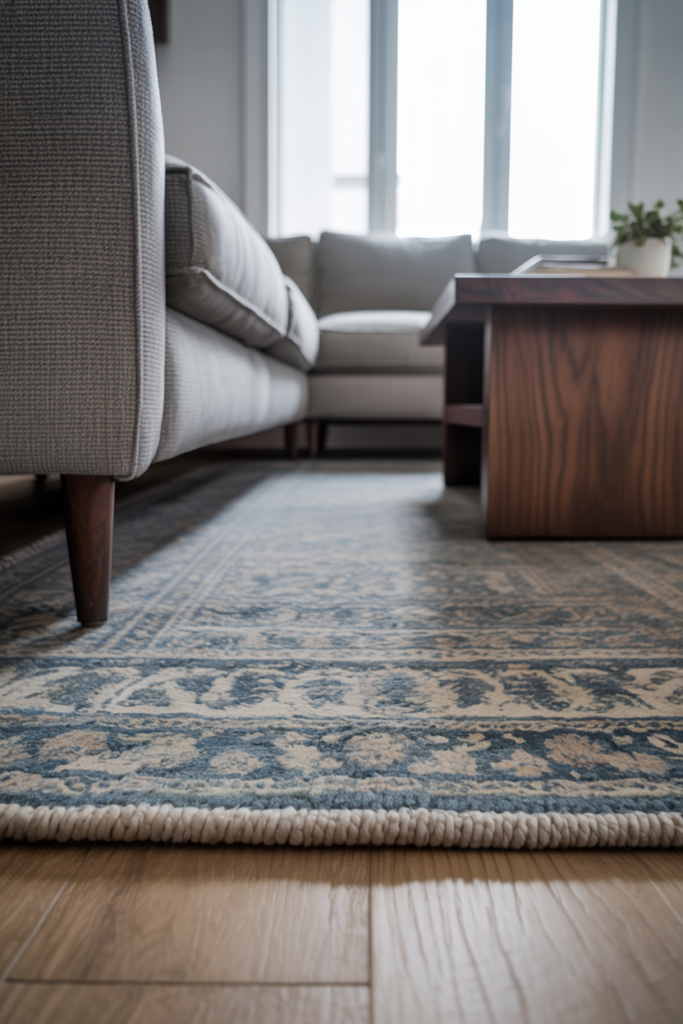
If you’re renting and you don’t have a statement rug, that is the single change that will do the most with the least effort.
Bare rental floors are almost always a problem. Whether it’s laminate that looks like it’s been in three different flats before yours, or carpet the color of compromise, a good rug covers the sin and anchors the whole room.
The size matters more than the pattern. Most renters default to a rug that’s too small — it ends up floating in the middle of the room like a bath mat with ambitions. The rule is simple: all four legs of the sofa on the rug, or at least the front two. A rug that’s too small makes the room feel smaller, not larger. Go bigger than you think. Significantly bigger.
Natural fiber rugs — jute, seagrass, sisal — are a fantastic renter’s choice because they’re textural without being trendy, and they layer beautifully under a smaller patterned rug if you want more visual interest. In the UK, look for flat-weave options in winter if you’ve got underfloor heating concerns. In the US, a thicker pile is your friend in apartments where noise carries between floors — you get softness and a little soundproofing.
“A rug that’s too small makes the room feel smaller. Go bigger than you think.”
5. The Furniture Piece Renters Consistently Overlook
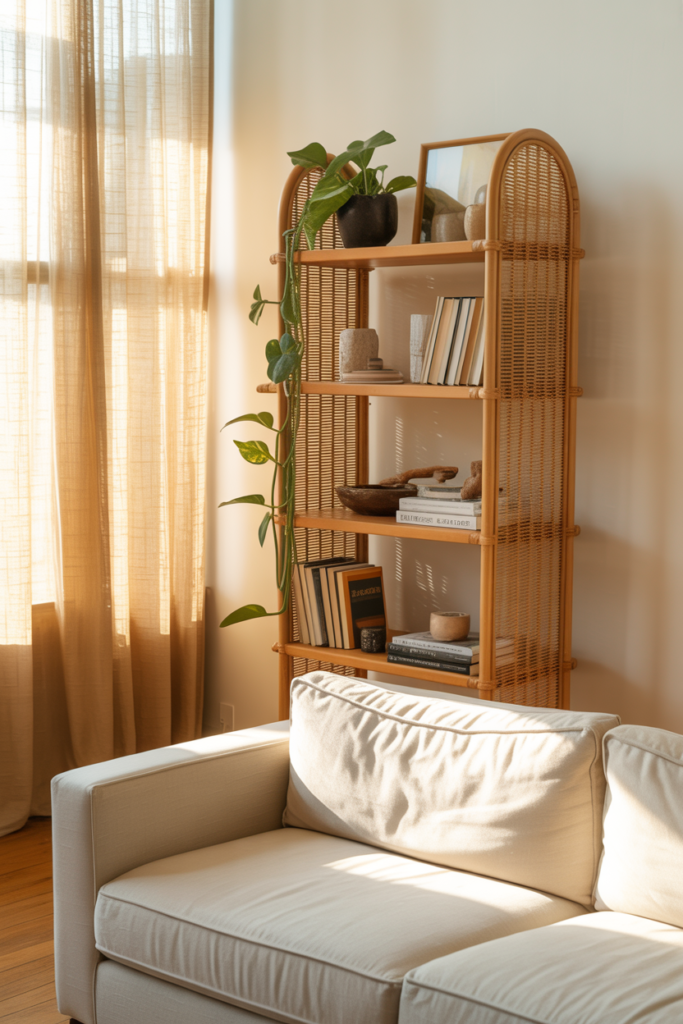
The console table. Or a narrow sideboard. Something along one wall that isn’t the sofa.
Most rental living rooms are arranged around the sofa, the coffee table, and whatever sad surface the TV lives on. Add one piece along a wall — even a narrow one, even a thrifted one — and suddenly the room has architecture. It has layers. It has somewhere for a lamp, a plant, a stack of books, a candle.
In a smaller flat (and if you’re renting in London or NYC, you know what small actually means), a console table behind the sofa works beautifully as a room divider in open-plan spaces and adds serious storage. In a larger apartment living room, a sideboard on the longest wall gives you display space, storage, and the kind of visual weight that makes a room feel lived-in and loved.
Thrift stores and Facebook Marketplace are your best friends here. You’re not looking for perfection — you’re looking for good bones and the right scale. A beat-up old sideboard with new handles costs almost nothing and adds ten times more character than anything flat-packed.
6. Lighting Your Rental Without Touching the Ceiling Fixture
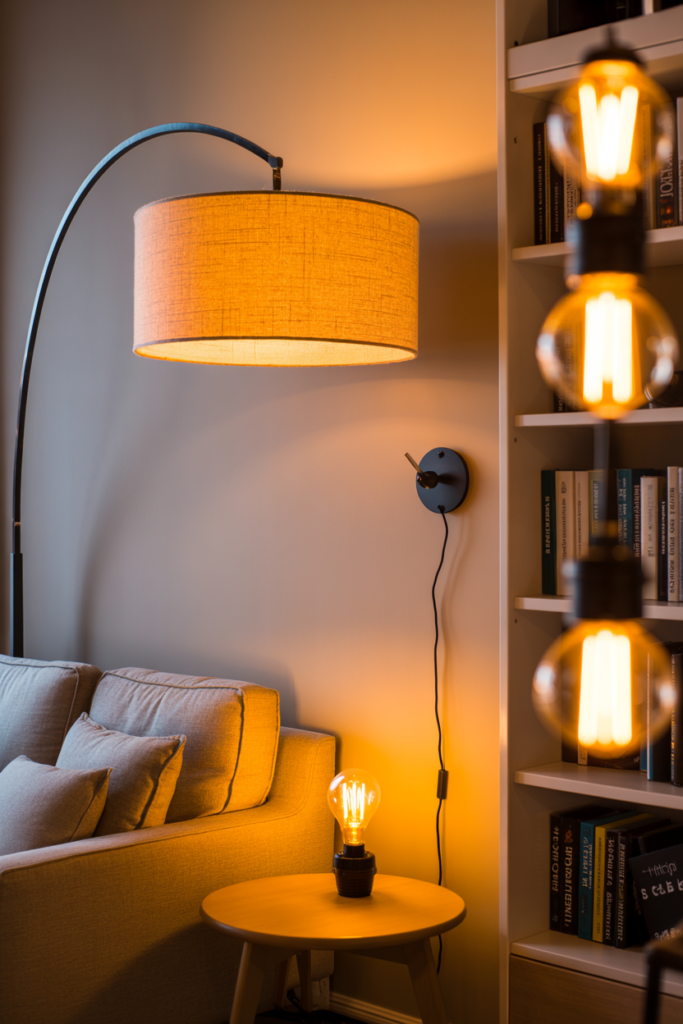
That overhead light is almost certainly terrible. The fluorescent strip light above your kitchen counter, the single pendant that hangs too high in the center of the living room ceiling — they’re not your friends, and in a rental, you probably can’t replace them.
What you can do is simply not use them as your main light source.
Layer your lighting from the floor and the table up. A floor lamp in the corner of the room immediately adds warmth and dimension. A table lamp on a sideboard or console creates a secondary glow that draws the eye across the room rather than straight up at the ceiling. For a cozy reading nook situation, a small task lamp on a side table beside an armchair does something genuinely magical to a room at 9pm.
The amber glow of a good Edison-style bulb at 7pm in a living room that’s been lit from below — it looks like a magazine. It looks like someone tried. No drills required.
Smart bulbs are worth every penny for renters. You can fit them in any existing lamp, control the warmth and brightness with your phone, and take them with you when you move. It’s the most portable investment in ambiance you’ll make.
7. When Your Rental Has One Genuinely Ugly Feature You Can’t Change
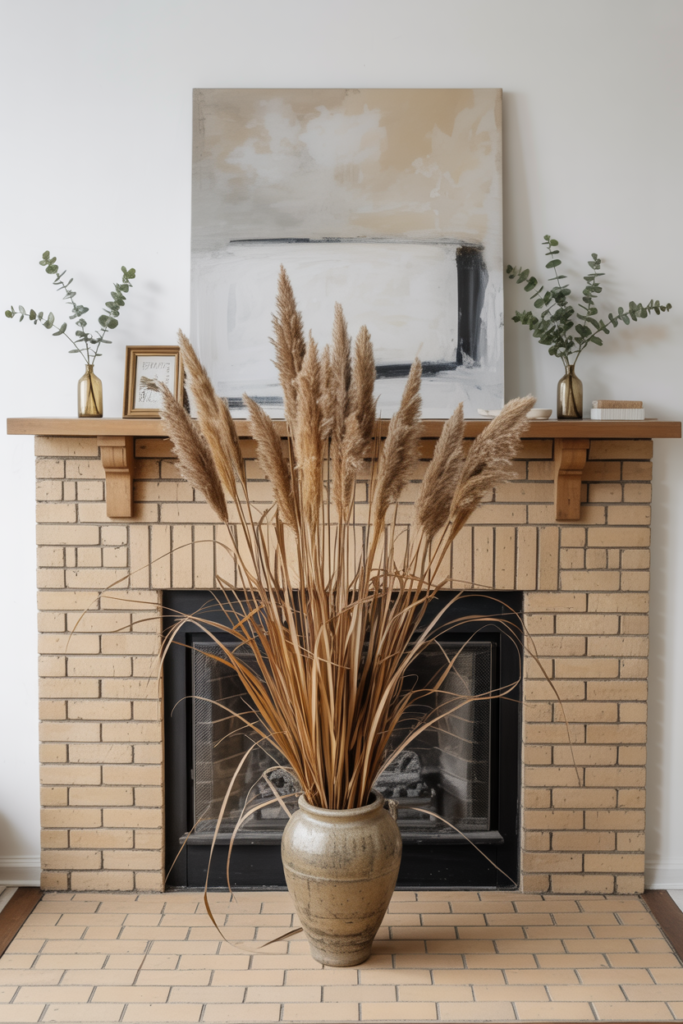
There’s always something. The electric fire with the fake coals. The boiler cupboard in the middle of the living room wall. The dado rail that belongs in a 1987 sales brochure. The radiator that looks like it’s been there since the Thatcher era.
You have two options: hide it or commit to it so hard it becomes a feature.
For hiding: a well-placed tall plant in a gorgeous pot works surprisingly well at pulling attention away from eyesores. A floor-to-ceiling curtain panel hung on a tension rod can conceal a multitude of rental sins — a boiler cupboard, a bad patch of wall, a truly unfortunate niche. Furniture placement is underrated too; sometimes the sofa itself, positioned just slightly in front of something, erases the problem entirely.
For committing: lean into the ugly. That old-school radiator? Style it with a stack of books on top (when it’s off), a trailing pothos plant beside it, a gorgeous radiator cover if the landlord allows. The electric fire? Make it the focal point with beautiful candles and a chunky mirror above it. Own the quirks. They become stories.
“Lean into the ugly. Own the quirks. They become stories.”
8. The Plant Strategy That Doesn’t Require a Green Thumb
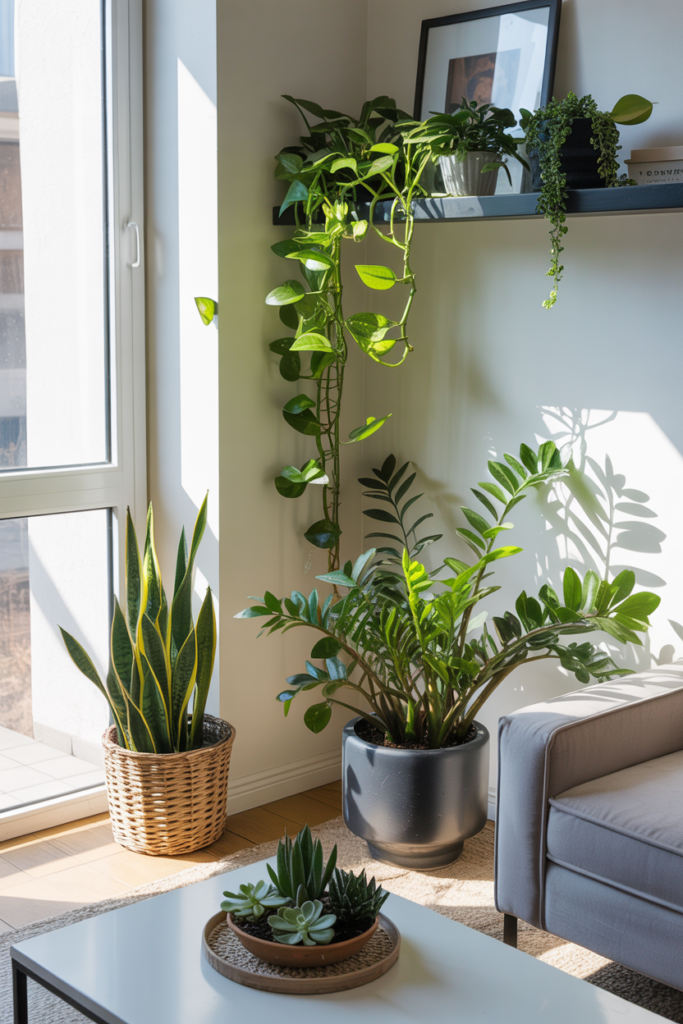
Plants are the fastest way to add life to a rental living room, and I will die on this hill.
But I also know that a lot of people have killed a lot of plants, and nothing takes the joy out of a beautifully styled room like a brown, crispy pothos on the windowsill.
So here’s the actual strategy. Start with three plants, not one. A large floor plant for scale — a Monstera deliciosa or a Fiddle Leaf Fig if you have bright indirect light, a Dracaena or ZZ plant if your light is poor. A mid-height plant on the sideboard or console. A trailing plant up high — on a shelf, on top of the bookcase, somewhere it can drape.
The trailing plant is the secret weapon. A heartleaf philodendron or a pothos that’s been growing for a year, trailing down from a high shelf, adds drama and lushness that no amount of cushions can replicate. And they’re practically unkillable.
In the UK, particularly in ground-floor flats or rooms with north-facing windows, focus on low-light champions: ZZ plants, snake plants, and cast iron plants (appropriately named). In the US, if you’re in a sunnier climate, you can get away with a lot more.
9. Bookshelf Styling That Looks Curated, Not Cluttered
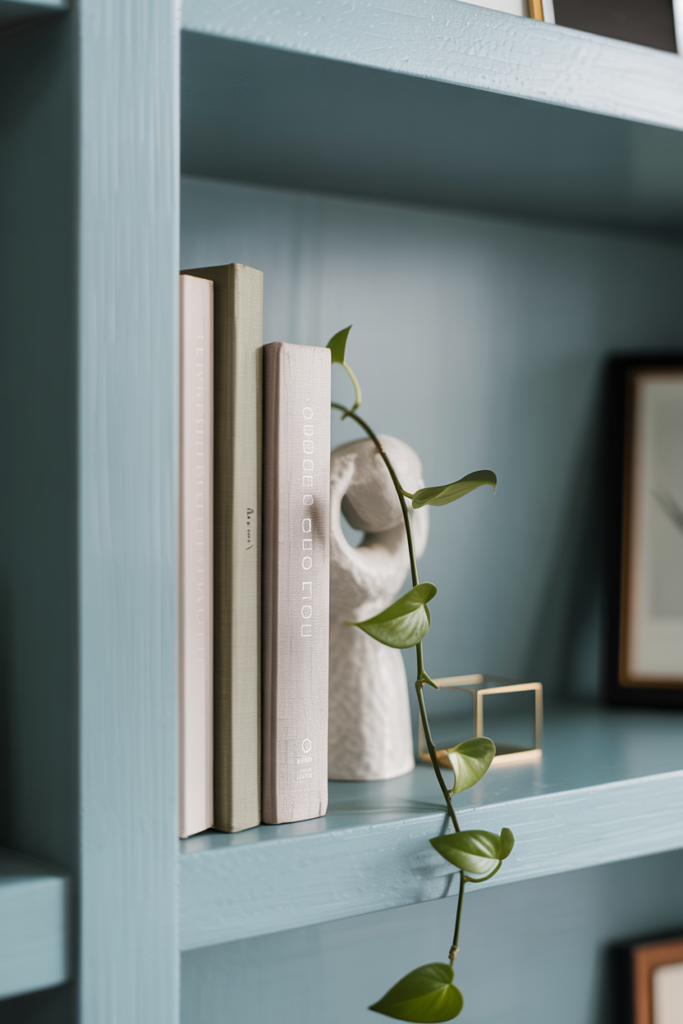
If you have a bookcase in your rental living room — bought, built-in, or inherited from the last tenant — the way you style it says more about the room than almost anything else.
The mistake is treating it like actual storage. Books spine-out, every available inch filled, no breathing room. It looks like chaos even when it’s organized.
The approach that works: mix orientation. Some books horizontal, stacked. Some vertical. Leave gaps. Put objects in those gaps — a small ceramic, a candle, a framed photo turned sideways. Pull a few books forward so the shelf has depth. Put a plant on top, trailing down over one side.
The color approach is optional but impactful: arrange books loosely by color within sections. You don’t have to go full rainbow — even just grouping all your white-spined books together, or clustering the darker spines on one side, creates visual rhythm that reads as intentional.
A bookshelf in a rental also serves as the world’s best focal point. It’s yours, it travels with you, it tells your story, and it makes bland magnolia walls completely irrelevant.
10. Curtains: The Budget Change With the Biggest Visual Impact
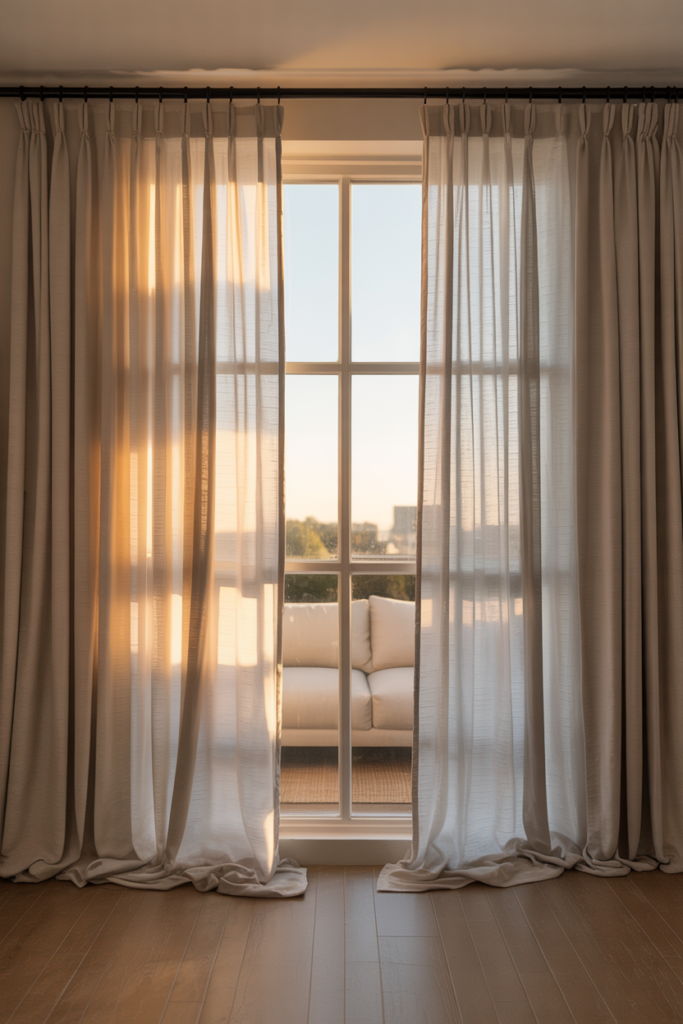
Rental curtains are almost always bad. Thin, too short, the color of weak tea. And changing them feels like a big commitment.
It isn’t. Swap them out, store the originals in a bag under the bed, and hang your own on the existing hardware. When you leave, you put the originals back. It takes twenty minutes and costs nothing in deposit terms.
The difference a pair of good curtains makes to a rental living room is genuinely hard to overstate. Linen curtains in a warm natural tone — oatmeal, soft white, pale sand — hung high and wide (above and beyond the window frame, not tight to it) make any window look twice its actual size. The room gets taller. The light feels softer. The whole space looks more considered.
In the UK, thermal-lined curtains also do genuine work in older flats where the windows aren’t double-glazed. You get the beautiful look and the warmth. In the US, light-filtering linen is perfect for apartments where you want privacy but hate blackout vibes in the daytime.
11. The Small Details That Separate “Nice” From “Actually Stunning”
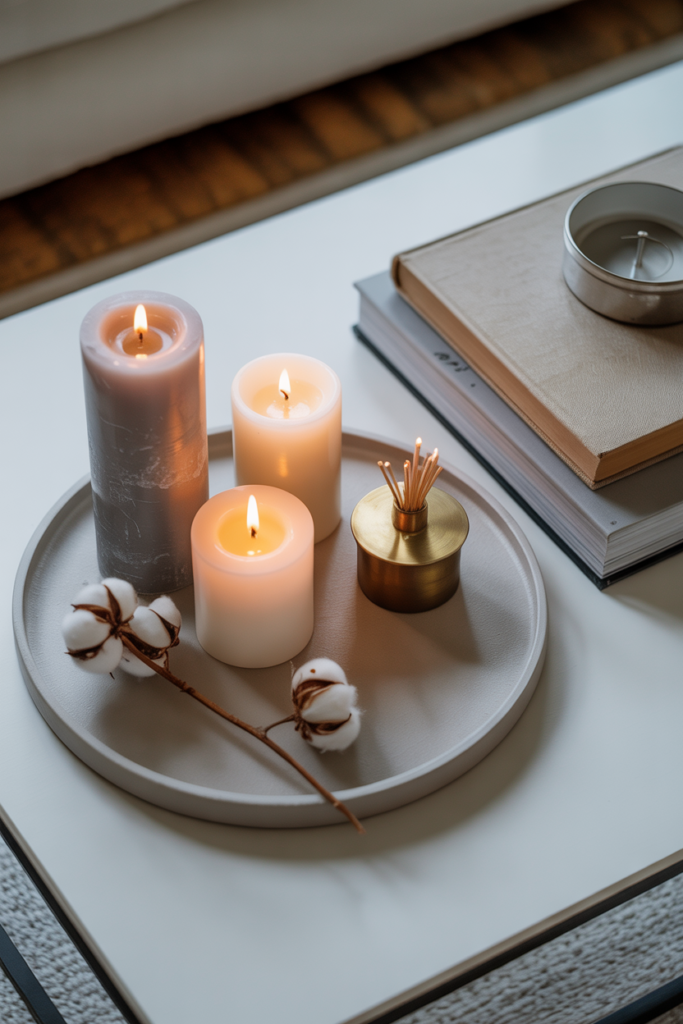
Here’s where renters often plateau. The big elements are sorted — rug, lighting, curtains, plants — and the room looks good. But good and stunning are separated by about fifteen small decisions.
A tray on the coffee table with three items on it. Not five, not eight — three. A candle. A small stack of two books. One decorative object. That’s it. The tray contains the arrangement and makes it look placed, not scattered.
Switched-out hardware. If the IKEA sideboard has basic silver handles and you switch them for unlacquered brass or matte black ones, the whole piece looks more expensive. Five minutes. Almost no money.
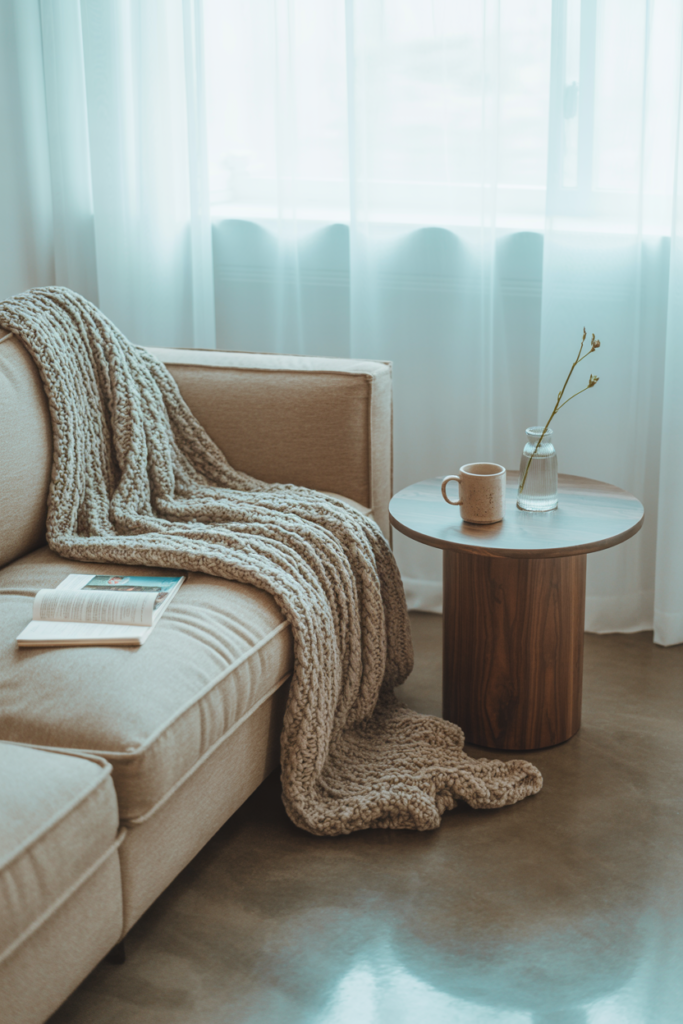
A throw that actually looks like it belongs. Not folded neatly like it came out of a packaging box — draped, slightly rumpled, one corner pushed off the sofa arm. The lived-in look is a technique.
Matching candles. This sounds obsessive but try it: three candles in the same color or similar tone, different heights. The cohesion is quiet but it registers subconsciously as calm and intentional.
The details don’t shout. They whisper. But the room hears them.
12. Moving In With Pieces That Will Actually Move With You
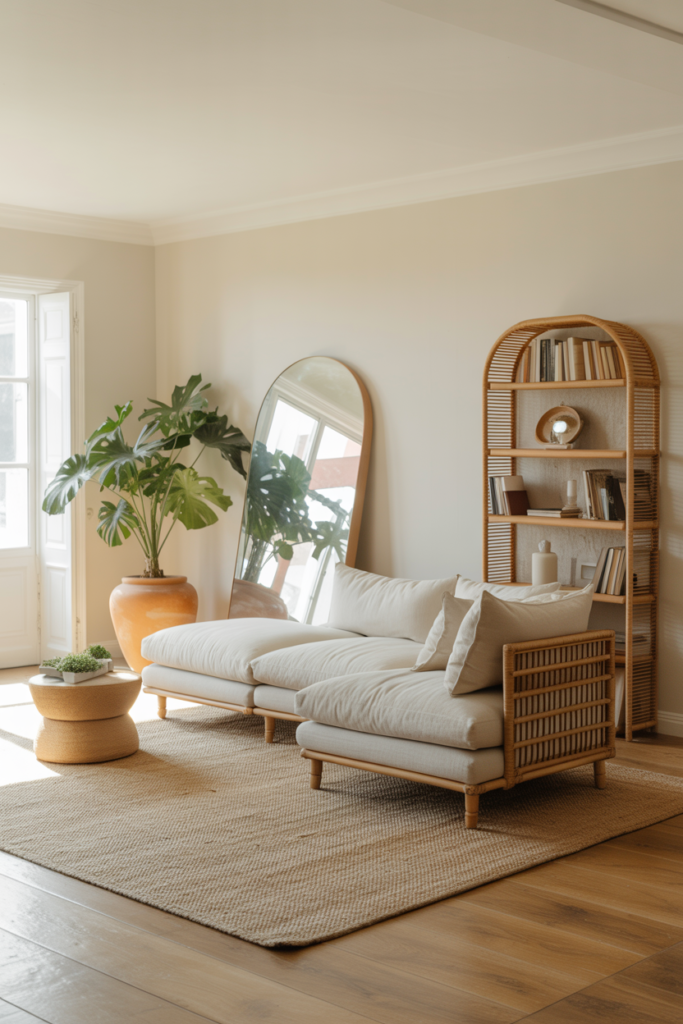
The final, most important thing about decorating a rental beautifully — every piece you invest in should either be cheap enough to leave behind happily or good enough that you’d take it to three more homes.
Build a collection of pieces that travel well. A great linen throw. A pair of quality table lamps. The perfect-sized rug. A few substantial ceramic vases. Framed art that suits your taste, not a specific room. A beautiful mirror.
These are your constants. They move with you from flat to flat, city to city. They’re the backbone of your style, and they make every new rental feel like yours within a weekend of moving in.
Don’t pour money into things that are fixed to the space or that only work in one specific layout. Pour money into the things you love and will love again in five years in a completely different home.
The best renter’s living room isn’t designed around the apartment. It’s designed around the person who lives in it.
—
🌿 Quick Tips
Start with lighting before anything else — one good floor lamp will change the room more than an entirely new color palette. Go bigger on the rug than you think you need, because a small rug is worse than no rug at all. Store your landlord’s curtains safely instead of throwing them away — you’ll need them when you leave. Shop vintage and secondhand for the pieces that give a room character; new furniture alone almost never creates that “collected” feeling. And never underestimate the power of three matching candles at different heights on a shelf — it sounds ridiculous until you try it.
—
❓ FAQ
Q: Can I paint my rental apartment walls without losing my deposit? A: In most cases, no — not without written permission from your landlord. That said, it’s always worth asking directly, since some landlords are happy to allow it as long as you return the walls to the original color before leaving. If painting isn’t an option, focus on large-scale art, removable wallpaper on a single accent area, and rich textiles instead.
Q: What’s the best way to make a small rental living room feel bigger? A: Light, mirrors, and the right rug size do the most heavy lifting. A large mirror on the wall opposite a window bounces light and doubles the perceived depth of the room. Keep furniture legs visible where possible — pieces that go to the floor visually shrink a room, while legs create airiness. And hang curtains high and wide to draw the eye upward.
Q: How do I make a rental feel like mine without spending a lot of money? A: Scent, lighting, and plants are genuinely the cheapest and most effective tools. A candle you love, lamps that make the room glow warmly at night, and one or two thriving plants will make any space feel inhabited and cared for. After that, a good throw and one meaningful piece of art go a long way.
—
💭 Final Thought
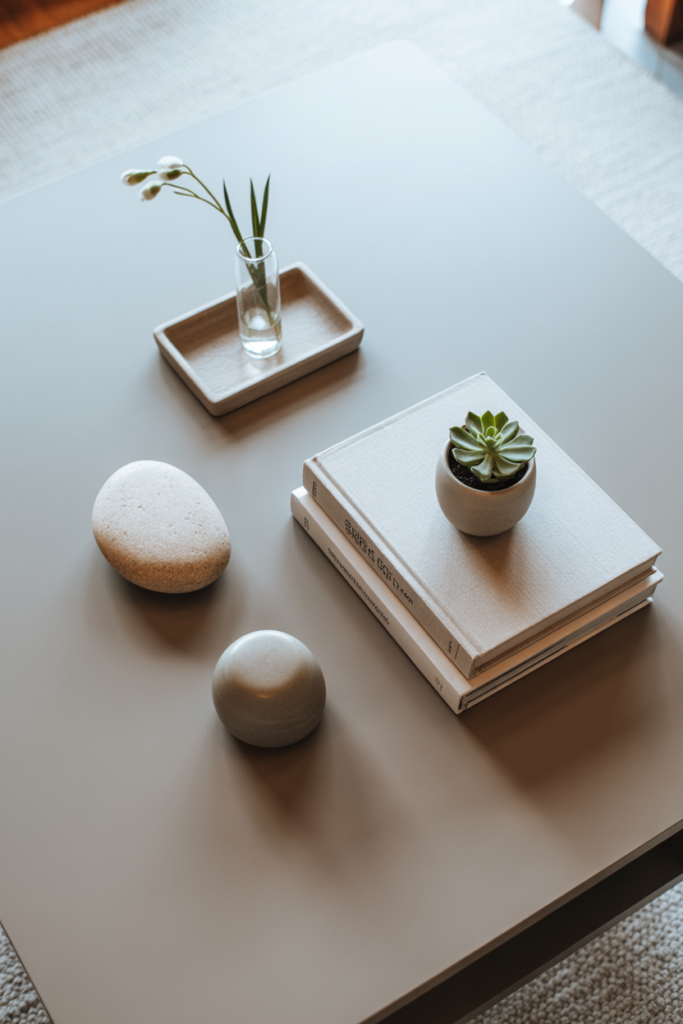
The most beautiful rental I ever walked into didn’t have expensive furniture or perfect bones. It had warmth. It had a person’s eye behind every small choice. The space said someone lives here who knows what they love. You don’t need to own a home to feel at home — and maybe the practice of making somewhere beautiful with constraints is what teaches you your own taste better than anything else. What would you do with a blank magnolia box if you knew it didn’t have to be permanent to be worth caring about?