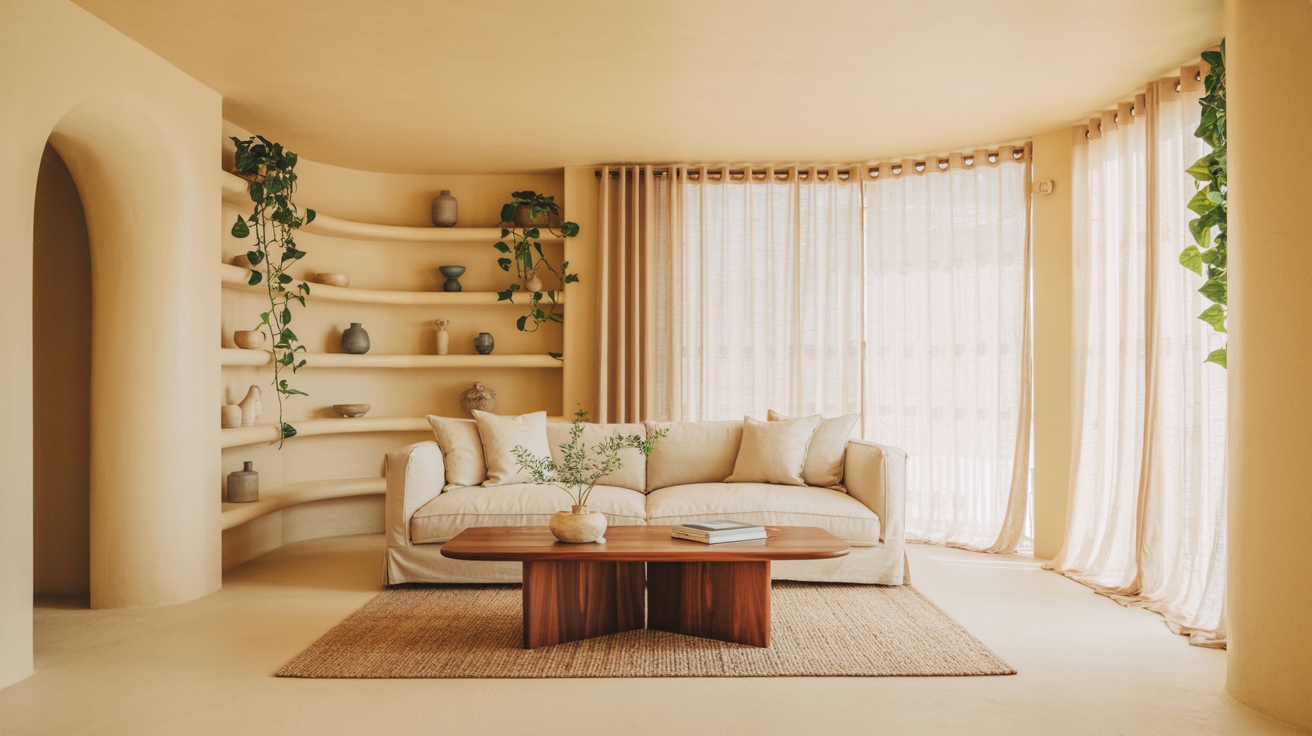
The Small Living Room That Feels Bigger Than It Is (And Exactly How to Get There)
You walked into someone’s apartment once — a studio, maybe, or a one-bed in the city — and it felt impossibly good. Airy. Thoughtful. Like every single thing had a reason for being there. Then you came home to your own small living room and wondered what they knew that you didn’t.
They knew a few things. And now so will you.
—
1. The Furniture Mistake Almost Everyone Makes in a Small Room
Most people think small room means small furniture. It’s the most logical conclusion in the world — and it’s wrong.
A living room full of tiny, scaled-down pieces doesn’t read as “cozy and curated.” It reads as “waiting room at a dentist’s office.” Everything looks apologetic. Like the room is embarrassed by itself.
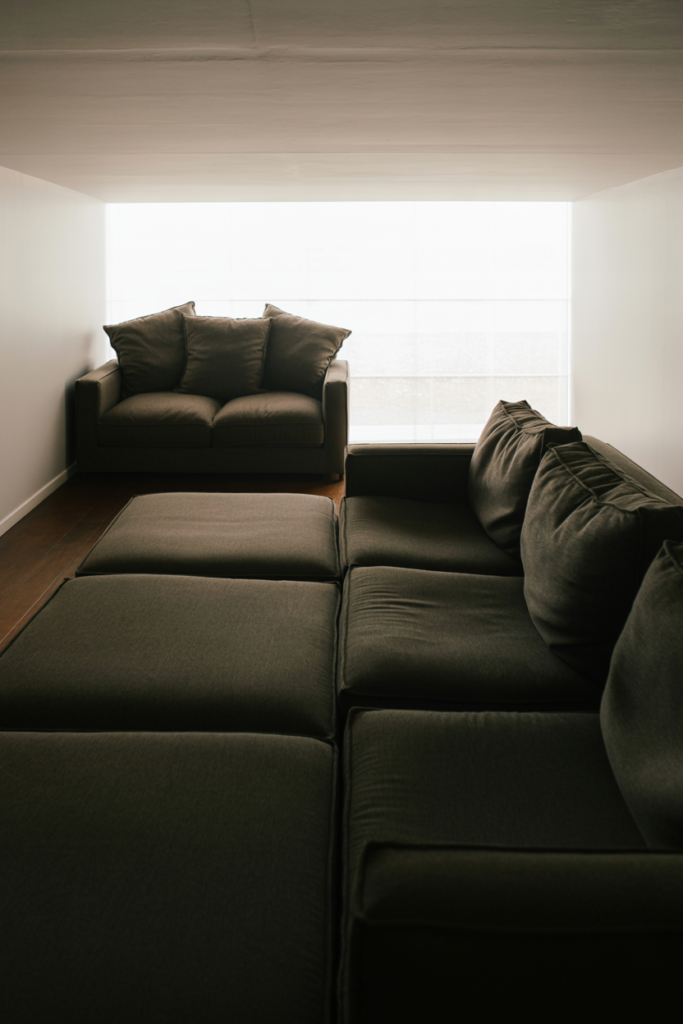
What actually works is the opposite principle: one or two larger, confident anchor pieces, and then breathing room around them. A proper sofa — a full-sized one, not a loveseat that looks like it’s been shrunk in the wash — can make a small living room feel complete rather than cramped. The trick is to choose pieces with clean lines and visible legs. Legs matter more than you think. When furniture floats above the floor, the eye can travel underneath it, and that travel reads as space. A sofa with low, stubby legs or — worse — one that sits flush to the floor creates a visual block. Lift it up, even two or three inches, and watch the whole room exhale.
The one piece to genuinely scale down: the coffee table. Go lower, go lighter, or go glass. Or skip it entirely and use a stack of books with a tray on top.
“Your furniture doesn’t need to be small. It needs to be intentional.”
—
2. The Color That Keeps Showing Up in Every Beautiful Small Living Room Right Now
It’s not white. Or rather, it’s not only white.
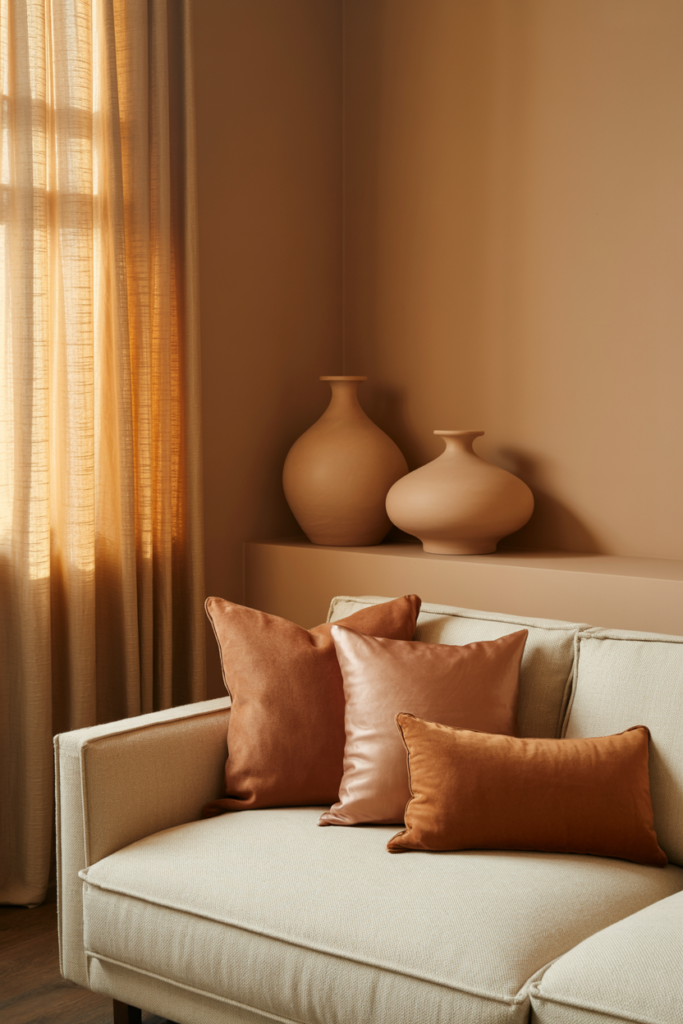
The rooms that are stopping people mid-scroll lately are doing something more interesting. They’re committing to a single deeper tone — a dusty sage, a warm terracotta, a soft biscuit — and using it everywhere. Walls, trim, even the ceiling. The technique is called color drenching, and what it does in a small space is genuinely clever: when you remove the contrast between wall and ceiling and baseboard, the eye can’t measure where the room ends. The space feels less bounded. Less like a box.
White walls can actually make a small room feel smaller. They bounce light, yes — but they also throw every corner and angle into stark relief. Every inch of that 12-by-14-foot room is now visible and measured.
A room painted in a soft, chalky sage from floor to ceiling? The boundaries soften. The proportions become mysterious in the best possible way.
In the US, Benjamin Moore’s Pale Smoke and Sherwin-Williams’ Accessible Beige are doing quiet, beautiful work in small spaces. In the UK, Farrow & Ball’s Mole’s Breath and Little Greene’s Aged White are having a serious moment. None of them are white. None of them are trying to be.
—
3. Why Your Lighting Situation Is Working Against You
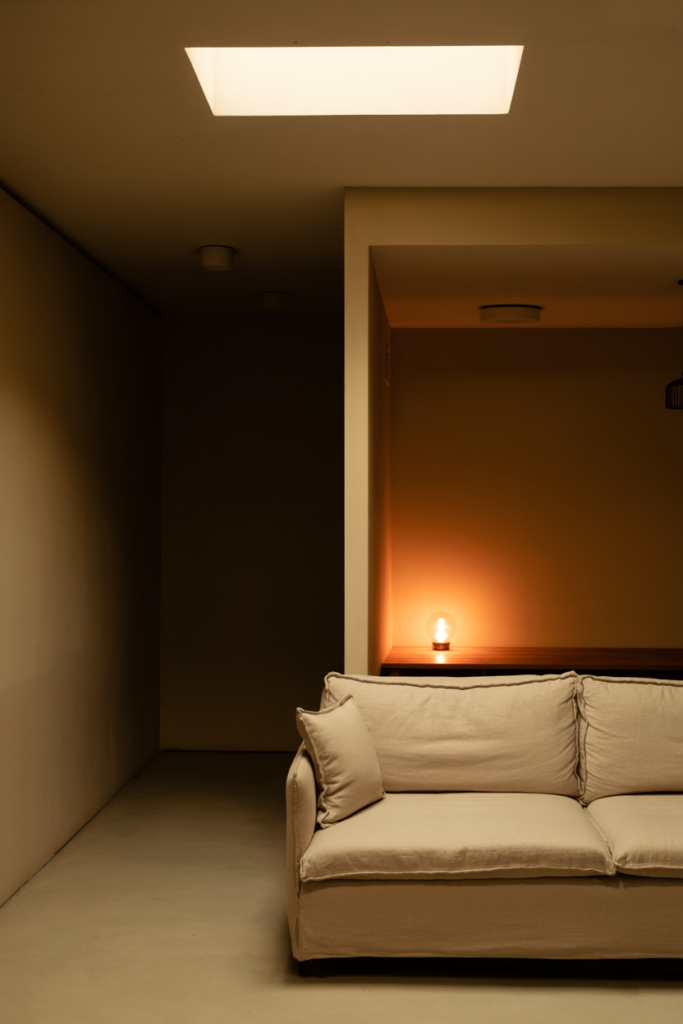
If your small living room is lit by one overhead fixture, that’s the problem. Right there. One light source, usually positioned in the dead center of the room, flattens everything. It throws equal light on every corner, eliminates shadow, and makes the space feel institutional.
Layer the light instead.
The amber glow of an Edison bulb at 7pm in the corner of a room does more for atmosphere than any overhead fixture ever could. Place a floor lamp behind the sofa. Put a small table lamp on a shelf or a side table. If you have a fireplace — even a decorative one — candles in the hearth add a third layer. Three light sources minimum, none of them the overhead. The overhead becomes the backup, the thing you turn on when you’re cleaning, not when you’re living.
In terms of bulb temperature: 2700K is warm and amber, which is what you want for evenings. 3000K is slightly cooler, still warm but better for reading. Anything above 4000K starts to feel like a supermarket, and no one wants that in their living room.
Wall sconces are an underused option in rented apartments because people assume they require hardwiring. They don’t. Battery-operated plug-in sconces exist, they look beautiful, and they can be hung with removable hooks.
—
4. The Layout Rule That Makes Any Small Room Feel Deliberate
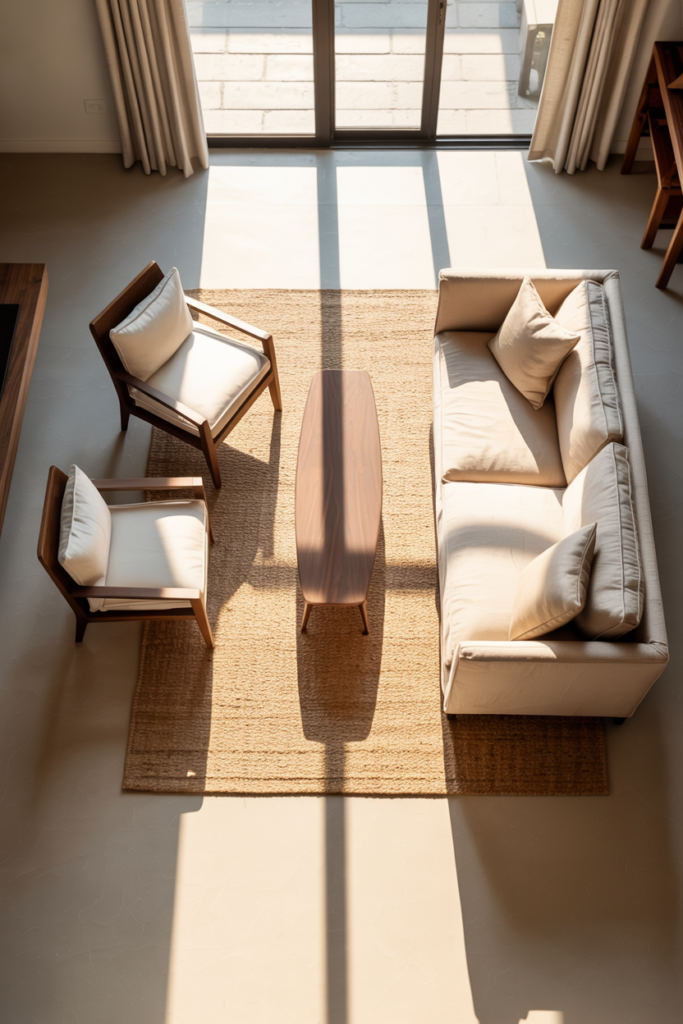
Push the furniture away from the walls.
This is the one instruction most people ignore because it sounds counterintuitive. In a small room, you want to press everything against the edges to maximize the center space, right? But what that actually creates is a room that looks like the furniture is trying to escape. Everything clinging to the walls, a void in the middle, and a space that reads as incomplete.
Pull the sofa six to twelve inches away from the wall behind it. Float it. Create a moment of negative space between the sofa back and the wall. This single change makes the room look like someone designed it, rather than someone just moved into it.
“The gap between the sofa and the wall is where a room starts to look designed.”
If you have a console table, tuck it directly behind the sofa. Lamp on top, books or a plant below. That narrow strip of wall behind the couch becomes a layered moment instead of dead space.
Group furniture toward the center of the room in conversational clusters rather than spreading it across every wall. It makes the room feel like a place that has a purpose, rather than a corridor with seating.
—
5. The Mirror Placement That Actually Works (Not the One You’re Thinking Of)
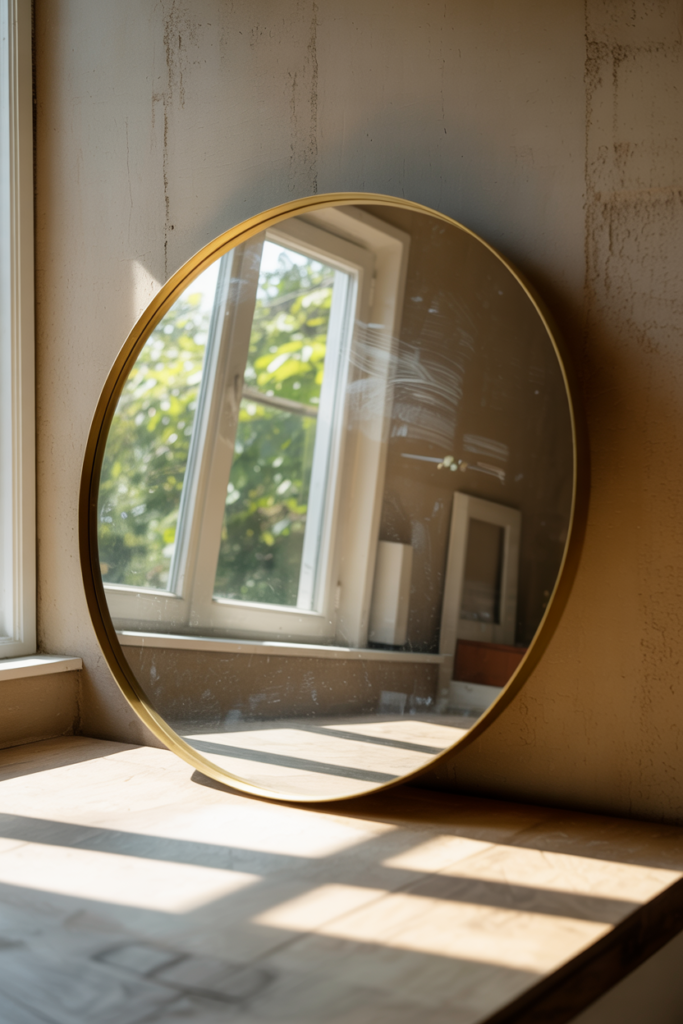
Mirrors in small spaces — everyone knows this trick. But most people do it wrong, and wrong mirrors don’t open up a room; they just reflect back the most cluttered corner of it.
The rule: a mirror should reflect something beautiful. Before you hang it, stand where the mirror will be and look at what it’ll face. Does it face a window? Perfect — it’ll bring natural light deeper into the room. Does it face a lamp? Also good. Does it face a pile of coats by the door or the back of your television? Don’t put a mirror there.
Large, single mirrors work better than collections of small ones in a small space. A floor-length leaner mirror propped against the wall is one of the most effective things you can put in a cramped living room — it reads as architectural rather than decorative, it doesn’t require hanging, and in a rented flat or apartment it moves with you.
Arched mirrors are everywhere right now and they earn their popularity. The rounded top softens hard corners and adds a sculptural quality. In a rental with zero architectural detail, an arched mirror can do a remarkable amount of visual work.
—
6. What Your Shelving Is Actually Doing to the Room
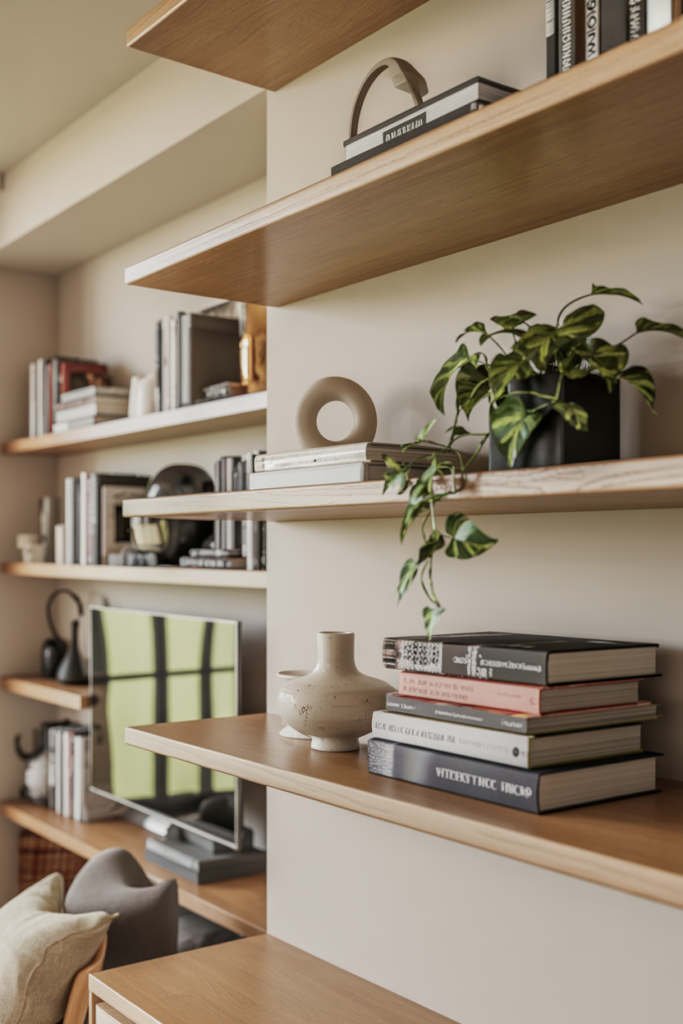
Shelving in a small living room is a non-negotiable. The floor space you don’t have, the walls have it. Going vertical is the small-space principle that genuinely changes the game.
But here’s where people lose the thread: they fill every shelf to maximum capacity. Every available inch occupied. A small shelf above the sofa becomes a graveyard of miscellaneous objects — books, a candle, a random picture frame, a succulent that’s seen better days, a pair of headphones, a remote control.
Edit ruthlessly. Shelves in a small space should be about sixty percent full. The other forty percent is air. That air is doing as much work as the objects. It’s the pause between sentences that makes the sentence land.
Group items in odd numbers — threes and fives — and vary the heights. A tall vase next to a short stack of books next to a single candle reads as intentional. Three objects of identical height reads as a row, which is decoration’s version of a list.
For floating shelves, go all the way to the ceiling if you can. Shelving that stops at head height chops the room. Shelving that rises to the ceiling draws the eye up, suggests height, and turns a utilitarian necessity into something that looks like it belongs in a library.
—
7. The Plants That Work Hardest in a Small Space (And Where to Put Them)
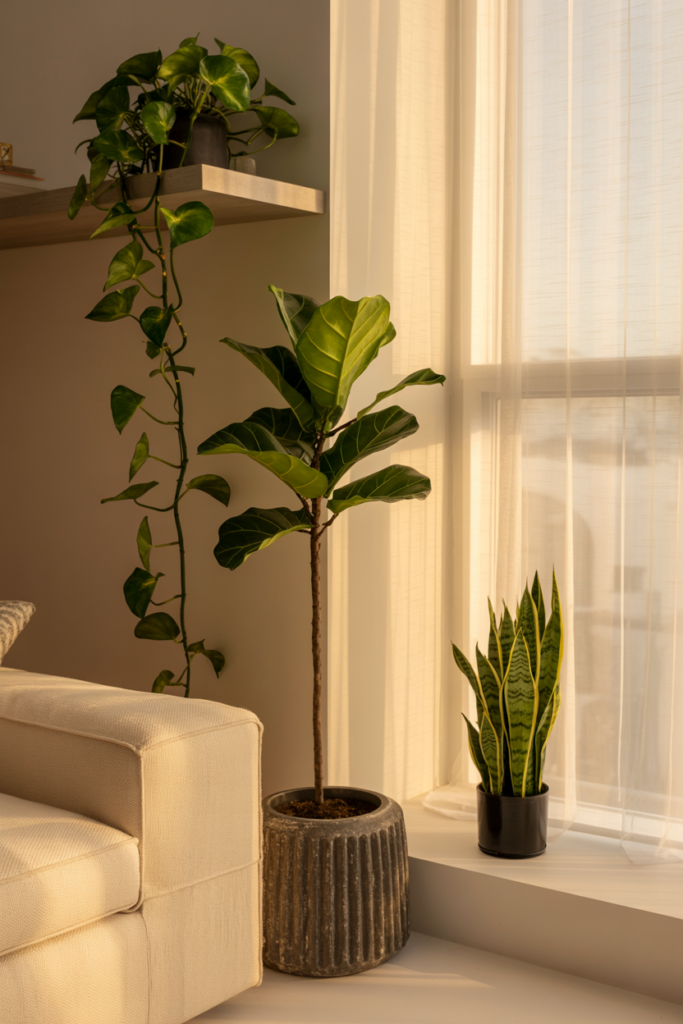
A plant in the corner of a small living room is one of those things that works on two levels simultaneously. Visually, a large plant — a fiddle leaf fig, a monstera, a tall snake plant — fills vertical space without using any floor footprint that matters. Psychologically, it adds life to a room in a way that nothing manufactured quite manages to replicate.
The placement matters more than the species. A plant in the corner behind the sofa anchors the seating arrangement. A trailing plant on a high shelf adds a softness to the vertical lines of the shelving. A single sculptural plant on a side table acts as the living room’s version of a statement piece.
“One really good plant does more for a small room than five mediocre ones.”
Don’t cluster all your plants together — that’s for gardens. In a small living room, spread them to create rhythm across the room. One tall plant in the far corner. One trailing plant up high. One small potted thing on a surface. Three points of green, spread across the room, and suddenly the room has movement without clutter.
If your small living room has limited natural light, pothos, ZZ plants, and snake plants are practically indestructible and genuinely thrive in lower-light conditions. You don’t need a south-facing window to have beautiful plants. You need to choose the right ones.
—
8. The Rug Size That’s Probably Too Small for Your Room
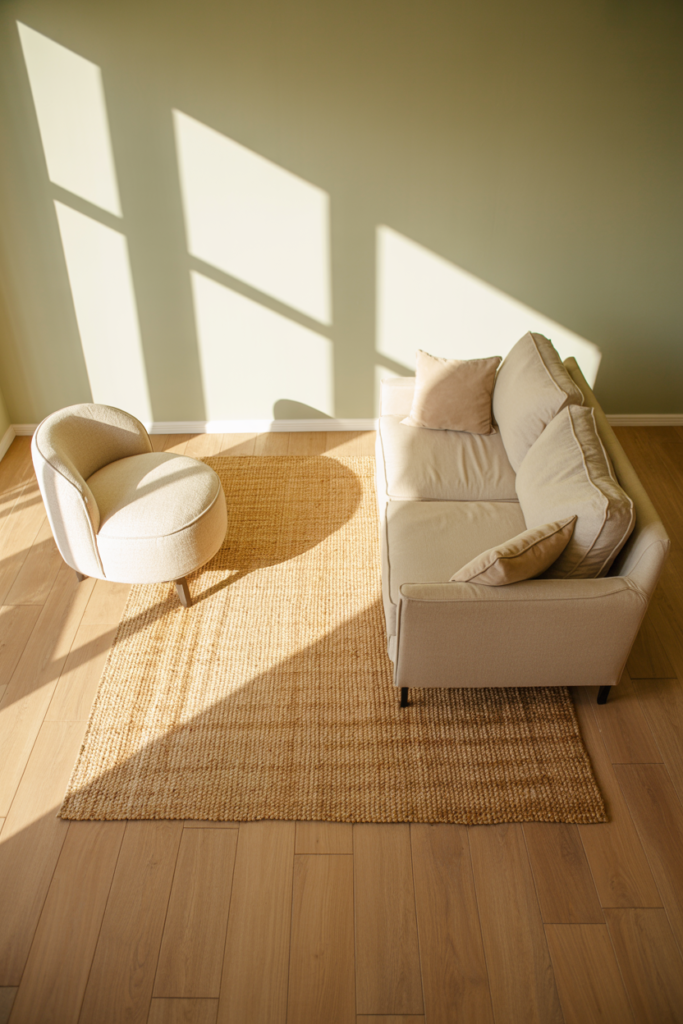
If you currently have an accent rug in your small living room that only the coffee table sits on — all four legs of the sofa off it, the armchairs off it, just a small island of pattern floating in the middle of the room — I want you to look at it and know that it’s making the room feel smaller, not larger.
This is perhaps the most common small-space decorating mistake there is, and it’s made by people who think they’re doing the right thing.
A rug should anchor the seating arrangement. The front two legs of every sofa and chair should sit on it. The coffee table should sit entirely on it. The rug isn’t a decoration; it’s the foundation of the conversation area, and it needs to be large enough to hold that area together.
In a small living room, you’re looking at a minimum of 5×8 feet, and 8×10 is better than you think it’ll be. When you lay down that large rug and pull all your furniture onto it, what happens is that the seating area becomes a room within the room — a defined, intentional zone. And when something is defined, it reads as designed. Designed reads as spacious.
—
9. The Curtain Height That Changes Everything
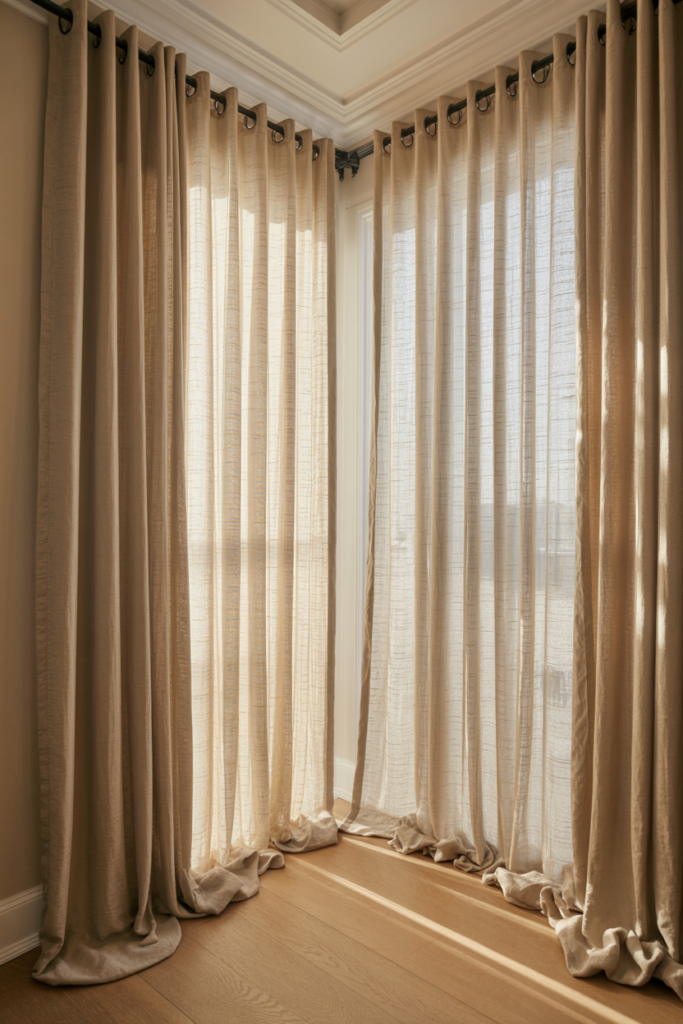
Curtains hung at window height — positioned right at the top of the window frame — are one of the most widespread and easily fixed mistakes in small living rooms.
Hang your curtains at ceiling height. Always. Even if the window stops two feet below the ceiling, the rod goes as high as it can, and the curtains fall from there to the floor. What this does is make the window appear taller than it is, which makes the wall appear taller, which makes the ceiling appear higher.
In a small flat in London or a studio apartment in Chicago, ceiling height is everything. You can’t knock down walls, but you can visually increase the height by a significant amount just by where you hang a curtain rod.
The curtains themselves: linen or cotton in a color close to the wall. The closer the curtain color is to the wall color, the more the walls and windows read as one continuous surface, which reads as width. A curtain in a dramatically different color creates a visual stop. Visual stops are the enemy of the small room.
—
10. The One Thing to Put in a Small Living Room Corner That Isn’t a Plant
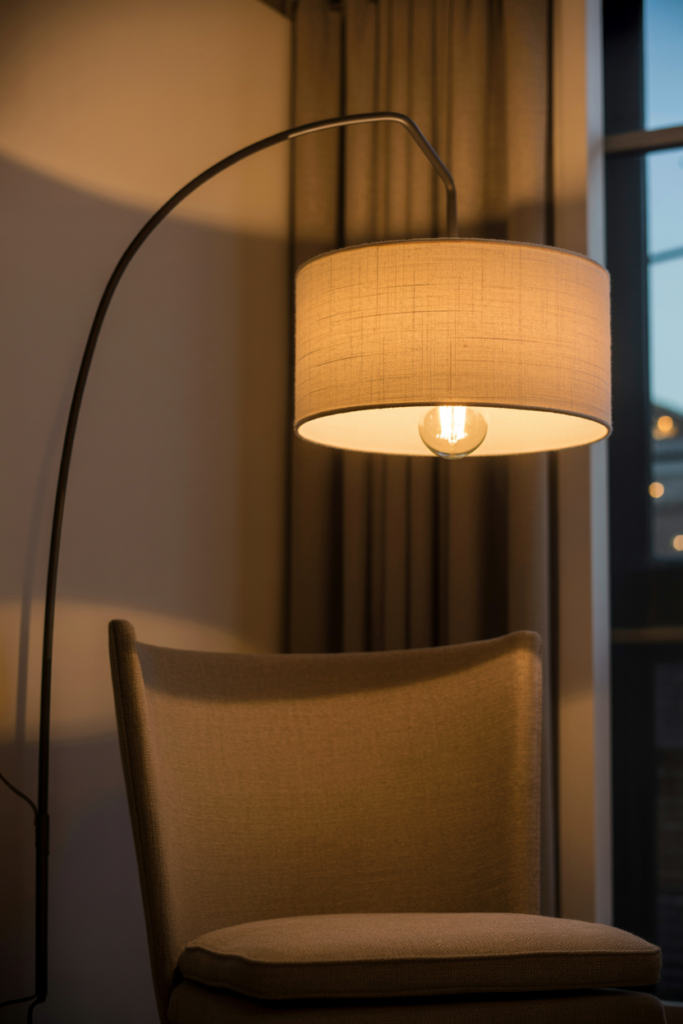
The forgotten corner is a small living room’s most underused resource. People default to ignoring it, or filling it with something functional but uninspiring — a speaker, a pile of things that don’t have a home.
The answer is a reading corner. Even in the smallest apartment.
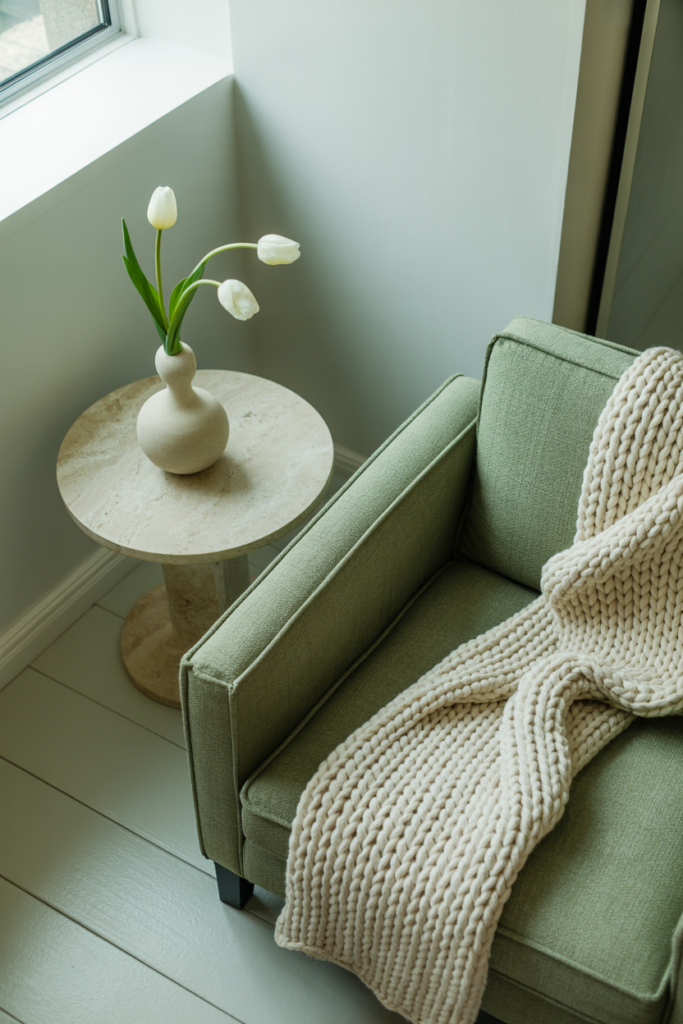
One armchair, properly scaled. A floor lamp positioned to read by. A small side table or a pouf that can hold a drink and a book. That’s it. That corner goes from dead space to the most charming spot in the room, and it’s three things total.
A well-placed reading corner does something emotional to a small living room — it suggests that this is a room people actually live in, not just pass through. It has aspiration. It has an invitation built into it. Every time someone enters the room, their eye goes there and some part of them thinks: I’d like to sit there.
That feeling, in a small space, is worth more than square footage.
—
11. Why the Room Feels Cluttered (Even When It’s Clean)
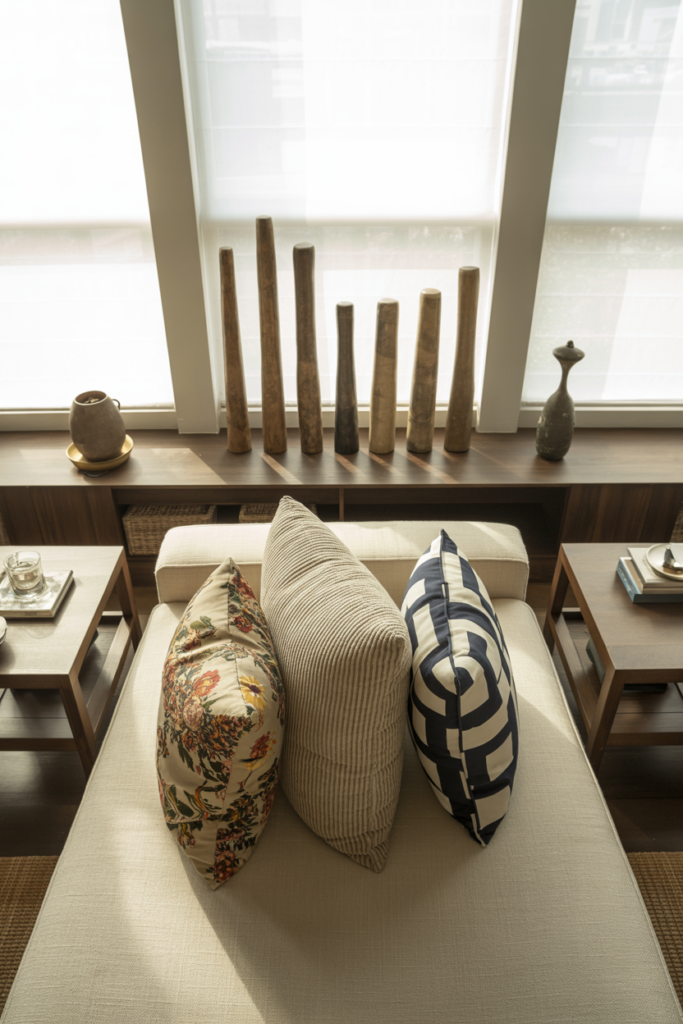
A small living room can feel chaotic not because of mess but because of visual noise. Too many competing colors, too many patterns, too many small objects scattered across surfaces — all of it adds up to a room that exhausts the eye.
The fix isn’t minimalism. It’s cohesion.
Choose a palette of three, maximum four, colors and don’t introduce anything outside of it. This sounds restrictive and in practice feels freeing. When everything belongs to the same family of color and tone, the room relaxes. The eye has somewhere to settle.
Pattern should appear in one place only — the throw pillow fabric, or the rug, or the curtains, but not all three simultaneously. One pattern, done well, reads as intentional. Three patterns in a small room read as a disagreement.
Hide the wires. This sounds obvious but it’s stunning how much a single visible cable snaking from the TV to the wall can undercut everything else you’ve done. Cable channels, cable boxes, strategic placement of a plant or a book — whatever it takes.
—
12. The Small Details That Make a Small Room Feel Like Yours
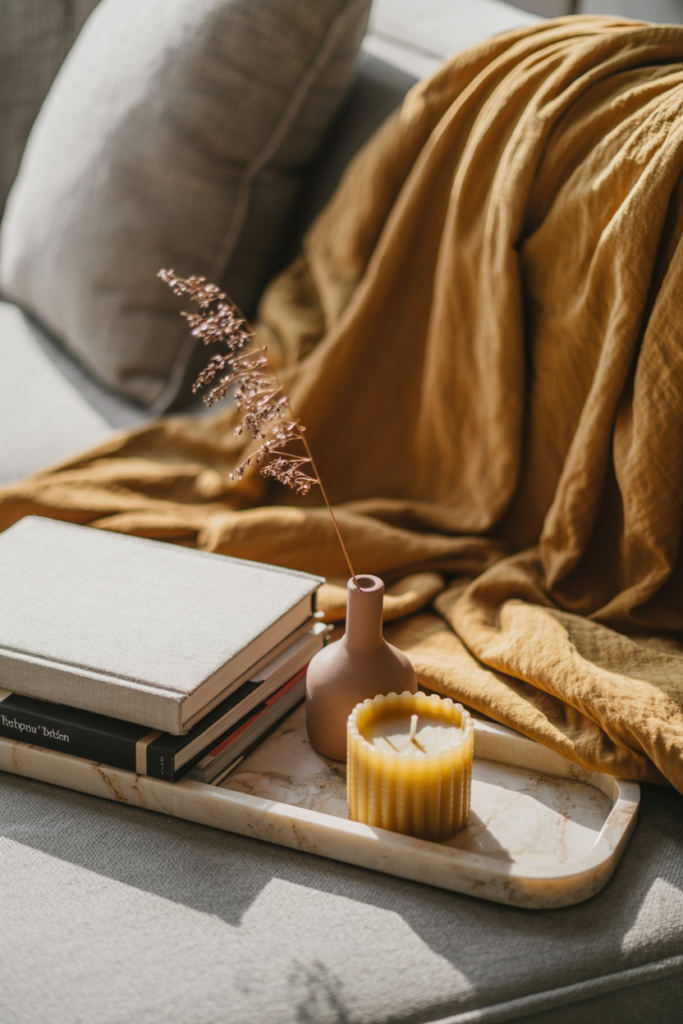
Here’s the part no one talks about: a room can follow every rule in the book and still feel like it belongs to no one.
The things that make a small living room feel inhabited — feel loved — are the specific and personal. The stack of books you’re actually reading, not an artfully staged tower of coffee-table books with the spines turned out. The blanket that you actually pull over yourself in November. The photograph on the wall that means something.
The rooms that stop you mid-scroll on Pinterest are never just technically correct. They have a quality that’s harder to name — a sense that someone actually lives there and likes their life in that space.
One or two deeply personal objects, placed with care, do more than a hundred thoughtful purchases. The postcard from a trip propped against a lamp. The vintage bowl you found at a market. The drawing your kid did that you had framed because you genuinely love it.
Small rooms reward specificity. They’re too intimate for generic. And in that intimacy, in that specificity, they become something that couldn’t exist anywhere else — which is, in the end, exactly what you want.
—
🌿 Quick Tips
Get the rug size right before you buy anything else — it sets the proportions for everything. A 5×8 is your minimum; an 8×10 is usually better than you expect. Test curtain rod height by hanging them at the absolute top of the wall for one evening and see what it does to the room. Edit surfaces to sixty percent full and add only what means something to you. Invest in at least three separate light sources and turn the overhead off by 6pm to see what your room is actually capable of. Use the same color throughout — walls, trim, ceiling — in one soft, chalky tone, and watch the room stop looking like a box.
—
❓ FAQ
Q: How do I make a small living room look bigger without repainting or redecorating entirely? A: Start with two things that cost almost nothing to change: move the furniture away from the walls and swap out your rug for a larger one. Both changes are reversible, both take an afternoon, and together they can make a room feel noticeably more spacious and considered without touching a single wall.
Q: What’s the best sofa style for a small living room? A: Look for a sofa with visible legs, clean lines, and a low-to-medium back height. Avoid sectionals unless the room is at least 12 feet wide — most small spaces can’t absorb a sectional without the sofa becoming the entire room. A two- or three-seater in a mid-century or modern silhouette tends to do the most work in a compact space.
Q: Can I use dark colors in a small living room without making it feel even smaller? A: Yes, and when done well, dark colors can make a small room feel intimate and rich rather than cramped. The key is to use the color on every surface — walls, ceiling, trim — so the eye reads the room as a continuous space rather than measuring each corner. Pair it with warm, layered lighting and at least one large mirror facing a window.
—
💭 Final Thought
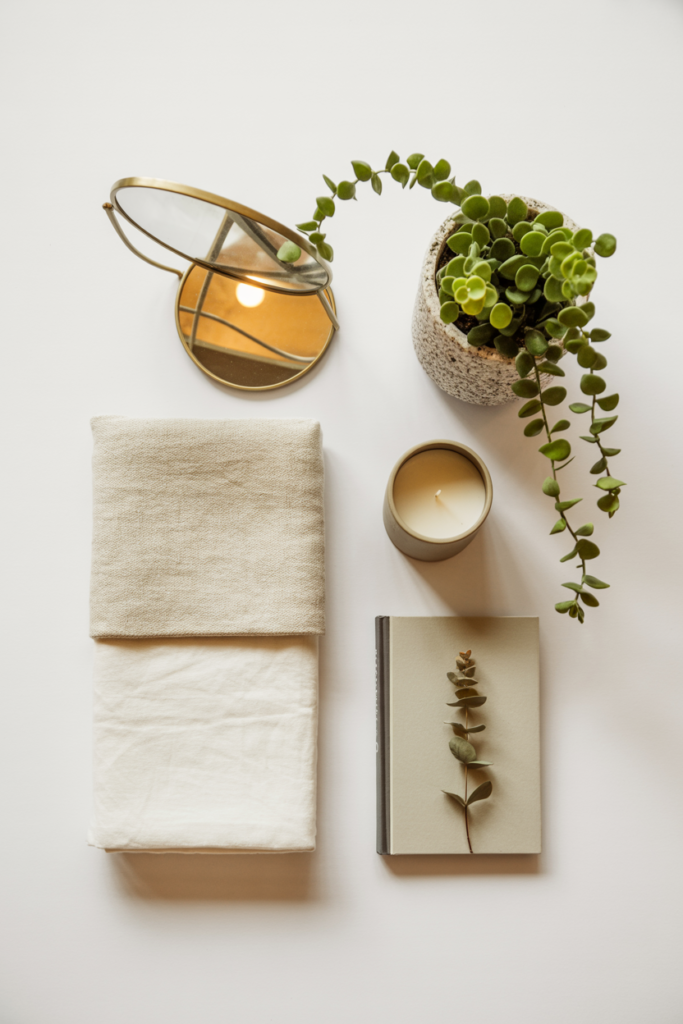
Small rooms have something large rooms rarely do: a sense of purpose. Every object matters more, every choice is amplified, and when it works — when the light is soft and the furniture is placed just right and there’s a plant in the corner doing exactly what it should be doing — it feels like the most complete and deliberate room in the world. The best small living rooms don’t apologize for what they aren’t. They commit entirely to what they are.
What’s the one thing in your small living room that you’ve been meaning to change — and what’s been stopping you?