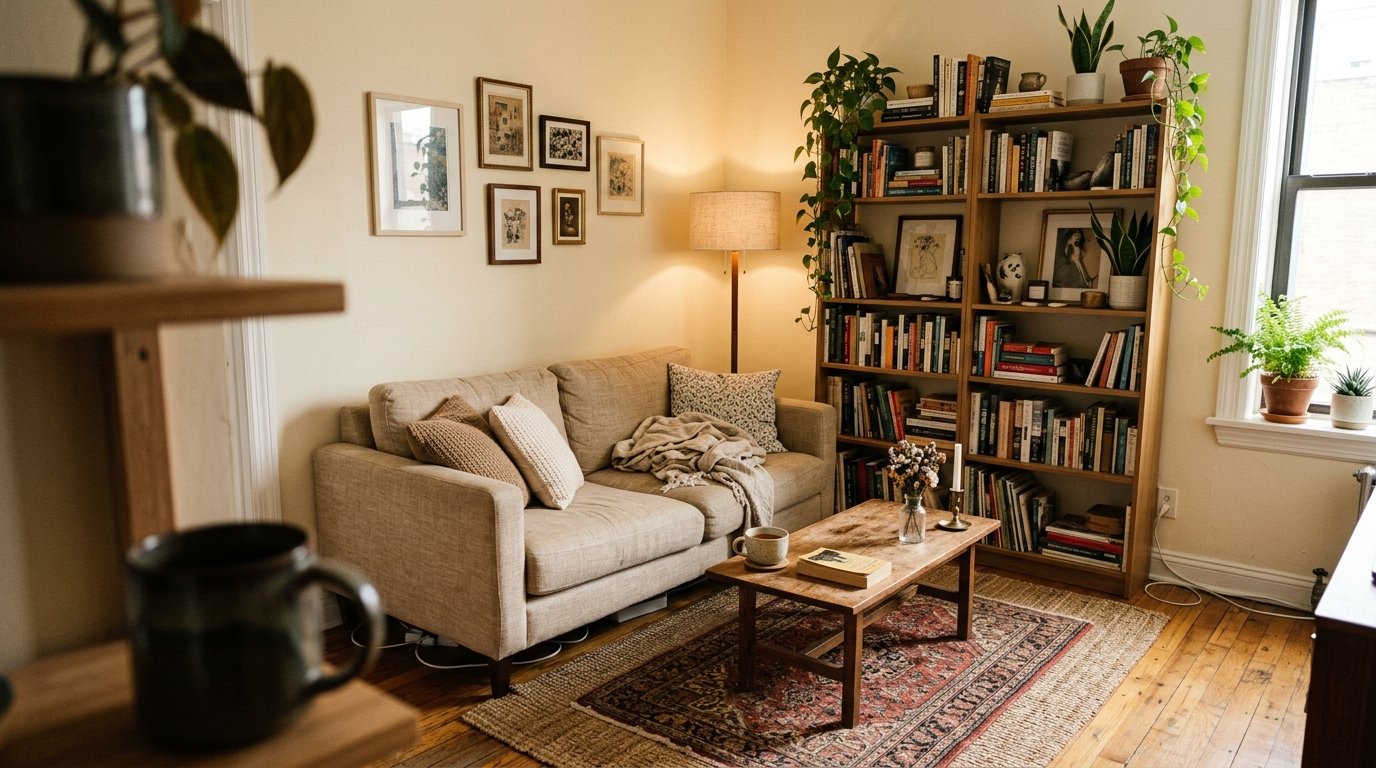
The Small Living Room Glow-Up That Doesn’t Require Knocking Down a Single Wall
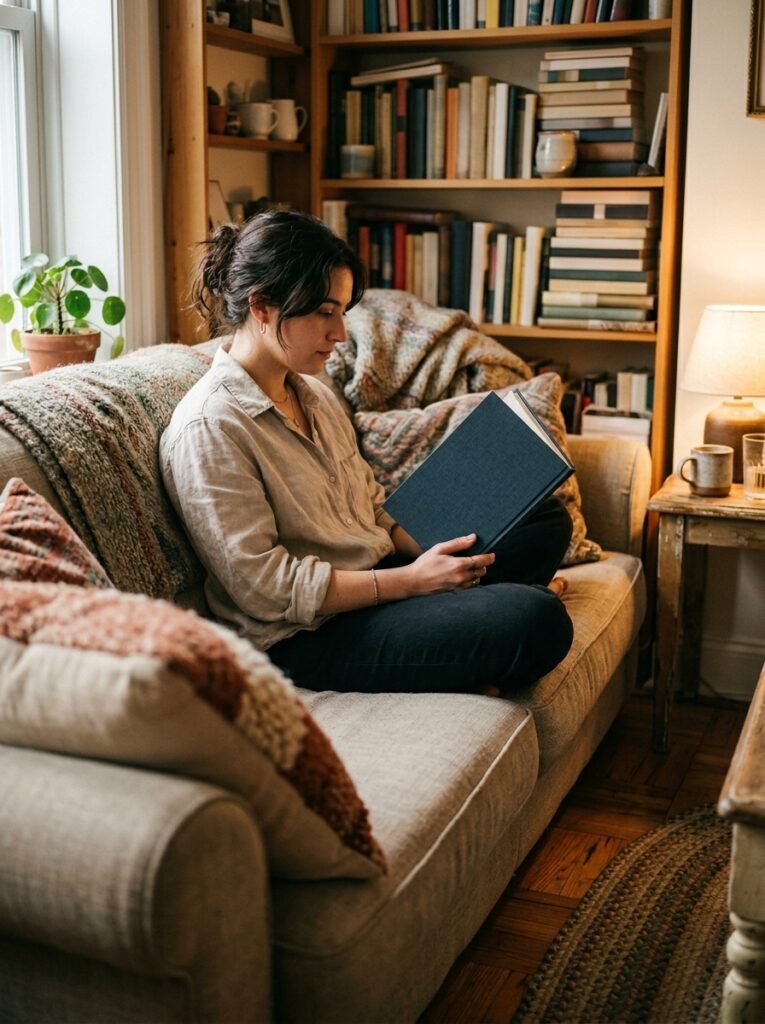
You moved in, stood in the middle of the room, and thought: this is everything I have to work with. Maybe it’s a Brooklyn studio with windows that face a brick wall. Maybe it’s a Victorian terrace flat in Manchester where the front room doubles as a dining room and a home office and your general life headquarters. Either way, small doesn’t have to mean compromise. It just means you have to be smarter — and honestly, more intentional — than everyone else.
—
1. The Mirror Trick That Every Designer Uses and Almost Nobody Does Right
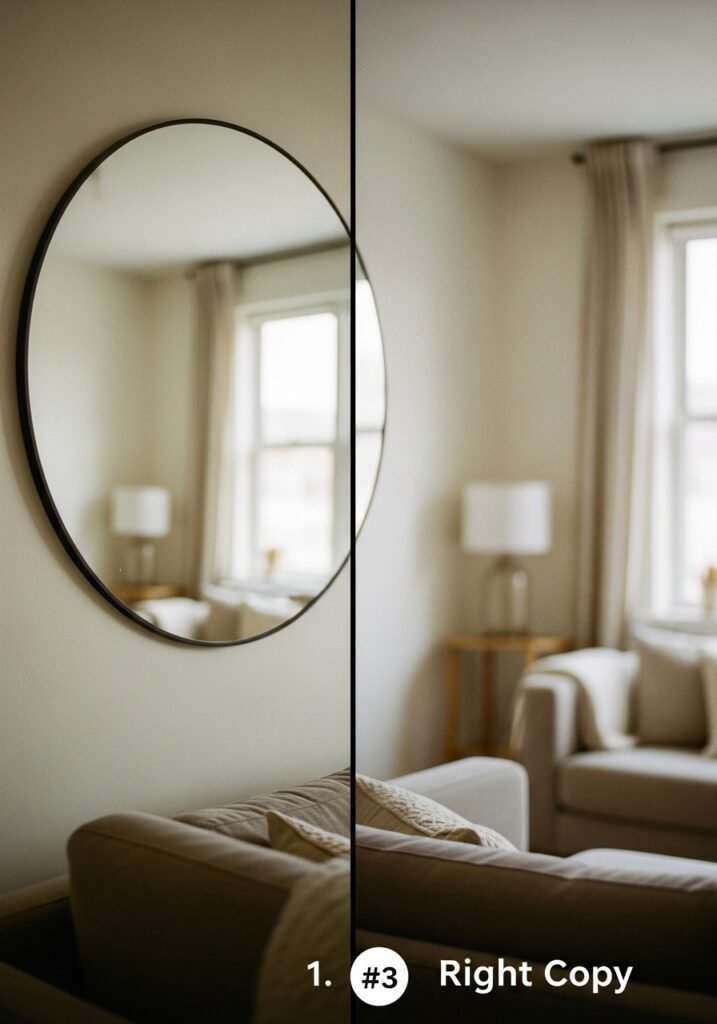
Mirrors are the oldest small-room trick in the book, and people still get them wrong. A small mirror hung at eye level on a random wall does almost nothing. What you’re after is scale, placement, and a little bit of theater.
A large mirror — we’re talking at least 24 by 36 inches, ideally bigger — placed opposite your main light source is what actually changes the room. It bounces light from one end to the other and creates the convincing illusion that there’s more space behind you than there is. Lean it against the wall instead of hanging it and it immediately feels intentional, not desperate.
The mistake most people make is choosing a mirror that’s decorative first and functional second. A gorgeous antique gilt frame that’s the size of a dinner plate is lovely. But a simple, oversized arched mirror that reaches from hip height to just below the ceiling? That’s the one that makes your guests stop and think the room is bigger than it is.
In UK homes especially, a mirror above a fireplace is practically tradition — but push it. Go wider. Go taller. Let it do real work.
“The right mirror doesn’t just reflect the room. It convinces you there’s more of it.”
—
2. The Color That Keeps Showing Up in Every Beautiful Small Living Room Right Now
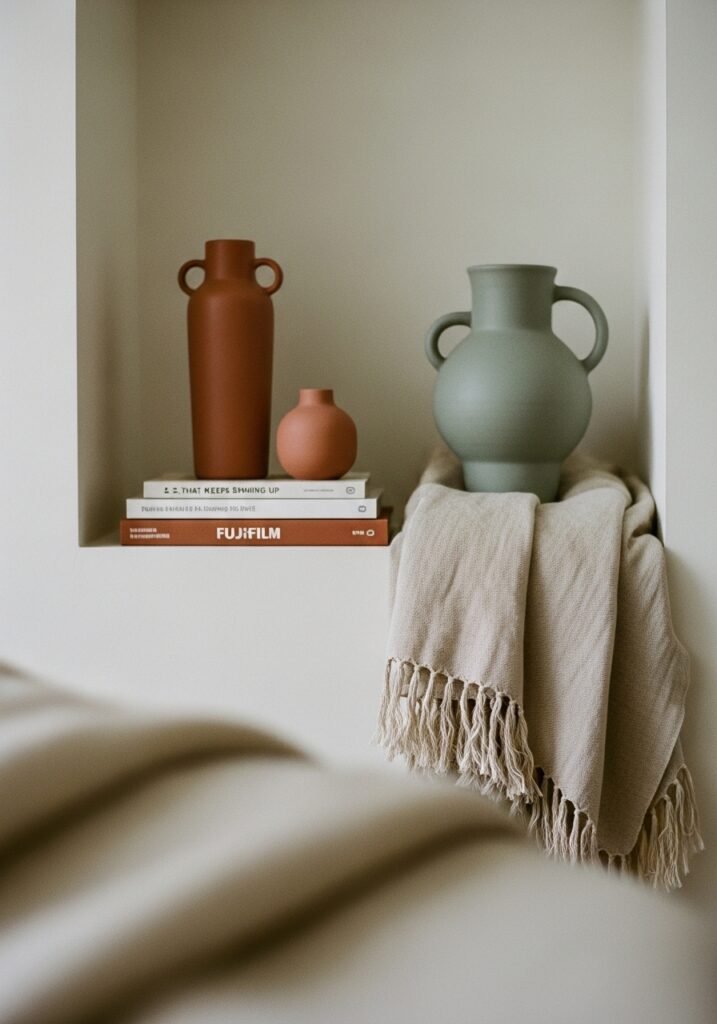
It’s not white. Everyone thinks it’s white — that painting everything bright and airy will open up a small room — but the rooms that actually photograph beautifully, the ones that feel like somewhere you’d want to spend a Sunday afternoon with a book and a good candle, tend to lean into something with a little more depth.
Right now it’s warm taupes, soft clay tones, and muted sage greens. In the US, you’ll see a lot of Benjamin Moore’s Pale Oak and Edgecomb Gray doing heavy lifting in small apartments. In the UK, Farrow & Ball’s Elephant’s Breath and Mole’s Breath are practically a design shorthand at this point — and for good reason.
The logic is counterintuitive but real: a slightly deeper, warmer tone makes the walls feel like they belong there. It wraps the room around you instead of exposing every corner and imperfection. It makes the space feel deliberate.
Paint the trim the same color as the walls and the whole room softens and expands. This is called a tonal room and it’s one of the most effective things you can do in a small space without spending more than the cost of a few tins of paint.
—
3. Why Your Sofa Might Be the Actual Problem (And How to Fix It Without Replacing It)
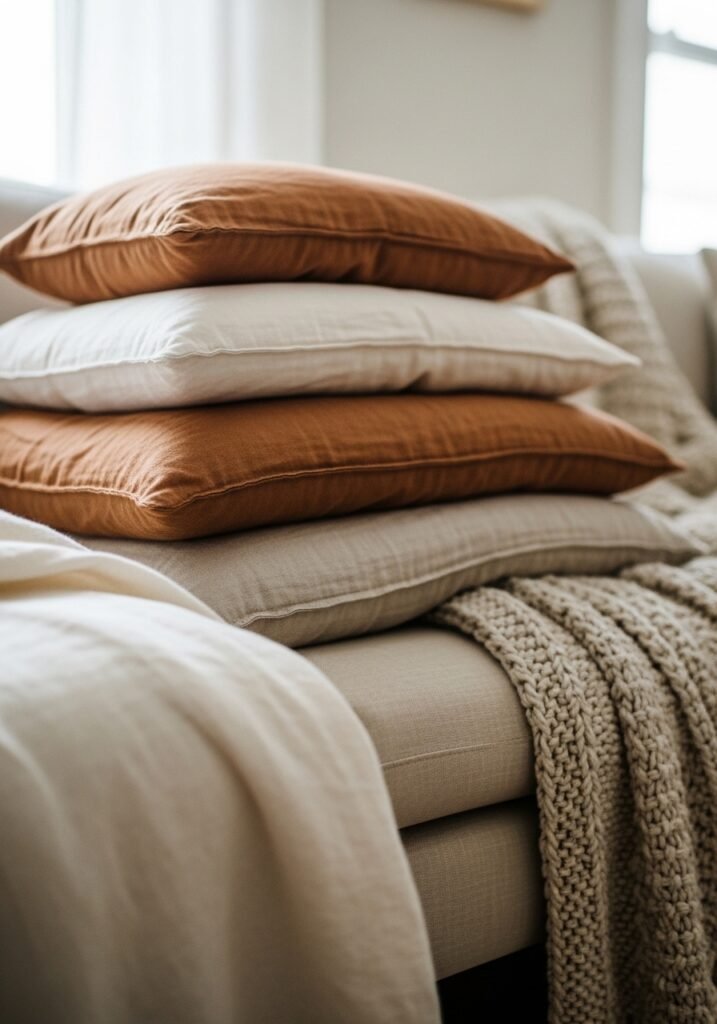
In most small living rooms, the sofa is too big, too dark, and pushed too hard against the wall. All three of those things are making your room feel smaller.
Too big is obvious. If your sofa takes up more than half the length of the longest wall, it’s dominating the room in a way that feels oppressive rather than comfortable. If you’re not ready to replace it, slipcovers in a lighter linen or cotton can do a surprising amount of work. Pull it six inches away from the wall — yes, really — and the room immediately feels less crammed.
Dark upholstery absorbs light. In a large room, that’s sometimes exactly what you want. In a small room, it creates a visual anchor that your eye keeps returning to, which makes everything feel compressed.
The pull-from-the-wall advice sounds backwards, but interior designers swear by it. That small gap creates depth, makes the sofa look like it was placed with intention, and stops the room from feeling like furniture was just shoved wherever it would fit.
A low-profile sofa — think clean lines, visible legs, nothing taller than about 32 inches at the back — opens up vertical space and gives the room room to breathe.
—
4. The One Rule That Makes Any Tiny Room Feel Like a Considered Design Choice
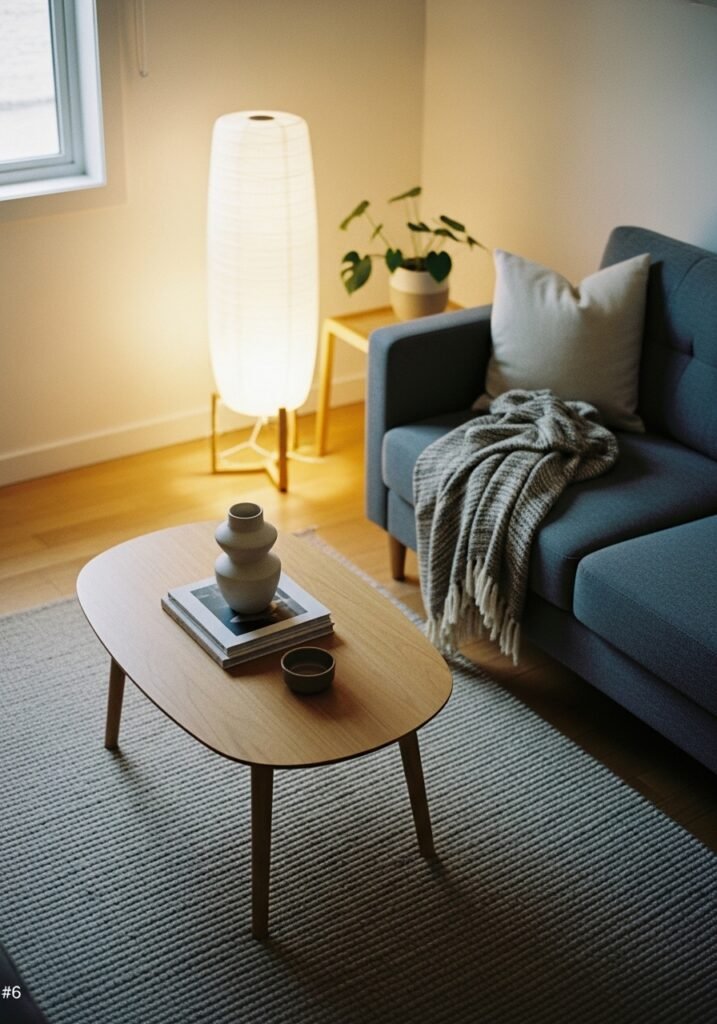
Everything touching the floor makes a small room feel chaotic.
Legs. Furniture with visible legs lifts a room visually. A coffee table on four slender legs, a sofa with a few inches of clearance, side tables that don’t go to the floor — all of it creates a sense of airiness that you feel before you can explain why.
The floor is a visual plane, and the more of it you can see, the larger the room reads. This is why those gorgeous chunky platform beds can overwhelm a small bedroom, and it’s the same principle in the living room. When you can see under a piece of furniture, your eye reads that space as part of the room rather than a blocked-off corner.
Pair this with a well-chosen rug — one that anchors the seating area without covering every square inch of floor — and you’ve defined a zone within the room, which paradoxically makes the room feel more organized and spacious at the same time.
“When you can see the floor, you feel the space. Hide the floor and the room shrinks around you.”
—
5. Lighting Layers That Make a Small Room Feel Like Somewhere You’d Actually Want to Be
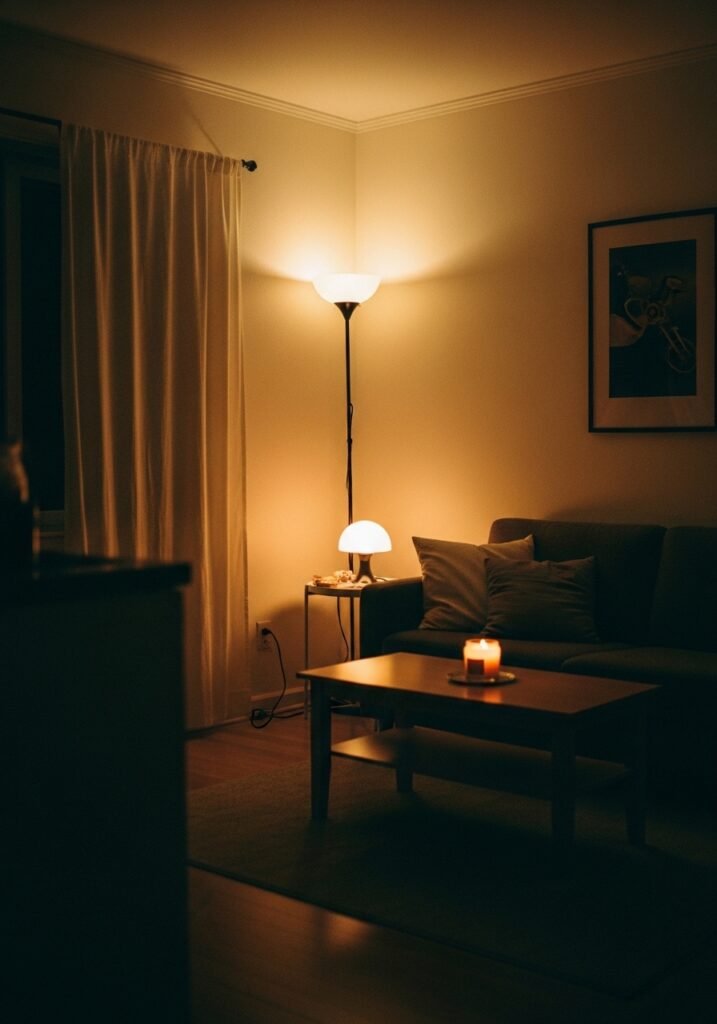
Overhead lighting is almost always the enemy of a cozy, well-designed small living room. The single ceiling light that comes with most apartments and rental flats does one thing: it illuminates everything flatly and makes the space look exactly as small as it is.
Layer it. This is non-negotiable.
A floor lamp in the corner. A small table lamp on whatever surface you have. Candles or battery-operated flame candles if you want something even warmer. Fairy lights tucked behind a bookshelf or along a windowsill. What you’re building is a room that glows from multiple points rather than one overhead source, and it changes everything.
The amber glow of an Edison bulb at 7pm on a Tuesday is not an aesthetic accident. It’s a deliberate choice that makes a 400-square-foot apartment feel like a destination.
In the US, smart bulbs like Philips Hue have made warm lighting adjustment cheaper and easier than ever. In the UK, the same products are widely available, and even a few inexpensive plug-in lamps from IKEA or Dunelm can completely rework how a room feels in the evenings.
Switch the overhead light off. Leave it off. See what happens.
—
6. The Vertical Space You’re Completely Ignoring (And How to Use It)
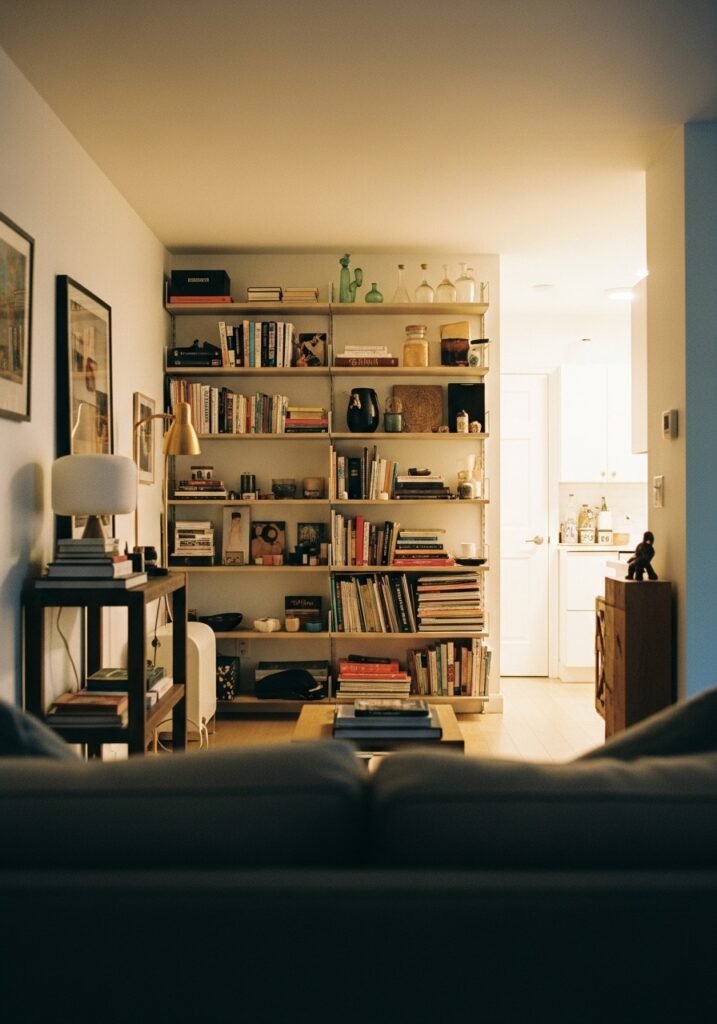
Look up. Seriously, right now, look up.
Most small living rooms have ceiling height that goes completely unused from about five feet up. And that vertical space is some of the most valuable decorating real estate in your entire home.
Tall bookshelves that run floor to ceiling don’t just add storage — they pull the eye upward and make the ceiling feel higher. One well-organized floor-to-ceiling shelf can turn a cramped corner into the focal point of the entire room.
Hang curtains high. This is the tip that gets passed around Pinterest constantly, and it’s there because it works without exception. Don’t hang your curtains at the window frame. Hang the rod as close to the ceiling as possible and let the curtains drop all the way to the floor. The window suddenly looks bigger, the ceiling looks higher, and the room feels like it was designed by someone who knew exactly what they were doing.
Wall-mounted shelves at varying heights are another way to use vertical space without taking up floor area. A few well-styled shelves — books, a plant, one or two objects that mean something — add character and storage simultaneously.
—
7. The Plant Placement Secret That Small-Room Stylists Know
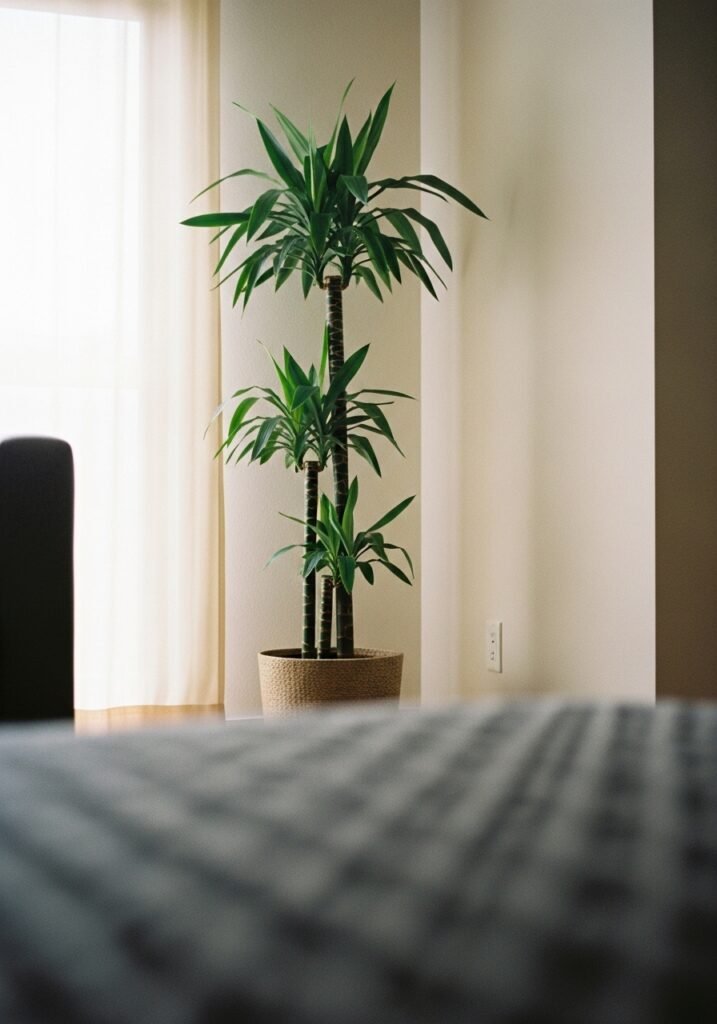
One large plant beats six small ones every single time.
Small plants scattered around a small room make it feel busier and more cluttered. One substantial plant — a fiddle-leaf fig, a monstera, a tall snake plant or a potted olive tree — acts like a piece of furniture. It has presence. It fills vertical space, brings life into a corner that might otherwise go dead, and photographs beautifully.
In UK homes where light can be more limited, low-maintenance options like snake plants (Sansevieria) or ZZ plants handle dimmer conditions without sulking. In US apartments with better light access, a monstera can fill an entire corner within a year and become the visual centerpiece of the room.
Put the large plant in a corner where it can spread slightly into the room. Give it a planter that matches your color scheme — terracotta, matte black, textured white — and treat it like furniture, because that’s what it is.
The trailing plant on the shelf is lovely. The structural plant in the corner is the one that changes the room.
“One plant that owns its corner beats a dozen that are just filling space.”
—
8. The Coffee Table Swap You Probably Haven’t Considered
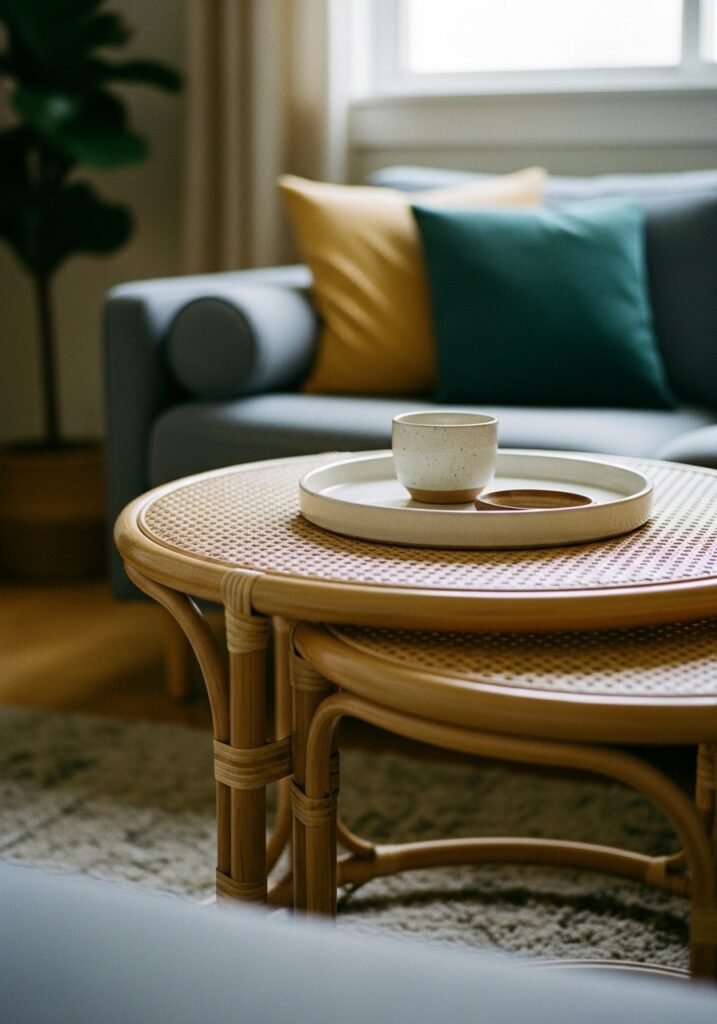
A glass or lucite coffee table in a small living room is a quiet revolution.
Because you can see through it, it takes up visual space without taking up visual weight. The room reads as less crowded. It still functions as a coffee table — you can stack books on it, put a candle and a small bowl on it — but it doesn’t block the room the way a solid wood or dark metal piece would.
Alternatively: no coffee table at all. Two small side tables flanking the sofa, each on legs, each at a usable height, can provide the same function with far less visual bulk. You get surface area, you get the airy under-table space, and you get flexibility — you can move them when you need the floor space.
Ottoman-style coffee tables with storage inside are popular for a reason, but be honest with yourself: if the top is always cluttered and the inside is packed beyond opening easily, it’s not solving the problem, it’s hiding it. A clear surface is almost always worth fighting for in a small room.
—
9. The Gallery Wall Approach That Doesn’t Make Small Rooms Feel Like a Dentist’s Waiting Room
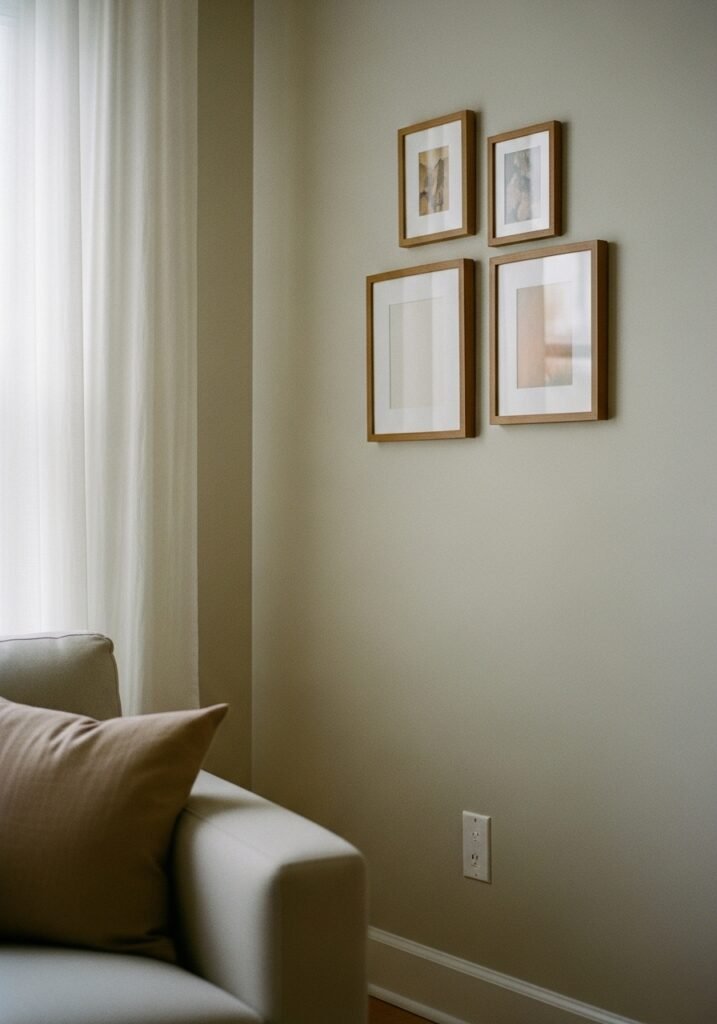
Gallery walls in small rooms can go one of two ways: curated and intentional, or chaotic and overwhelming. The difference is usually restraint.
A single large piece of art does more for a small living room than eight small pieces arranged in a grid. One bold print, one large photograph, one oversized abstract canvas — hung slightly higher than feels natural — anchors the room and becomes a focal point rather than background noise.
If you love the gallery wall format, limit it to one wall and keep it tight. Frames in the same finish (all black, all natural wood, all white) hold it together visually. Mix sizes but keep the spacing consistent and relatively tight — wider gaps make a collection feel scattered rather than composed.
In the US, Society6 and Minted offer oversized prints at reasonable prices. In the UK, desenio has become the go-to for affordable large-format art that photographs well. You don’t have to spend much. You just have to choose with confidence.
—
10. Why Two-In-One Furniture Is Worth Every Penny (If You Buy the Right Pieces)
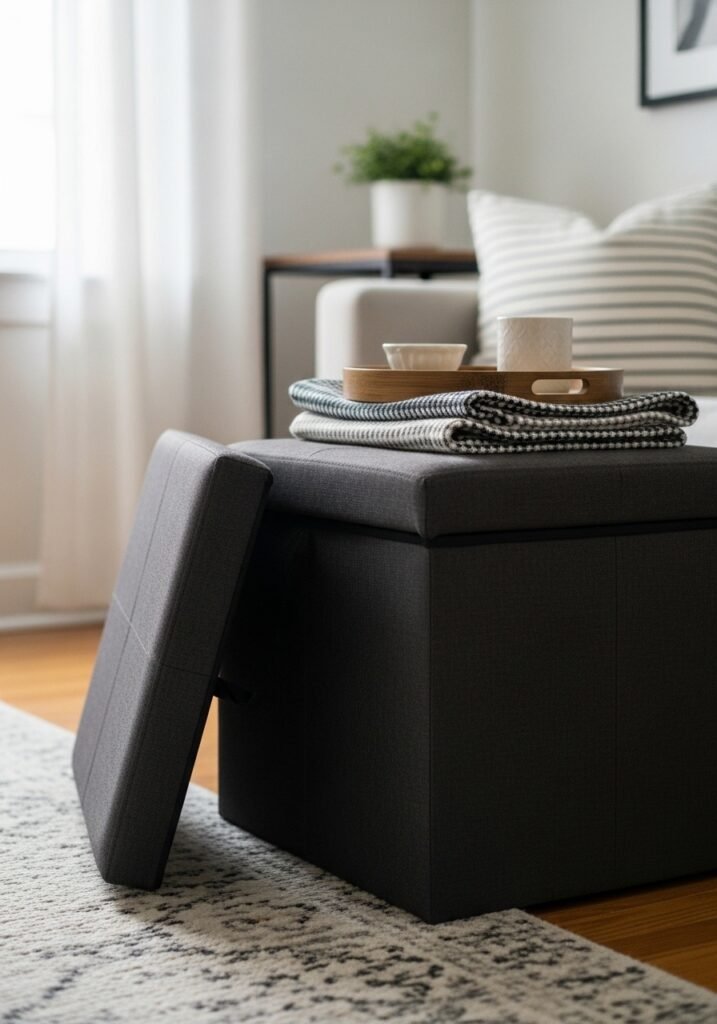
Dual-purpose furniture is either a design decision or a desperate compromise, and the difference is entirely in the quality of the piece.
A storage ottoman that also works as a coffee table and occasional seating. A console table behind the sofa that doubles as a home office desk. A bench at the end of a tiny space that provides seating and holds blankets. A nesting table set that tucks away when you need floor space and expands when you have guests.
The key is buying pieces that look like they were chosen because they’re beautiful, not because you needed to fit a quart into a pint pot. When dual-purpose furniture looks like it was designed first and functional second, it reads as clever rather than cramped.
In small US apartments, the IKEA KALLAX unit has become practically iconic as both room divider and storage system. In UK Victorian terraces where alcoves are common, built-in shelving with a window seat below is the dream that most people approximate with a bookshelf and a cushion on a chest, and honestly? That approximation usually looks great.
—
11. The Rug Size Mistake That’s Making Your Room Look Smaller Than It Is
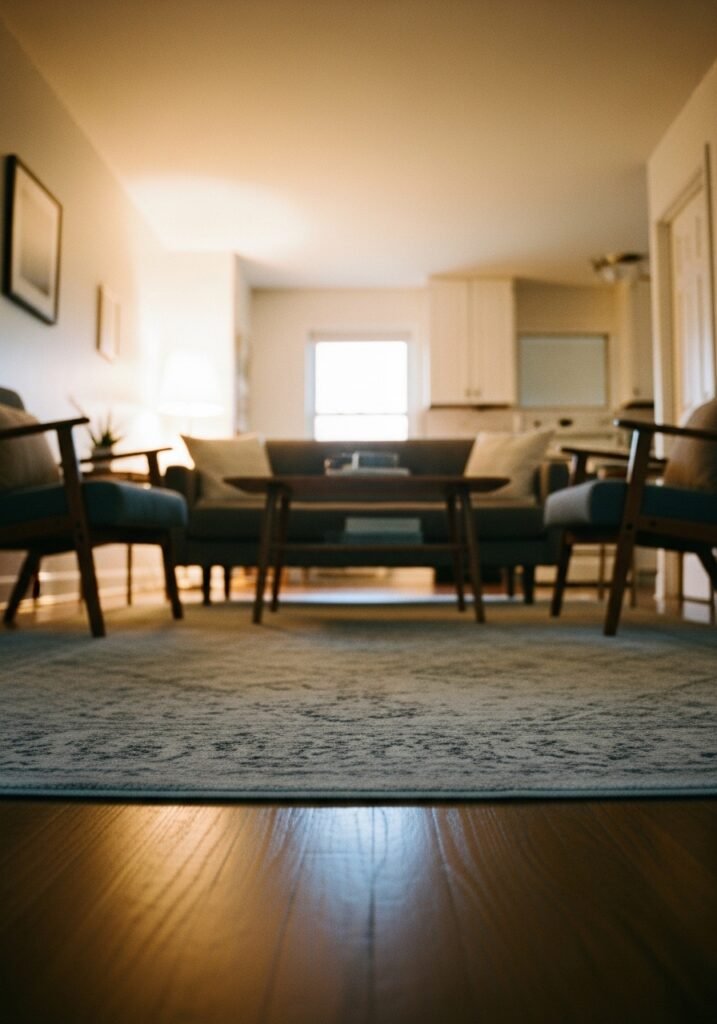
Too small. Almost every rug in almost every small living room is too small.
A rug that just sits under the coffee table, surrounded by a sea of bare floor, does the opposite of what you want. It creates an island effect — the furniture floats on a small rug while the floor extends around it, and the room looks chopped up rather than cohesive.
The rule that designers repeat constantly: in a living room, all the furniture legs — or at least the front legs — should sit on the rug. A rug that anchors the whole seating arrangement creates a defined zone and makes the room feel like one considered composition.
For a typical small living room, that usually means going up to at least a 6×9 or 8×10 rug (US sizing). In UK homes where rooms are measured in meters, you’re generally looking at 160x230cm as a starting point for a small-to-medium room.
Go bigger than you think you need. The floor will thank you.
—
12. The Styling Habit That Instantly Reads as ‘This Person Really Knows What They’re Doing’
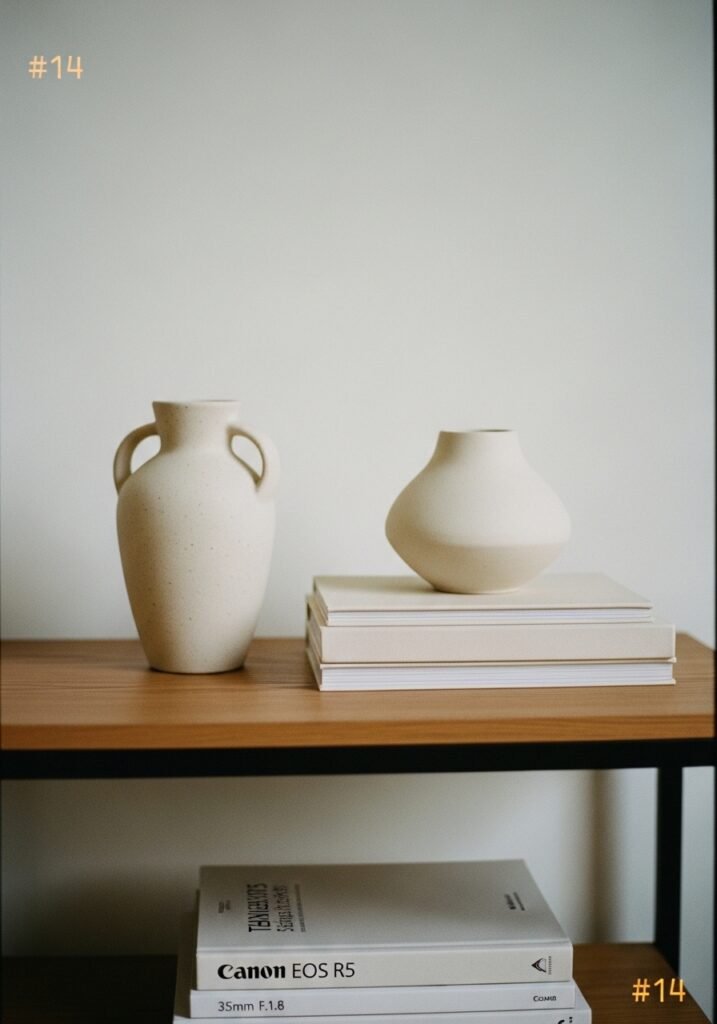
Edit. Then edit again.
The most beautifully styled small living rooms always have less on display than you’d think. Not empty — but considered. Every object on a shelf, every throw on a sofa, every candle on a coffee table was chosen and placed. Nothing is there by default.
The habit to build is a regular ten-minute pass where you walk through the room and remove three things. Not throw away — just put away. A remote control that can go in a drawer. Two of the four throw pillows that are making the sofa look like a pile-up. The stack of magazines you’ve been meaning to read. The little bowl of things that has become a little bowl of everything.
What remains looks intentional. Surfaces with one or two things on them look styled. Surfaces with many things look like they accumulated.
This is the difference between a room that photographs beautifully and a room that looks like someone lives there but nobody curates it. Both are fine. But if you want the first one — and given that you’re reading this, you probably do — the edit is the most powerful tool you have.
—
🌿 Quick Tips
Swap your overhead light bulb for a warm white (2700K) bulb immediately — it costs almost nothing and changes the entire mood of the room by evening.
Float your sofa away from the wall by at least six inches; it feels wrong until it looks completely right.
Choose one dominant texture — chunky knit, linen, velvet — and repeat it in two or three places so the room feels cohesive rather than collected.
In UK homes with alcoves, don’t leave them empty or use them as dumping grounds — a shelf, a lamp, and a plant make an alcove feel like a feature rather than an afterthought.
Declutter your surfaces before you buy anything new; the room you already have often looks significantly better than you think once the noise is removed.
—
❓ FAQ
Q: What’s the best paint color for a small living room with not much natural light? A: Warm mid-tones tend to work better than stark white in low-light rooms — white can look grey and flat without strong natural light. Look for warm whites with yellow or pink undertones (Benjamin Moore White Dove, or Farrow & Ball’s Pointing in the UK) or lean into a warm greige that makes the most of what light you do have.
Q: How do I make a small living room look good on a tight budget? A: Lighting and decluttering cost almost nothing and make the biggest difference. After that, prioritize a large rug, one substantial plant, and one piece of meaningful art — those three things do more work per pound or dollar than almost anything else.
Q: Can a small living room have a sectional sofa? A: Sometimes, yes — but it has to be the right scale. A small L-shaped sectional with low arms, visible legs, and light upholstery can work in a room that’s at least 12 feet across. If the sofa fills more than half the room, it’s too big, no matter how much you love it.
—
💭 Final Thought
Small rooms have an intimacy that larger rooms can never manufacture. There’s something genuinely lovely about a space where everything is within reach, where the light from one lamp fills the whole room, where a single plant in a corner feels significant. The rooms on Pinterest that you’ve saved a hundred times aren’t beautiful because they’re large — they’re beautiful because every choice in them was made on purpose.
What one thing in your living room right now is there by accident rather than intention?