The TV Wall That Makes Your Small Living Room Look Like a Design Decision, Not an Afterthought
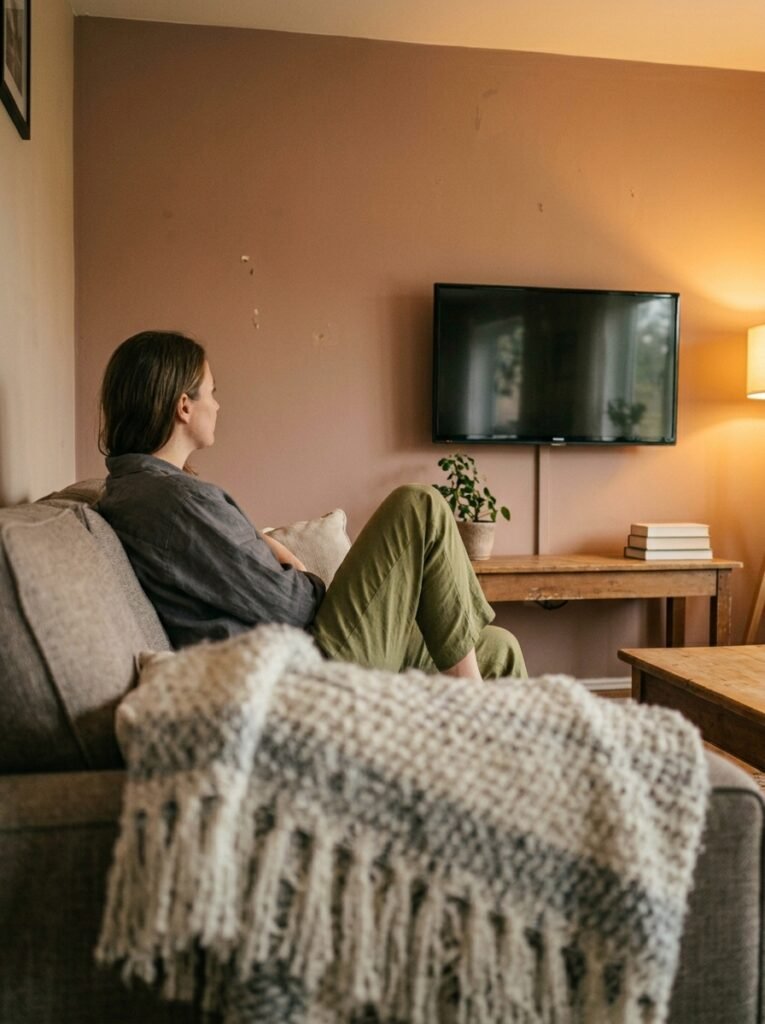
You moved the sofa three times. You tried two different gallery walls. And still, the television just sits there — a big black rectangle demanding attention and offering nothing back. Here’s what nobody tells you about small apartment living rooms: the TV wall isn’t your problem. It’s your biggest untapped opportunity.
—
1. Why Most Small Living Room TV Walls Feel So Depressingly Accidental
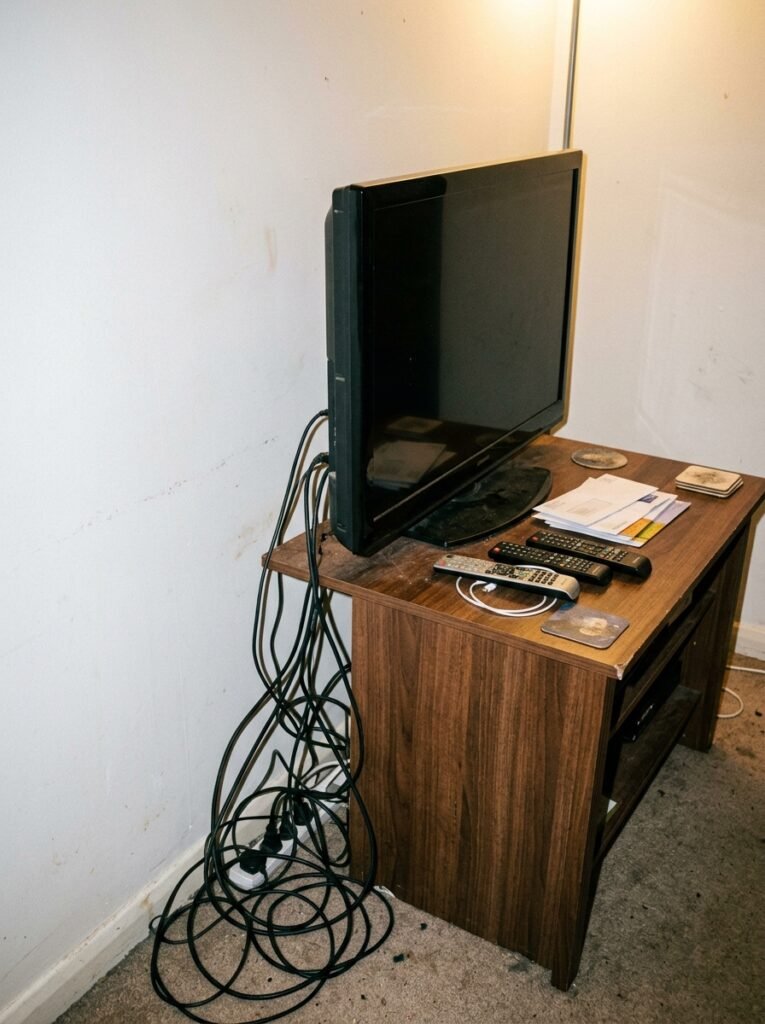
Let’s be honest about what’s usually happening. The TV goes up on the wall because it has to go somewhere. A few cable wires dangle. Maybe there’s a media unit underneath that came flat-packed in a box with a name that sounds like a Swedish hiking trail. And somehow, even after you’ve styled the bookshelves and hung the curtains and found the perfect throw, the whole room still feels like it’s orbiting that black rectangle without any real intention behind it.
The problem isn’t the TV. The problem is that we treat it like a necessary evil instead of a design element.
In a small apartment — whether you’re in a one-bedroom in East London or a studio in Chicago — the TV wall is often the first thing you see when you walk through the front door. It sets the tone for the entire space. Get it right and the room feels curated, considered, genuinely yours. Get it wrong and even the most beautiful rug in the world won’t save you.
The good news? Every fix on this list costs less than you’d think. Some cost nothing at all.
“The TV wall isn’t your problem. It’s your biggest untapped opportunity.”
—
2. The Paint Trick That Reframes Everything (And Costs About $30)
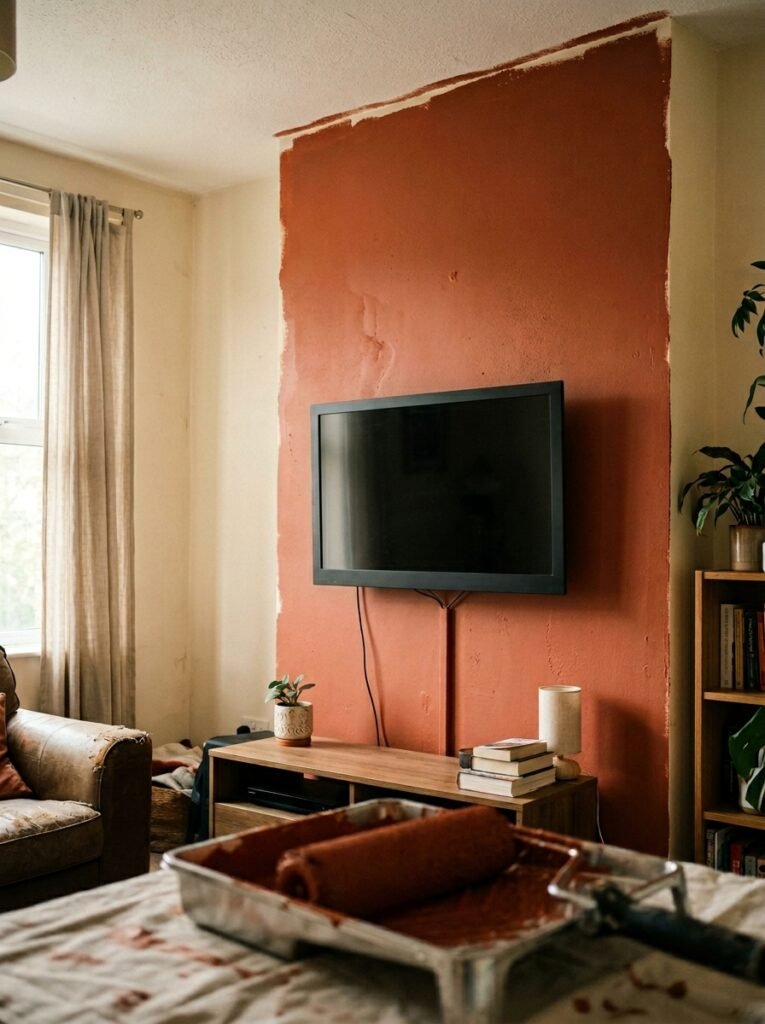
Paint one wall. Not the whole room — just the wall where the television lives. Pick something deep. Charcoal. Dusty olive. Moody navy. Even a very dark warm brown if you’re feeling brave.
Here’s what happens: the TV visually disappears into the dark background. It stops being a black interruption and starts reading as part of an intentional composition. The wall becomes the feature, and the TV is simply one element within it — like a painting, like a shelf, like a sconce. You stop seeing the screen and start seeing the wall.
In small British terrace houses and Victorian conversions, this technique is almost magical. The low ceilings and narrower rooms that can feel cramped suddenly read as intimate and cocoon-like when that back wall goes dark. In American apartments with open-plan layouts, the dark accent wall also does something clever — it signals “this is the living area” without you needing a room divider or any structural changes.
Use a matte finish. Eggshell if you must, but matte is better for drama. And don’t stop at the wall — paint the inside of any shelving unit on that wall in the same color. It makes everything you display pop like it’s floating.
—
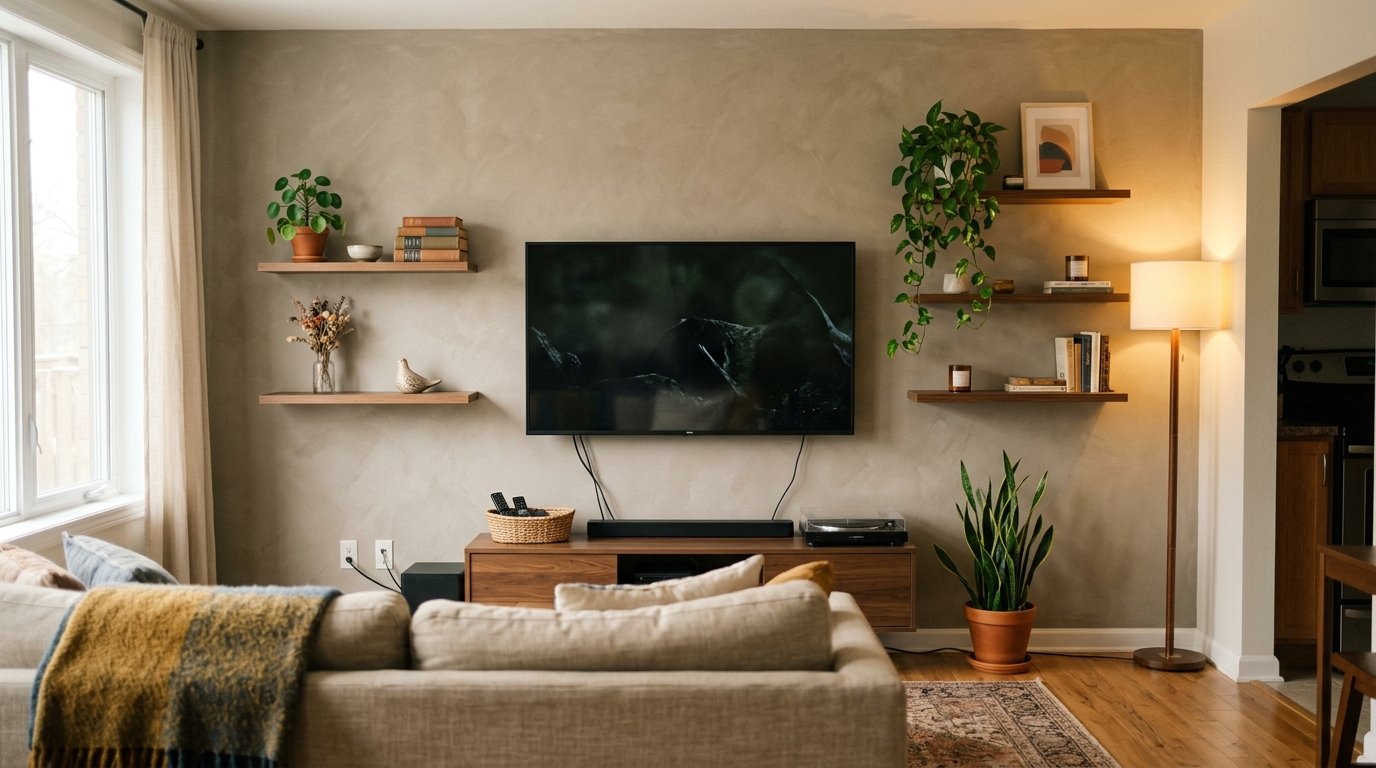
3. The Floating Shelf Formula That Interior Designers Keep Using
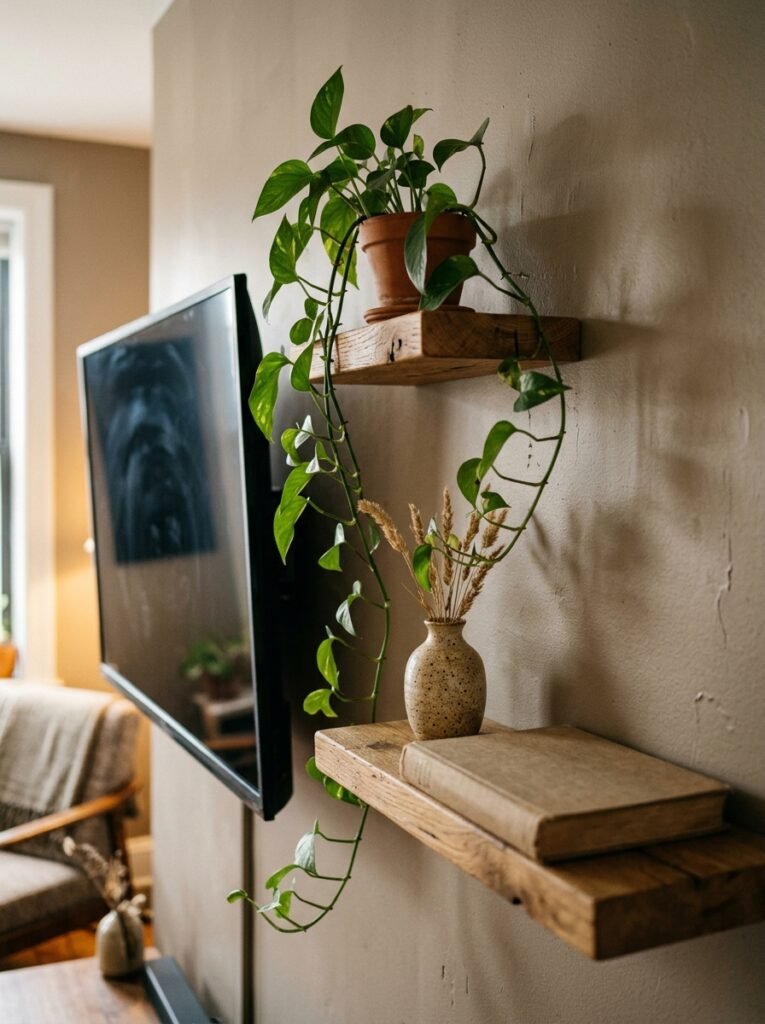
Two shelves above. One shelf below. That’s it.
It sounds almost embarrassingly simple, but this arrangement — two floating shelves positioned above the television and one low shelf or media console below — creates a visual rhythm that the eye reads as composed and deliberate. The TV slots into the middle, and suddenly it’s not dominating anything. It’s participating.
On the upper shelves: vary the heights of what you place there. A tall vase next to a small stack of books next to a trailing plant. Something sculptural, something natural, something with personal meaning. The asymmetry matters. Perfectly matched pairs on either side of a TV look like a hotel lobby, not a home.
For the lower shelf or console, keep it cleaner than you think you need to. One or two objects maximum. A basket for remotes and the small tangle of life that accumulates. Maybe a candle. The restraint at the bottom makes the display above it feel intentional rather than chaotic.
In smaller rooms, go wall-mounted rather than freestanding wherever possible. Freestanding media units with legs are fine, but wall-mounted shelving at the right height gives the floor back to you — and visible floor space is the single most effective way to make a small room feel larger. Every inch of floor you can see reads as breathing room.
—
4. How to Handle the Cable Situation Without Spending a Fortune on an Electrician
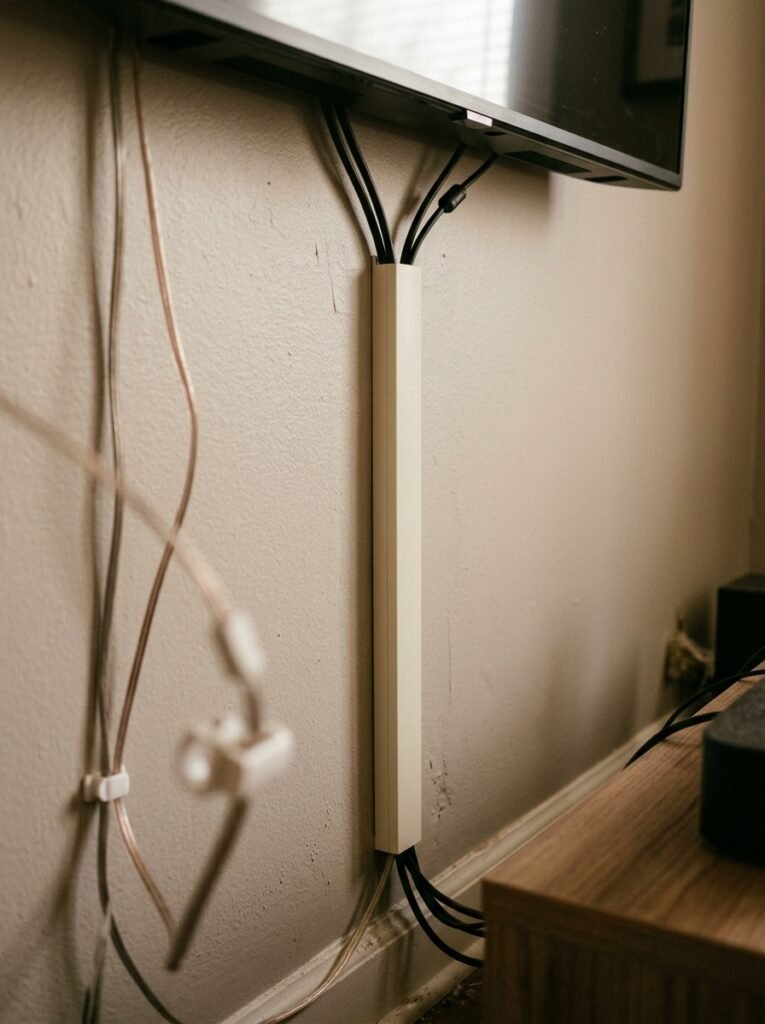
Nothing destroys a carefully considered TV wall faster than a waterfall of cables. It’s the visual equivalent of getting dressed up and then forgetting to brush your hair.
The simplest solution most people overlook: a cable raceway. These are slim plastic or aluminum channels that mount directly to the wall, run floor-to-ceiling or horizontally behind your console, and can be painted the exact color of your wall so they disappear completely. A pack costs under $20 at most hardware stores and takes about forty minutes to install.
If you’ve gone dark on the accent wall, spray paint the raceway to match before you stick it up. It becomes genuinely invisible.
The more committed approach — and worth it if you’re renting in the UK and plan to stay a while, or own your place in the US — is to have an electrician run cables in-wall and add a recessed outlet directly behind where the TV mounts. It costs a few hundred dollars or pounds depending on your location and your walls, and the result looks like something out of a showroom.
Don’t underestimate the power of a simple velcro cable tie either. Bundle what you can’t hide. A neat cluster of cables is so much better than individual trails of black wire creeping in different directions. It’s the small thing that separates a finished room from one that’s still in progress.
“Visible floor space is the single most effective way to make a small room feel larger. Give the floor back.”
—
5. The Framing Idea That Makes the TV Look Like It Was Always Meant to Be There
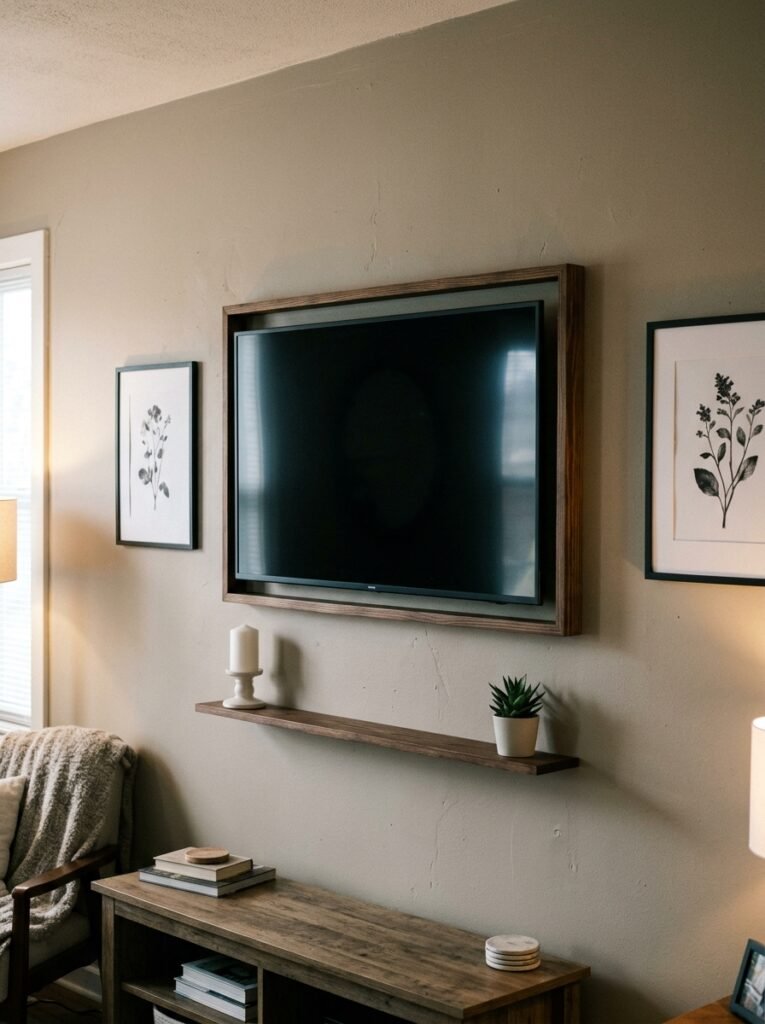
This one requires a bit of DIY confidence but not a lot of skill. Build a simple frame around the television using thin wood trim — the kind sold in long lengths at any hardware store in both the US and UK. Miter the corners at 45 degrees, paint it to match or contrast with the wall, and attach it so it surrounds the TV the way a frame surrounds a painting.
Suddenly the television has a reason to be exactly where it is.
The frame trick works especially well with thinner, newer flatscreen TVs. For a QLED or OLED that’s already impressively slim, a clean matte black or warm wood frame makes it read almost like a piece of art. Samsung even sells their Frame TV specifically around this concept — but you can achieve 80% of the effect for a fraction of the cost with a $15 trip to the lumber section.
If full framing feels like too much commitment, consider instead adding a slim ledge shelf directly beneath the TV — just wide enough to hold one or two objects — and two small wall sconces flanking it at approximately shoulder height when seated. That trio of elements creates the same visual “intentionality” as a frame without any cutting or carpentry.
—
6. Plants That Actually Work on a TV Wall (And Won’t Die Under Your LED Lights)
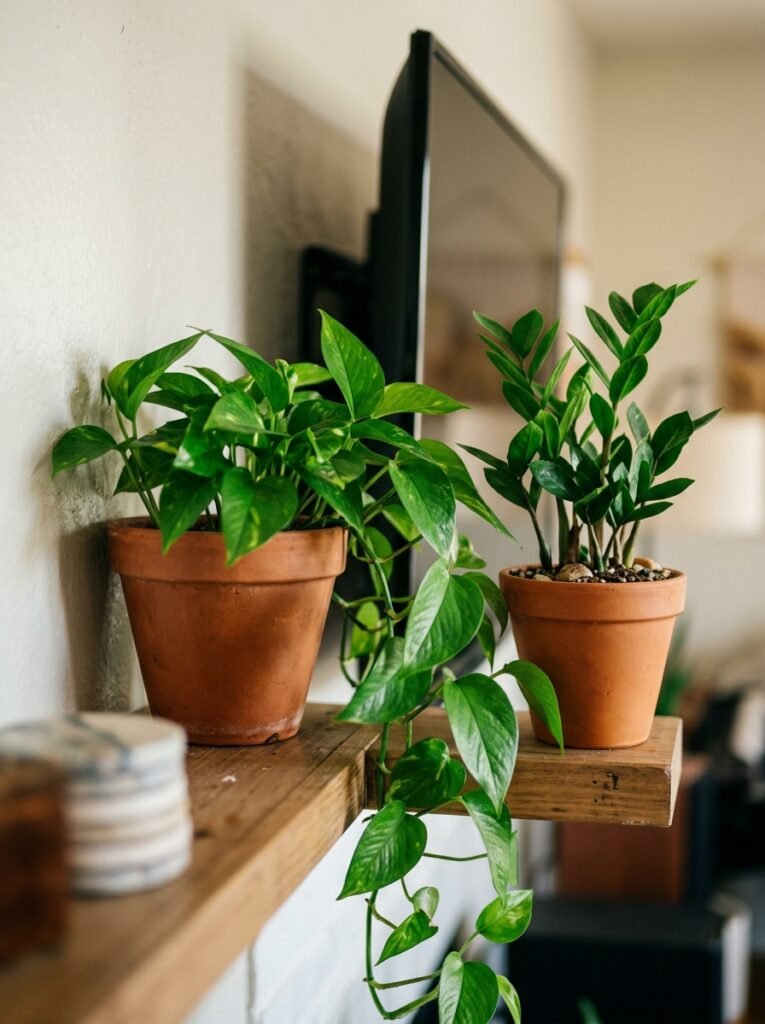
Plants change everything on a TV wall, but not any plant will do. Direct sunlight is rarely happening on an interior wall, and the ambient light from the television itself doesn’t count for photosynthesis, unfortunately.
The plants that consistently work well in lower-light TV wall situations: pothos, which will happily trail down from an upper shelf and seem to grow almost aggressively even in a north-facing London flat; ZZ plants, which are nearly indestructible and have a sculptural quality that looks genuinely expensive; and snake plants, which stay upright and architectural rather than drooping sadly toward the screen.
For Americans in sunnier climates, a small fiddle leaf in a corner adjacent to the TV wall can frame the whole composition beautifully — just make sure it has a window source within reach.
One rule: avoid putting plants directly on top of the TV unit where they’ll be directly in your line of sight to the screen. Flanking is better than blocking. A tall plant in the corner of the room next to the TV wall often has more visual impact than anything placed on the unit itself, and it anchors the whole wall without cluttering the surface.
—
7. The Gallery Wall That Actually Works Around a TV (Most Don’t)
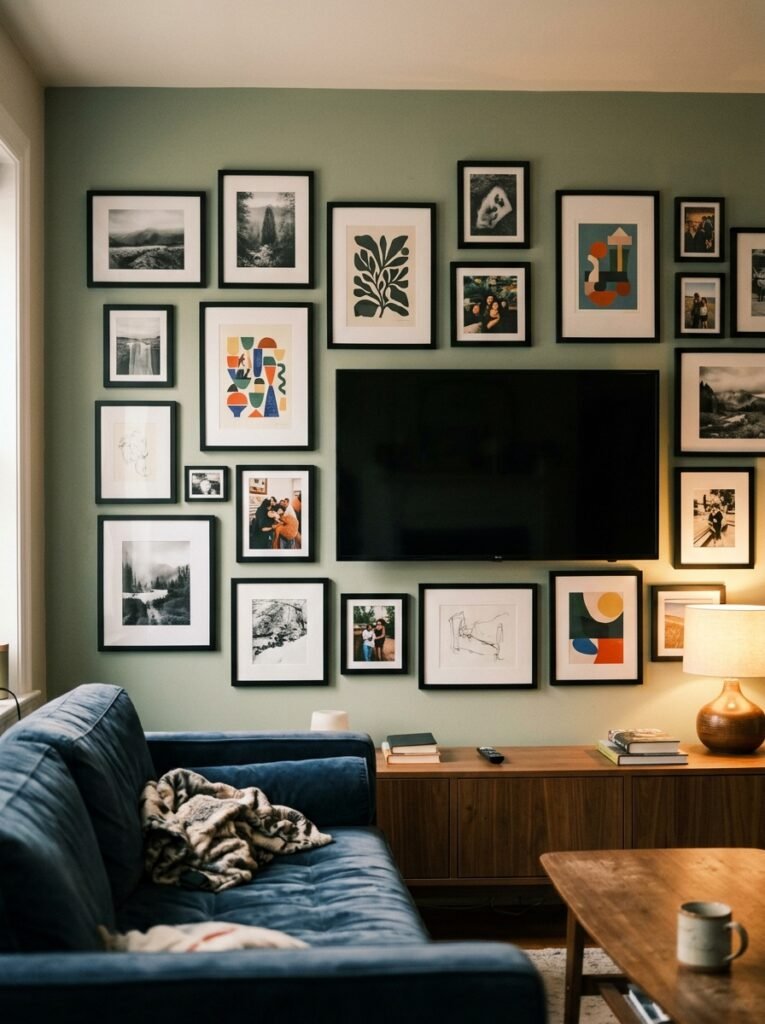
Most TV gallery walls look wrong. Too symmetrical, too random, or too obviously trying to compensate for the television at the center. The mistake is treating the TV as the anchor and building outward from it. Try the opposite.
Design the gallery wall as if the TV weren’t there. Map it out with paper templates on the wall first. Build a composition you’d love on its own — a mix of art prints, a small mirror, a ceramic wall piece, maybe a woven textile. Then cut a hole in that composition where the TV needs to live.
The result reads as a gallery wall that happens to include a television, rather than a television wall that tried to be a gallery wall. The difference is subtle but enormous.
Keep the frames relatively slim and in a limited palette — all black, all natural wood, or a mix of the two. Too many different frame styles fragment the eye and make a small space feel more chaotic. And leave a little more space between frames than you think you need. Tight clustering around a TV can feel fussy; slightly more breathing room feels editorial.
“Design the gallery wall as if the TV weren’t there. Then cut a hole in the composition where the screen needs to live.”
—
8. Lighting the TV Wall After Dark (This Changes Your Whole Evening)
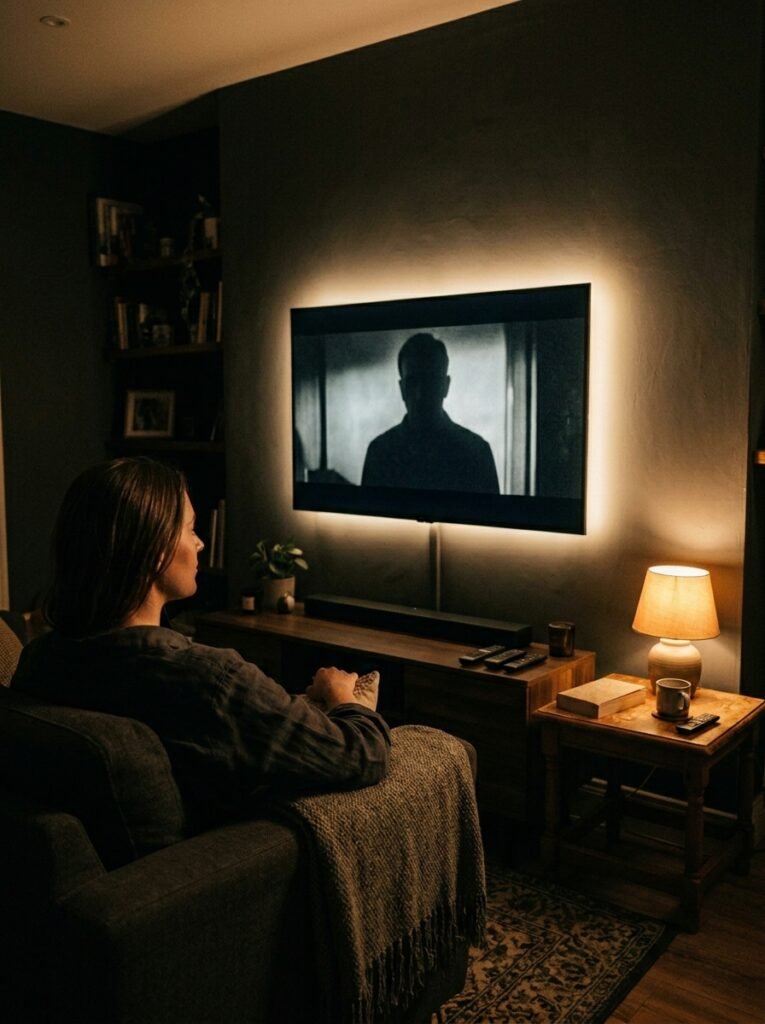
Backlighting. If you’re not using bias lighting behind your television, start tonight.
A strip of warm LED lights mounted to the back of the TV frame — pointing toward the wall behind it — creates a soft amber glow that reduces eye strain, makes your evenings feel noticeably more cinematic, and turns the whole wall into something warm and atmospheric rather than a cold screen in a dark room.
For the broader wall itself, two wall-mounted reading sconces at roughly eye level when seated are worth more than any overhead lighting for evening ambiance. The amber glow of a warm-toned sconce at 7pm on a cozy evening is the difference between a room that feels finished and one that still feels like a rental.
If you’re in a UK rental and can’t make holes, plug-in wall sconces exist now — and they look genuinely good. Plug the wire into a cord cover painted to match the wall. From across the room, you’d never know.
Avoid overhead spotlights aimed directly at the TV wall. They create glare on the screen and flatten the whole space. Layered, lower light sources make everything look better — the room, the decor, and honestly, you.
—
9. The One Piece of Furniture That Anchors a Small TV Wall Better Than Anything
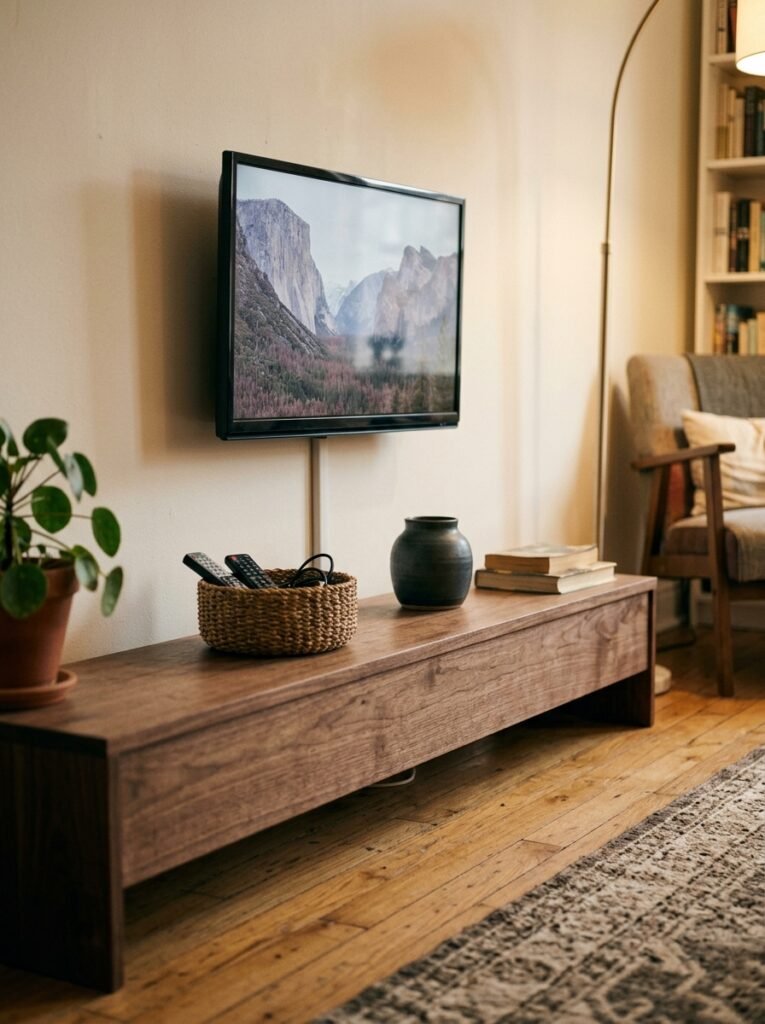
A single, long, low media bench. Not a floating console, not a TV stand — a proper bench, ideally with some storage inside, that runs nearly the full width of the TV wall.
The length is the point. When a piece of furniture visually spans most of a wall, the eye reads “intention.” Short, stubby media units under a large TV make both the wall and the furniture look smaller. A long bench does the opposite — it grounds the television, anchors the whole wall, and makes the room feel wider.
In small spaces, choose a bench with simple, clean legs rather than one that sits directly on the floor. Those few inches of visible leg lift create an illusion of space that solid, floor-sitting furniture simply doesn’t.
Color: a warm medium wood tone works with almost everything and adds a material richness that painted or laminate surfaces rarely achieve. If you already have plenty of wood in the room, a muted sage, dusty cream, or deep olive green media bench can be genuinely beautiful — something you’d notice and want to photograph, rather than furniture you stopped seeing six months after you bought it.
—
10. Textiles Are the Secret Ingredient Nobody Talks About on TV Walls
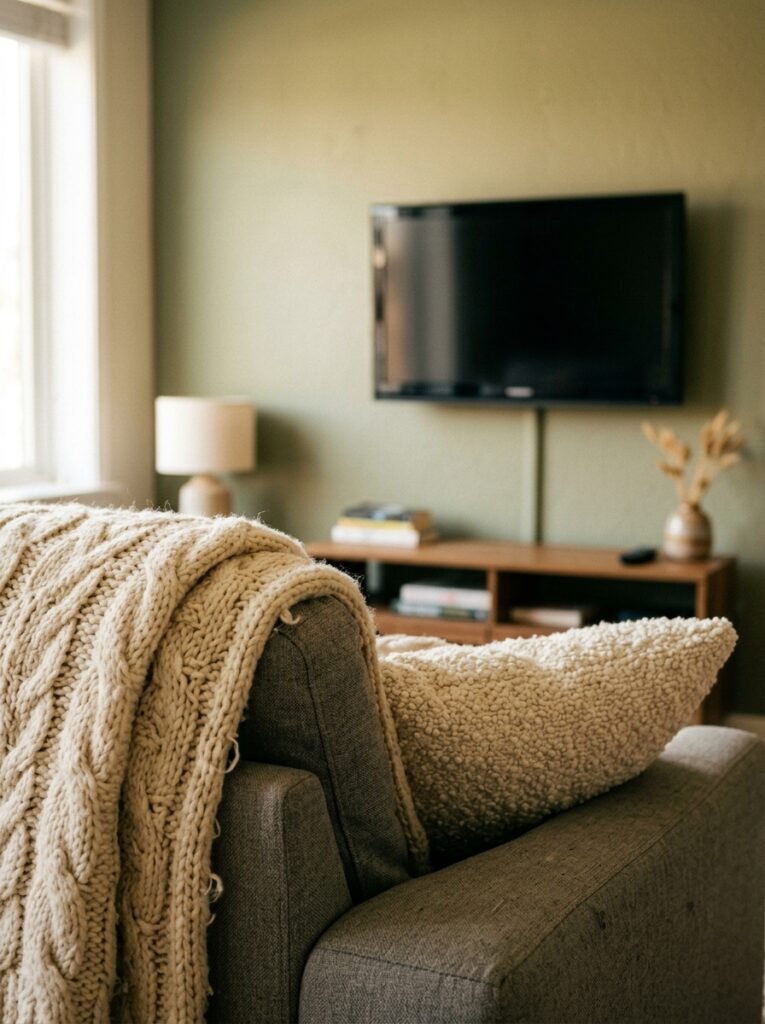
We talk endlessly about shelves and paint and art. But the softest, most impactful change you can make to a TV wall happens six feet away from it — on the sofa facing it.
A large, chunky knit throw draped over the arm. A textured linen cushion. A wool rug that extends generously under the coffee table and toward the TV wall. These soft elements do something that no paint color or shelf arrangement can: they make the room feel inhabited. Warm. Like someone actually lives here and loves it.
From a pure design perspective, the visual weight of soft textures on the sofa side of the room balances the harder, more graphic presence of the TV wall opposite. Without them, the hard side wins, and the room feels cold. With them, there’s a conversation happening between the two sides of the space.
A large area rug is probably the single most impactful investment for a small TV-focused living room. It defines the seating area, adds color and pattern without going on the walls, and brings everything into a coherent composition — TV wall, sofa, coffee table — that feels designed rather than assembled.
—
11. Small Apartment Rules About What to Actually Put on Those TV Wall Shelves
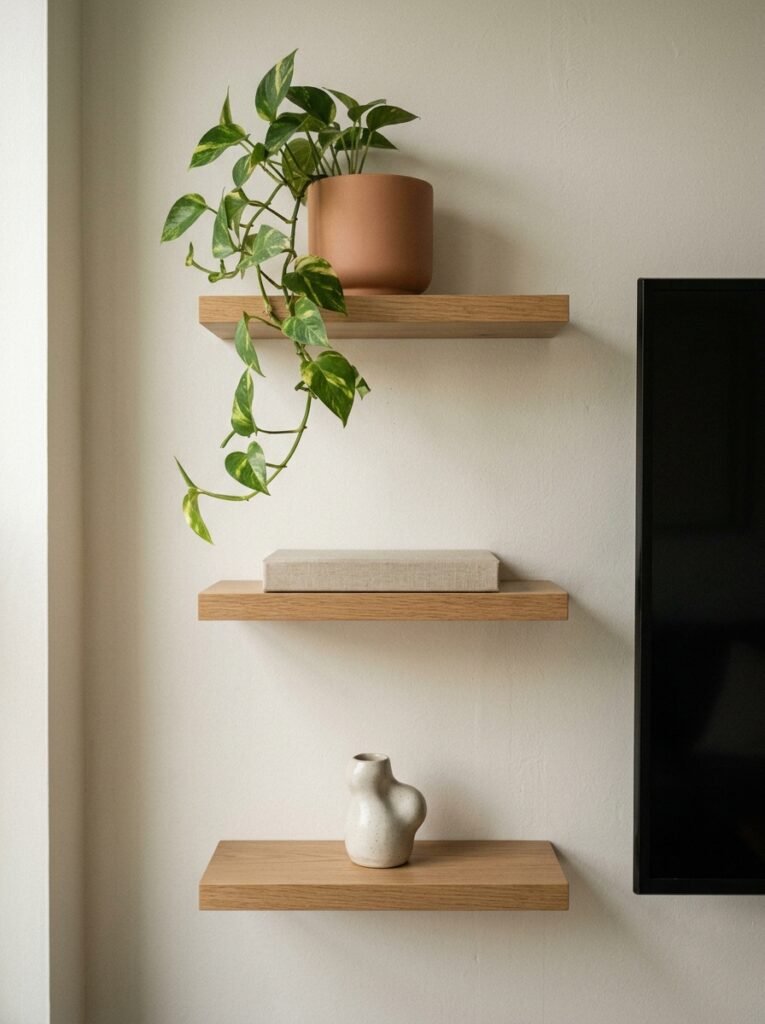
Everything displayed on a TV wall shelf earns its place or it goes. No exceptions.
That’s the rule. Not because minimalism is a requirement — you can display a lot — but because in a small space, visual clutter around a TV is amplified. The eye is already doing a lot of work managing the screen, the wall, the furniture. Every object on display adds to that cognitive load.
The things that consistently work: objects with varying heights, materials that mix (ceramics next to wood next to something metallic), and at least one item that has personal meaning to you specifically. That last one matters. A beautiful shell from a beach trip, a small print from a local market, a ceramic piece made by someone you know — these make a styled shelf feel like a home and not a showroom.
The things that consistently fail: books stacked in a perfect symmetrical arrangement (feels corporate), matching decorative orbs in the same color family (safe but boring), and too many small objects that compete for attention without any one thing winning.
One large interesting piece is almost always more powerful than six small forgettable ones. Invest in the one thing.
—
12. The Mindset Shift That Makes Everything Else Work
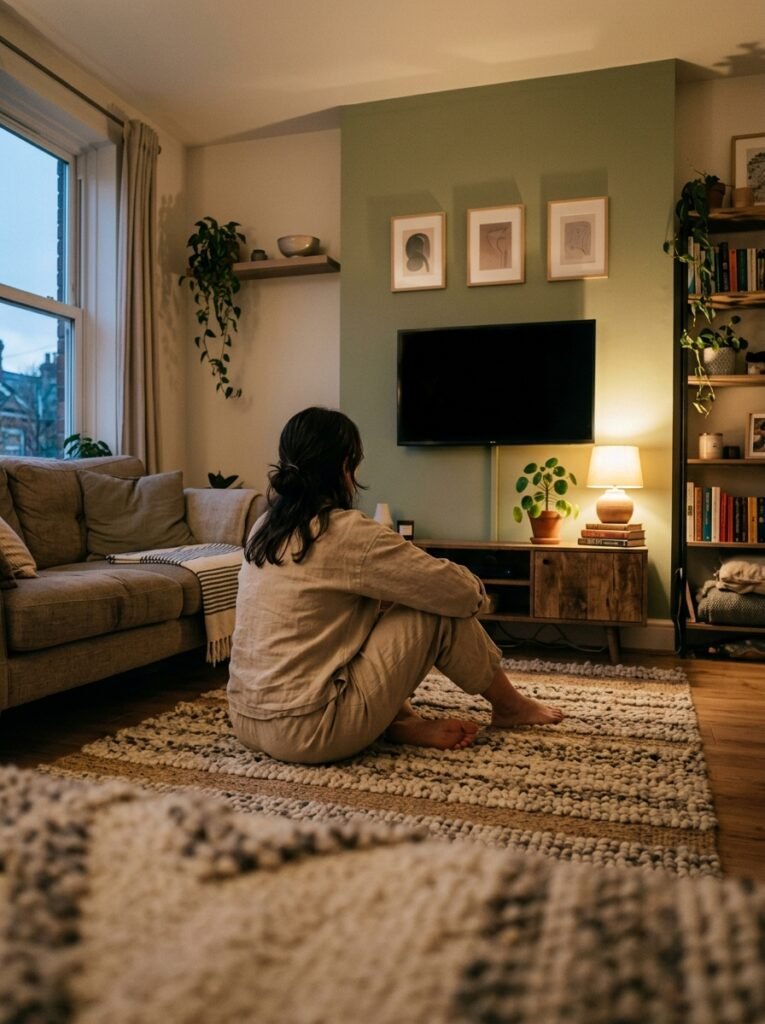
Stop trying to hide the TV. It’s not going anywhere.
The most beautifully designed TV walls you’ll ever see on Pinterest aren’t hiding the television — they’re integrating it. They’ve accepted it as a component of the room’s composition and designed around that reality rather than against it.
When you fight the TV, you end up with awkward compromises. When you work with it, you end up with something that looks deliberately designed. The black screen at rest can read as a bold graphic element. The rectangle of the screen can dictate proportion. The wall behind it can become a canvas.
Small apartment living requires this kind of practical creativity more than any other living situation. You can’t separate rooms. You can’t dedicate a wall to something purely decorative. You have to make every wall work, including this one.
The TV wall that looks intentional, that makes guests say “oh, I love what you’ve done there” — it didn’t happen by accident. But it also didn’t require a designer or a big budget. It required a decision. One clear decision about what this wall is going to be.
Make the decision. The room will follow.
—
🌿 Quick Tips
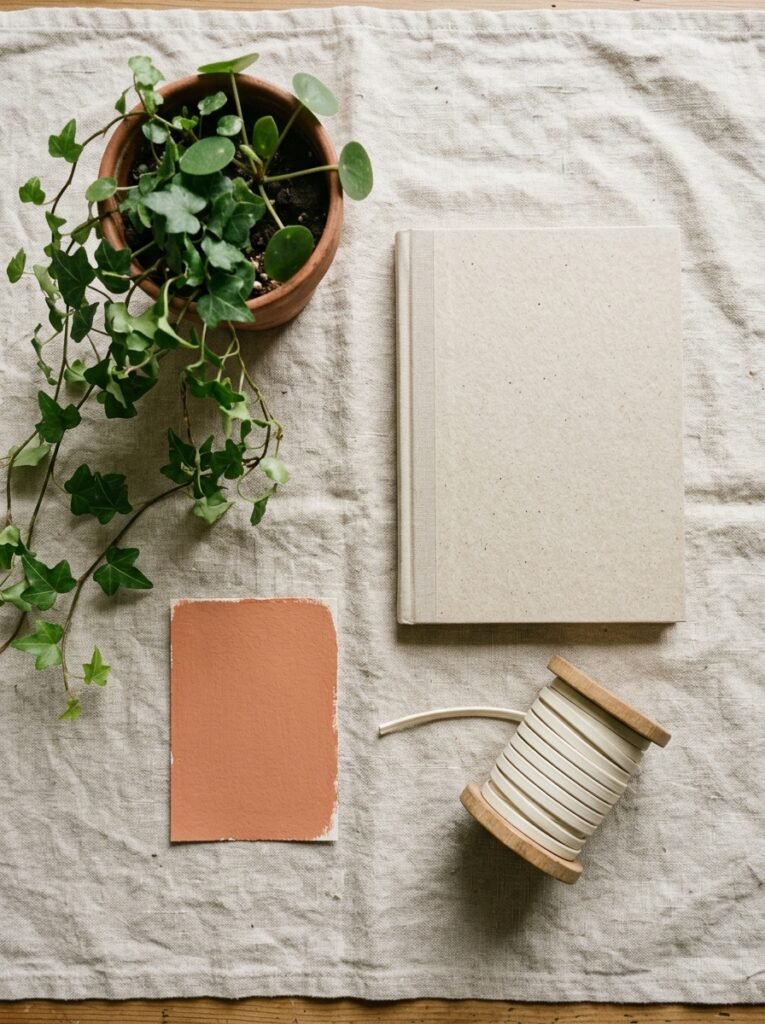
There’s always a smaller, faster version of all this. Here are five that actually matter.
Go as large as you can afford with the TV for the wall size — an undersized TV on a large wall always looks awkward, and proportional decisions are everything in small spaces.
Warm white bulbs only, anywhere near the TV wall. Cool daylight bulbs kill the atmosphere you’re trying to build.
If you have one piece of art to hang, hang it somewhere other than the TV wall. Let the TV wall do its one job; give the art somewhere it can breathe without competition.
Declutter the console first. A beautifully designed TV wall with a cluttered surface underneath it is like a great outfit with worn-out shoes. The surface matters.
Step back. Literally walk to the doorway of the room and look at the TV wall from a distance. That’s how guests see it. That’s how it reads. Design for that view, not the up-close one.
—
❓ FAQ
Q: How do I decorate around a TV in a small living room without making it look cluttered? A: The single most effective principle is restraint on the surfaces closest to the TV. Go bolder with decor on the shelves above and beside it, but keep anything within about 18 inches of the actual screen clean and open. Visual breathing room around the screen itself makes everything look more intentional.
Q: Should I put my TV on the wall or on a stand in a small apartment? A: Wall mounting is almost always better for small spaces because it reclaims floor and surface area and allows you to set the exact height for your room. A stand works well if you choose a long, low bench style that runs close to the wall’s full width — but floating the TV gives you more flexibility with what goes below it and genuinely makes the room feel less crowded.
Q: What color should I paint a small living room TV wall to make the space feel bigger? A: Counterintuitively, darker colors on the TV wall often make a small room feel more spacious, not less. A deep charcoal or dusty navy causes that wall to visually recede, making the room feel deeper. Light walls throughout a small room can sometimes make everything feel equally compressed; one darker feature wall creates contrast and perceived depth.
—
💭 Final Thought
The TV wall is the wall most of us have made our peace with rather than made our own. But in a small apartment, you don’t have the luxury of leaving any wall behind — and honestly, that constraint is a gift in disguise. It forces creativity that a bigger home never demands.
Your TV wall can be the most interesting thing in your living room. It just needs you to decide what it’s going to say.
What would your wall say if you let it speak?