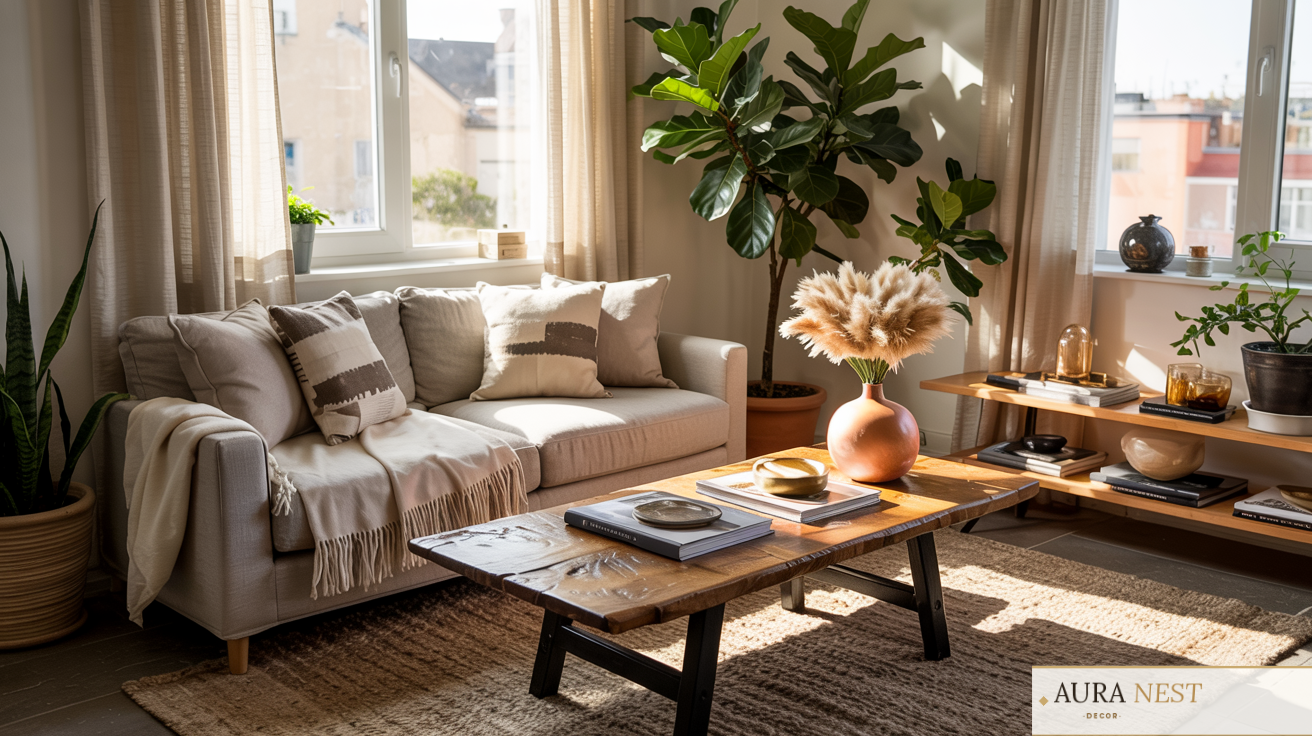
The Small Living Room Glow-Up That Doesn’t Require Moving, Renovating, or Spending a Fortune
You sat down on your sofa last Tuesday and thought: this room is just not it anymore. The space feels cluttered somehow, even though there’s barely anything in it. It feels small in all the wrong ways — closed off, a little sad, like it’s apologizing for existing.
Here’s the thing. It doesn’t have to feel that way.

—
1. The Lighting Trick That Interior Designers Never Stop Using (And Most People Ignore)
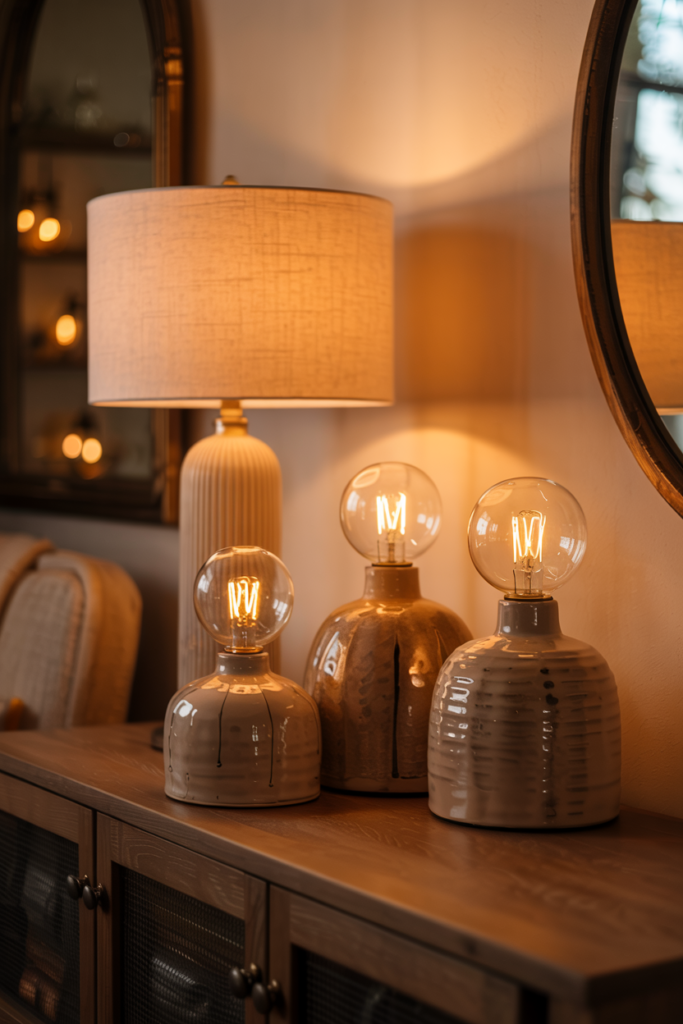
Overhead lighting is almost always the problem. That single ceiling fixture — whether it’s a flat flush-mount in a British terrace or a basic drum shade in a Brooklyn apartment — is doing your room no favors. It lights everything flatly, casts unflattering shadows downward, and makes the space read as smaller and more institutional than it actually is.
The fix costs less than a takeaway order for two.
Add three light sources at three different heights. A floor lamp in the corner. A table lamp on a side table or bookshelf. A string of warm Edison bulbs draped somewhere — along a shelf edge, across a window frame, around a mirror. Then turn off the overhead light entirely for one evening and just sit in that new warmth.
The amber glow at 7pm when all three are on simultaneously does something to a small room that no paint color, no furniture arrangement, no expensive throw can replicate. The room stops feeling like a room and starts feeling like a place. Shadows become interesting instead of oppressive. The ceiling visually lifts. Your walls stop crowding you.
Dimmer switches, if your rental allows them, push this even further. But honestly, just having multiple low-level light sources transforms the mood completely. This is the one change that people make and immediately wonder why they waited so long.
“Turn off your overhead light for one evening. That’s it. That’s the whole experiment.”
—
2. Why Your Sofa Is Probably in the Wrong Place (Yes, Even If It’s Pushed Against the Wall)
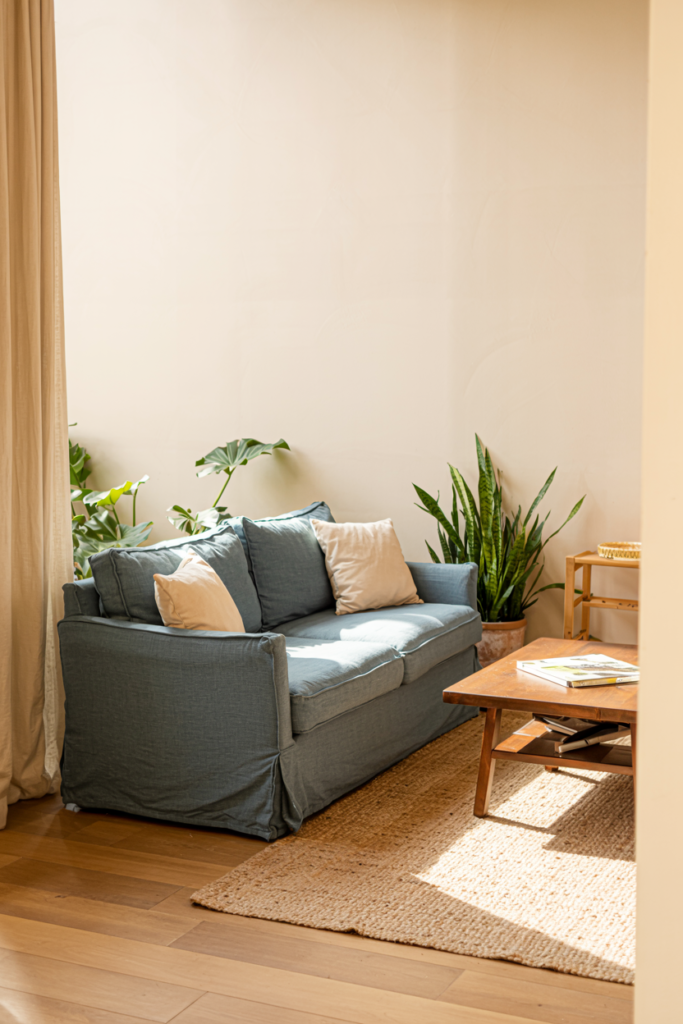
Every small-space article ever written will tell you to push furniture against the walls to maximize floor space. It sounds logical. It’s mostly wrong.
Furniture floating even a few inches away from the wall — or pulled genuinely inward toward the center of the room — creates a sense of intentionality. It says: someone thought about this. It creates a zone. And zones in small spaces are everything, because zones make a single room feel like it contains multiple experiences rather than one cramped one.
Try pulling your sofa 6 to 8 inches away from the wall behind it. Add a narrow console table in that gap if you want — even 10 inches of depth gives you room for a lamp, a plant, a small stack of books. Suddenly your sofa has a backdrop instead of just leaning against a surface like it’s waiting for something to happen.
In a small British flat where rooms are often long and narrow, this is especially effective. You break the tube-like quality of the space. You create a seating area that feels enclosed and cozy rather than stranded in open floor. In American apartments where open-plan is common, this trick defines the living room boundary without a single wall to help you.
The floor will look smaller. The room will feel bigger. These are not the same thing, and feeling bigger is the one that matters.
—
3. The Color That Keeps Showing Up in Every Beautiful Small Living Room Right Now
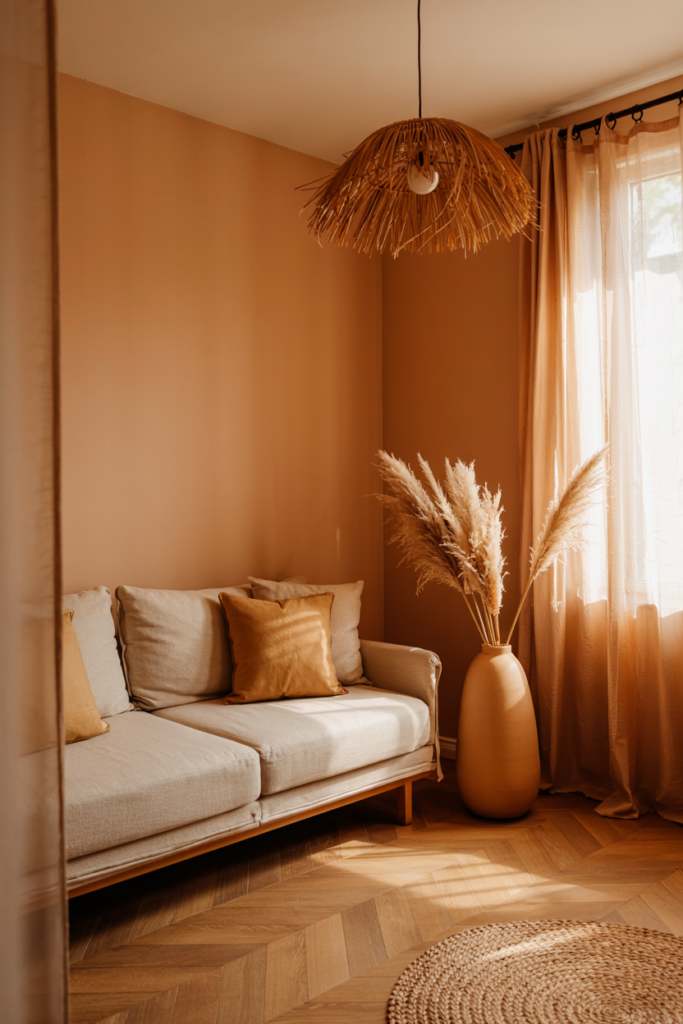
It’s not white. It’s not grey. It’s not even the ubiquitous sage green, though that’s still a perfectly lovely choice.
It’s deep, warm, slightly dusty terracotta — and the way people are using it is specific. Not as a full four-wall commitment, which can feel heavy in a small space. Instead, one wall. Sometimes just the chimney breast, or the wall behind the sofa, or the wall opposite the window that gets that afternoon light.
The reason this shade works so well in small rooms is that it adds depth without darkness. It reads warm, which makes the room feel embraced rather than enclosed. It photographs beautifully in natural light, which matters if you care about your space looking good in photos. And it pairs with almost everything — linen, wood, brass, forest green, dusty pink, even navy.
If terracotta isn’t your thing, the same principle applies with deep sage, old rose, or a blue-green like duck egg pushed slightly deeper. The formula is: one wall, one deep warm-toned color, keep everything else light and natural. It gives the room a focal point, makes it look intentional, and does the visual work of making the space feel layered without requiring you to acquire a single piece of new furniture.
—
4. The Rug Size That’s Ruining More Small Living Rooms Than You’d Think
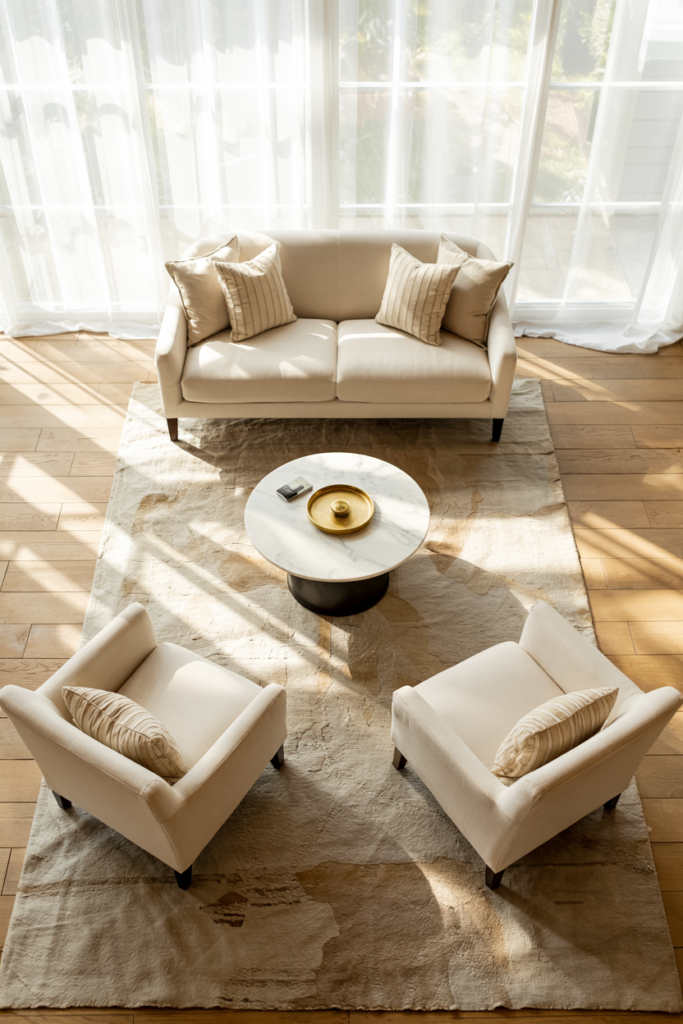
A rug that’s too small is one of the most common styling mistakes in small apartments on both sides of the Atlantic, and it creates the opposite effect of what people intend.
When a rug is too small — when it sits under just the coffee table and nothing else — it becomes an island. It makes the furniture look like it floated there accidentally. It visually chops the room into pieces. A small rug in a small room makes the room look smaller. It sounds counterintuitive, but walk into any beautifully decorated small space and look at what’s under your feet.
The rug should be large enough that at least the front legs of every main seating piece sit on it. Ideally, all four legs of the sofa, the front legs of any armchairs, and the entire coffee table rest on the same rug. This unifies everything into one cohesive zone. The room reads as a complete, composed space rather than a collection of objects that happen to share a postcode.
For texture, flat weaves and low-pile rugs in small rooms keep the floor feeling expansive. A chunky high-pile rug can work beautifully but needs to be a conscious choice, not a practical one. Jute looks incredible and works in both cottagecore British interiors and cleaner American boho-minimal spaces. A faded vintage-style rug in terracotta, blue, and cream is having a very long moment and it’s earned every second of it.
“The rug ties the room together — or it doesn’t. There’s rarely an in between.”
—
5. The Shelf Styling Formula That Makes a Room Look Curated Instead of Cluttered
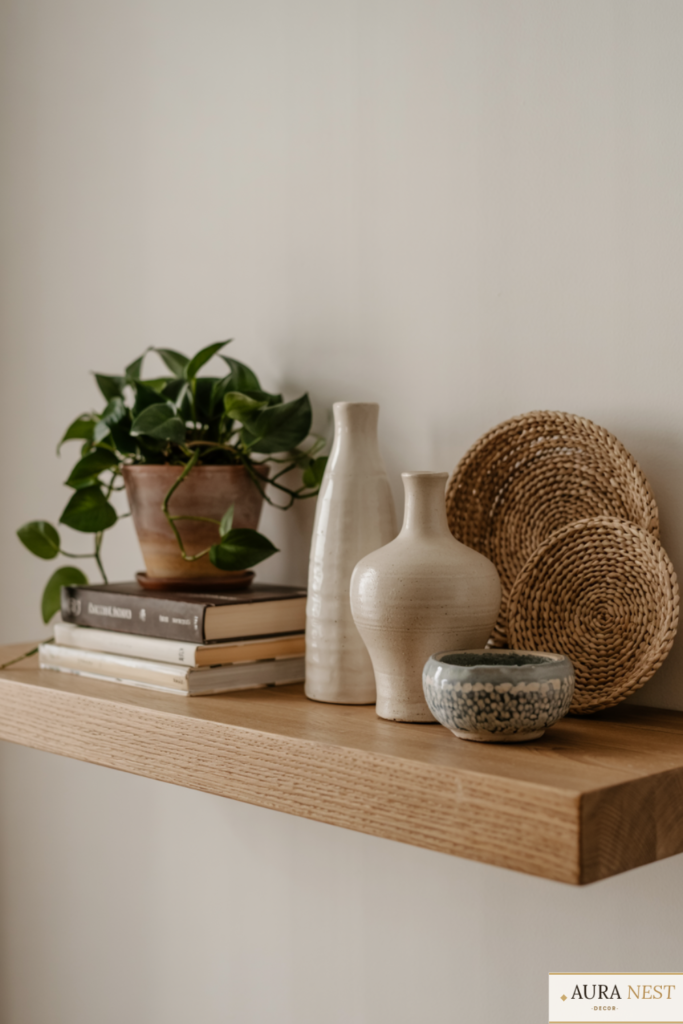
Books vertical. Books horizontal. A small object on top of the horizontal stack. One plant — trailing or architectural, your choice. One piece of art leaning casually rather than hung. A candle. Negative space. Full stop.
That’s it. That’s the formula.
The mistake people make with shelving in small living rooms is trying to fill every inch, because empty shelf space feels wasteful. It isn’t. Negative space on a shelf is what gives the eye somewhere to rest. Without it, shelving reads as clutter regardless of how carefully each individual item was chosen.
The vertical-horizontal book rhythm is something you’ll notice once you see it and then never unsee it. All vertical spines in a row looks like a library. All horizontal stacks look like a storage problem. Alternating them — three vertical, one horizontal stack with an object on top, four vertical, one horizontal — creates visual movement. The shelf starts to feel like it was styled rather than loaded.
In terms of color, grouping books loosely by tone does more for a room than any matching set of decorative objects ever could. You don’t need to color-sort obsessively — just pull the orange hardcovers together, keep the dark navy spines near each other, and suddenly your shelving becomes a soft abstract composition.
—
6. One Rule That Makes Any Tiny Room Feel Intentional (Not Just Small)
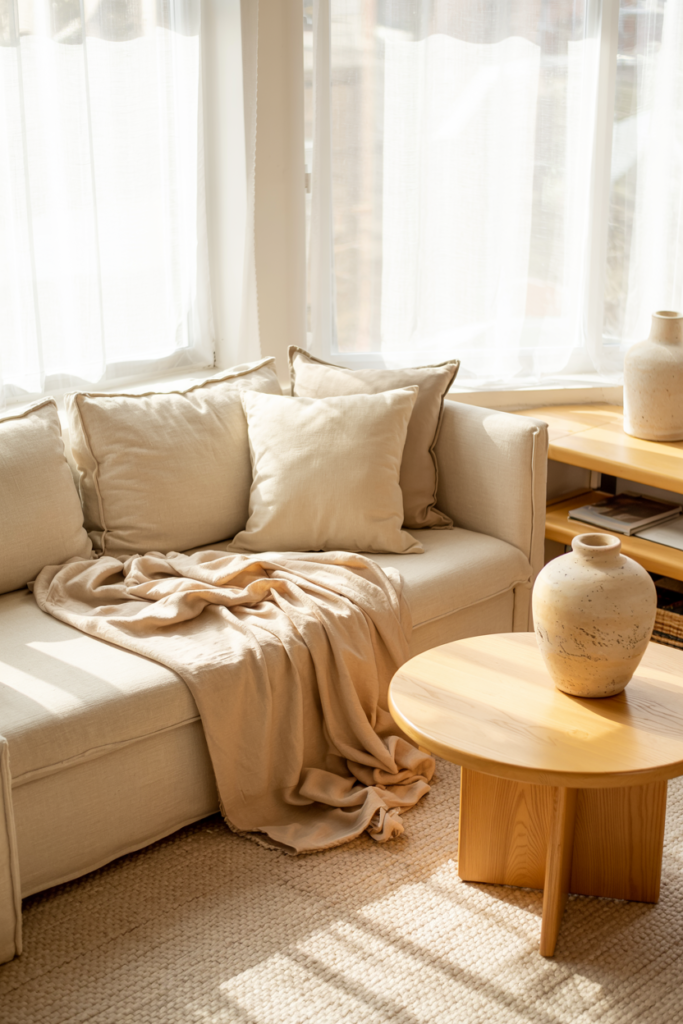
Every small room needs a moment. One corner, one wall, one surface that makes someone walk in and immediately look at that spot. Not the whole room — just one place that says: this was thought about.
It could be an armchair with a beautiful throw and a reading lamp angled perfectly over it. It could be a gallery wall done in mismatched frames but a coherent color story. It could be a window seat built from two Billy bookcases and a cushion cut to size. It could literally be a single large piece of art hung at exactly the right height above a console table with two symmetrical objects flanking it.
The moment is what elevates a space from furnished to designed. And in a small room, you only need one. In fact, in a small room, only one is often ideal — too many focal points and the room fragments. One strong statement lets the rest of the room breathe around it.
If you’re in a British flat with original features — a fireplace, a bay window, an old Victorian cornice — you already have your moment. Your job is simply to not compete with it. Let it be the thing. Arrange everything else in service of it.
—
7. The Plants That Look Most at Home in a Small, Cozy Living Room
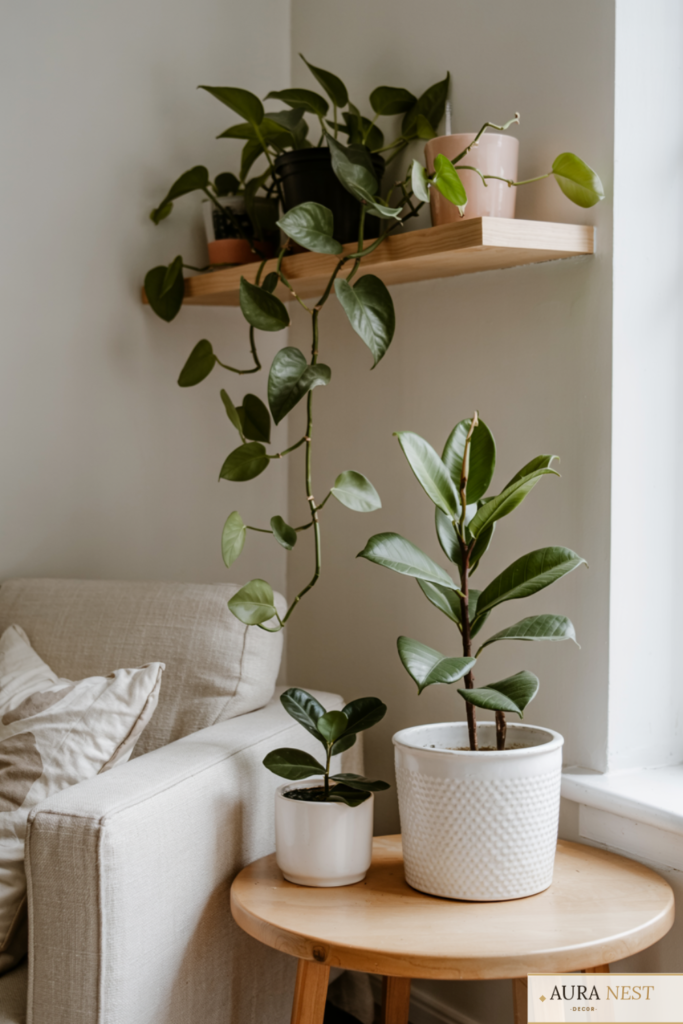
Not every plant suits a cosy, intimate living room. A towering fiddle leaf fig works magnificently in an open-plan space with high ceilings. In a small room, it can feel overwhelming and slightly absurd, like someone brought a small tree indoors and forgot to check the scale.
What tends to work better in small living rooms: trailing plants placed high — a pothos or string of hearts cascading down from a shelf or mantelpiece creates vertical movement and organic softness. A small, sculptural plant like a monstera in an early stage, or a compact rubber plant in a terracotta pot, adds life without dominating.
The pot matters as much as the plant. A beautiful pot makes even a very basic houseplant look intentional. Ribbed terracotta, matte white stoneware, dark glazed ceramic — these give the plant a context. A black plastic nursery pot, even with the most beautiful trailing plant, reads as an afterthought.
Layer your plants rather than clumping them. One on the floor, one on a shelf, one on the coffee table in a tiny bud vase. Different heights create depth. The room starts to feel like something living in it chose to be there, which is exactly the energy a cozy small space needs.
“A plant in a beautiful pot is two design decisions for the price of one.”
—
8. Why Mirrors Belong on Your Wall Right Now (And Where Almost Everyone Puts Them Wrong)
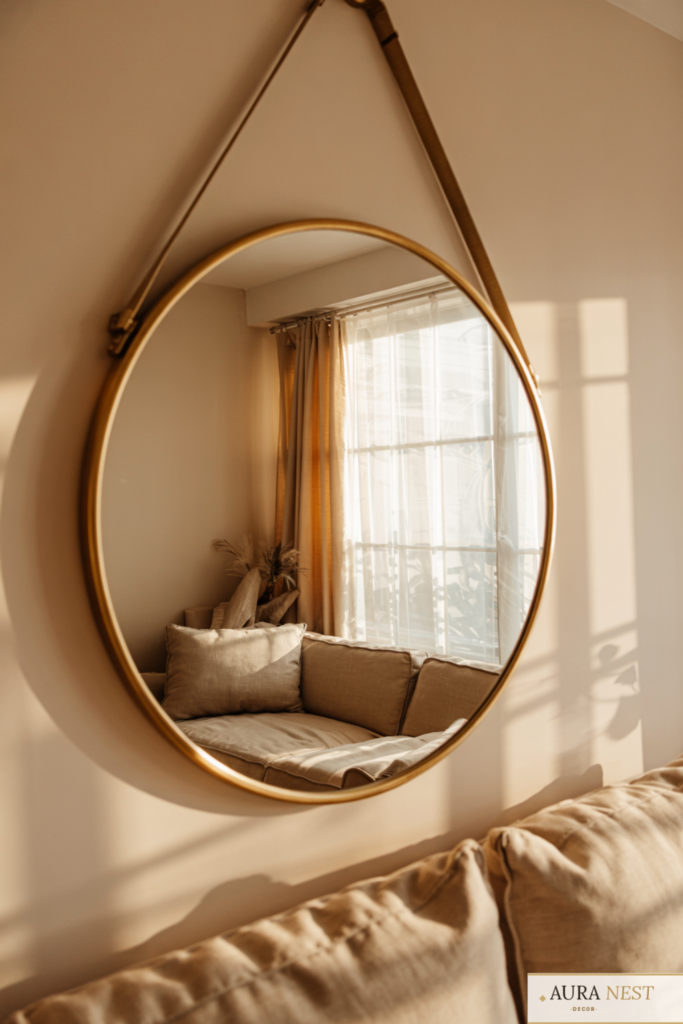
Mirrors in small spaces are not a new idea. But most people hang them in the wrong spots and then wonder why the room still feels small.
The standard advice is to place a mirror opposite a window to reflect natural light. This works. But what works even better — and what fewer people try — is placing a mirror where it reflects something beautiful. The amber glow of your floor lamp at night. Your gallery wall. That perfect styled shelf. A mirror that reflects a dead corner or a blank wall is just showing you more of what you’re trying to distract from.
Lean a large mirror against the wall rather than hanging it flat. This softens the effect, makes the room feel casually styled rather than strategically decorated, and works brilliantly in both Scandi-minimal apartments and warmer, more eclectic British living rooms. An arched mirror is doing enormous work in small spaces right now — the curved top draws the eye upward, which means the ceiling reads as higher, which means the room reads as larger.
For a really small room in an older building — a Victorian terrace, a converted attic flat — a floor-to-ceiling mirror on one wall is the closest thing to magic available in the home décor world. It literally doubles the perceived depth of the room. It’s a statement, but it’s a very effective one.
—
9. The Textile Layer That Small Rooms Are Missing More Often Than Anything Else
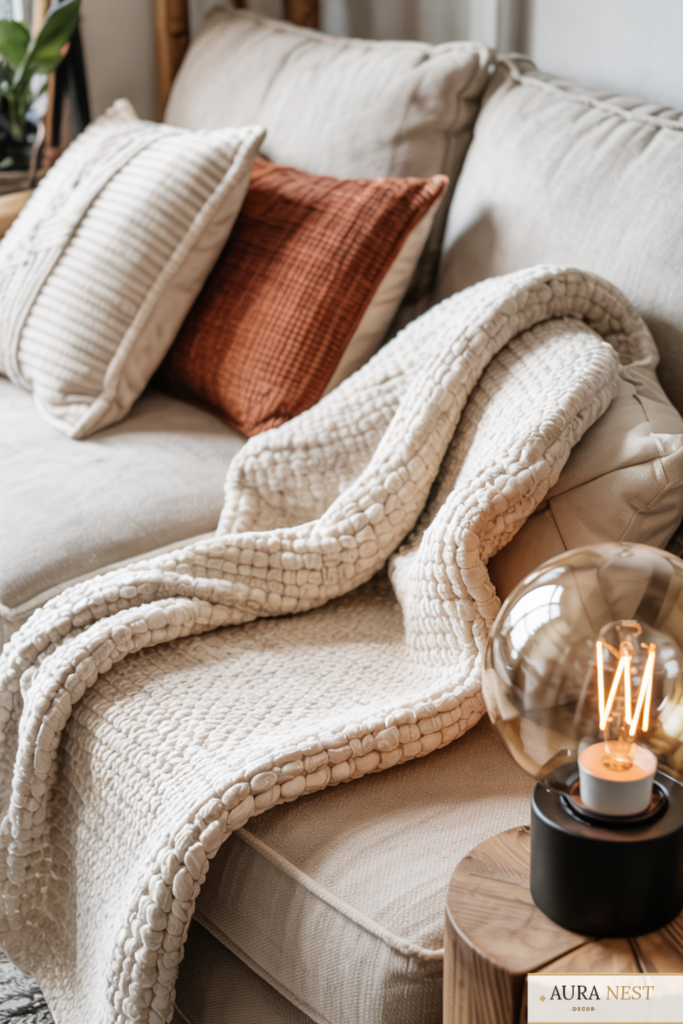
Not more throw pillows. More texture variety.
There’s a particular version of small-room décor that looks almost right but feels a little flat — smooth sofa, flat rug, plain curtains, sleek coffee table. Everything is tasteful. Nothing is interesting to touch. The room lacks what textile designers call “hand” — the tactile quality that makes you want to run your fingers along surfaces and sink into corners.
The fix is layering different textile textures, not just different colors. A linen throw next to a chunky knit pillow cover next to a velvet cushion on the same sofa creates a richness that the eye reads as depth, even before you consciously register the individual pieces. A jute rug under a smaller, softer sheepskin in front of the fireplace. Linen curtains with a slight slub texture that catches light differently than polished fabric.
Curtains deserve their own emphasis: hang them from as close to the ceiling as possible, even if the actual window stops well short of that. Long, high-hung curtains in a small room are doing more heavy lifting than almost any other single design decision. They make the ceiling tall. They make the window large. They make the room feel like it was considered.
—
10. The Coffee Table Swap That Frees Up More Space Than You’d Expect
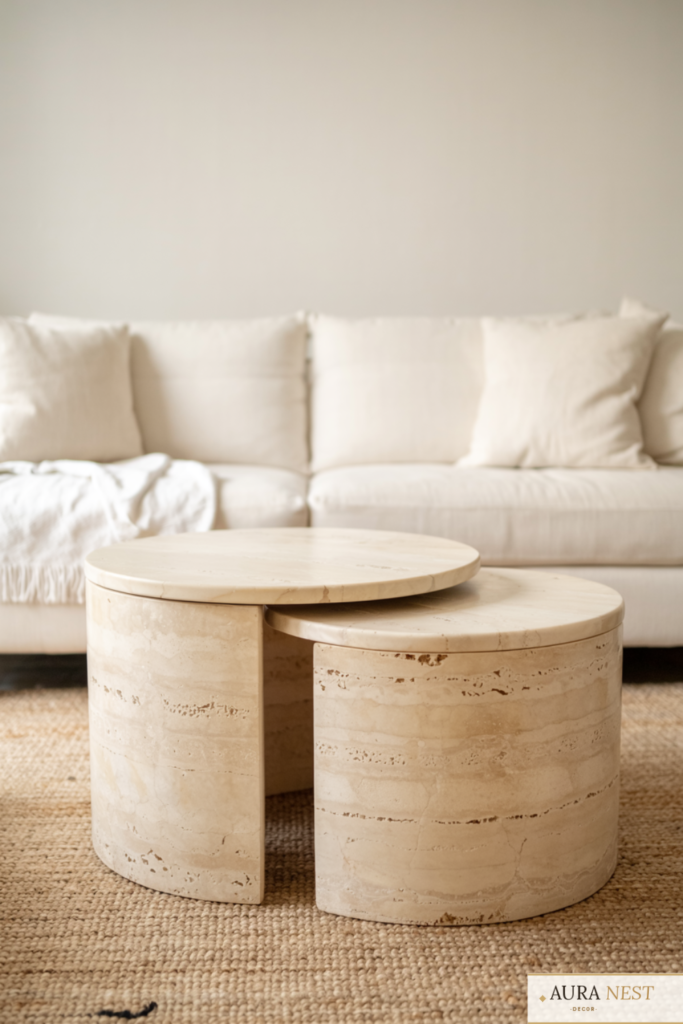
The traditional square or rectangular coffee table is not always serving small living rooms well. A solid wood block in the center of a small seating arrangement blocks visual flow, makes the room harder to navigate, and tends to become a dumping ground that’s difficult to style neatly.
Two alternatives that genuinely change how a small room feels: a round coffee table, which softens the geometry of a rectangular room and removes the visual barrier of sharp corners; or a nesting table set, which allows you to expand surface area when you need it and tuck it away when you don’t.
A glass or acrylic coffee table is the classic transparency trick — the table is present but your eye travels through it, so the floor stays visible and the room feels more open. This works especially well in rooms where the rug is the hero piece, because nothing interrupts the view of it.
If you love a vintage or antique aesthetic — which is currently thriving in both American boho-eclectic spaces and British period homes — a vintage leather ottoman with a tray on top gives you a coffee table that doubles as extra seating when needed. Flexible furniture in small spaces isn’t a compromise. It’s a strategy.
—
11. The Wall Art Arrangement That Always Looks More Expensive Than It Cost
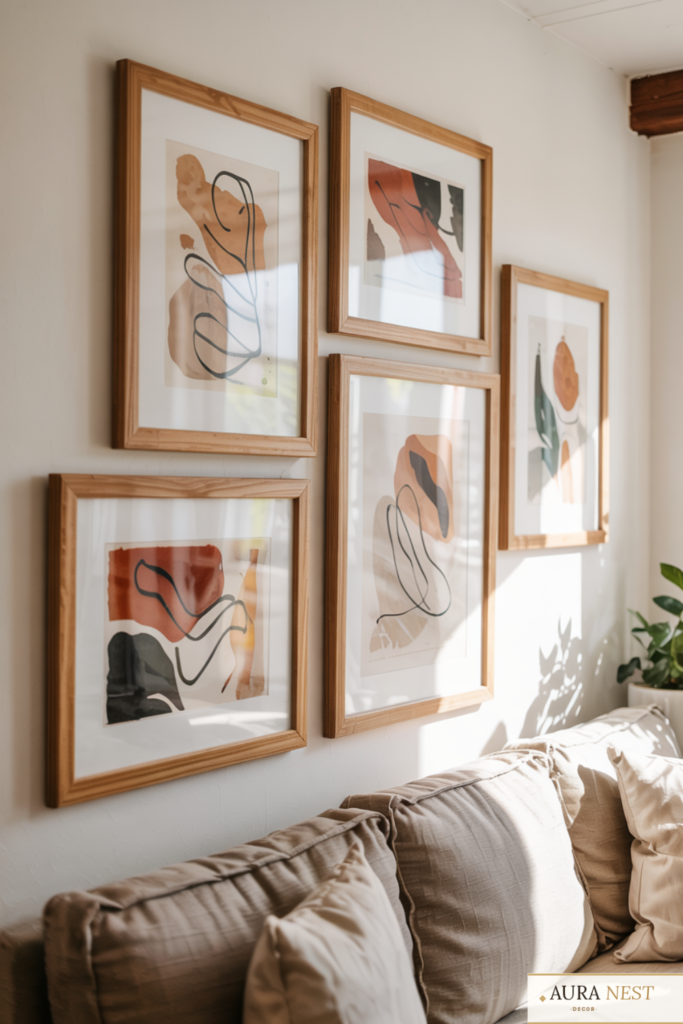
A gallery wall is one of the best things you can do for a small living room, but the execution is what separates the ones that look curated from the ones that look chaotic.
The secret is a coherent color palette across all the frames and all the art, even if the subjects are completely different. Black frames with black-and-white photography mixed with simple line drawings mixed with one piece of abstract color art — all in the same frame style — reads as intentional. Matching frames in different sizes create order. Mismatched frames in different metals create warmth but need a unifying color story in the art itself to hold together.
Scale matters enormously. Lots of small prints spread across a large wall will always look insubstantial, like postage stamps. One large piece, or a cluster of medium pieces with genuine proximity — close enough that there’s only an inch or two between frames — reads as a single composition rather than a collection of individual things.
And the golden rule: hang everything lower than feels natural. Art hung too high is one of the most universal home décor errors in existence. Eye level means the center of the piece at seated eye level, which is lower than standing eye level, which is where most people hang things. Get it right and the whole room settles.
—
12. The Small Room That Feels Like More Than It Is: The Final Layer
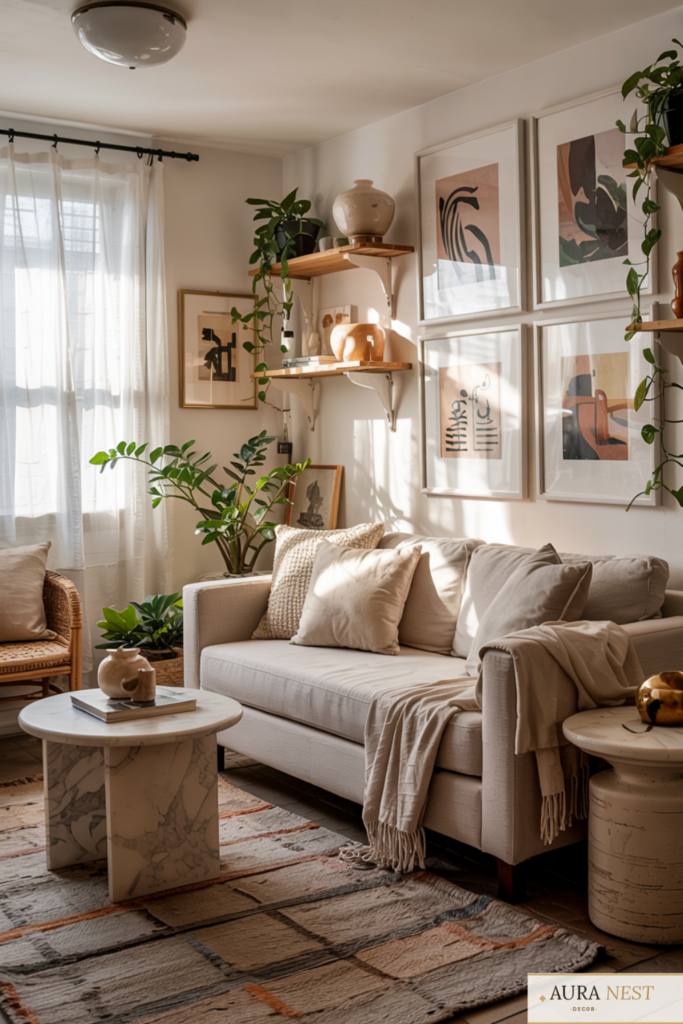
There’s a version of small that feels cramped, apologetic, and temporary. And there’s a version of small that feels intimate, complete, and intentionally cozy.
The difference isn’t size. It’s commitment.
The rooms that feel cozy and complete are the ones where someone made decisions all the way through — picked a color, stuck with it, found the right rug, hung the curtains high, put the sofa somewhere interesting, styled the shelves with actual care. They didn’t hedge their bets by keeping everything beige and interchangeable in case they moved or changed their minds. They committed to a feeling.
Scent is the final layer that almost everyone skips. A specific candle you only burn in the living room, a diffuser with one consistent fragrance — cedar and amber, or eucalyptus and something warmer — tells your brain that this space is a place. Smell is the fastest route to memory and emotional association. A room that smells like itself feels like home in a way that even the most perfectly styled space without a scent doesn’t quite achieve.
Commit to the room you’re in. Make it yours. Fully.
—
🌿 Quick Tips
The front legs of every main seating piece should sit on the rug. If they don’t, the rug is too small, and the room will never quite look finished.
Swap your overhead lighting for three layered light sources — floor lamp, table lamp, and one string of warm bulbs — and you won’t look back.
High-hung curtains from ceiling to floor visually add an entire foot of perceived height to any room, and fabric costs less than renovation.
One deep-toned accent wall — terracotta, aged sage, dusty rose — gives a small room a spine. Pick one wall and go for it.
When in doubt, take something out. Cozy and cluttered are not the same thing. Breathing room is part of the design.
—
❓ FAQ
Q: What’s the best sofa color for a small living room? A: A mid-tone natural shade — warm grey, oatmeal, camel, sage — tends to work best because it doesn’t visually dominate the way a dark sofa can, but it also doesn’t show every piece of lint and dust the way a bright white or pale cream would. Textured fabric like boucle or linen also helps a sofa read as a considered piece rather than a functional object.
Q: How do I make a small living room look more expensive without spending much? A: Invest in a large rug, hang curtains high, and remove anything that doesn’t belong in the space. Decluttering reads as luxury far more reliably than new furniture does. A few beautiful objects displayed with breathing room between them always looks more expensive than the same objects crowded together.
Q: Can a small living room work as a home office too? A: Yes, and the key is containment. A dedicated desk area — even a floating wall shelf at desk height, or a small console table in a corner — keeps the work zone visually separate from the living zone. A small folding screen or a bookshelf placed as a partial divider reinforces that separation without requiring a permanent wall.
—
💭 Final Thought
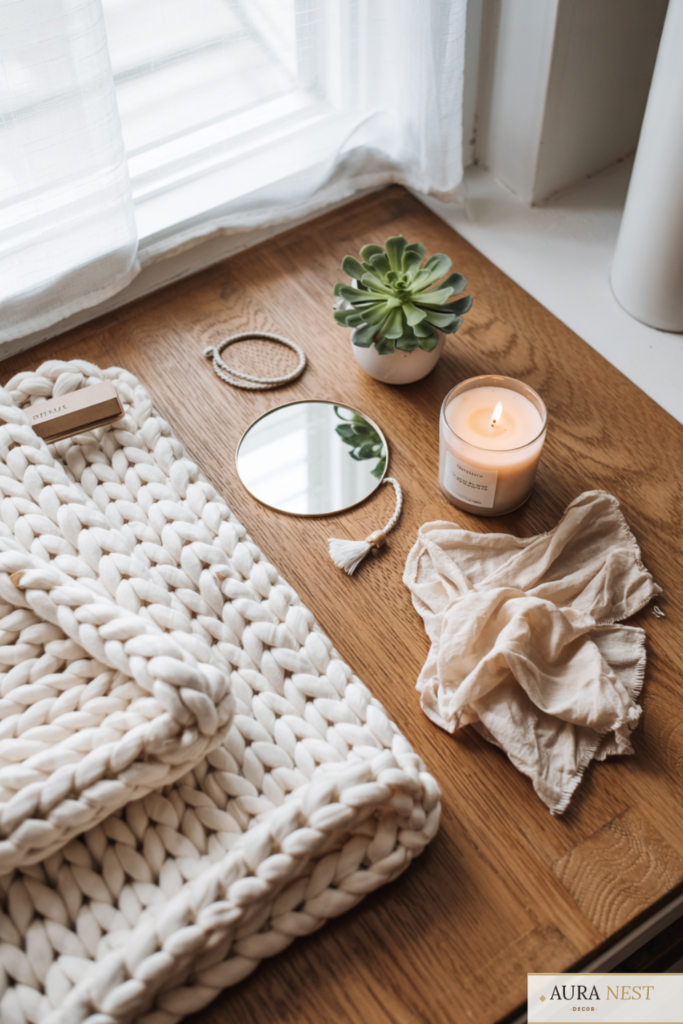
Small rooms ask something of us that large rooms don’t. They ask us to be intentional — to actually decide what matters, what stays, what the room is for and what it should feel like at 9pm on a Wednesday when everything else has quieted down.
There’s something genuinely lovely about a room that knows what it is.
What would your small living room feel like if you committed to it completely — not as a temporary space, but as the real, beautiful home you actually have right now?