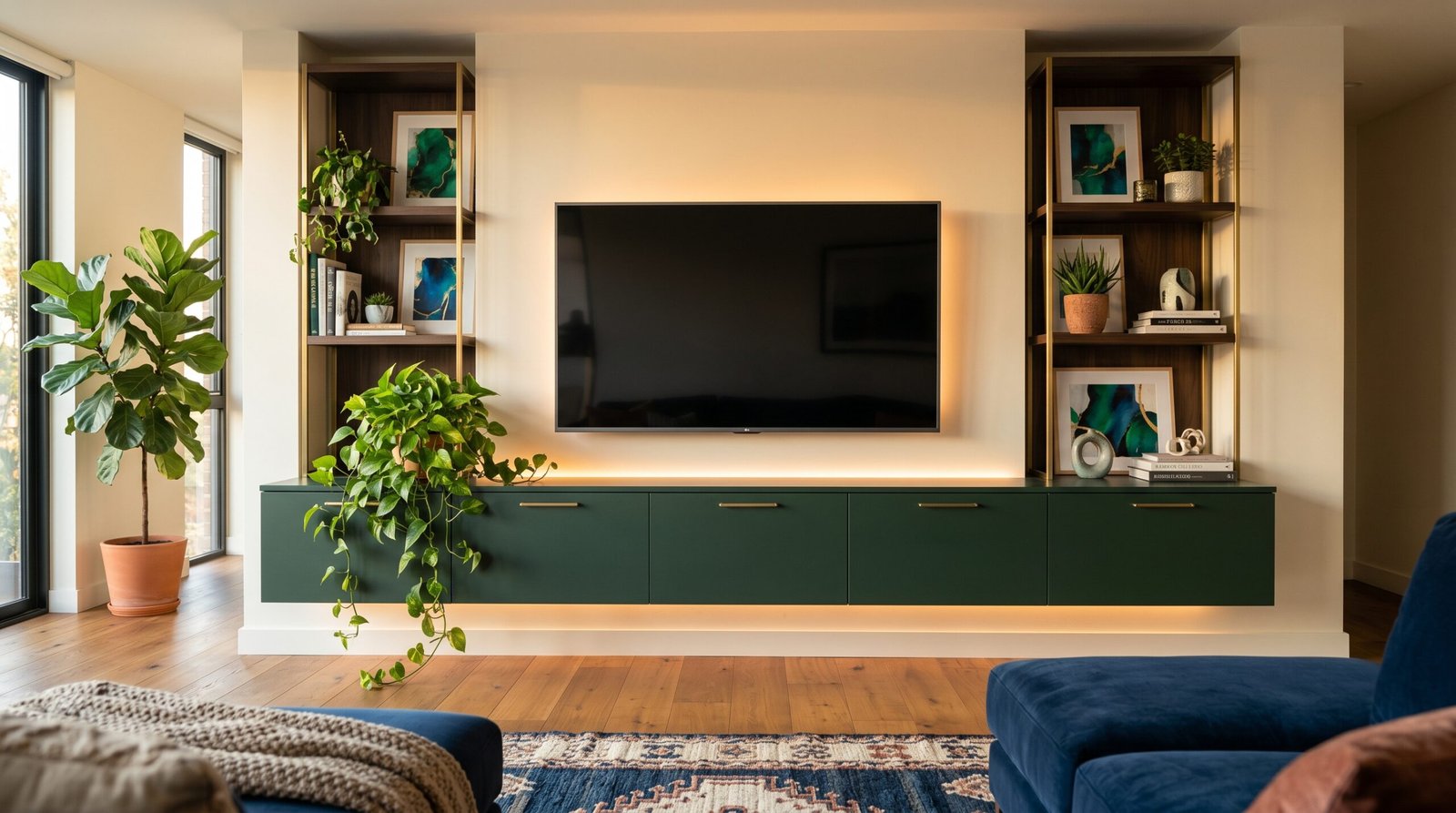
The TV Unit Interior That Changed How My Living Room Felt — Not Just Looked
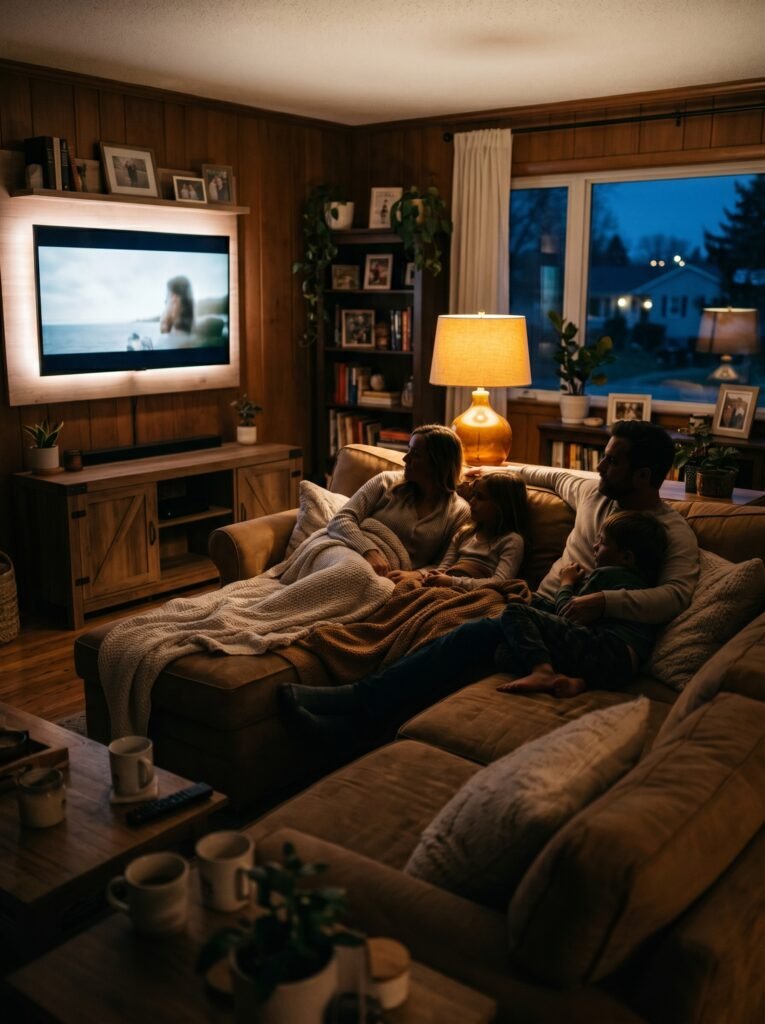
There’s a corner in almost every home that silently sets the emotional tone of the entire space — and most of us don’t even realize it. Your TV unit isn’t just a piece of furniture. It’s the anchor of your living room, the place your eyes land first, and the backdrop to every family movie night, lazy Sunday afternoon, and quiet evening you’ll ever spend in that room.
—
Table Of Content
1. Why Your TV Unit Is the Most Underestimated Piece of Furniture in Your Home
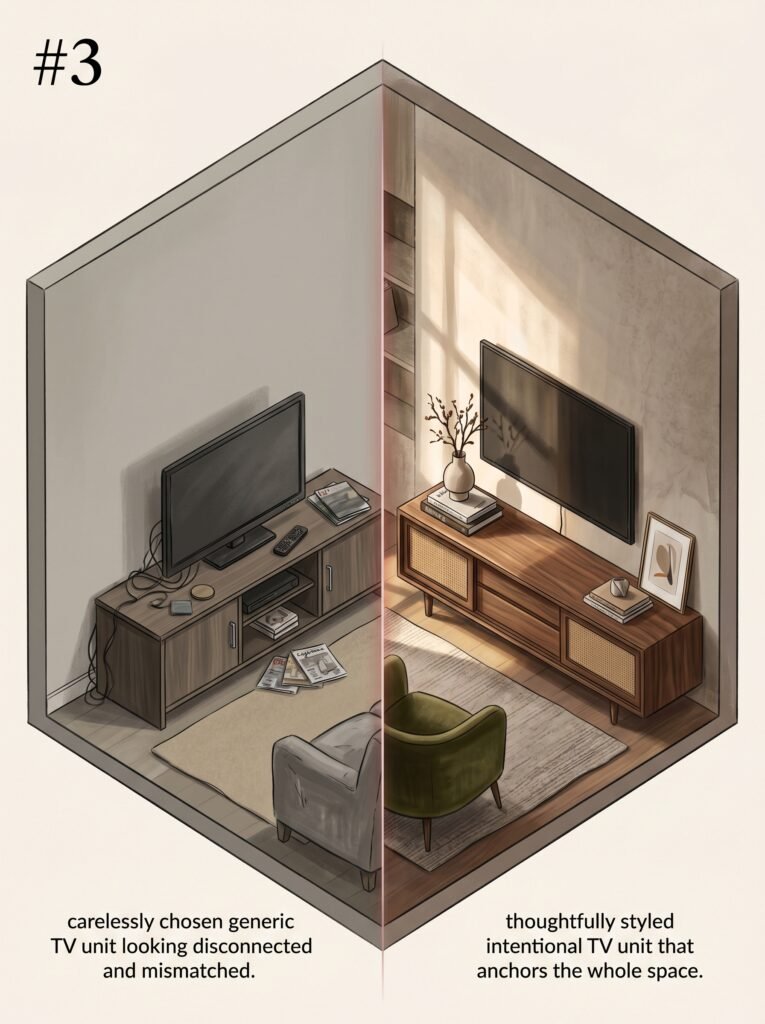
Walk into any living room and your eyes will instinctively travel to the TV wall before landing anywhere else. It’s just how the human brain works — we orient ourselves toward the focal point of a room, and in most modern homes, that focal point is the television and the unit that grounds it.
Yet somehow, the TV unit is the piece of furniture that gets the least intentional thought. People spend weeks choosing a sofa, agonize over paint colors, and curate throw pillows with editorial precision — then pick a TV unit based on price and storage capacity alone. The result? A living room that feels disconnected, slightly off, like a sentence without a proper ending.
“Your TV unit isn’t just furniture — it’s the emotional anchor of your entire living room.”
The truth is, when your TV unit interior is styled and designed with intention, the whole room comes alive. Suddenly the sofa makes more sense, the lighting feels purposeful, and the space tells a story about the people who live there. That’s the power of getting this one piece right.
—
2. The Hidden Language of TV Unit Styles — What Your Choice Says About You
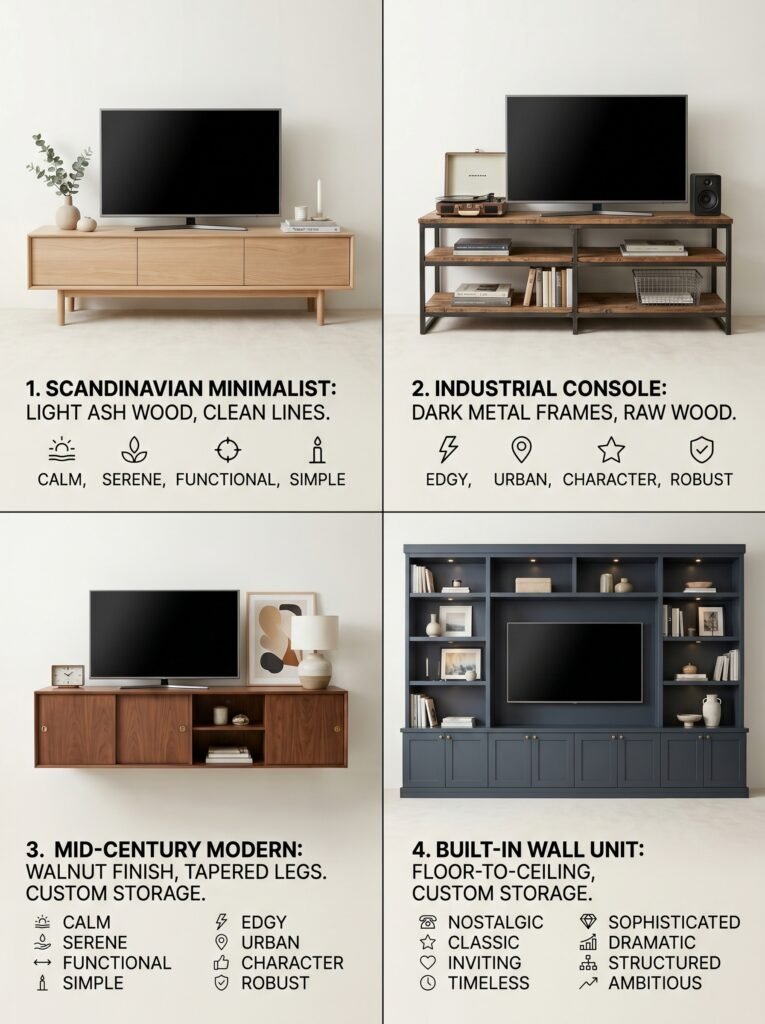
Every design style carries its own emotional vocabulary, and TV units are no different. A sleek, floating wall-mounted unit with handle-free cabinets says something clean and modern — it whispers minimalism, discipline, and a love of uncluttered breathing room. A chunky, reclaimed wood unit with open shelving and woven baskets tells a different story entirely — one of warmth, collected memories, and a home that’s been lived in with love.
Understanding the major TV unit styles can help you stop scrolling endlessly and start making choices with genuine confidence. The most popular right now are Scandinavian minimalist units (light wood, clean lines, muted tones), industrial-style consoles (dark metal frames, raw wood shelves, exposed hardware), mid-century modern cabinets (tapered legs, walnut finishes, retro silhouettes), and built-in wall units (custom, floor-to-ceiling, architecturally seamless).
Each style has a place. The question isn’t which is trending — it’s which one makes you exhale when you walk through the door.
—
3. Floating vs. Floor-Standing: The Design Decision That Changes Everything
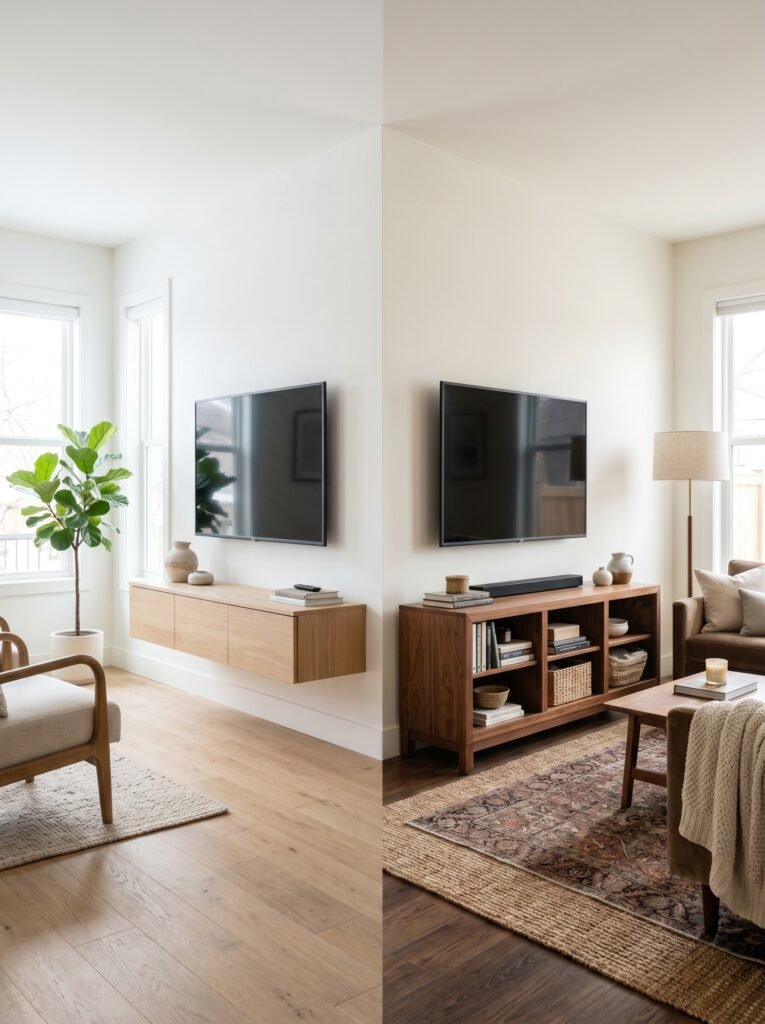
This is one of those choices that feels purely practical on the surface but is deeply aesthetic at its core. A floating TV unit — one mounted directly to the wall with no legs touching the floor — creates an illusion of more floor space, makes a room feel larger, and gives a contemporary, almost sculptural quality to the wall. It’s particularly transformative in smaller living rooms where visual breathing room is precious.
A floor-standing unit, on the other hand, brings a sense of solidity and permanence. It feels grounded — in the most reassuring, literal sense of that word. For families with young children, it often feels safer and more practical. For those who love layering rugs and lower furniture, it creates a beautiful, cozy visual weight that ties the room together.
The choice between these two isn’t about what’s “better.” It’s about how you want the room to feel when you sink into the sofa at the end of a long day. Do you want it to feel open and airy — or anchored and enveloping?
—
4. The Magic of Styling the Space Around Your TV (Not Just Under It)
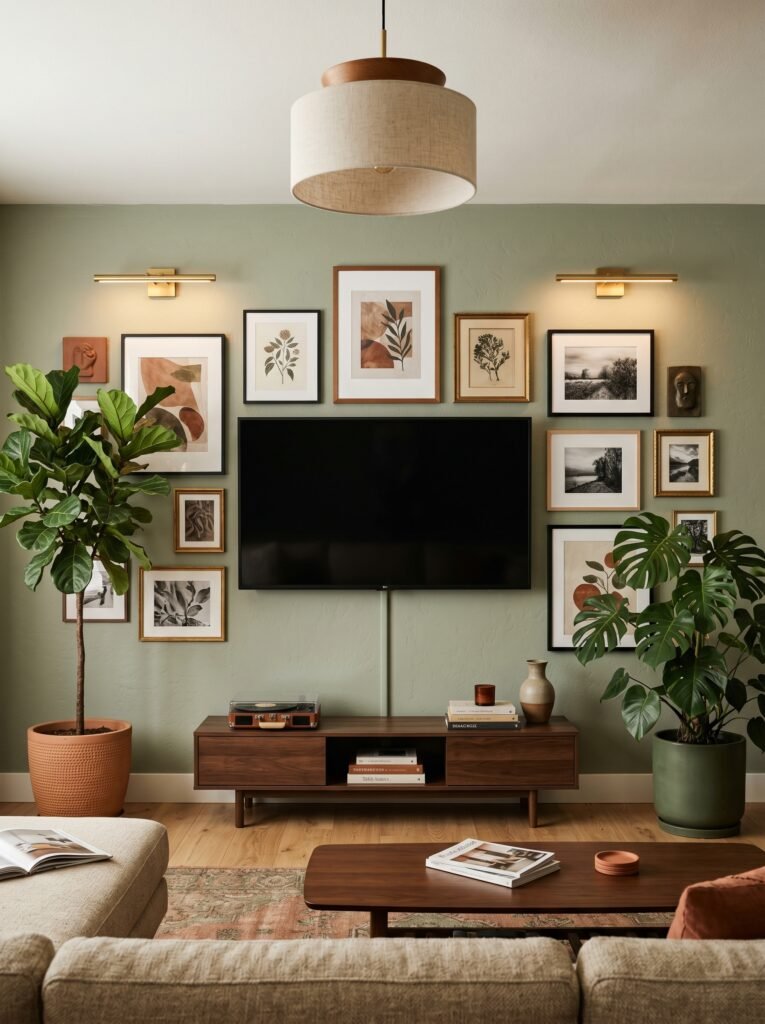
Here’s something most interior design guides skip: the space around your TV matters just as much as the unit below it. The wall, the flanking shelves, the space above the screen — these are all part of the TV unit interior composition.
Think of your TV wall as a gallery. The television itself is the centerpiece, but what surrounds it creates the mood. Tall indoor plants placed on either side of the unit instantly soften a hard, rectangular screen. Gallery walls of framed photographs or art prints stop the TV from feeling like the only personality in the room. Sconces or LED strip lighting behind the TV panel creates a soft ambient glow that reduces eye strain and — unexpectedly — makes the entire wall feel designed.
Even the ceiling above the TV unit deserves a thought. A pendant light slightly off-center, a recessed spotlight, or even a small statement chandelier can draw the eye up and make the entire vertical space feel intentional.
—
5. Color Choices That Make a TV Unit Interior Look Designer-Level

Color is where most people play it safe — and where the biggest transformation opportunities actually live. The default choice is wood-toned neutrals and white, which are lovely and timeless but can also feel predictable. When you start considering color as a design tool rather than a safe default, something exciting happens.
A TV unit in deep forest green against a warm cream wall creates a richness that feels both sophisticated and deeply cozy. A matte black unit against a light gray wall is dramatic without being heavy. A dusty blush unit with brass hardware feels romantic and editorial — the kind of thing you’d spot in a curated home magazine and immediately save to Pinterest.
“Color isn’t just decoration — it’s the emotional temperature of the room you walk into.”
One approach that always works beautifully: choose your TV unit in a color that’s one or two shades deeper than your wall color. The tonal contrast is subtle enough to feel cohesive, but dramatic enough to make the unit look like it was designed for that exact spot.
—
6. Open Shelving vs. Closed Cabinets — The Eternal Storage Debate
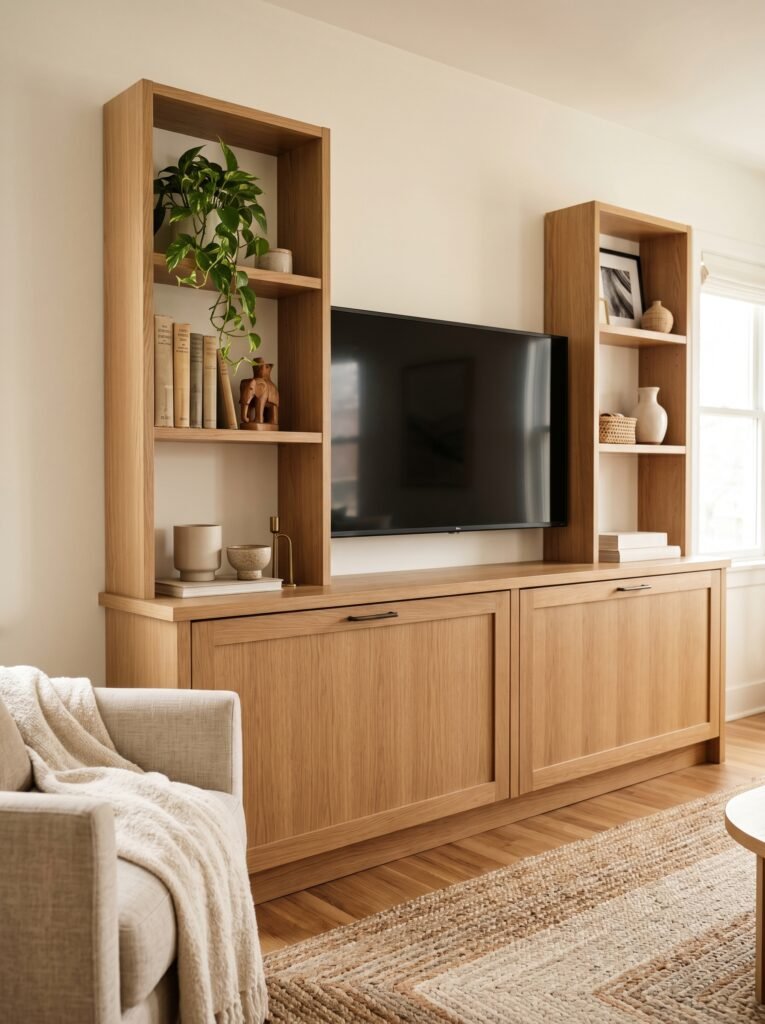
If you’ve ever spent an afternoon styling open shelves only to feel vaguely dissatisfied — you’re not alone. Open shelving on a TV unit is gorgeous in theory and requires real curation to look intentional in practice. The key is the rule of threes: group objects in odd numbers, vary the height and texture, and leave at least 30% of shelf space empty. Yes, empty. White space is not wasted space — it’s what makes everything else visible.
Closed cabinets solve the clutter problem elegantly. All those streaming device cables, game controllers, remote controls, and random batteries that accumulate over time — they vanish behind a door, and your living room maintains its composure. The best TV units combine both: closed storage below for the practical necessities, and open shelving above for the beautiful things you actually want to display.
Think of the open shelves as your curated story — the books you’ve loved, the travel souvenirs that mean something, a candle in a beautiful vessel, a small piece of art. These aren’t decorations for decoration’s sake. They’re a quiet invitation for anyone who visits to understand who you are.
—
7. How Lighting Transforms a TV Unit Interior from Ordinary to Extraordinary
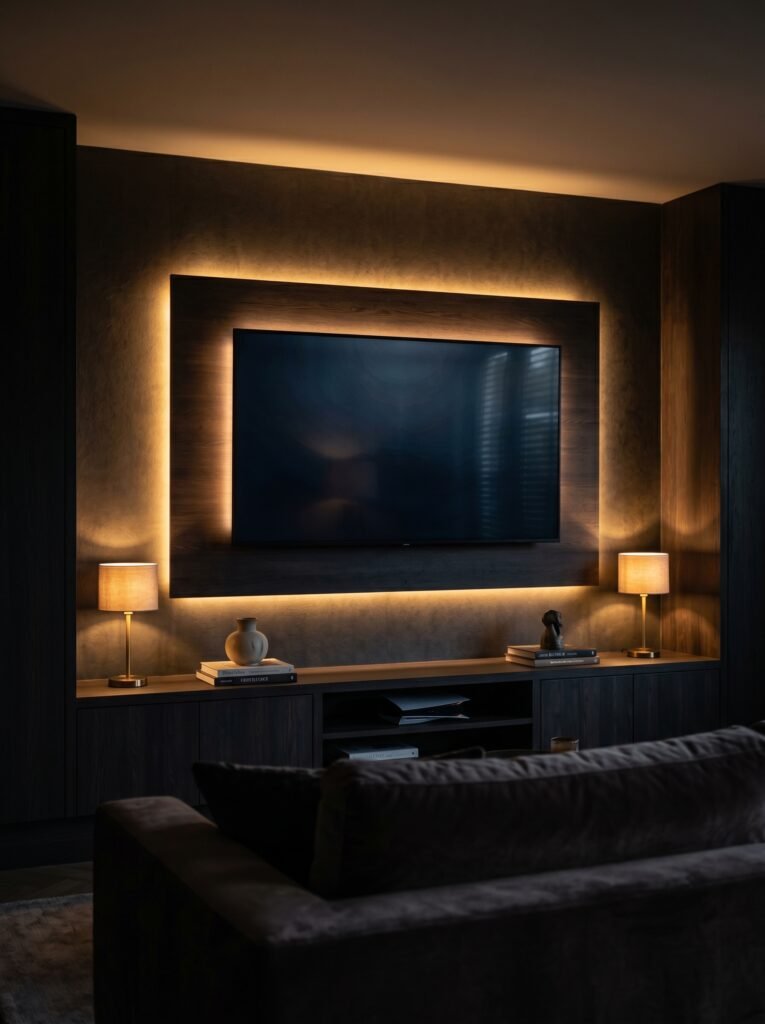
Lighting might be the most underused design tool in the entire living room — and nowhere is this more true than at the TV unit. The right lighting doesn’t just illuminate a space; it completely redefines its mood.
LED strip lights installed along the back edge of a floating TV unit create a soft halo effect that makes the unit appear to float even more dramatically. Warm-toned lights (2700K-3000K color temperature) cast a golden glow that makes the whole room feel cozy and intentional, like a boutique hotel lobby. Small table lamps placed on the TV unit itself — on either side of the screen, on a lower shelf — add layered warmth and break up the rectangular dominance of the television.
For those who watch films seriously, a bias lighting setup (soft LED lighting behind the TV screen) reduces eye strain dramatically while also making the entire TV wall look like something out of a cinema lounge.
—
8. Small Living Room? Here’s How to Make Your TV Unit Work Harder
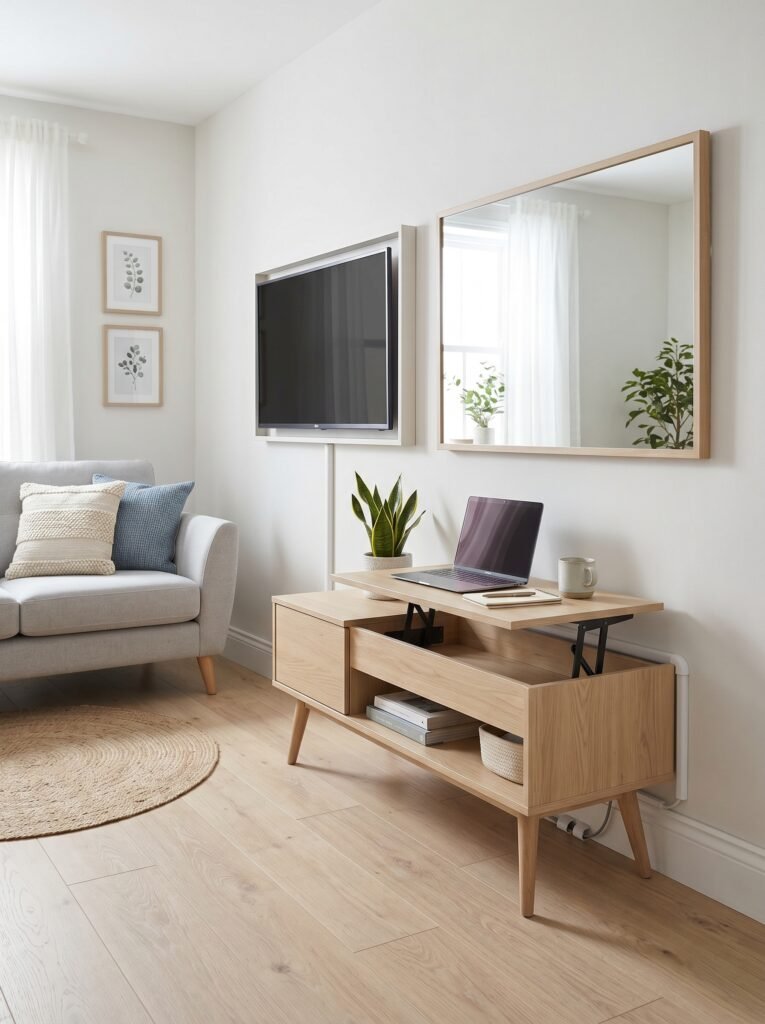
Small spaces demand smarter thinking — and the TV unit is often where small rooms either succeed or struggle. The biggest mistake in a compact living room is choosing a TV unit that’s too heavy, too tall, or too wide for the space. It crowds the room visually and makes everything feel compressed.
The solution is a unit that’s proportional — and multifunctional. Look for units with lift-top panels that can double as a workspace, units with built-in cable management to eliminate visual clutter, or slim console-style units that occupy minimal floor space while still providing storage.
Mirrors on the wall above or beside the TV unit will make a small room feel dramatically larger — the reflection doubles the perceived depth of the space. And if your unit is floor-standing, choosing one with tapered legs (that mid-century modern silhouette) keeps the floor visible and the room feeling light.
—
9. The Art of Cable Management — Because Nothing Kills a Beautiful TV Setup Like Visible Wires
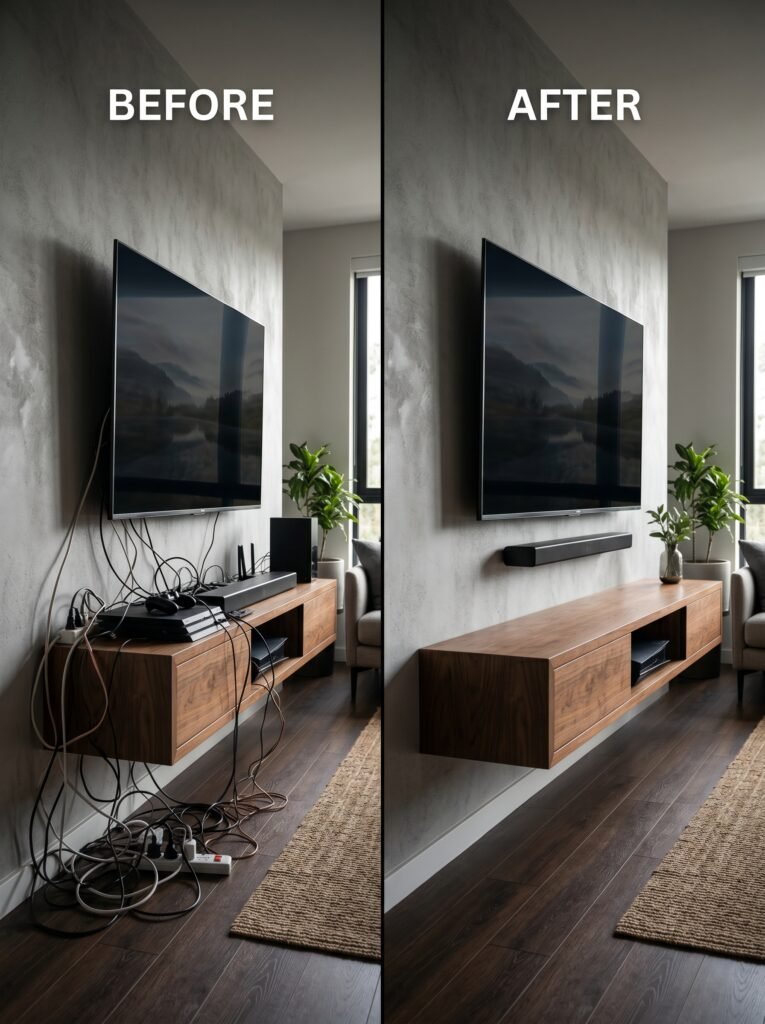
You can have the most beautifully styled TV unit interior in the world, and a tangle of visible cables will undo every bit of that effort in an instant. This is one of those practical details that has an outsized visual impact — and thankfully, the solutions are simpler than most people realize.
“A beautifully styled room and visible cables cannot coexist — one always wins.”
Cable raceways (plastic or aluminum channels that mount to the wall) create a clean vertical or horizontal line that’s barely noticeable once painted to match the wall. Velcro cable ties bundle cords behind the unit neatly. For a completely seamless look, in-wall cable management kits allow you to route cables through the wall itself — no visible wires at all, just a television that appears to hover on a clean, uninterrupted surface.
The effort is small. The visual payoff is enormous.
—
10. Incorporating Plants, Artwork, and Personal Objects Into Your TV Unit Styling
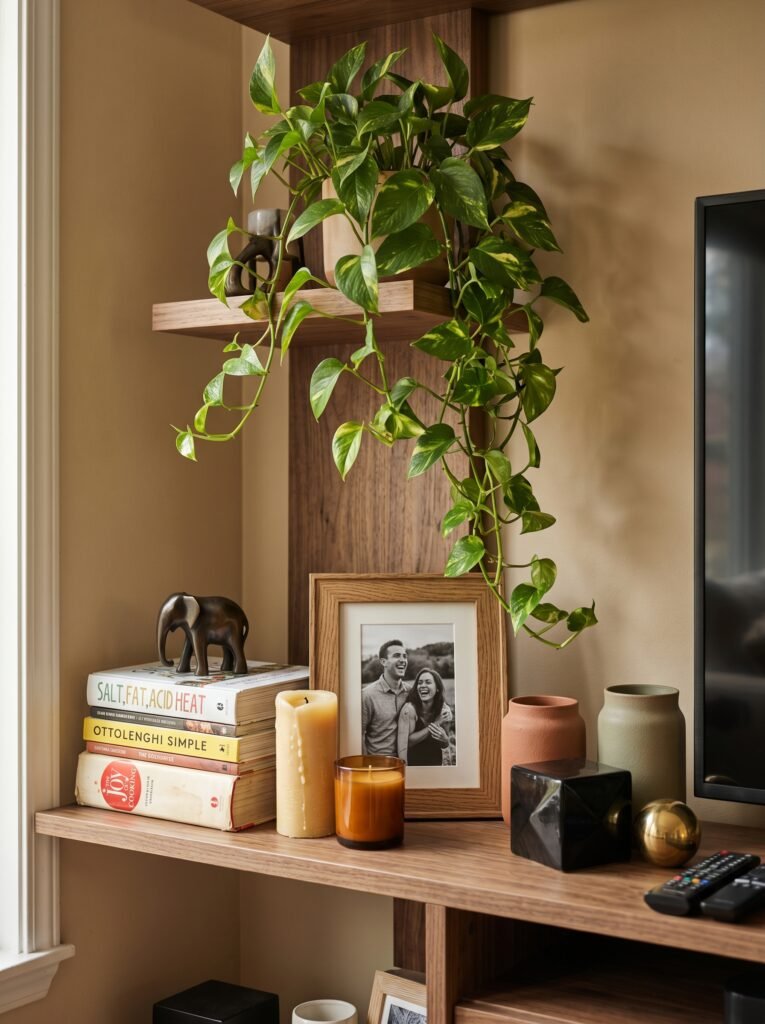
A TV unit styled purely with symmetrical candles and matching vases looks beautiful in a showroom. In a real home, it can feel sterile. The secret ingredient that makes a TV unit interior feel genuinely personal is the layering of objects that have meaning — mixed with objects that are simply beautiful.
A trailing pothos plant cascading off the edge of an open shelf brings life and organic movement to what could otherwise feel rigid and composed. A stack of well-loved cookbooks next to a small sculpture you picked up at a local market tells a real story. A framed photograph tucked between two candles at varying heights adds a human heartbeat to the whole composition.
The styling rule to remember: vary height, texture, and finish. Pair matte with gloss. Organic with geometric. Soft with hard. This contrast is what creates visual interest — and it’s what makes the difference between a shelf that looks styled and one that looks alive.
—
11. The Most Current TV Unit Interior Trends Worth Knowing Right Now
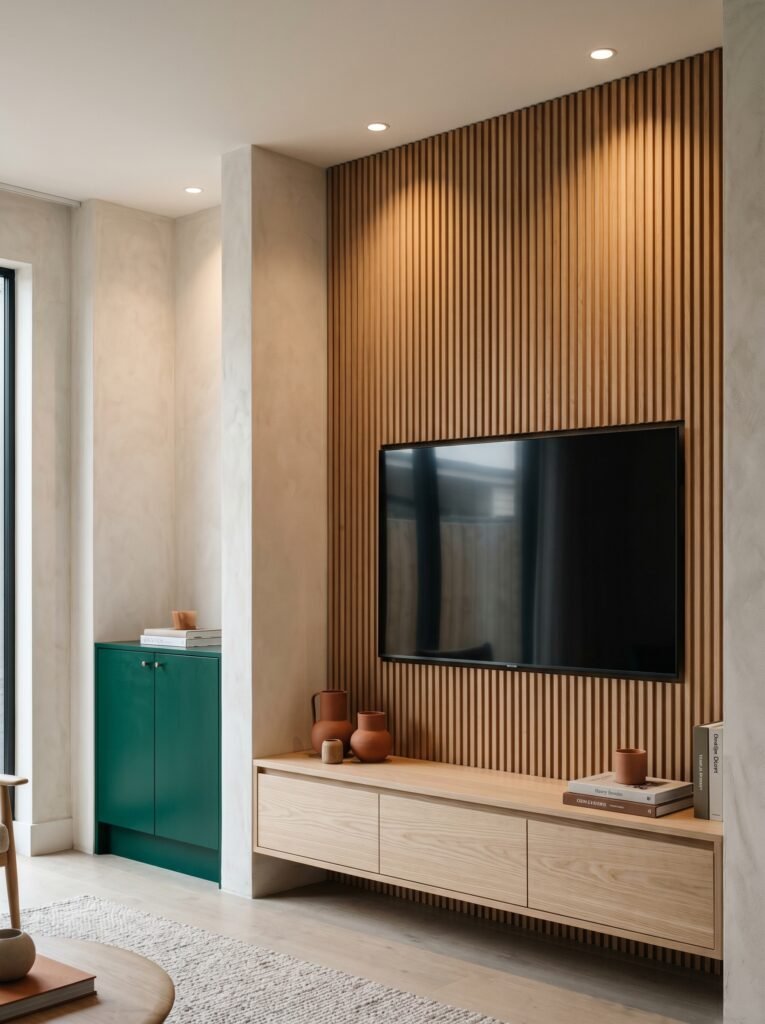
Design trends exist to inform, not dictate. But knowing what’s gaining momentum can help you make choices that feel current and considered rather than accidentally dated.
Right now, the strongest TV unit trends are moving toward bolder built-in wall panels — full-height paneling behind the TV unit that creates an architectural backdrop, usually in rich textured finishes like limewash plaster, fluted wood panels, or Venetian plaster. This transforms the TV wall from a simple storage solution into a genuine design statement.
Japandi aesthetics — the deeply calming blend of Japanese minimalism and Scandinavian warmth — are defining many TV unit interiors right now. Think low-profile units in natural ash or oak, minimal hardware, clean horizontal lines, and a palette of warm whites, soft greiges, and earthy terracottas. There’s also a quiet return to maximalism in the form of deeply colored, richly textured units in jewel tones — emerald, sapphire, deep terracotta — that make a deliberate, confident statement.
—
12. How to Pull the Whole Look Together — From Vision to Reality
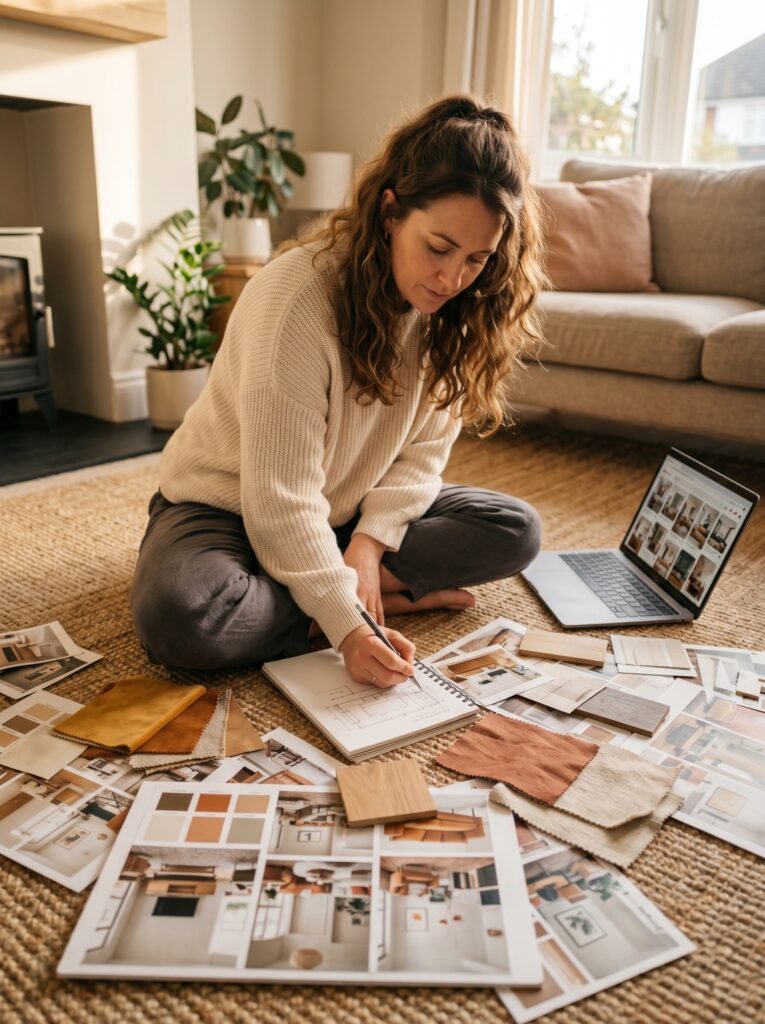
The most important step in creating a TV unit interior you’ll love for years isn’t choosing the right piece of furniture — it’s starting with a clear vision of how you want the room to feel. Not look. Feel.
When you begin with feeling, every choice becomes easier. If you want the room to feel calm and restful, you’ll gravitate toward a lower-profile unit, a neutral palette, and minimal open shelving. If you want it to feel warm and full of personality, you’ll choose richer tones, layered shelving, and textured materials. If you want it to feel sophisticated and considered, you’ll lean toward custom built-ins, carefully matched lighting, and a more restrained styling approach.
Build a mood board — even a simple Pinterest board — before buying anything. Look for the common thread in the images you keep saving. That thread is your design intuition telling you exactly what it wants. Trust it.
—
🌿 How to Take Care of Your TV Unit Interior
Maintaining a beautiful TV unit interior isn’t about expensive products or time-consuming routines. It’s about small, consistent habits that keep the space feeling intentional.
Dust the unit weekly — especially open shelves — using a microfiber cloth. Dust settles fastest on horizontal surfaces and can make even beautiful objects look neglected surprisingly quickly. For wood-finish units, a monthly wipe with a small amount of furniture oil or beeswax will keep the material looking rich and prevent drying or cracking over time.
Revisit your shelf styling every season. Swap out candles, rotate plants, swap a decorative object for something new you’ve collected. This seasonal refresh takes twenty minutes and completely revitalizes the look without spending a single dollar.
Keep the cable management in check every few months — cables have a way of gradually migrating out of their managed paths, and a quick re-tuck keeps the overall look clean and composed.
Finally, clean your television screen with a dry microfiber cloth — never wet cloths or household glass cleaners, which can damage the screen coating. A clean screen reflects the light better and makes the entire TV unit composition look sharper and more polished.
—
❓ FAQ
Q: What size TV unit should I choose for my living room? A: As a general rule, your TV unit should be at least as wide as the television itself, and ideally around 1.5 times the width of the TV. This creates visual balance and prevents the unit from looking too narrow or top-heavy beneath a large screen.
Q: How high should a TV unit be positioned from the floor? A: The ideal viewing height places the center of your TV screen at approximately eye level when you’re seated — which is typically around 42-48 inches from the floor for most sofas. For a floating TV unit, this means positioning the unit so the TV sits comfortably within that range, usually around 18-24 inches from the floor for the unit itself.
Q: Can I mix different wood tones in a TV unit interior styling? A: Absolutely — and in fact, mixing two or three wood tones often looks more sophisticated and considered than trying to match everything perfectly. The key is to have one dominant tone and one or two accent tones, and to make sure there’s a warm-to-warm or cool-to-cool consistency (rather than mixing very warm honey woods with very cool ashy gray woods, which can feel unresolved).
—
💭 Final Thought
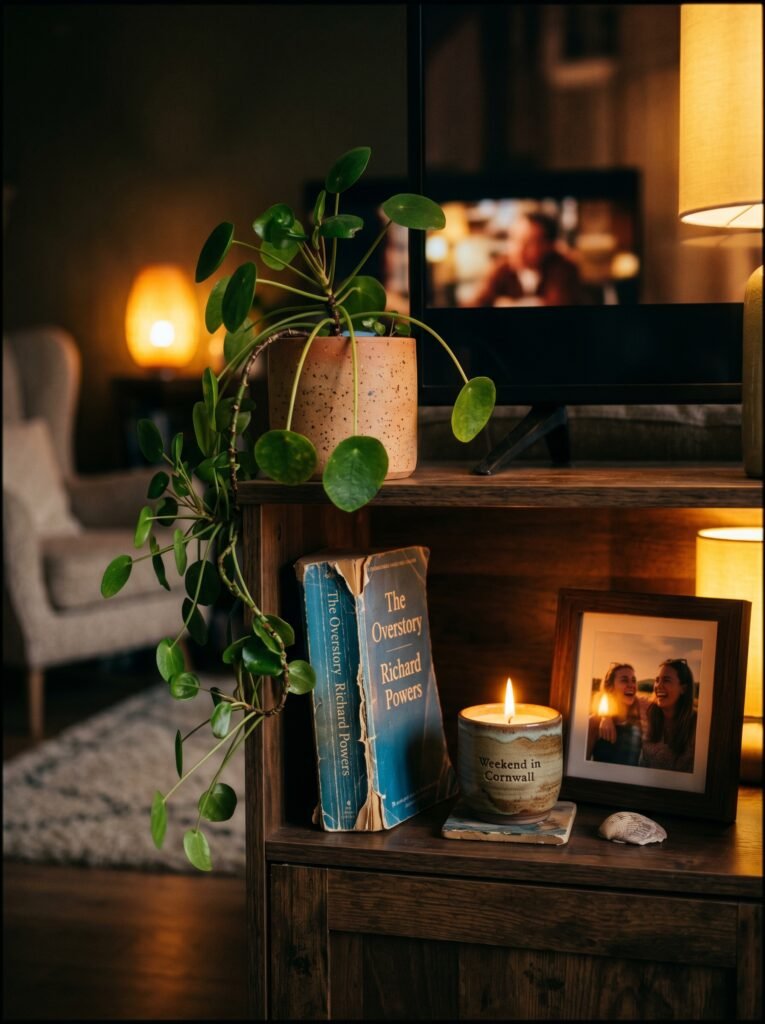
The most beautiful TV unit interiors aren’t the ones copied perfectly from a catalog — they’re the ones that feel unmistakably like the people who live with them. They hold a plant that was a gift from a friend, a book that changed something, a candle from a weekend trip, and somehow all of it coheres into something that feels like home.
Your living room deserves that kind of intention. So does the quiet anchor at its center.
What does your TV unit say about you right now — and what do you wish it said?