Dark Academia Living Room: How to Make Your Home Feel Like a Victorian Library You Actually Want to Live In
You know that feeling when you walk into a room and something about it makes you want to sit down, pour a drink, and stay for hours? That’s what dark academia does. It’s moody without being oppressive, intellectual without being cold, and honestly — it makes any room feel like there’s a secret hiding in it somewhere.
—
1. The Wall Color Decision That Changes Everything Else in the Room
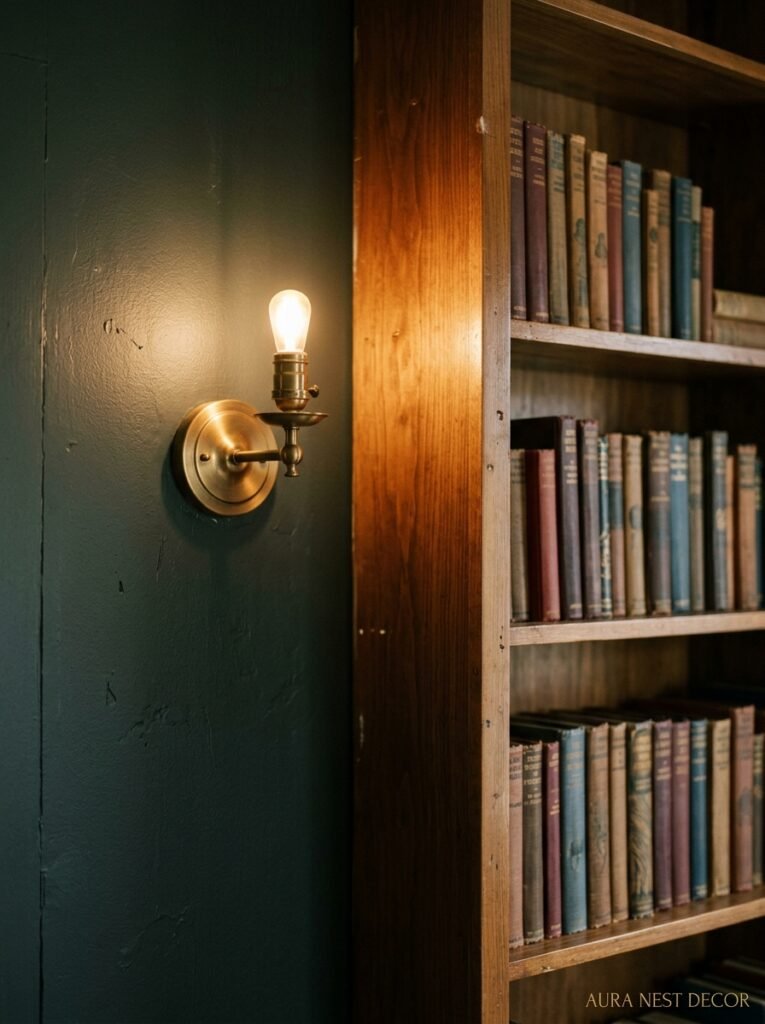
Let’s start here because it’s the one choice that cascades into every other decision you make. Dark academia doesn’t require dark walls — but it certainly doesn’t shy away from them, and I think that’s where most people lose their nerve.
Deep forest green. Inky navy. A warm charcoal that still reads brown in candlelight. These are the colors that do the heavy lifting. Benjamin Moore’s “Black Forest Green” or Farrow & Ball’s “Railings” if you’re in the UK — these are starting points worth bookmarking.
But here’s what I don’t want you to do: paint one accent wall and call it done. That’s not dark academia, that’s an Ikea showroom with ambition. The commitment is kind of the whole point. Paint ALL the walls, or at minimum three of them, and suddenly the room becomes a place instead of just four walls with furniture in it.
If you’re in a rented flat and your landlord would actually lose their mind over this, go for deep mahogany-toned wallpaper instead. Maximalist floral, aged map prints, or William Morris-style botanical repeats in dark colorways. Your walls are the canvas, and the canvas needs depth.
“Paint the whole room. Not an accent wall. A room.”
—
2. The Furniture Pieces That Actually Define the Aesthetic (Not Just the Vibe)

There’s a difference between furniture that evokes dark academia and furniture that just looks a bit brown and old. The distinction matters.
What you’re looking for is weight. Visual weight, physical weight — actual heaviness. A Chesterfield sofa, ideally in dark leather or forest green velvet. A wingback armchair tucked near a lamp. A wooden coffee table with actual heft to it, not the kind that wobbles when you put down a mug. And legs — furniture with legs matters here, specifically because it gives the room breathing room and doesn’t make things look like they’re melting into the floor.
Antique and secondhand pieces are your best friends. Not gonna lie, this aesthetic genuinely looks BETTER with imperfect furniture. A little scuff on a leather chair? That’s patina. A wobbly drawer on an old writing desk you found at a car boot sale or an estate sale? That’s character. The goal isn’t a magazine spread — it’s a room that feels like it’s been lived in by interesting people for a very long time.
In the UK, check your local auction houses. In the US, Facebook Marketplace and estate sales are honestly unbeatable for this stuff. Skip the new “vintage-inspired” furniture unless you can’t find the real thing, because reproductions usually miss the weight and proportions in ways that are hard to put your finger on but VERY hard to unsee.
—
3. Why the Bookcase Is the Most Important Single Object You’ll Buy
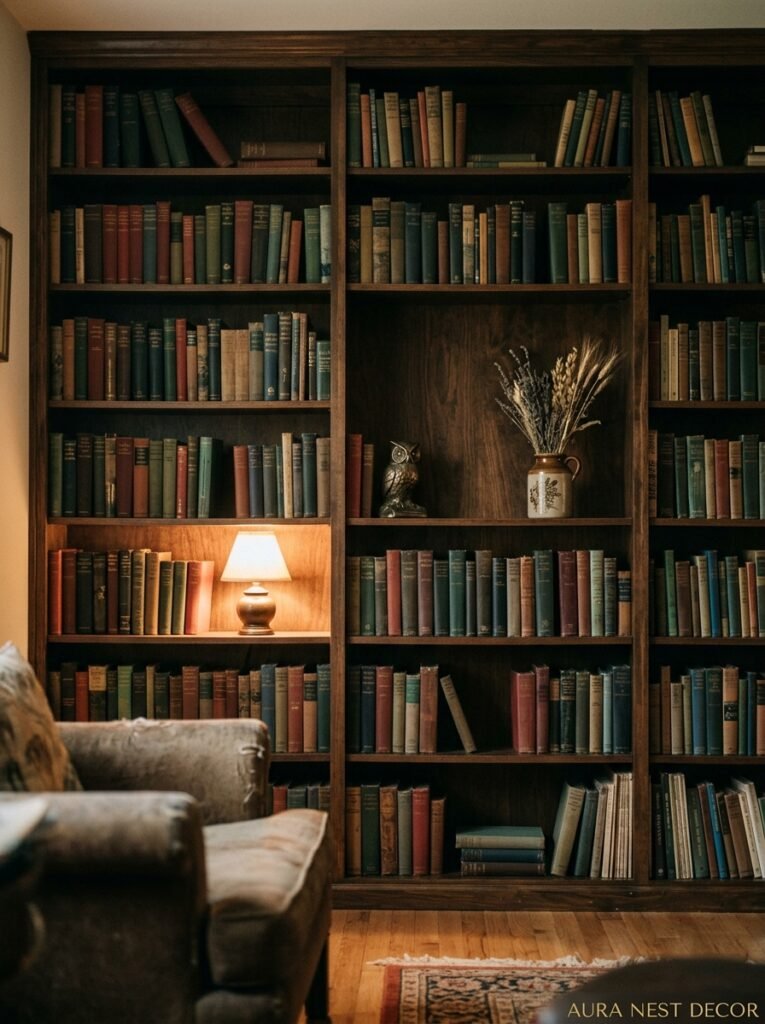
Not a decoration. Not an afterthought. The anchor.
Dark academia without books is like — I don’t know — a library without shelves. It’s missing its whole reason for existing. And I’m not talking about a couple of paperbacks arranged spine-out on a floating shelf. I mean a proper bookcase. Floor-to-ceiling if you can manage it, but even a six-foot unit pushed against a dark wall does something remarkable to a room.
The styling here matters as much as the structure. Mix vertical and horizontal stacks. Leave some objects on the shelves — an antique globe, a candle, a framed photo with a dark frame, a small taxidermy piece if you’re into that, old apothecary bottles. Don’t organize by color. This isn’t a color-coordinated Instagram bookshelf, it’s an actual collection of actual things, so it should look like books you’ve genuinely read and accumulated and loved.
Spine-out for most books is fine. But a few face-out, especially anything with beautiful vintage cover art, adds interest. And if you don’t have enough books yet, charity shops (UK) and thrift stores (US) are absolutely swimming in old hardbacks with gorgeous spines. Buy them by the handful.
—
4. Lighting Is the Difference Between “Moody and Beautiful” and “Just Kind of Dark”
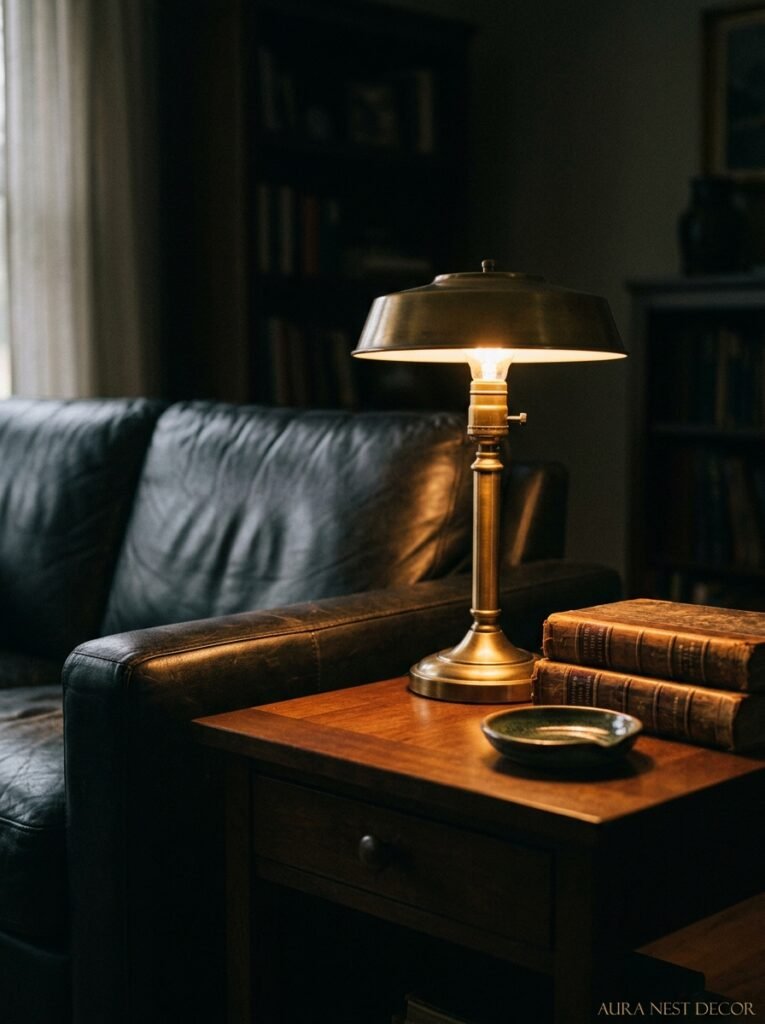
This one separates the rooms that actually work from the ones that look like a bad film set. And it comes down to LAYERS.
You don’t want overhead lighting doing most of the work. Overhead lighting — especially those flat ceiling panels — kills the atmosphere instantly. What you want are multiple light sources at different heights all around the room.
A tall brass floor lamp with a fabric shade near the armchair. A small bankers lamp on the bookcase shelf or side table, ideally in green glass. A table lamp with an amber or warm-toned bulb on the sideboard. Candles — actual candles — on the coffee table, the windowsill, the mantelpiece if you have one. The Victorians didn’t have overhead lighting and their rooms looked incredible, so take notes.
Edison bulbs are good but genuinely overused at this point. What I’d suggest instead is any bulb under 2700K color temperature, which gives you that warm amber glow without being so on-the-nose about it. And dimmer switches. If you don’t have dimmer switches and you’re doing this aesthetic, please sort that out first. It’s the single most transformative — actually, I told myself I’d stop using that word — the single MOST impactful ten-pound or fifteen-dollar electrical upgrade you’ll make.
“Candles are not decorative. They’re structural.”
—
5. The Textiles That Make People Never Want to Leave Your Sofa
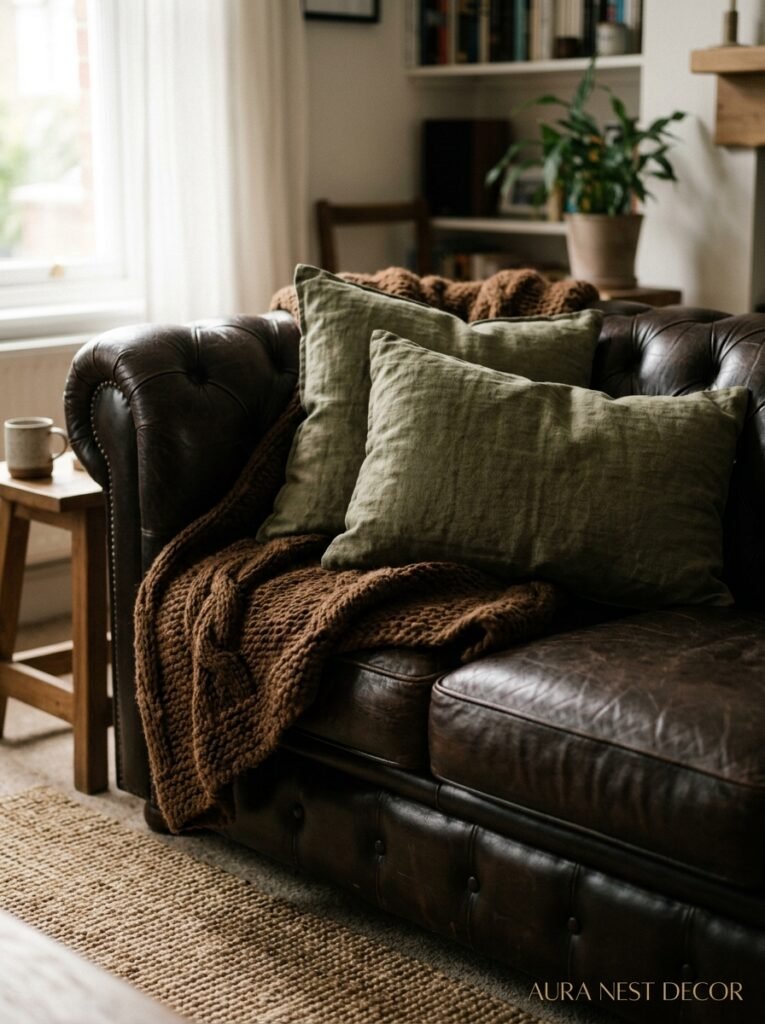
Dark academia is a tactile aesthetic, which is something people don’t talk about enough. You should FEEL it, not just see it.
Think heavyweight velvet cushions. A wool throw in deep burgundy or hunter green. A Persian rug — or a Persian-style rug, because original ones can cost a fortune — with rich jewel tones underfoot. Layer these. Don’t be precious about it. A throw draped over the back of a sofa looks like an afterthought; a throw half-pulled and slightly rumpled over the seat looks like someone’s been sitting there reading all afternoon.
Curtains deserve a mention here too. Floor-length, full curtains in velvet, heavy linen, or tweed. Let them pool slightly on the floor. This does two things: it makes the ceiling feel higher (a ceiling height illusion that actually works), and it adds that sense of enclosure and warmth that is absolutely core to the whole feeling.
Stay away from anything synthetic-looking or too sleek. No faux-silk curtains that catch light in that weird, cheap way. The texture of every fabric should read “real” and preferably “aged.”
—
6. The Art and Objects That Tell the Room’s Story Without Saying a Word
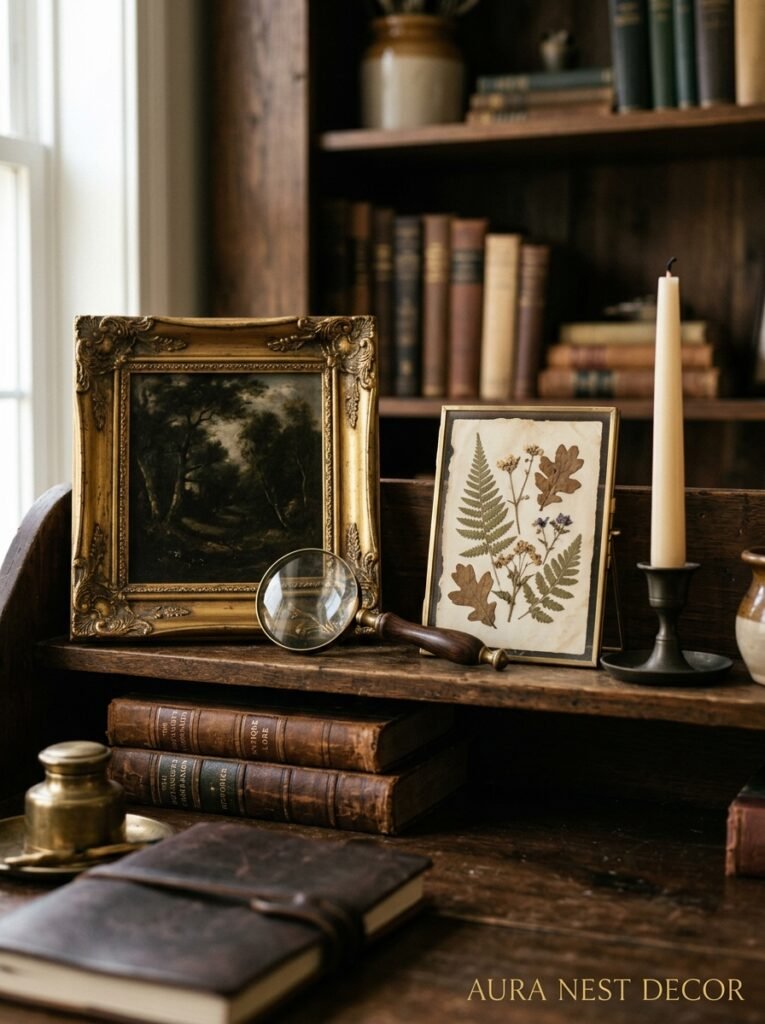
Here’s where dark academia gets interesting because the objects you choose are what make YOUR version of this aesthetic distinct from everyone else’s.
Antique botanical prints in dark frames. Oil paintings — doesn’t matter if they’re originals or prints, the look reads the same from across a room. Old maps, ideally framed without mounts so the paper feels raw and present. Scientific illustrations. Anatomical drawings if you’re not squeamish about that sort of thing.
And then the objects. A vintage microscope on the side table. An old clock — not a novelty clock, an actual old clock with a face you have to read properly. Antique brass candlesticks. A magnifying glass left casually on a book as if you were just using it (maybe you were). A glass dome over some small curio. These things don’t need to be expensive. They need to feel FOUND rather than purchased from a set.
The one rule I’d give you: don’t clutter for the sake of it. Every object should earn its place. If you’re putting something on the shelf and you’re not sure why — pause. Dark academia has density and richness but it’s not maximalism in the chaotic sense. It’s curated, even when it looks effortless.
—
7. How Rugs Do About 40% of the Whole Room’s Work
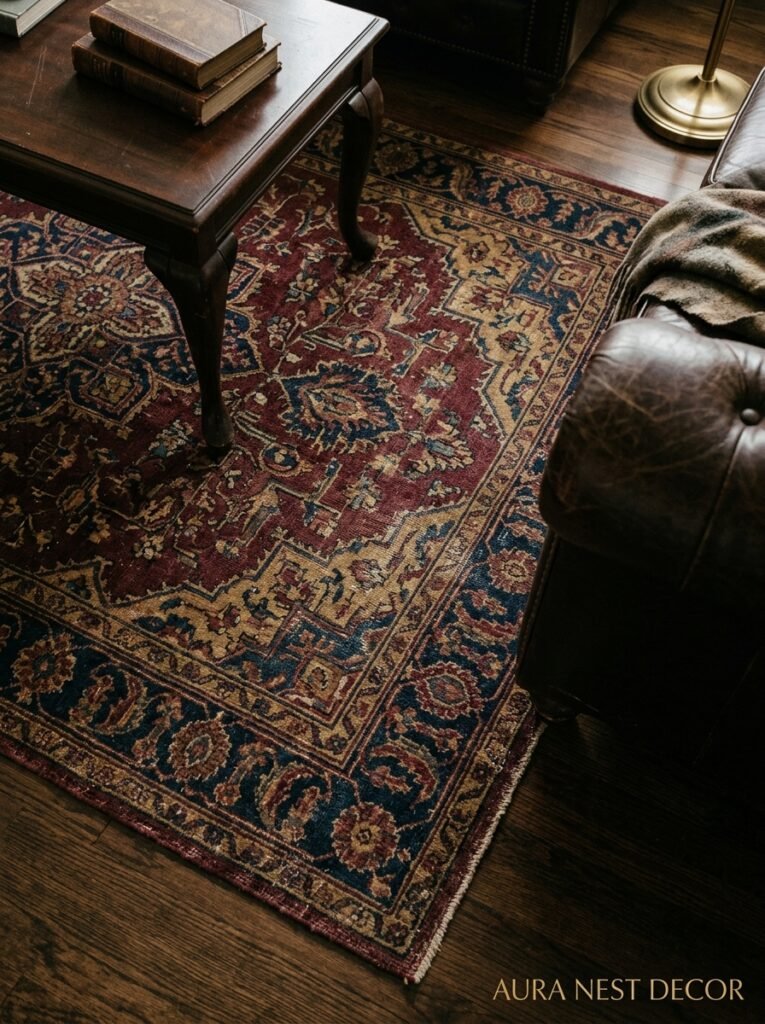
You can get away with a lot if your rug is right.
A dark or jewel-toned Persian rug grounds everything. It brings the seating together, it absorbs sound so the room feels quieter and more intimate, and it defines the space in a way that says “this is intentional.” Go as large as you can — ideally the rug should sit under at least the front legs of every sofa and chair in the seating area.
Worn rugs are better than new ones for this look. A slightly faded Persian or Turkish rug, with that characteristic softness that comes from decades of being walked on, looks dramatically better than a brand-new one with sharp, bright colors. Vintage rug shops in the UK, Etsy, and sites like Ruggable’s vintage-style section are good places to look — though honestly, even the rug section at your local antique center might surprise you.
And layering! If you have hardwood floors that you love, you can layer a smaller flatweave or kilim rug on top of a larger one to add depth. Not everyone’s taste, I know, but in a dark academia room it reads as intentional rather than chaotic.
“A worn rug isn’t sad. It’s the proof that the room has been loved.”
—
8. The Mantelpiece Styling That Actually Works (And What Most People Get Wrong)
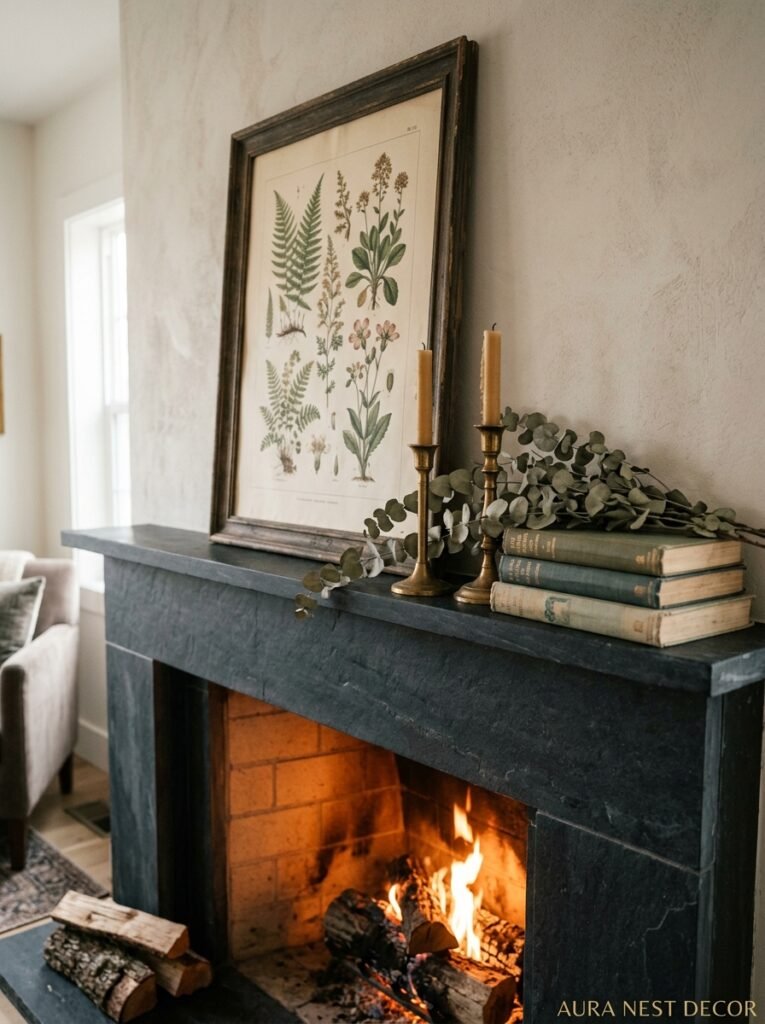
If you have a fireplace — real or decorative — it’s the most important surface in the room.
Most people style mantelpieces symmetrically. One thing on each side, something in the middle. And it ends up looking like a hotel lobby. For dark academia, go asymmetric. A stack of books on one end, a tall brass candlestick somewhere in the middle, an art print leaning against the wall rather than hung perfectly level. A small framed mirror to catch candlelight, slightly off-center. Maybe a trailing ivy or dried botanicals spilling over the edge.
The point is it should look like it evolved, not like it was arranged. The best mantelpieces I’ve ever seen in dark academia spaces look like someone keeps using that shelf, keeps adding things, and occasionally rearranges when something new arrives.
And the fireplace opening itself — if it’s decorative and you’re not using it — fill it. Stack old books inside it. Put candles in it. A small arrangement of dried ferns. Leave it empty and it’s a black hole that kills the eye-line completely.
—
9. Plants That Belong in This Room (And the Ones That Really Don’t)
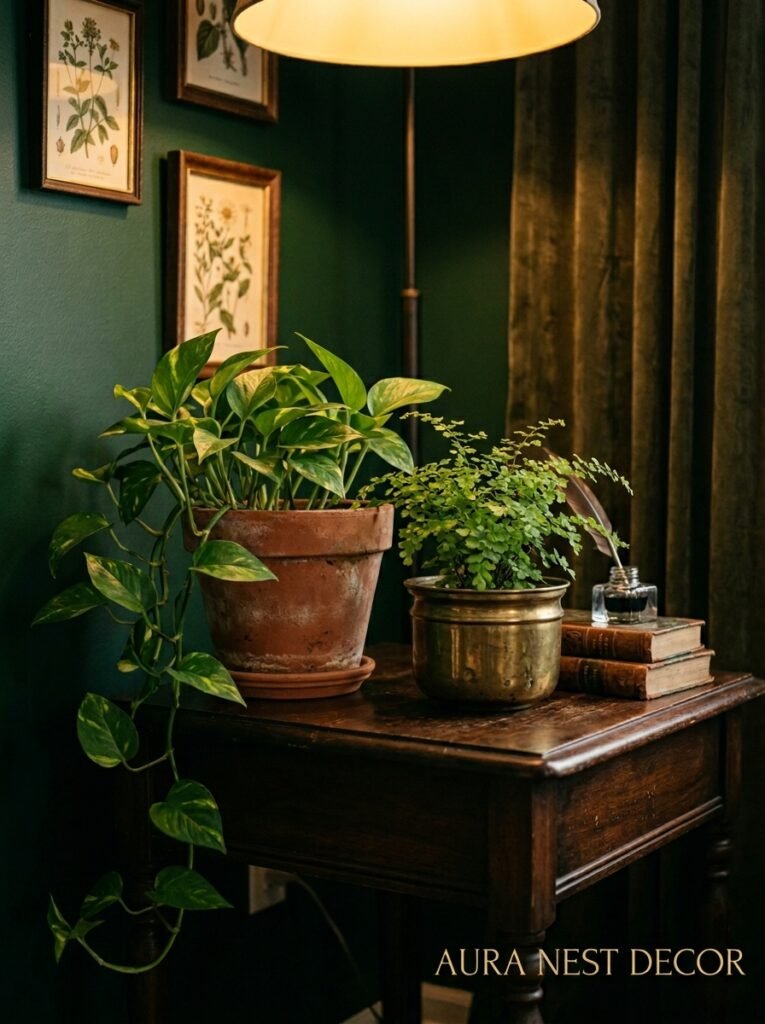
I know. Bear with me. Plants might not be the first thing you think of with dark academia, but the right ones make such a difference.
Ferns. Trailing ivy. Pothos in terracotta pots. Dark-leafed plants like burgundy oxalis or black prince echeveria. Anything that looks like it could have been growing in a Victorian conservatory. These work.
What doesn’t work: succulents in white pots, anything in a brightly colored Ikea planter, those little artificial succulent arrangements people put on bookshelves. Nope. Out of place, full stop. If you want dried botanicals instead of living plants — and honestly for busy people that’s a completely valid choice — dried eucalyptus, dried pampas in dark tones, pressed flowers in small frames all land beautifully.
The planters matter too. Terracotta, aged bronze, old ceramic with a matte or crackle glaze. No plastic. Nothing glossy-white. If you love your white pot, give it to someone else for this room.
—
10. Smell Is Part of the Interior Design and Everyone Forgets This
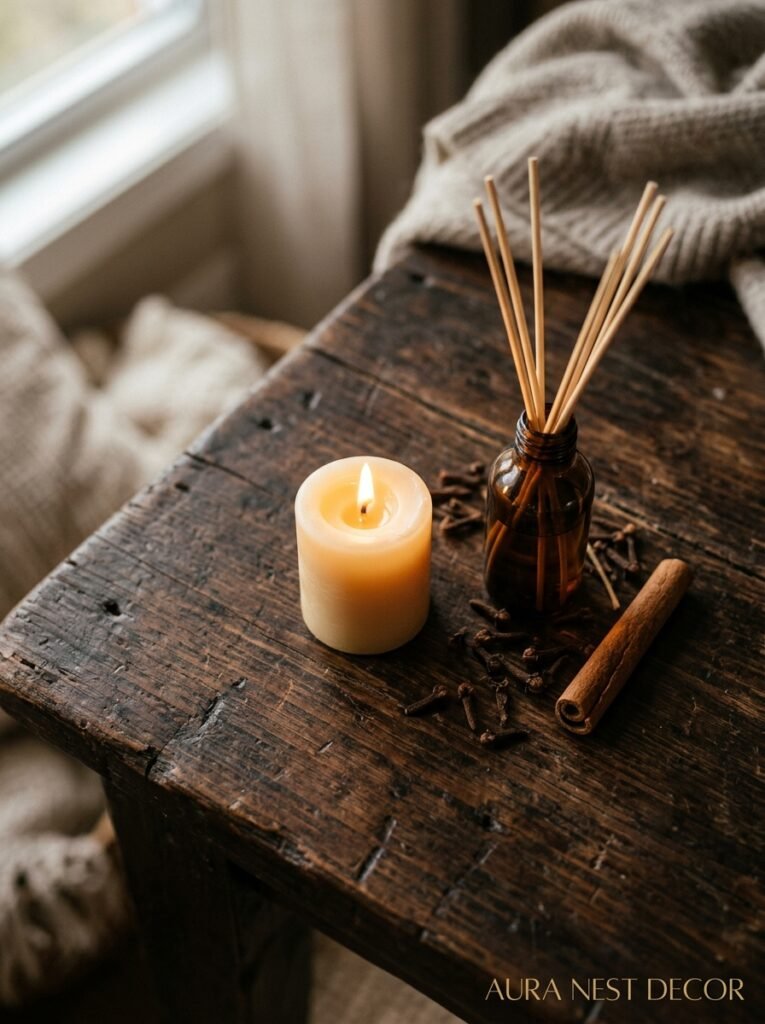
Genuinely one of the most underrated parts of any room aesthetic.
Dark academia has a scent. It’s sandalwood and black tea and old books and maybe just a hint of woodsmoke. You can actually build this. A sandalwood or oud candle burning in the afternoon. A reed diffuser with cedarwood and amber somewhere subtle. Beeswax candles — which smell incredible and look beautiful burning. Even just a bowl of dried botanicals somewhere that releases a faint herbal smell into the room.
I’m not suggesting you spray perfume on your sofa (though I’ve heard of weirder things), but being intentional about smell is the difference between a room that looks right and a room that FEELS right when you walk in. The olfactory element is what your guests remember, even when they can’t name why the room was so good.
—
11. The Dark Academia Colour Palette for People Who Want a Cheat Sheet
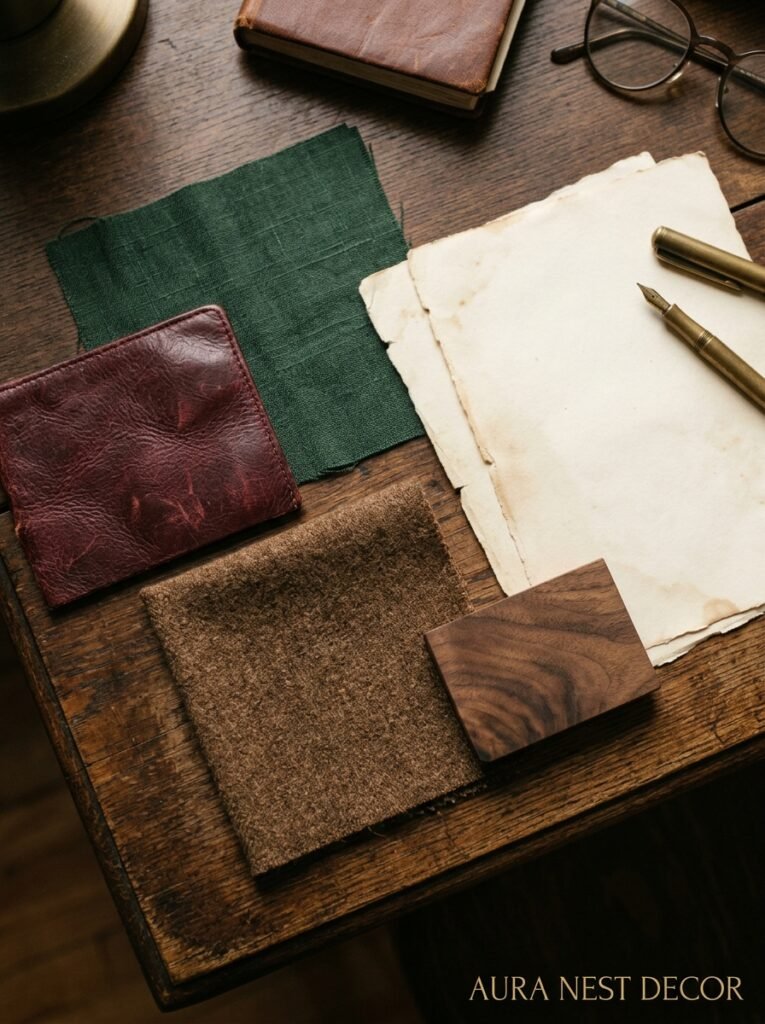
Let’s be direct about this because I know people want specifics.
Deep forest green. Warm charcoal. Aged ivory. Cognac brown. Burgundy. Navy that leans toward black. Dusty terracotta. Antique gold. Any color that could appear naturally in an old oil painting — those are your colors.
What’s NOT in the palette: bright white, cool grey, millennial pink, anything with the word “sage” in a trendy context, turquoise, yellow. These aren’t bad colors in general — but they break the mood immediately. One wrong accent color and the whole thing reads like a costume rather than a home.
For accent tones specifically, I keep coming back to cognac leather and aged brass. These two together look like money, cost nothing in small doses, and work against every other dark academia base color beautifully.
—
12. The Small Details People Notice Without Knowing They Notice Them

This is the section about the micro-decisions that add up to the whole thing feeling RIGHT.
Cabinet and drawer hardware in aged brass or black iron. Not chrome. Not brushed nickel. Light switch plates in dark finishes — you can get matte black switch plates in the UK for about a fiver, and in the US it’s even cheaper. Small framed photos on side tables, in dark wood frames. A vintage tray on the coffee table to corral smaller objects. Books left open, face-down (I know, I know — bookmarks, please — but visually, it works). An inkwell even if you never use it. A wax seal stamp on the desk.
None of these things cost much. Some of them cost nothing if you already own them. But together they’re the difference between a room that tries to do dark academia and one that actually IS dark academia. It’s in the details that no one consciously registers but everyone subconsciously feels.
—
❓ FAQ
Q: Can I do dark academia in a small living room without it feeling cramped? A: Yes, and actually the moody quality of dark academia can work IN your favor in a small room — it draws attention to the atmosphere rather than the square footage. Just don’t overcrowd the furniture. One good sofa, one armchair, and a properly sized rug will do more than filling the space with lots of smaller pieces.
Q: My living room gets a lot of natural light. Will dark academia still work? A: It will, with a few adjustments. Use heavier curtains to diffuse the light rather than block it completely — this gives you that soft, atmospheric quality even on bright days. And go slightly warmer and deeper on your wall color since bright daylight will lift even very dark shades considerably.
Q: Is dark academia actually a timeless look, or is it just a trend that’ll feel dated in three years? A: The core of it — rich colors, quality furniture, books, layered lighting — is genuinely classic. It’s the over-styled, TikTok version that’ll date. If you build it around things you actually love and use, it’ll age the same way any well-furnished room does. Which is to say, better.
—
💭 Final Thoughts

The best dark academia rooms I’ve seen have one thing in common: they feel used. Not styled, not curated for photographs — actually, genuinely inhabited by someone who reads and thinks and stays up late with a glass of something warming. That feeling is available to you whether you’re in a Victorian terrace in London or an apartment in Chicago. It doesn’t require a budget. It requires intention and patience and a willingness to stop buying new things and start noticing old ones. So — what’s the one piece you’d bring into your own living room first?