
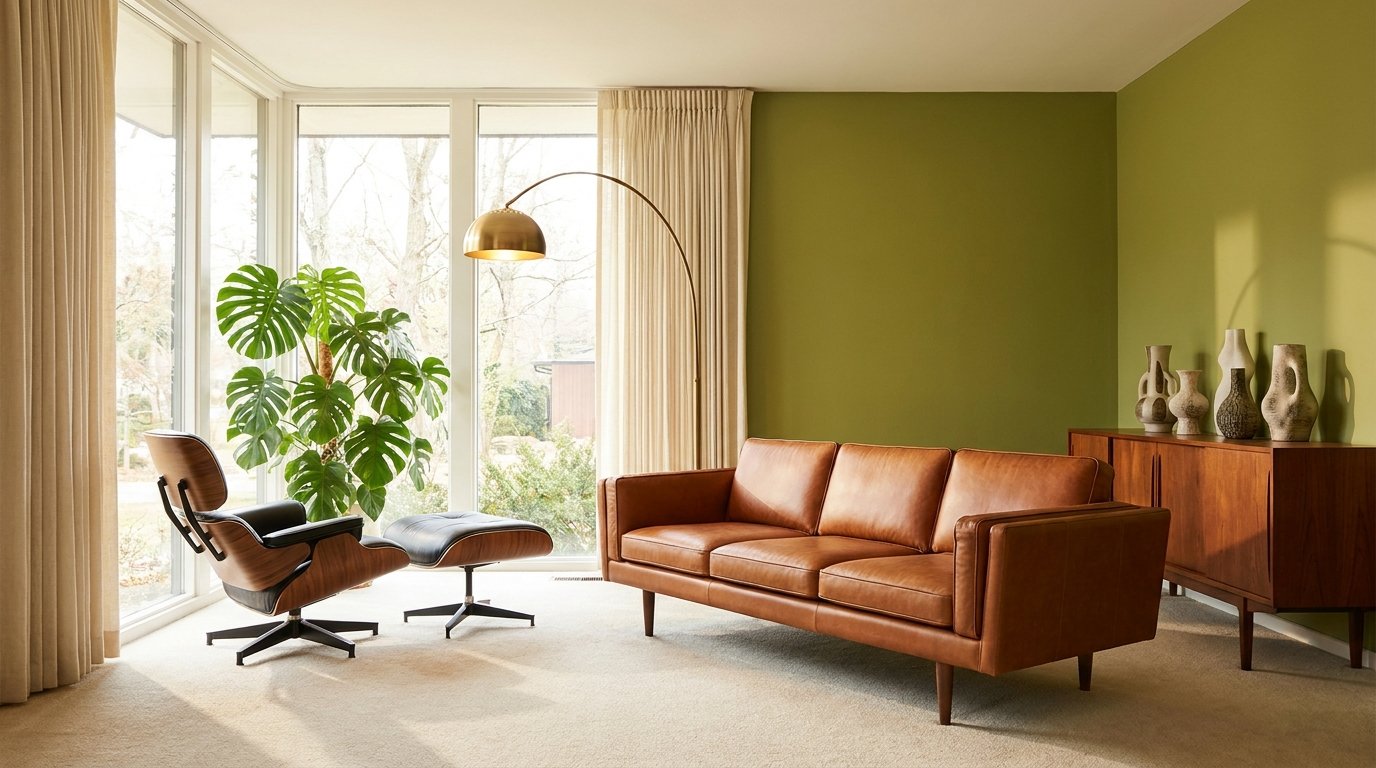
Mid-Century Modern Interior Design: The Timeless Style That Makes Every Home Feel Like a Dream
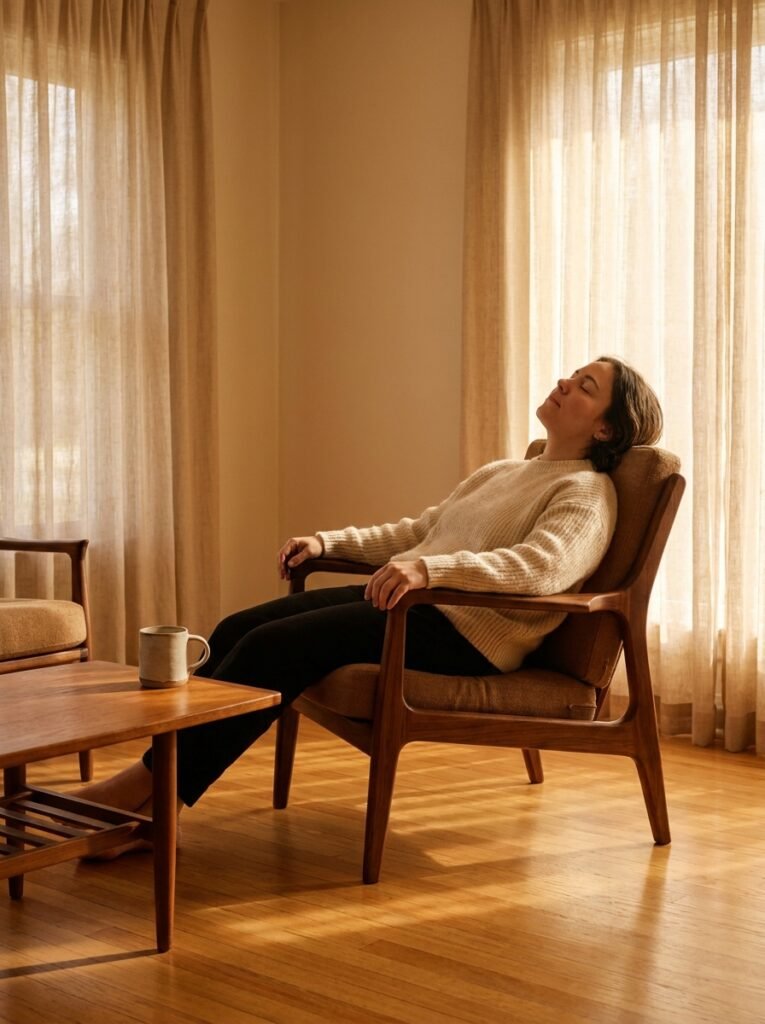
There’s something about walking into a mid-century modern room that makes you exhale — like the space itself is telling you to slow down, sit in that gorgeous walnut chair, and just be. It’s a design era that never truly left us, and honestly, it was never supposed to.
—
1. What Is Mid-Century Modern, Really? (And Why Everyone Gets It Wrong)
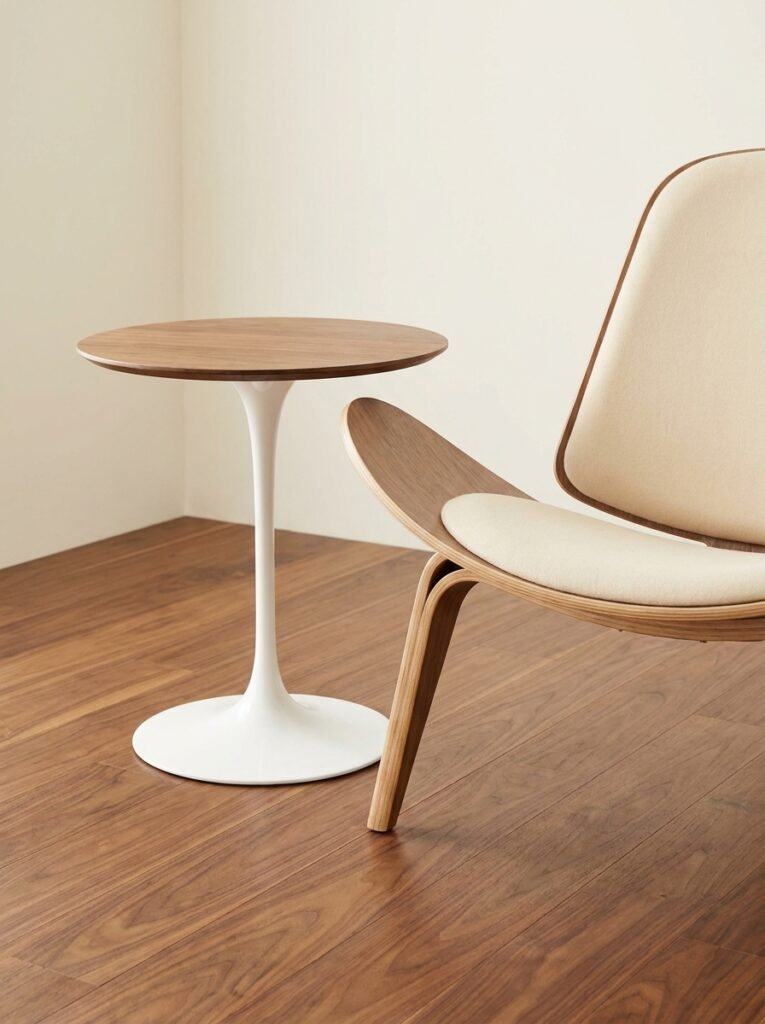
Here’s the thing most people miss when they try to recreate this style: mid-century modern isn’t just a furniture aesthetic — it’s a philosophy. Born between roughly 1945 and 1969, this design movement emerged from a world that had just survived profound hardship and was desperately hungry for optimism, simplicity, and beauty that actually made sense. Designers like Charles and Ray Eames, Florence Knoll, and Arne Jacobsen weren’t just making pretty chairs. They were reimagining what it meant to live well.
The style blends organic shapes with functional elegance — curves that feel natural, materials that feel honest, and spaces that feel uncluttered without feeling cold. It’s the sweet spot between form and function, between warmth and minimalism. Understanding that underlying intention is what separates a mid-century room that sings from one that just looks like a furniture catalog page.
“Mid-century modern isn’t a trend you follow — it’s a way of living you choose.”
2. The Color Palette That Hits Differently Every Single Time
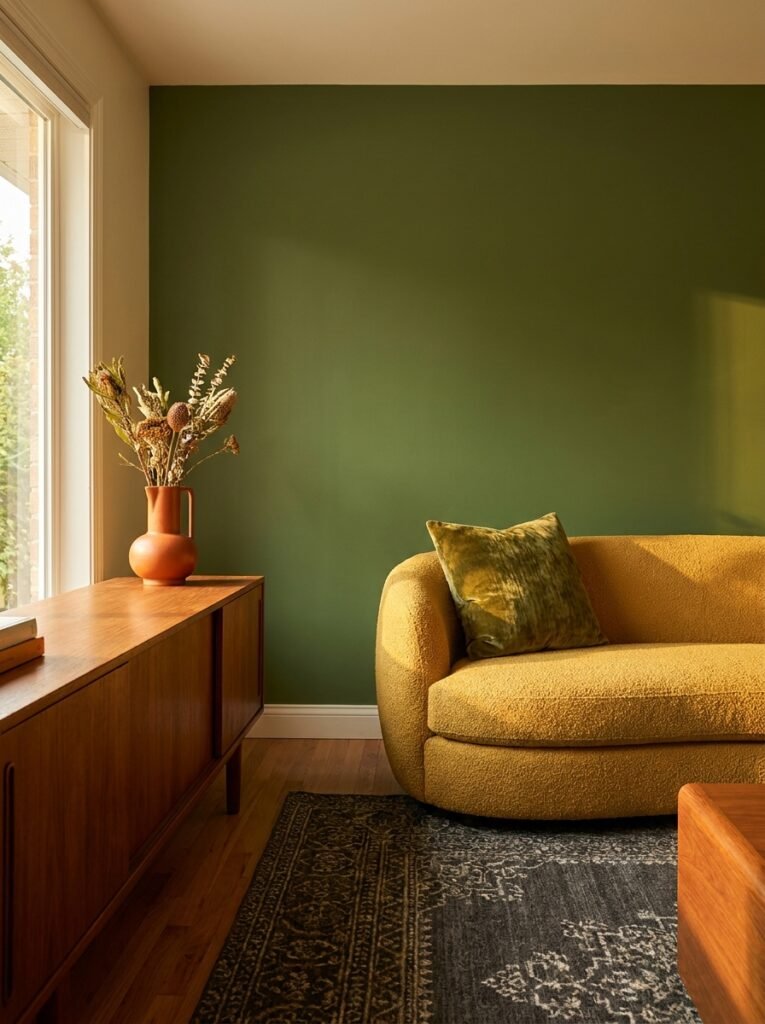
Imagine painting your living room a deep avocado green or a warm mustard yellow and having it look not dated, but deeply sophisticated. That’s the magic of mid-century color. The palette of this era pulls from nature — earthy ochres, burnt oranges, olive greens, rich teals, and warm caramels — grounded always by the quiet confidence of white, cream, or charcoal.
What makes these colors work so beautifully today is that they’re genuinely warm. In a world increasingly dominated by cold grays and sterile whites, mid-century hues feel like a home-cooked meal for your eyes. They invite you in. They make you feel held. The key to using them well is restraint — choose one or two statement colors and let natural wood tones and neutral fabrics carry the rest of the room. Think of it as a jazz composition: a few bold notes, played at exactly the right moment, backed by something steady and warm.
3. Furniture That Looks Like It Was Sculpted, Not Built
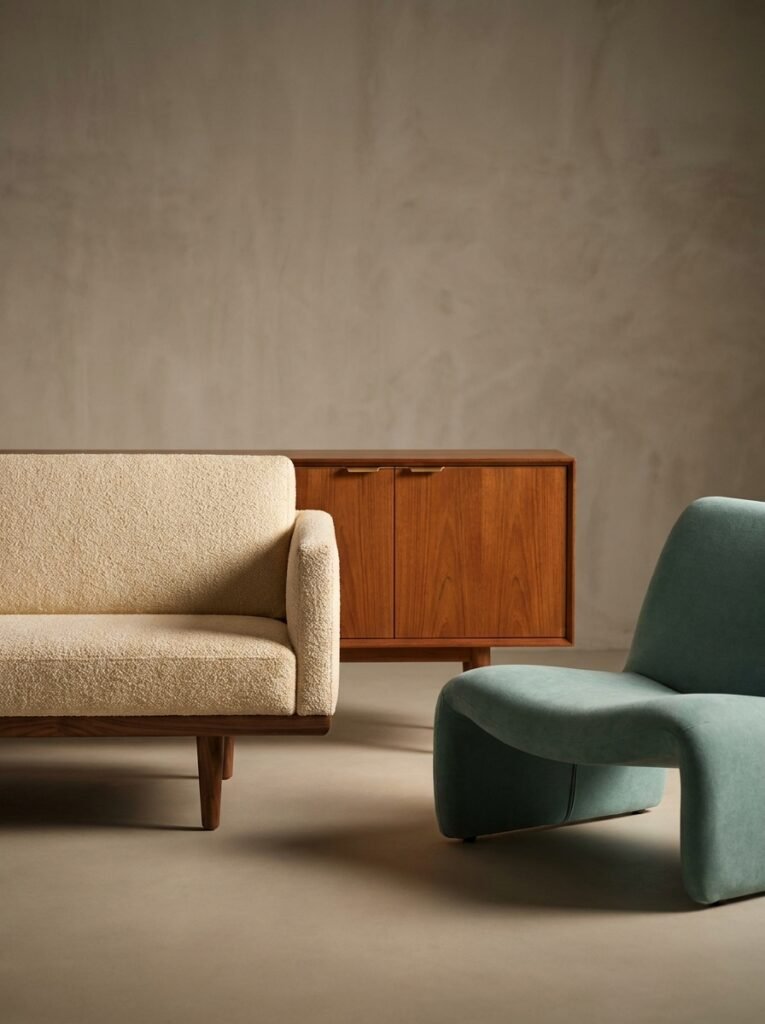
The furniture is where most people fall instantly in love with this style — and for very good reason. Mid-century modern pieces have this extraordinary quality of looking simultaneously sculptural and deeply functional. The tapered legs, the low profiles, the gentle curves — every element was considered with an almost obsessive attention to how the piece would feel to live with, not just to look at.
When you’re building a mid-century room today, look for these signatures: tapered wooden legs in walnut, teak, or oak; upholstery in warm textured fabrics like bouclé, velvet, or wool; clean silhouettes without excessive ornamentation; and that signature low-slung profile that makes every sofa feel like an invitation to settle in for hours. Whether you’re investing in genuine vintage pieces or finding beautifully made reproductions, the soul of the furniture should always feel the same — intentional, human, and quietly proud of itself.
4. The Rule of Natural Materials (That Changes How Your Home Feels)
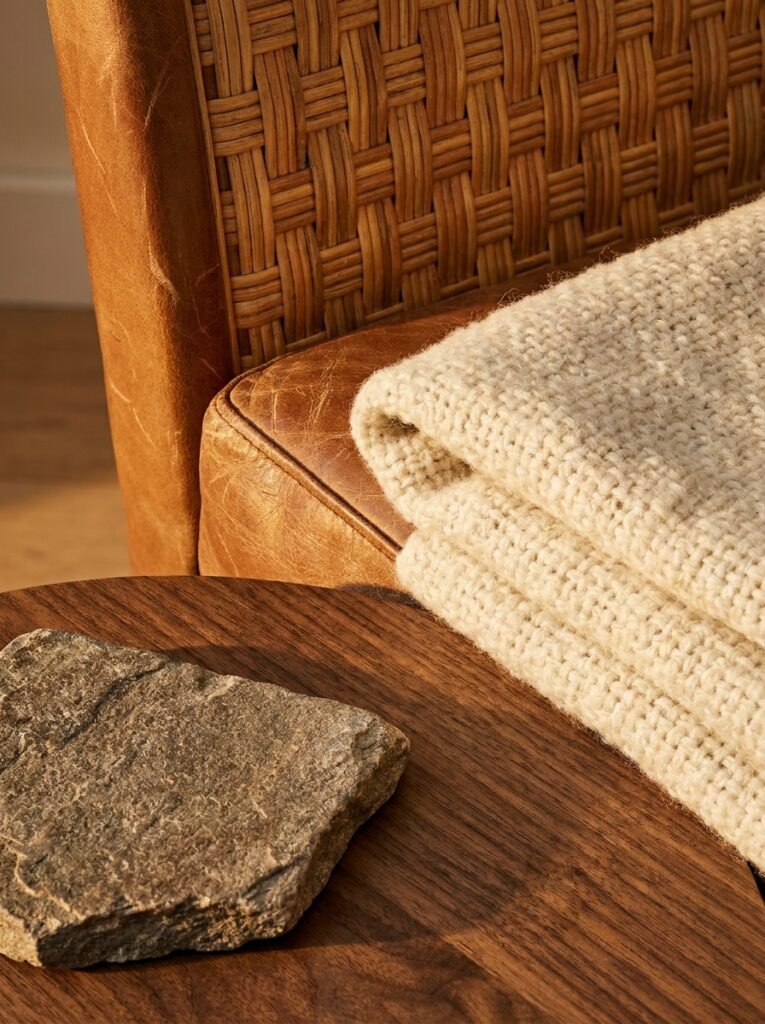
Walk into almost any well-designed mid-century space and close your eyes for a moment. What do you feel? You feel the grain of the wood, the warmth of the leather, the slight roughness of a woven wool throw. This style is deeply tactile in a way that modern interiors sometimes forget to be. The materials aren’t just decorative choices — they’re emotional ones.
Wood is the undisputed star of this world. Walnut, in particular, has this rich, dark warmth that photographs beautifully and ages even more beautifully over time. Teak brings a lighter, honey-golden tone. Then there’s leather — aged and broken-in — rattan and cane for lightness, and stone or terrazzo for grounding. Layering these materials creates a room that feels lived-in and loved, not staged. That’s the difference between a beautiful room and a room that feels like yours.
5. How Light Transforms a Mid-Century Space into Something Magical
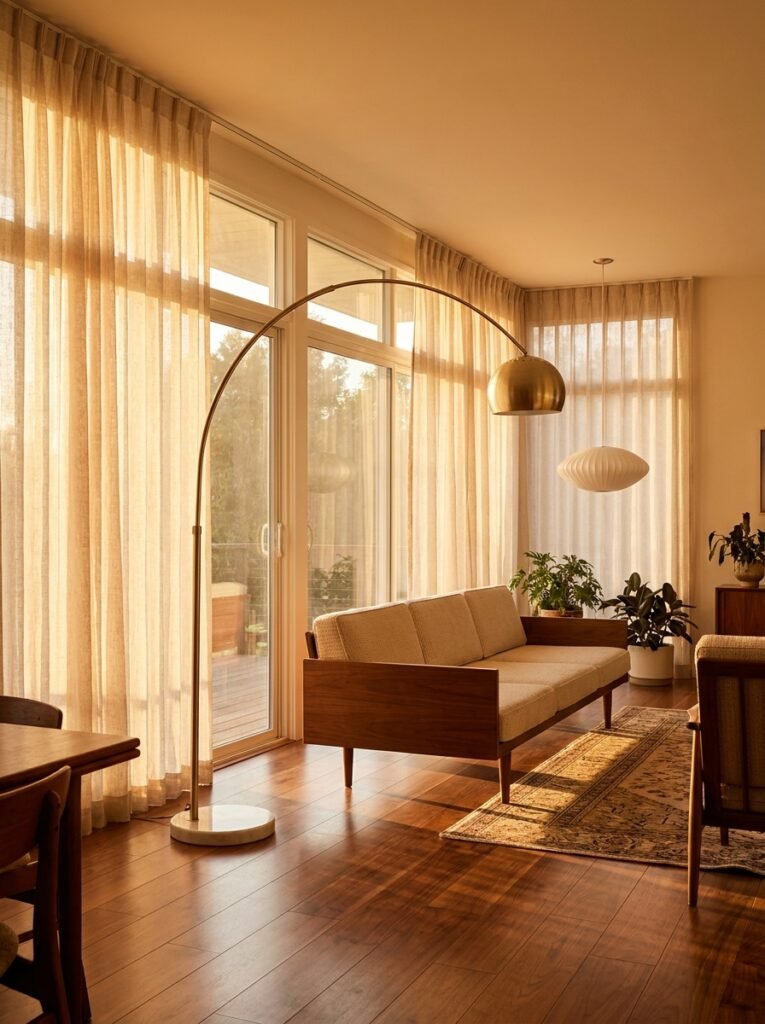
Here’s something the design books don’t always tell you: light is arguably the most important element in any mid-century interior. The architects and designers of this era were obsessed with natural light — they built homes with massive windows, sliding glass doors, and open floor plans specifically to blur the line between inside and outside. That connection to nature wasn’t incidental. It was the whole point.
When you’re recreating this in your own home, think carefully about how you’re managing light at every hour of the day. Let in as much natural light as possible — avoid heavy drapes in favor of sheer linen curtains that filter the light into something golden and soft. For artificial lighting, the era gave us some of the most beautiful lamp designs ever created: the Arco floor lamp’s dramatic arc, the PH lamp’s warm, glare-free glow, the Nelson Bubble lamp’s floating organic form. Lighting in a mid-century room should never be harsh or overhead-dominant. It should pool warmly in corners, cast gentle shadows, and make every evening feel like the beginning of a wonderful story.
“The right lamp in a mid-century room doesn’t just light the space — it transforms the mood entirely.”
6. The Art of Negative Space: Why What You Don’t Add Matters Most
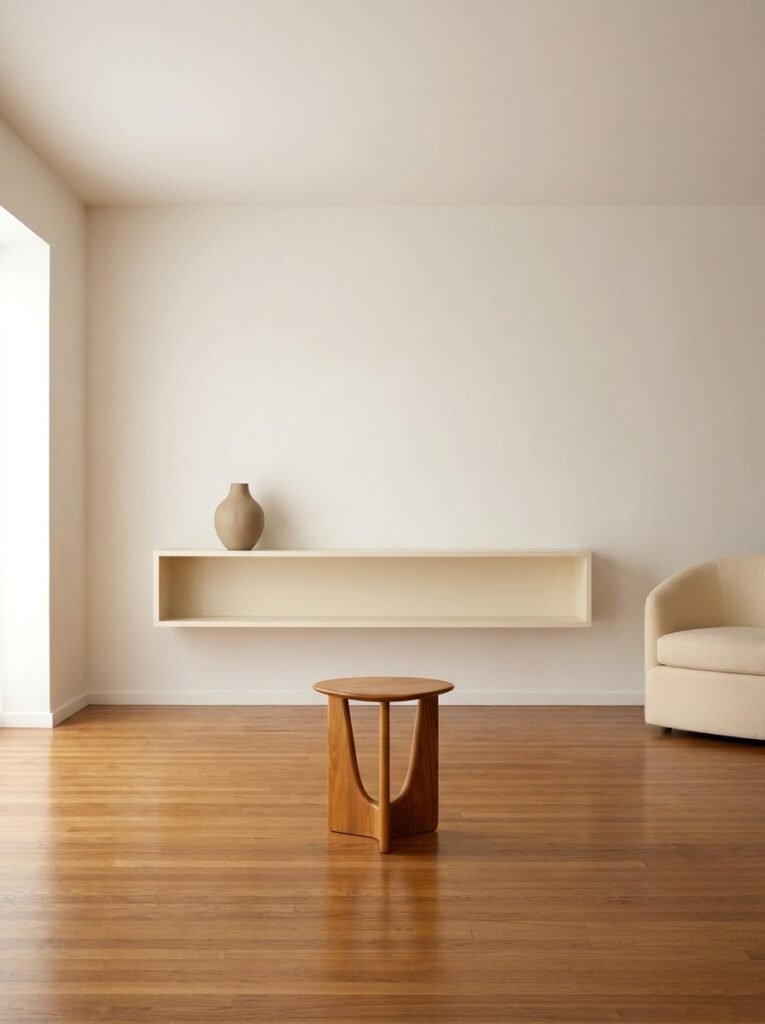
One of the most radical things about mid-century design, especially viewed through today’s maximalist tendencies, is its profound respect for negative space. These rooms breathe. There’s room around every piece of furniture, room between every object on a shelf, room for your eyes to rest. That restraint isn’t emptiness — it’s confidence.
This is the principle most people struggle with most when they try to decorate in this style. The instinct is always to add one more thing — one more pillow, one more plant, one more sculptural object on the console table. But the magic of this style lives in the pause, in the deliberate gap between things. Edit ruthlessly. Choose fewer pieces and choose them well. Let each item in your room be something you genuinely love and that genuinely earns its place. The room will feel larger, calmer, and far more beautiful for it.
7. Statement Pieces That Do All the Heavy Lifting
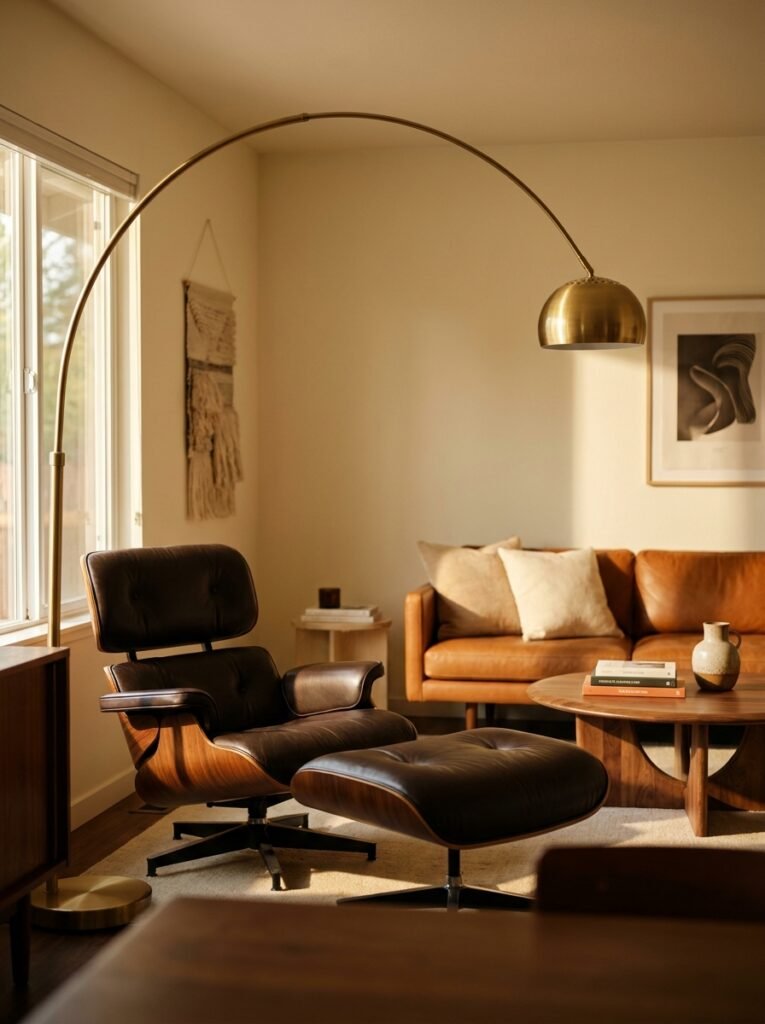
Every great mid-century room has at least one piece that stops people in their tracks — an Eames lounge chair in a corner, a tulip dining table surrounded by shell chairs, an extraordinary arc floor lamp casting its elegant shadow across a low-slung sofa. These statement pieces aren’t just decorative; they’re the emotional anchors of the room.
You don’t need to break the budget to achieve this. The key is identifying the one or two pieces that will carry the most visual weight and investing there. A genuinely beautiful vintage sofa in a warm cognac leather, found at an estate sale or a great antique market, will do more for a room than fifteen mediocre accessories ever could. Think of your statement piece as the first line of a great novel — it sets the tone for everything that follows.
8. Bringing Nature Indoors: Plants, Wood, and Organic Forms
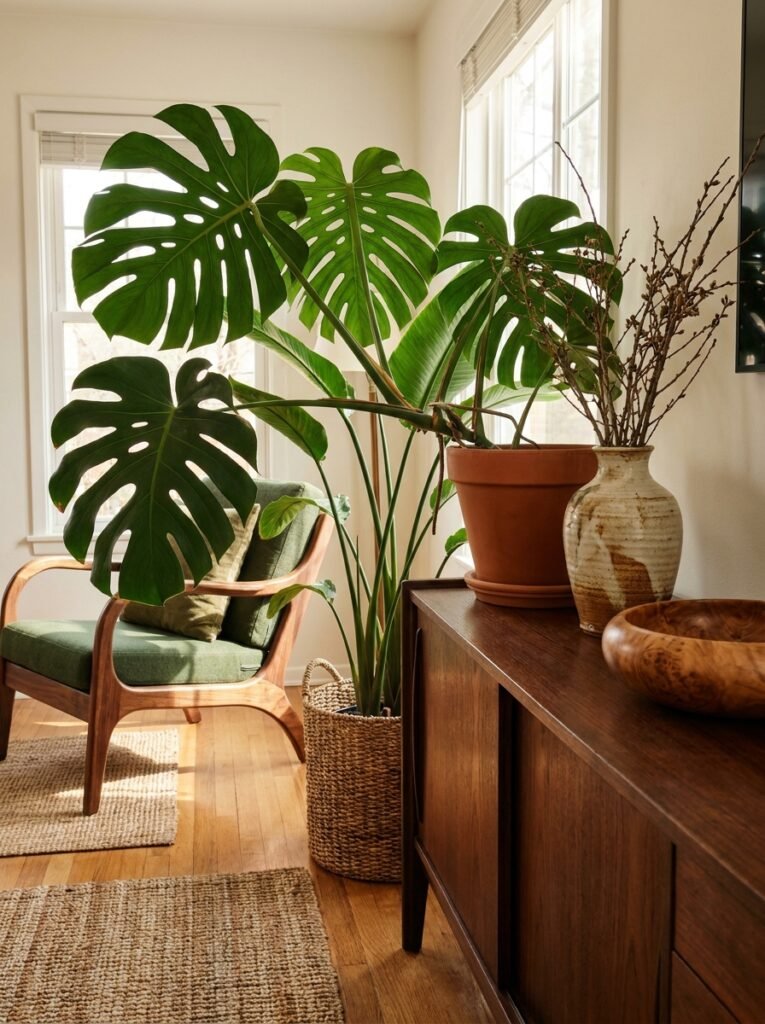
The mid-century obsession with the natural world wasn’t limited to materials and window placement — it extended to the living, breathing greenery that designers and homeowners of the era brought inside with genuine enthusiasm. Large-leafed plants like the fiddle-leaf fig, monstera, and bird of paradise feel absolutely at home in a mid-century space. Their sculptural shapes echo the organic curves of the furniture; their deep greens complement the earthy palette perfectly.
Beyond plants, think about organic forms throughout the room — a ceramic vase that looks like it was shaped by hand, a wooden bowl turned from a single piece of burl, a textile with a pattern inspired by nature. These elements add life and texture without adding clutter. They’re the quiet reminders that a home, no matter how beautifully designed, is still a living place — growing, changing, and deeply connected to the world outside its walls.
9. Kitchen and Dining Spaces in Mid-Century Style
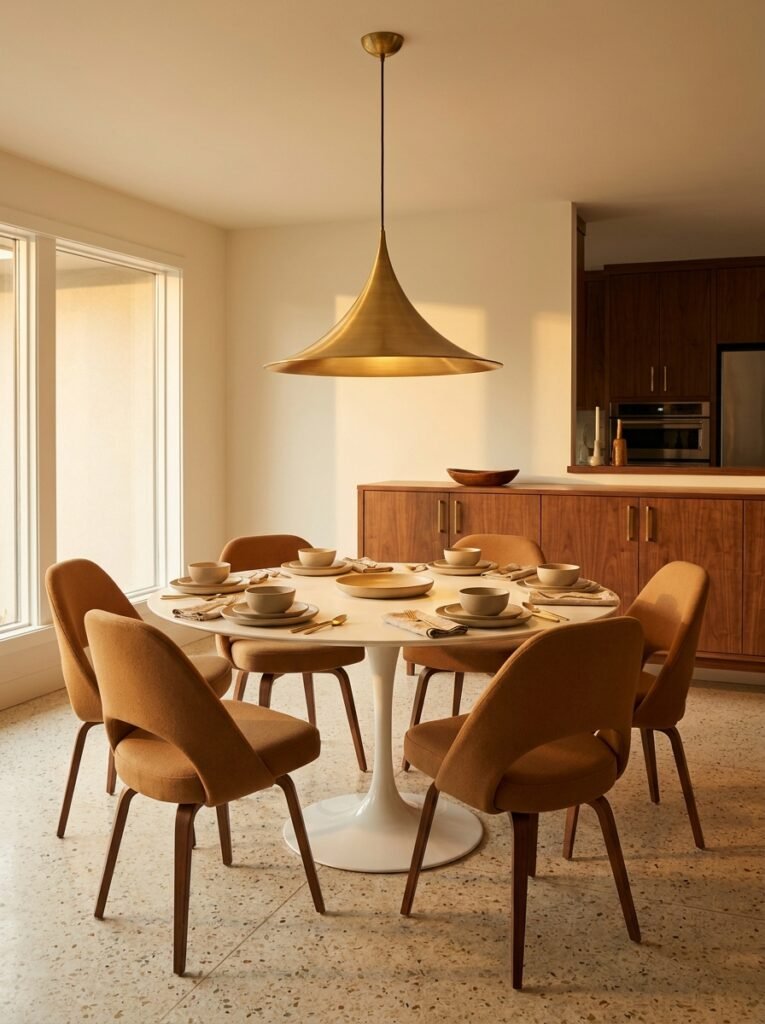
There is something wonderfully specific about a mid-century kitchen or dining room — a quality of intention that makes the act of cooking and gathering feel elevated and meaningful. Think warm wood cabinetry with simple hardware, terrazzo or linoleum floors in a warm color, open shelving displaying beautiful objects that happen to also be useful. The kitchen in this design philosophy was never an afterthought — it was the heart of the home, designed to be worked in and lived in simultaneously.
The dining room is where the magic really crystallizes. A tulip table — round, pedestal-based, impossibly elegant — surrounded by four to six beautifully upholstered chairs creates a space that makes every dinner feel like an occasion. Add a statement pendant light overhead — something sculptural in brass or spun aluminum — and suddenly your Tuesday-night pasta dinner has the quiet glamour of a dinner party in a 1962 design magazine. That’s the gift mid-century dining spaces give you: they make ordinary moments feel worth marking.
“A well-designed dining room doesn’t just hold meals — it holds memories.”
10. Budget-Friendly Ways to Achieve the Mid-Century Look Without Starting Over

Here’s the honest truth that so many interior design articles refuse to say out loud: you do not need to gut your home, spend a fortune, or replace every single piece of furniture to live beautifully in this style. The mid-century modern aesthetic is, in fact, remarkably forgiving and wonderfully accessible when you approach it thoughtfully.
Start with what you have and edit. Remove anything that feels fussy, overly ornate, or cluttered. Then identify one or two key pieces to invest in — a good vintage side table, a set of beautiful tapered-leg dining chairs, a quality floor lamp. Add a warm, earthy textile in a mustard or burnt orange. Bring in a large-leafed plant. These moves alone — thoughtful editing combined with a few well-chosen additions — can transform a room from generic to genuinely character-filled. Thrift stores, estate sales, Facebook Marketplace, and antique markets are treasure troves for this style, because mid-century pieces were made to last and there are millions of them still living beautifully in the world.
11. The Mid-Century Modern Bedroom: Your Retreat, Reimagined
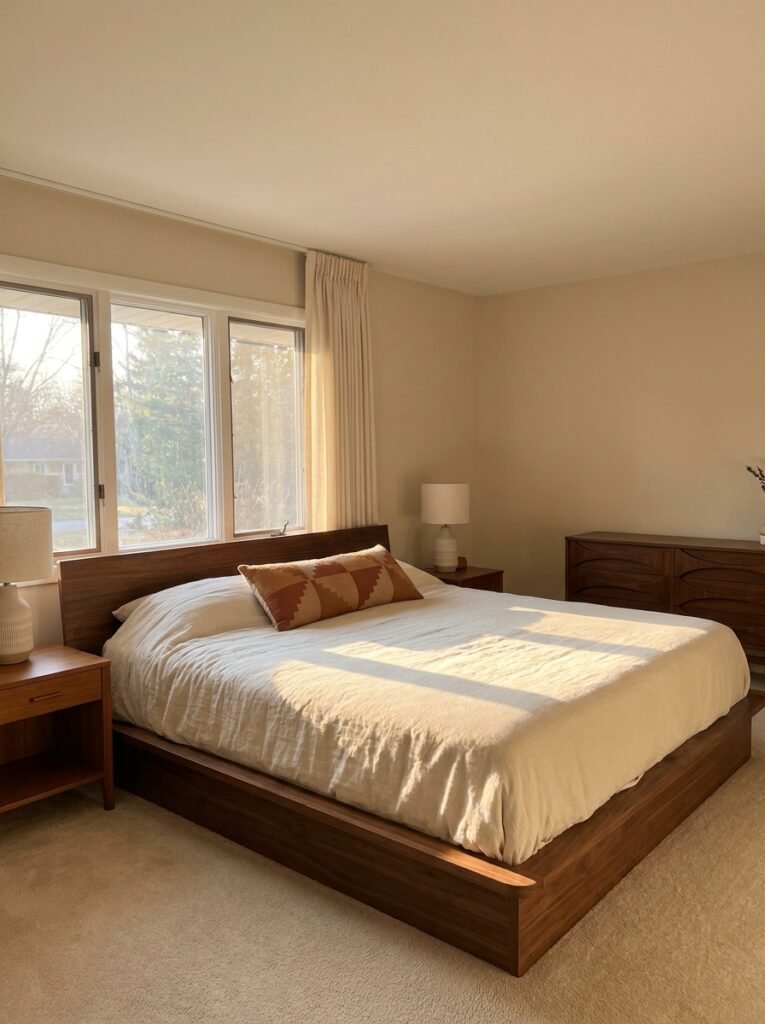
There is a particular kind of peace in a mid-century bedroom — something about the low platform bed, the warm wood grain of the nightstands, the way the morning light falls across a simple linen duvet — that makes waking up feel like a gentle, good thing. The bedroom in this design world is intentionally quiet, stripped of anything that doesn’t serve rest, beauty, or intimacy.
Focus on a low-profile bed frame in walnut or teak with a clean, simple headboard — no elaborate tufting, no elaborate silhouettes. Nightstands with simple lines and just enough storage. A dresser that looks like a piece of sculpture from the right angle. Textiles in warm neutrals — cream, oatmeal, caramel — with perhaps one bold accent pillow in a geometric print. The result is a room that feels like a private retreat from everything, a space that’s beautiful enough to photograph but more importantly, real enough to sleep deeply in.
12. Why Mid-Century Modern Feels More Relevant Than Ever Right Now
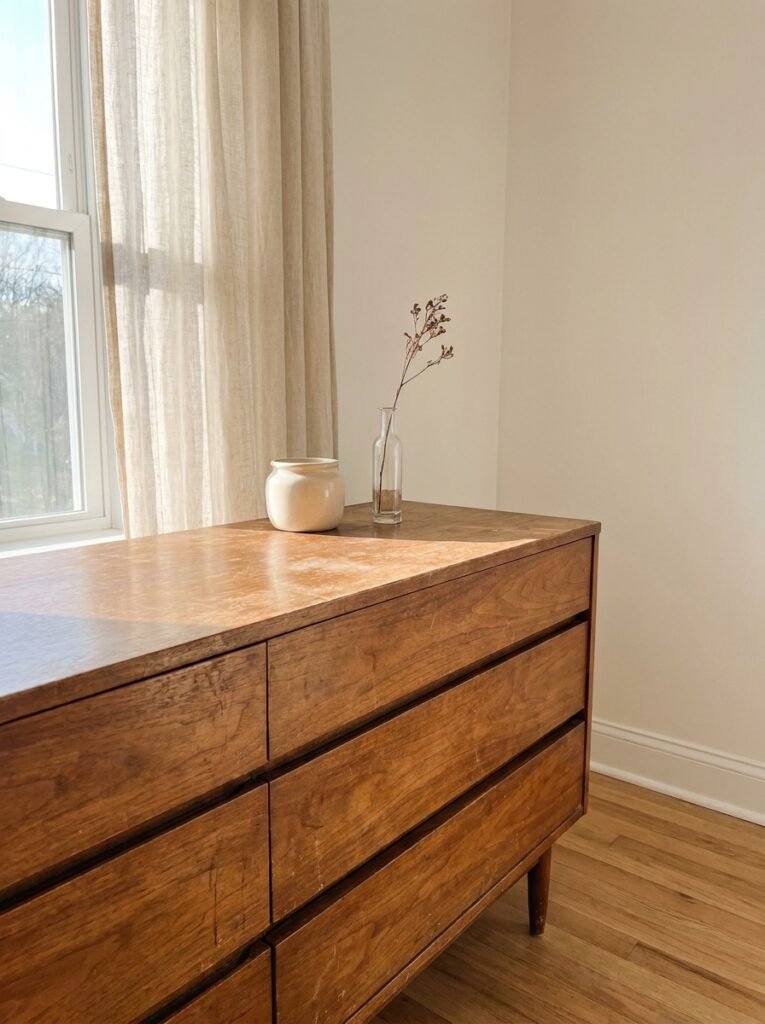
In a world that feels increasingly overstimulated — too much noise, too much information, too many choices, too many things — there is something deeply radical about a design philosophy that says: less, but better. Mid-century modern has surged back into cultural consciousness not because we’re nostalgic for the 1950s and 60s, but because we’re hungry for what this style actually offers: quality over quantity, intention over impulse, beauty that endures rather than trends that expire.
The style also speaks beautifully to how many of us want to live now — sustainably, thoughtfully, with well-made things that age gracefully rather than disposable pieces that fall apart in two years. A mid-century walnut dresser bought at an estate sale represents the opposite of fast furniture. It was built to last a century. It probably already has. Choosing to fill your home with pieces like that isn’t just a design decision — it’s a values statement, a small act of resistance against throwaway culture, a quiet declaration that your home deserves better and so do you.
—
🌿 How to Take Care of Your Mid-Century Interior
Living well in a mid-century modern home is as much about maintenance and stewardship as it is about initial design choices. Here’s how to keep the magic alive over time.
Nourish your wood regularly — walnut and teak furniture benefits enormously from a light application of natural oil or furniture wax a few times a year. This keeps the grain rich, prevents drying and cracking, and deepens that gorgeous honey-to-dark-chocolate color over time. A well-maintained mid-century wood piece gets more beautiful with age, not less.
Rotate and refresh your textiles seasonally. In winter, lean into deeper, warmer tones — burnt orange throws, rust-colored pillows, heavy wool rugs. In summer, lighten to cream linens, natural rattan accents, and fresh greenery. The bones of the room stay constant; the feeling shifts with the light and the season.
Edit at least twice a year. Walk through your space with fresh eyes and ask yourself, genuinely: does every object in this room earn its place? Does it add beauty, function, or meaning? Anything that answers no to all three is ready to leave. This discipline — gentle but consistent — is what keeps a mid-century room feeling alive and intentional rather than slowly cluttered.
Guard your light fiercely. Keep windows clean. Resist the urge to block natural light with heavy window treatments. And invest in beautiful lamps over time — each one is a chance to add another layer of warmth and character to your space.
—
❓ FAQ
Q: Is mid-century modern still in style in 2024 and beyond? A: Absolutely — and arguably more than ever. Mid-century modern has transcended trend status to become a true classic, largely because its principles (quality materials, clean lines, organic forms, functional beauty) align so well with how people want to live today. It pairs beautifully with contemporary design elements, making it endlessly adaptable and genuinely timeless.
Q: What’s the difference between mid-century modern and Scandinavian design? A: They’re close cousins with some meaningful differences. Both value simplicity, natural materials, and functional beauty. Mid-century modern, particularly the American and Italian versions, tends toward bolder colors, more dramatic sculptural forms, and a certain warm glamour. Scandinavian design leans cooler, lighter, and more restrained — more hygge, less jazz. Many beautiful interiors actually blend both sensibilities, which works wonderfully.
Q: Can I mix mid-century modern with other design styles? A: Not only can you — you probably should. Pure, museum-perfect mid-century rooms can feel slightly frozen in time. The most beautiful and livable spaces tend to mix mid-century foundations with contemporary art, global textiles, or even a few bohemian elements. The key is staying consistent with the spirit of the style — intentional, warm, uncluttered — rather than rigidly replicating a specific era.
—
💭 Final Thought
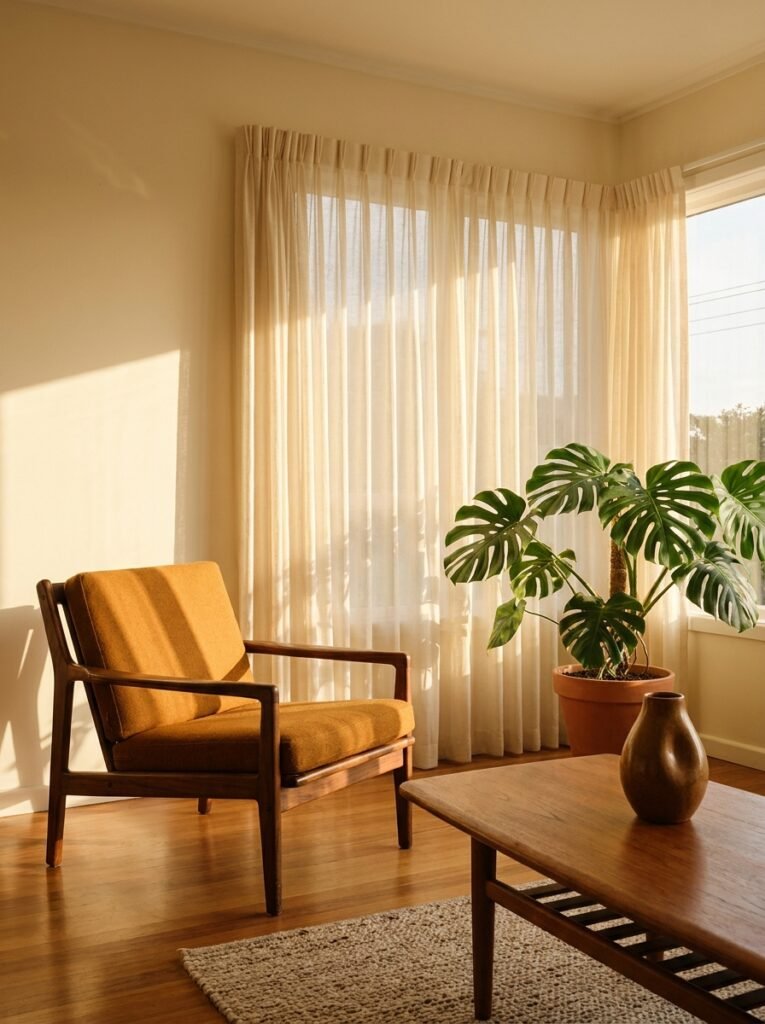
Mid-century modern endures not because it’s trendy, but because it’s true — true to the materials it uses, true to the human body it serves, true to the belief that beauty and function are not opposing forces but natural partners. It asks you to slow down, choose carefully, and fill your home only with things that genuinely matter.
So here’s the question worth sitting with: if you stripped your home down to only the pieces that brought you real, lasting joy — what would actually stay?