
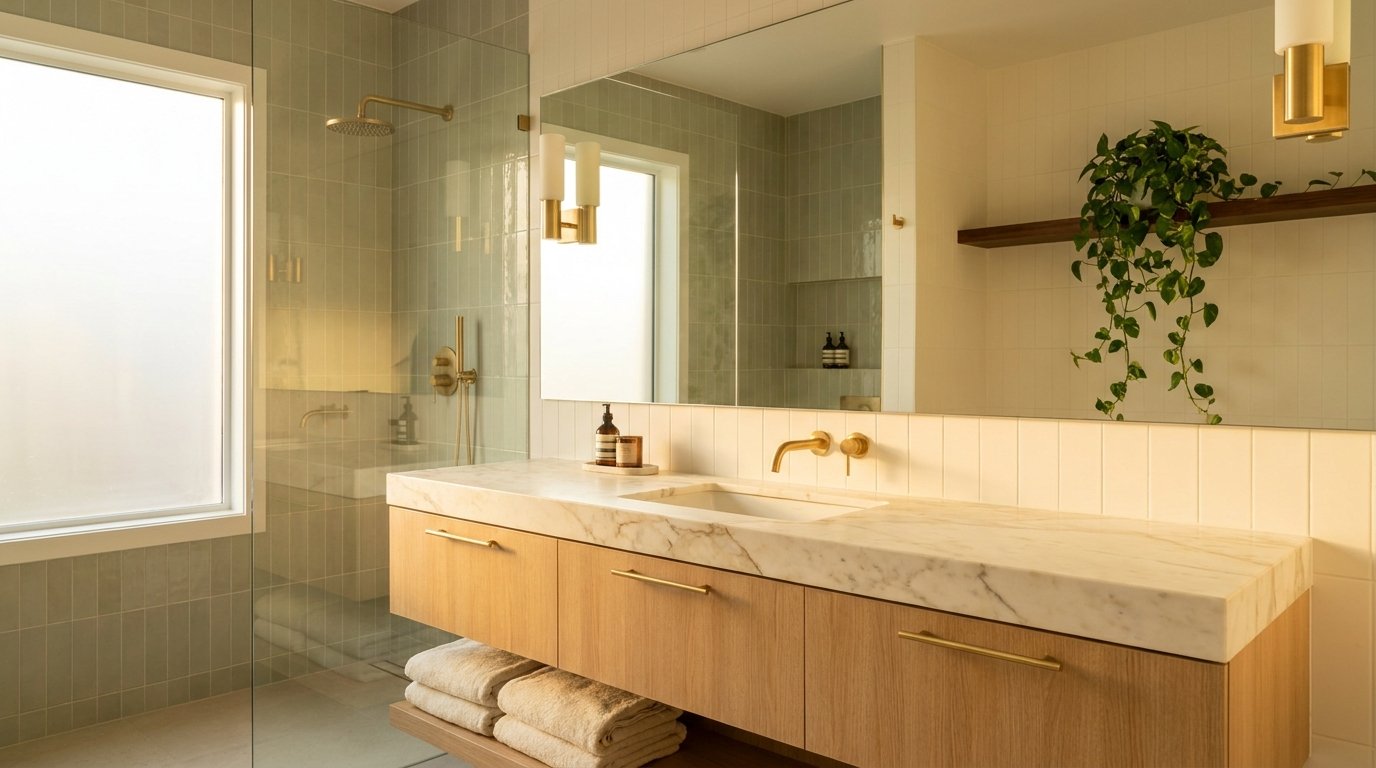
The Washroom That Changed How I Start Every Single Day
There’s something quietly powerful about a washroom that actually makes you feel good the moment you step inside. It’s not about luxury — it’s about intention, and the way a well-designed space can shift your entire mood before the day even begins.
—
1. Why Your Washroom Deserves More Attention Than You’re Giving It
Most of us spend somewhere between 30 minutes to an hour in our washroom every single day. That’s over 300 hours a year in a space most people treat as an afterthought — a room to rush through, not one to actually inhabit. But here’s what interior designers have understood for decades: the washroom is one of the most psychologically influential rooms in your home.
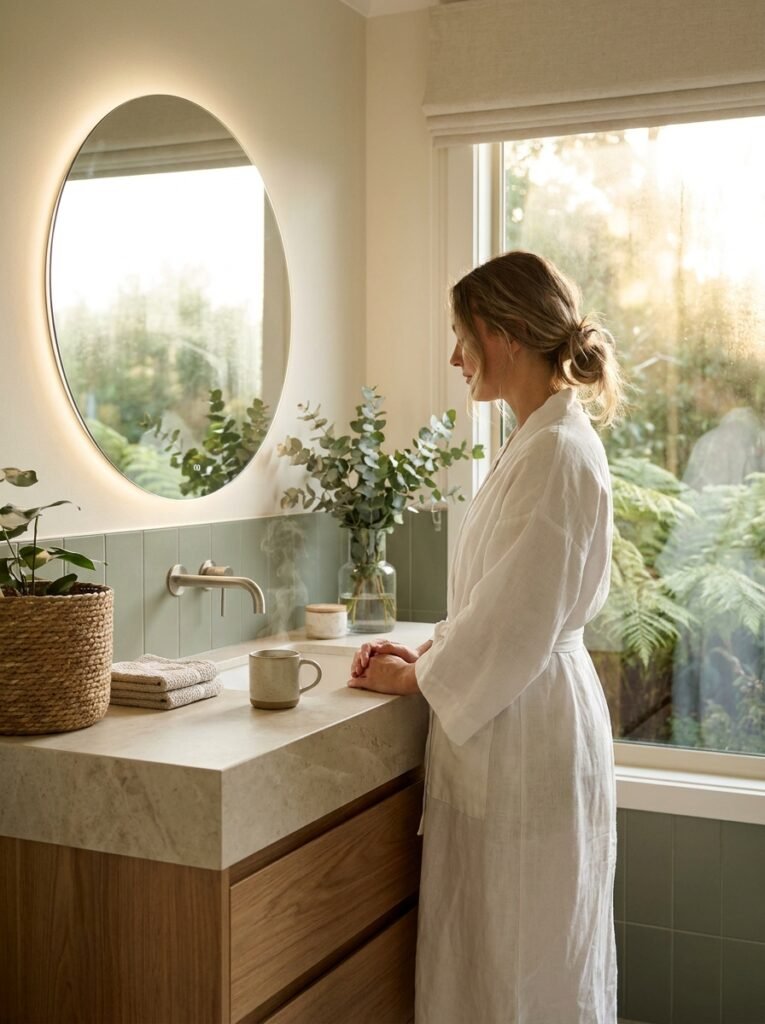
Think about it. It’s the first room you walk into when you wake up, bleary-eyed and not yet ready to face the world. It’s where you look at yourself — really look — before stepping out the door. It’s where you decompress at the end of a hard day, where the warm water of a shower somehow loosens more than just your muscles. A washroom isn’t just a functional room. It’s a ritual space.
When you start treating it that way — when you approach its design with the same care and intention you’d give a living room or a kitchen — something genuinely shifts. The morning routine doesn’t feel like a chore anymore. It starts to feel like a ceremony.
“A washroom designed with intention doesn’t just clean your body — it resets your entire state of mind.”
The good news? You don’t need a full renovation or a five-figure budget to create a washroom that feels elevated, calm, and deeply yours. You need a clear vision, a few smart design principles, and the willingness to see this small room as the important space it truly is.
—
2. The Color Psychology Behind Every Calm Washroom You’ve Ever Admired
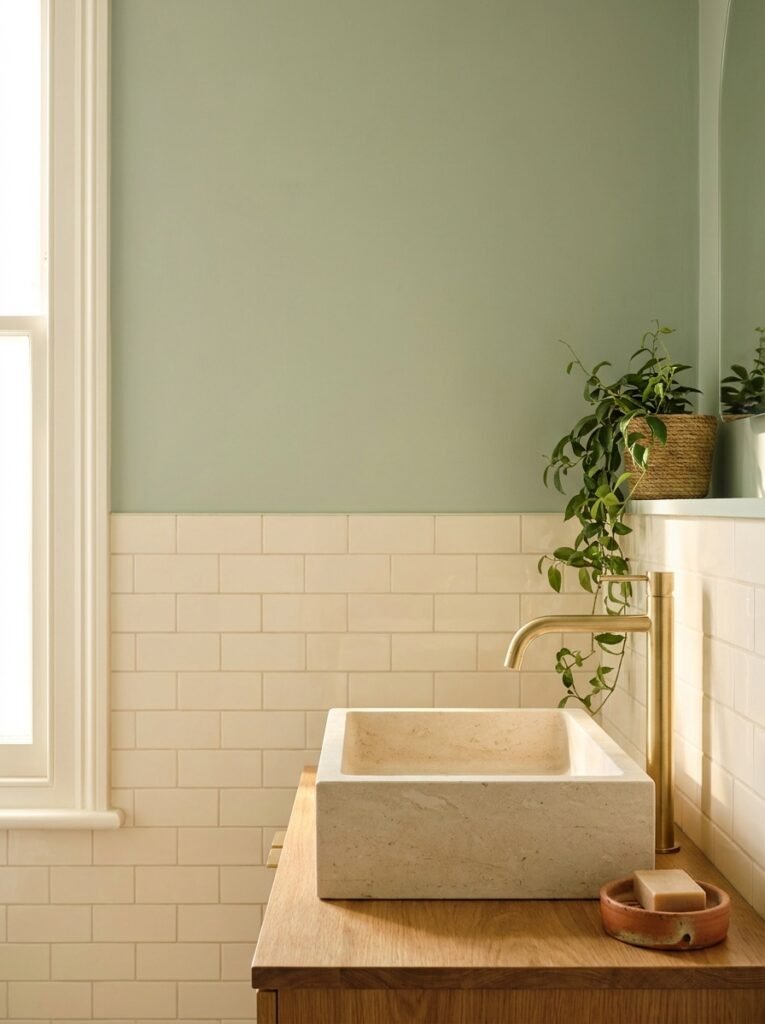
You’ve seen them on Pinterest — those washrooms bathed in soft sage green, or warm cream, or the coolest shade of slate grey. You save them instinctively, without always knowing why they make you feel so calm. The answer, more often than not, comes down to color psychology.
Color has a measurable, documented effect on our nervous system. Blues and blue-greens — think soft teal, dusty aqua, classic navy — are clinically associated with reduced heart rate and feelings of calm. They mimic water and sky, two of the most universally soothing things humans encounter. This is why so many spa-inspired washrooms lean heavily into the blue-green spectrum.
Warm whites and creams, on the other hand, create a sense of cleanliness without feeling clinical or cold. They reflect light beautifully, making even a small washroom feel more open and breathable. Earthy tones — terracotta, warm sand, muted ochre — bring grounding energy, a sense of being rooted and settled, which is exactly what you want in a room where you’re preparing to face the world.
Deep, moody tones like charcoal, forest green, or even black might seem counterintuitive in a washroom, but used thoughtfully — especially in larger or well-lit spaces — they create an extraordinary sense of luxury and intimacy. A dark washroom with great lighting feels like a boutique hotel. It feels like an escape.
The rule of thumb interior designers swear by: choose one dominant color, one supporting neutral, and let your materials and textures do the rest of the talking.
—
3. The Tile Choices That Tell the Story of Your Entire Home
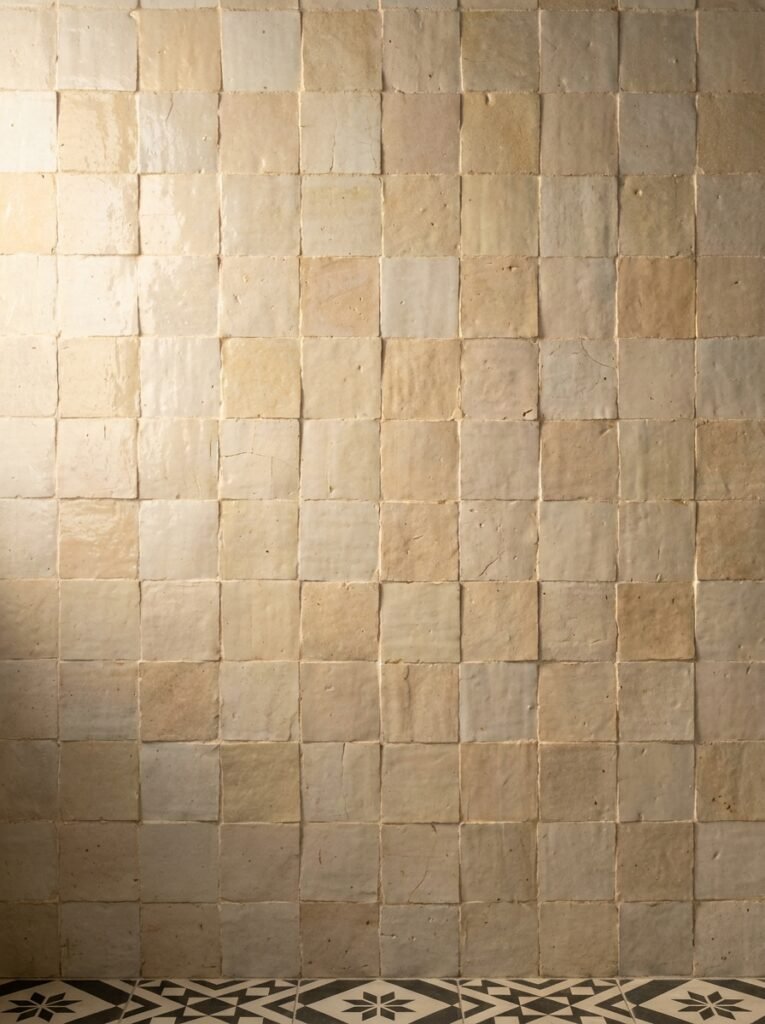
Tiles are the most permanent decision you’ll make in a washroom, and they carry enormous design weight. The wrong tile makes a space feel dated, cold, or incoherent. The right tile — even a simple one — can make an entire room feel architecturally intentional.
Subway tiles remain a timeless classic for a reason. Their clean lines and modest scale work in almost every style of home, from classic Victorian to minimalist contemporary. But the way you lay them changes everything. Standard horizontal stacking reads as traditional. Vertical stacking adds height. A herringbone or chevron pattern introduces movement and interest without needing a patterned tile at all.
Zellige tiles — handmade Moroccan clay tiles with slightly irregular glazing — have surged in popularity for their ability to add texture, warmth, and that ineffable sense of craft. Each tile is subtly different from the next, which means the overall effect is alive, organic, never flat. They work beautifully in warm, earthy washrooms.
Large-format tiles (think 60cm x 120cm or even bigger) are a brilliant choice for small washrooms because fewer grout lines means less visual interruption, which makes the space read as larger and more seamless. Paired with a matching or toning grout color, the effect is genuinely stunning.
Don’t overlook the floor. A patterned encaustic floor tile — especially in black and white geometric or a vintage floral — gives even the most neutral washroom a personality and a story. It becomes the unexpected detail that guests always compliment.
—
4. Lighting: The Single Element That Makes or Breaks Everything
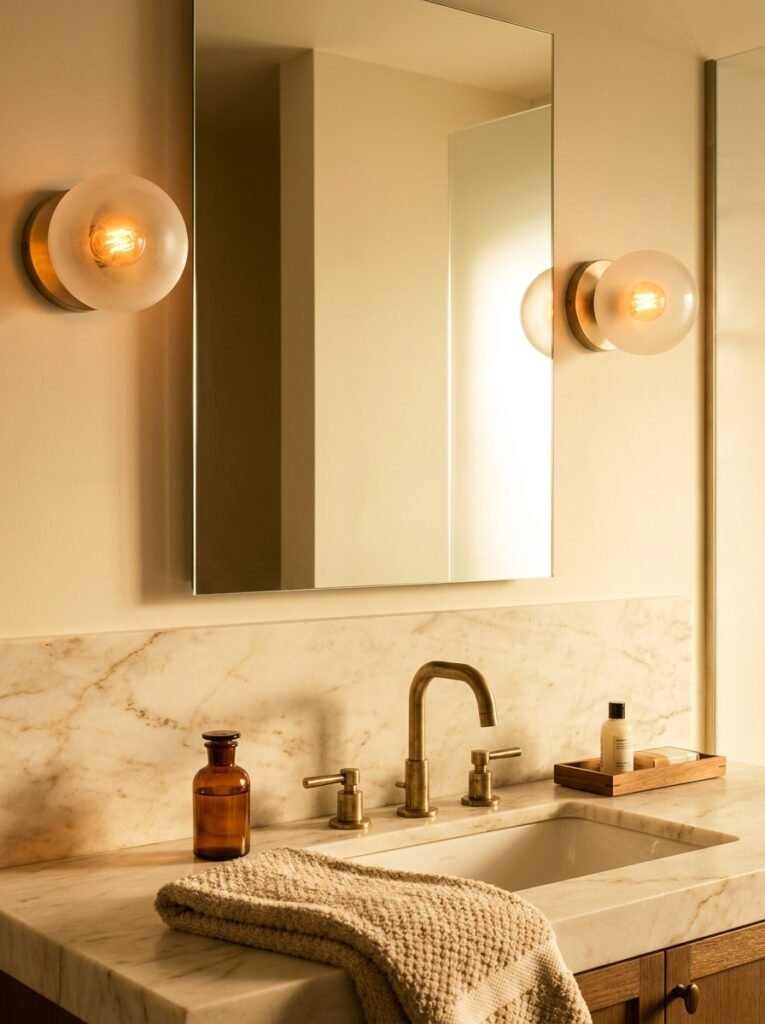
Interior designers will tell you, almost universally, that lighting is the most underestimated element in washroom design. You can spend thousands on beautiful tile and a stunning vanity, but if the lighting is wrong, none of it matters — or worse, all of it looks flat, harsh, and unflattering.
The most common mistake in washroom lighting is relying solely on a single overhead fixture. Overhead lighting — especially a bright, cool-toned overhead light — casts downward shadows on the face, exaggerating dark circles and unflattering angles. It’s the opposite of what you want in a room where you’re assessing how you look before leaving the house.
The gold standard for washroom lighting is layered. Start with ambient lighting — this is your overall, general illumination. Add task lighting specifically at the vanity mirror, positioned at face level on either side of the mirror rather than above it. This is called Hollywood lighting for good reason: it illuminates the face evenly and beautifully. Finally, add accent lighting — small LED strips under floating vanity units, or a soft backlit mirror — to create depth and that irresistible spa-like atmosphere.
Color temperature matters enormously. Warm white (around 2700K–3000K) feels flattering, cozy, and human. Cool white (above 4000K) feels clinical and harsh. For a washroom that feels both functional and beautiful, warm white is almost always the right answer.
“Good lighting in a washroom isn’t a luxury — it’s the most essential design decision you’ll ever make in that room.”
—
5. Small Washroom? Here’s How to Make It Feel Twice as Large
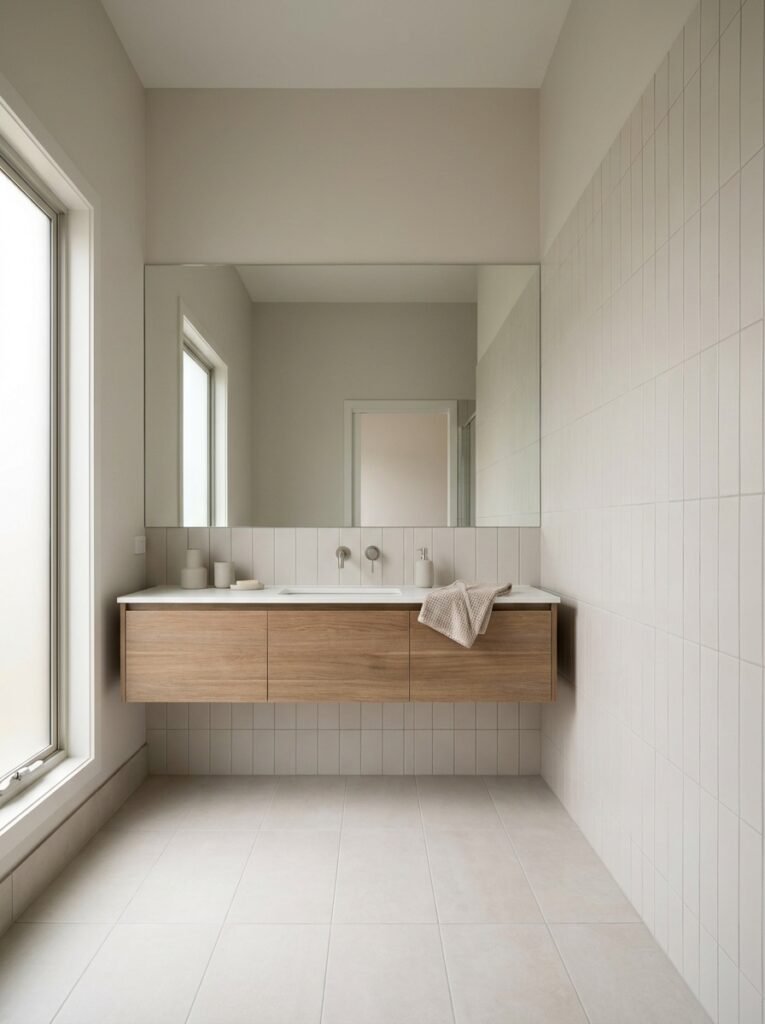
The majority of washrooms, particularly in apartments and older homes, are small. Not just compact — genuinely, breathtakingly small. And yet, some of the most beautiful washrooms ever photographed exist in tight spaces. The difference is always in the approach.
Mirrors are the single most powerful tool in a small washroom. A large mirror — or better yet, a full-width mirror that spans the entire vanity wall — doubles the perceived depth of the room instantly. Light bounces, space appears, and the whole room opens up. If a single large mirror feels too heavy, a gallery of smaller mirrors creates interest while achieving the same spatial effect.
Floating vanities are another game-changer in small spaces. By revealing the floor underneath, they create visual continuity that makes the room feel longer and more open than it actually is. Pair with a wall-mounted faucet and you’ve eliminated visual clutter entirely.
Vertical lines — through floor-to-ceiling tiles, tall narrow shelving, or vertically stacked subway tiles — draw the eye upward and create the illusion of greater ceiling height. In a small washroom, height is your friend. Use it deliberately and generously.
Finally: edit ruthlessly. Every object on a countertop in a small washroom competes for visual space. Keep surfaces as clear as possible and store everything you can behind cabinet doors or in baskets tucked neatly out of sight. A small washroom that is organized feels spacious. A small washroom filled with clutter feels claustrophobic, no matter how beautiful the tiles are.
—
6. The Vanity That Ties Everything Together
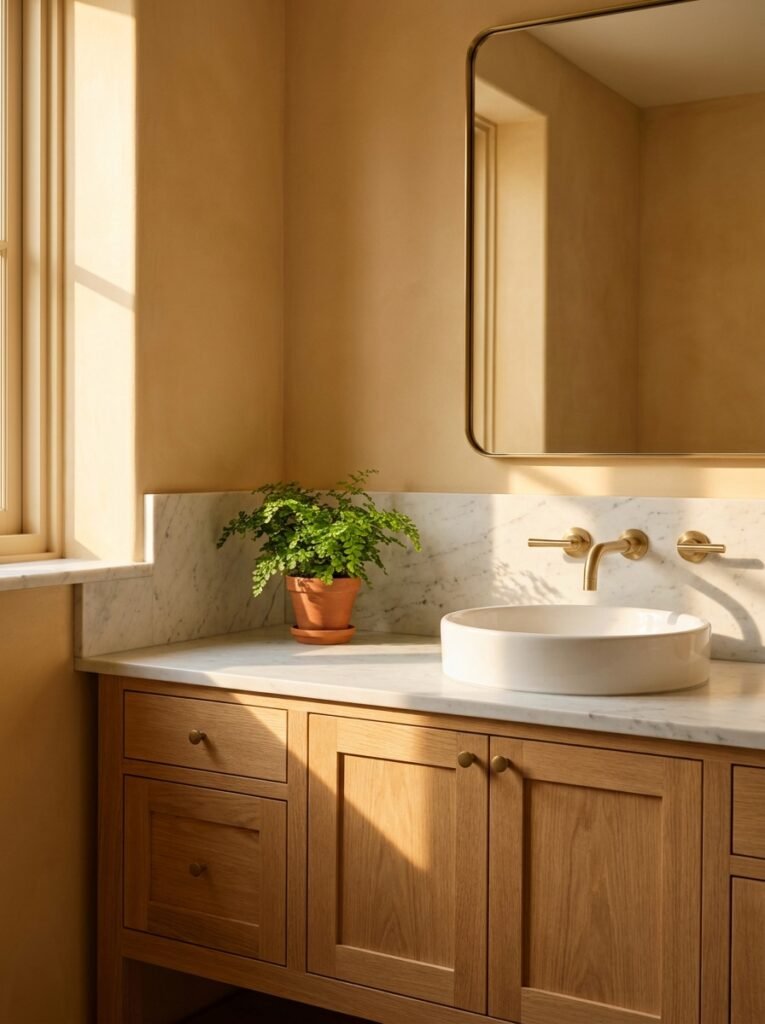
The vanity is the anchor of your washroom — it’s where you stand, where you look, where you begin and end your day. It deserves serious thought. The material, the height, the style, the storage configuration — all of it communicates something about the room as a whole.
Solid wood vanities bring immediate warmth. Whether it’s a light oak, a rich walnut, or a painted shaker-style design, wood in a washroom softens the inherent hardness of tile and porcelain. It brings nature inside in a way that feels grounding and genuinely beautiful.
Stone vanity tops — particularly honed (matte) marble or limestone — have a timeless quality that never dates. Unlike polished marble, honed stone doesn’t show every water drop and fingerprint, which makes it far more practical for everyday washroom life while still looking quietly spectacular.
Consider height carefully. Standard vanity height sits around 80–85cm, but a taller vanity at 90–95cm is often more comfortable for taller individuals and creates a more modern, architectural look. If multiple people use the space, the right height prevents years of chronic lower back strain.
—
7. Storage That Feels Beautiful, Not Just Functional
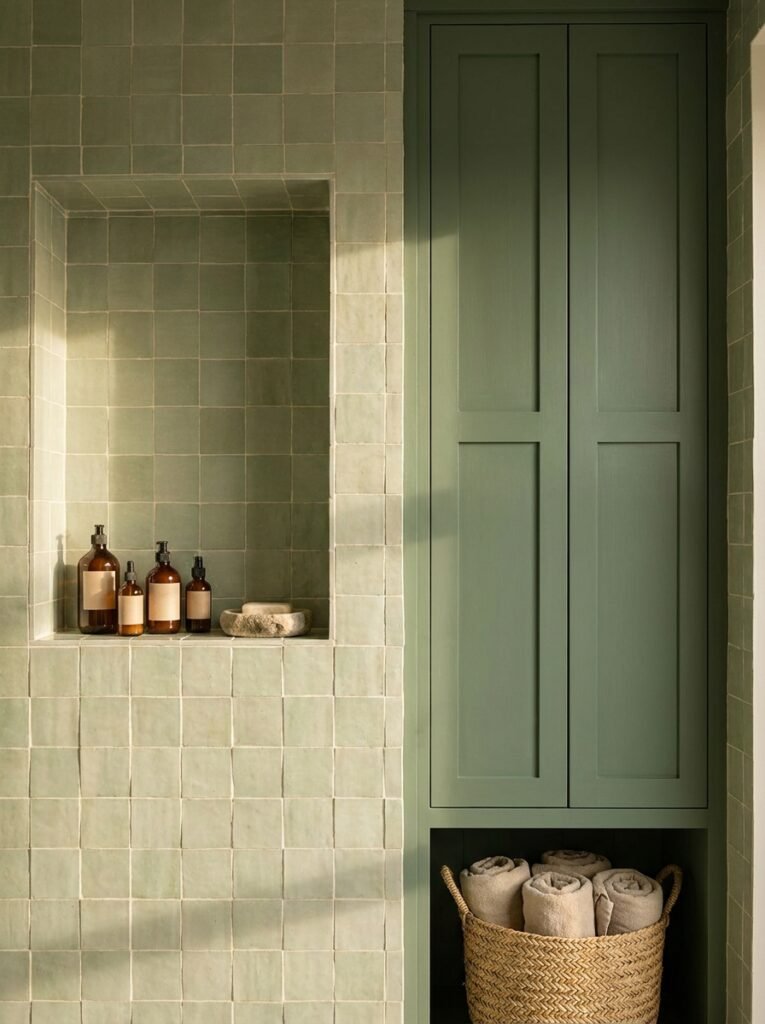
The best washroom storage is invisible — or close to it. The goal is to have everything you need within reach, without any of it being visible from the doorway. This requires thinking about storage not as an afterthought, but as a core element of the design from the very beginning.
Recessed niches — shelves built directly into the wall between studs — are perhaps the most elegant washroom storage solution. They add storage without taking up any floor or wall space, they can be tiled to match the surrounding wall, and they look like they’ve always been there. A well-placed niche in a shower enclosure is genuinely one of the most satisfying design details a washroom can have.
Built-in cabinetry on either side of a mirror, extending to the ceiling, creates substantial storage while making the ceiling feel higher. Tall, vertical storage in a small washroom is almost always more efficient than low, wide storage, and it draws the eye upward in that helpful, space-expanding way.
Baskets — woven seagrass, rattan, or linen — provide soft, textural storage for everyday items like spare toilet rolls, hand towels, or skincare products. They soften the inevitable hard surfaces of a washroom and bring a warmth that no cabinet can quite replicate.
—
8. Bringing Nature Into Your Washroom (and Why It Works So Well)
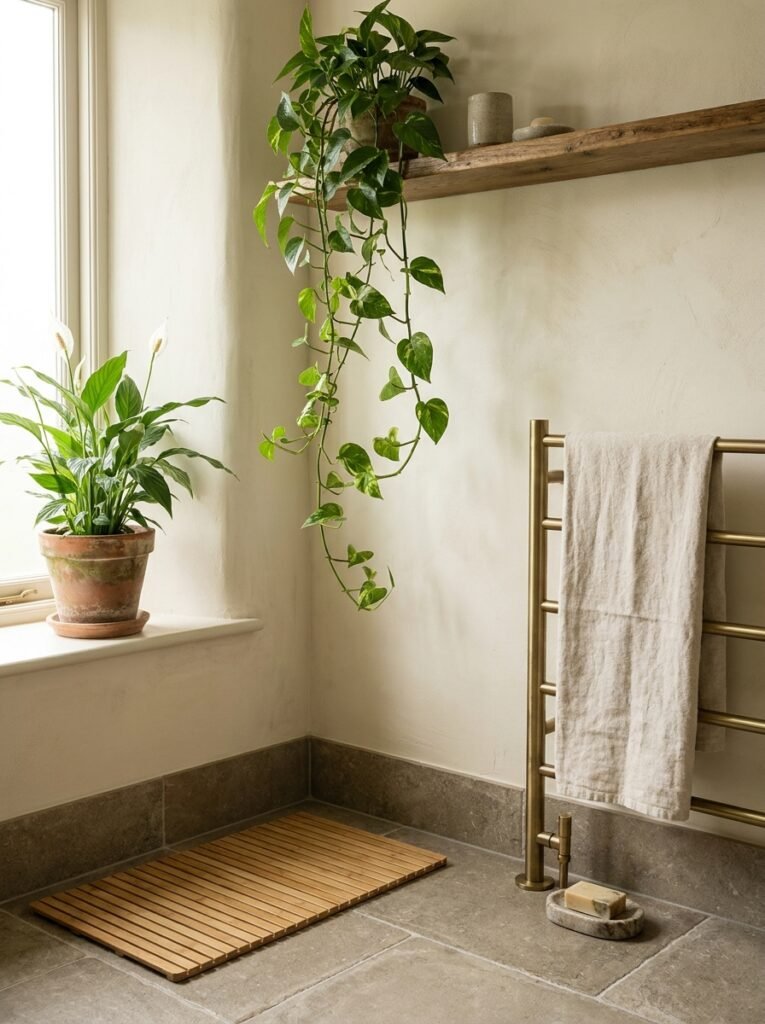
Plants and washrooms are a pairing that makes profound sense, both aesthetically and physiologically. The presence of living greenery has been shown in multiple studies to lower cortisol levels, reduce anxiety, and improve focus. In a room where you’re preparing to meet the day — or unwinding at the end of it — that’s meaningful.
The practical concern, of course, is light. Most washrooms don’t get the bright, direct sunlight that many plants prefer. The solution is choosing plants specifically suited to lower light and higher humidity. Pothos vines trail beautifully from a high shelf, thriving in the steamy atmosphere a shower creates. Peace lilies are elegant, almost architectural, and prefer indirect light. Ferns love humidity. A small aloe vera on the windowsill is both decorative and genuinely useful.
Beyond plants, natural materials bring the same grounding energy. A wooden bath mat instead of a synthetic one. A stone soap dish. A linen hand towel in a natural, undyed color. Bamboo accessories. These small material choices, accumulated thoughtfully, create a washroom that feels connected to the natural world in a way that is quietly, persistently calming.
“Nature doesn’t belong just in the garden — bringing it into your washroom is one of the kindest things you can do for your daily routine.”
—
9. Textiles That Transform the Feel of a Washroom Instantly
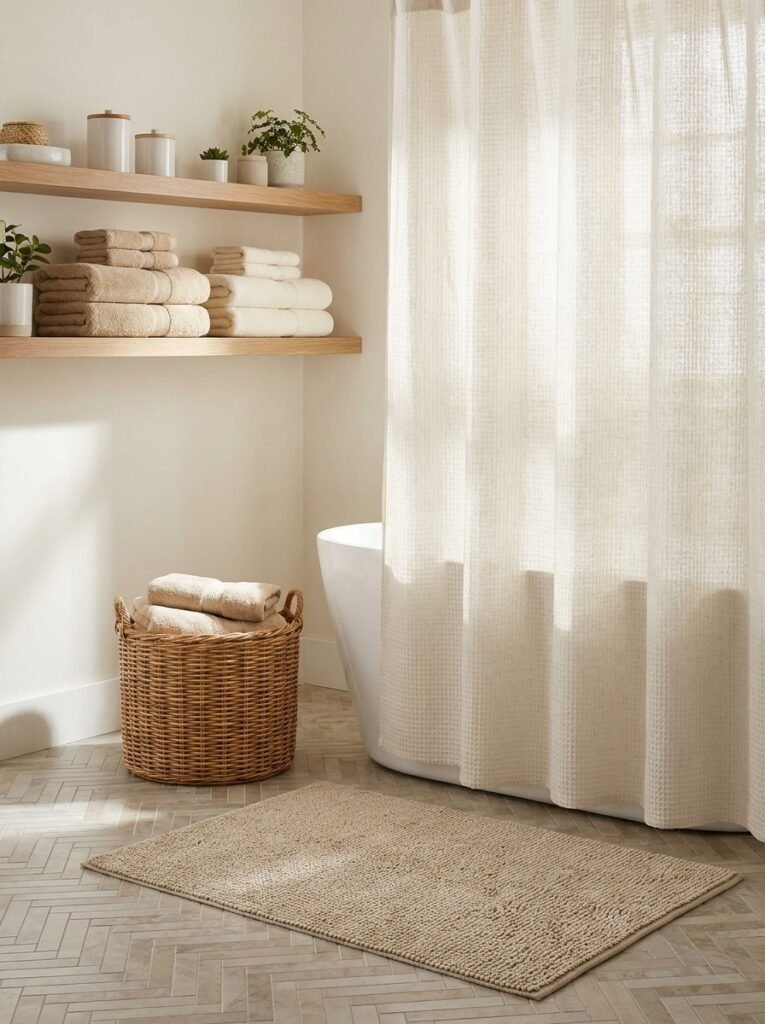
Textiles are the quickest, most affordable way to shift the atmosphere of a washroom — and the most underestimated. A beautiful towel, a well-chosen bath mat, a linen shower curtain — these soft elements absorb sound, add warmth, and introduce color and texture in a way that is completely reversible.
Towels deserve particular attention. High-quality Turkish cotton or waffle-weave towels in a coordinated color palette — rather than an assortment of mismatched colors from different eras of your life — immediately elevate the look of any washroom. Rolled and placed in an open basket, or folded neatly and stacked on a shelf, they become part of the visual design of the room.
Bath mats are often forgotten until they become a problem — worn, discolored, or completely wrong for the space. A thick, generously sized bath mat in a natural material (cotton, bamboo, stone-effect) sets a tone of quiet luxury, even in a modest room. If you’re changing the look of your washroom without a renovation, swapping the bath mat is genuinely one of the highest-impact, lowest-cost moves you can make.
A linen or cotton shower curtain (for those without a glass shower screen) is a significant opportunity for pattern, texture, and color. A simple waffle-linen curtain in natural white adds texture without pattern. A subtle stripe adds interest without overwhelming the space. A bold botanical or geometric pattern — in the right space — can anchor the entire room’s personality.
—
10. The Finishing Details That Signal a Truly Designed Space
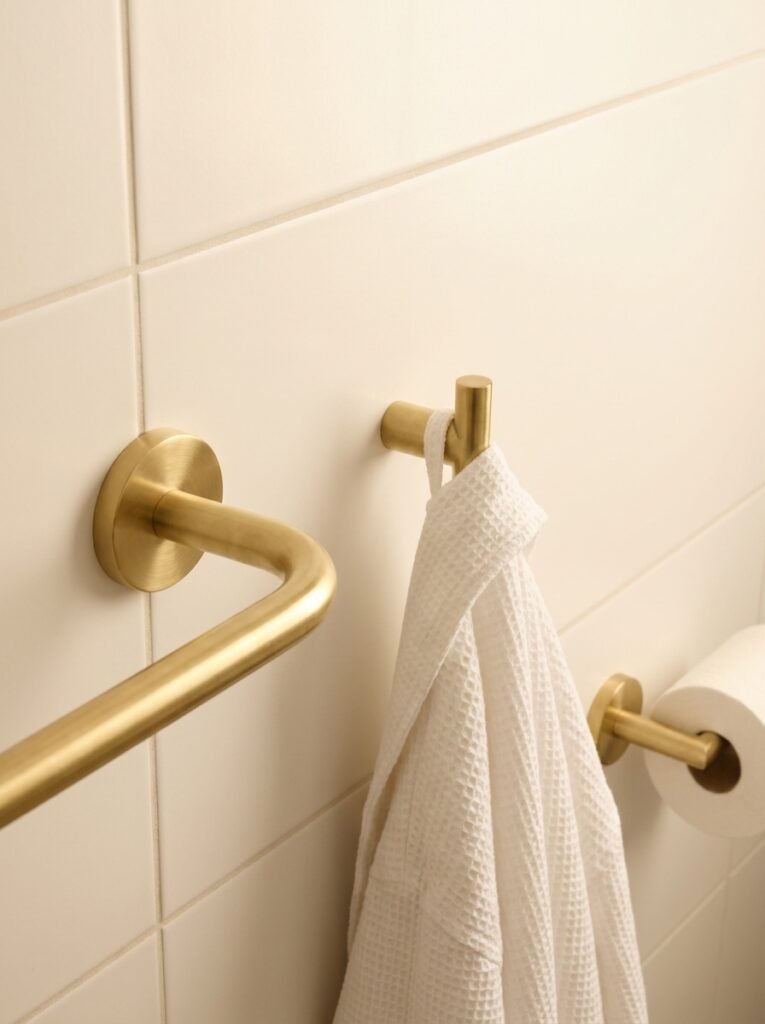
The difference between a washroom that looks fine and one that looks genuinely designed often comes down to hardware — the taps, the towel rails, the robe hooks, the toilet roll holder. These small metal moments, repeated throughout the room, create visual cohesion that reads immediately as intentional.
Choose one metal finish and commit to it throughout. Brushed brass adds warmth and a vintage sophistication. Matte black is contemporary, graphic, and strikingly beautiful against white tile. Brushed nickel has a cool, understated elegance. Chrome is classic and versatile. Mixing metals can work, but it requires careful intention — if you’re not confident in your eye for it, a single consistent finish is always the safer, cleaner choice.
Pay attention, too, to the toilet. It’s a functional necessity that most people try to ignore aesthetically — but a well-chosen toilet in the right style and proportion can genuinely improve the look of a washroom. A wall-hung toilet, in particular, creates a floating effect similar to a floating vanity and makes cleaning the floor dramatically easier.
—
11. Scent, Sound, and the Sensory Experience of Your Washroom
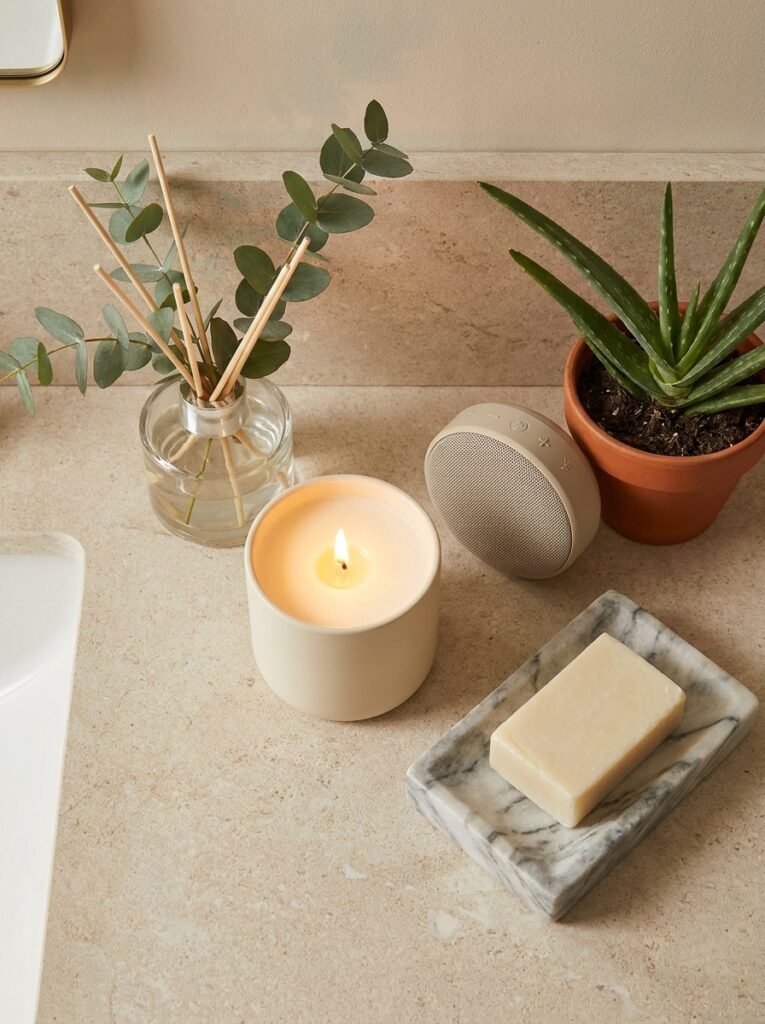
A truly well-designed washroom engages all the senses — not just sight. This is something that luxury hotels understand instinctively, and it’s something you can replicate at home with minimal investment.
Scent is perhaps the most immediate and powerful. A reed diffuser in a carefully chosen fragrance — eucalyptus and mint for an energizing morning atmosphere, lavender and vetiver for an evening wind-down — can completely transform the emotional experience of the room before you’ve even registered anything visual. Scented hand soap and a quality candle in a complementary fragrance create a cohesive olfactory environment that feels unmistakably intentional.
Sound is often overlooked in washroom design. A small, water-resistant Bluetooth speaker — hidden discreetly or chosen to complement the decor — changes the entire ritual of showering or bathing. Music in the morning creates momentum. A podcast brings information. Rainfall or nature sounds amplify the spa feeling. The acoustic properties of a tiled room actually enhance sound in a pleasing way, making even modest speakers sound impressively full.
Temperature matters too — both the warmth of the water and the warmth of the room itself. Underfloor heating, where possible, is the single greatest domestic comfort upgrade most people consistently underestimate until they experience it firsthand. Stepping onto a warm floor on a cold morning is one of those small, everyday joys that never loses its power.
—
12. Creating a Morning Ritual You Actually Look Forward To
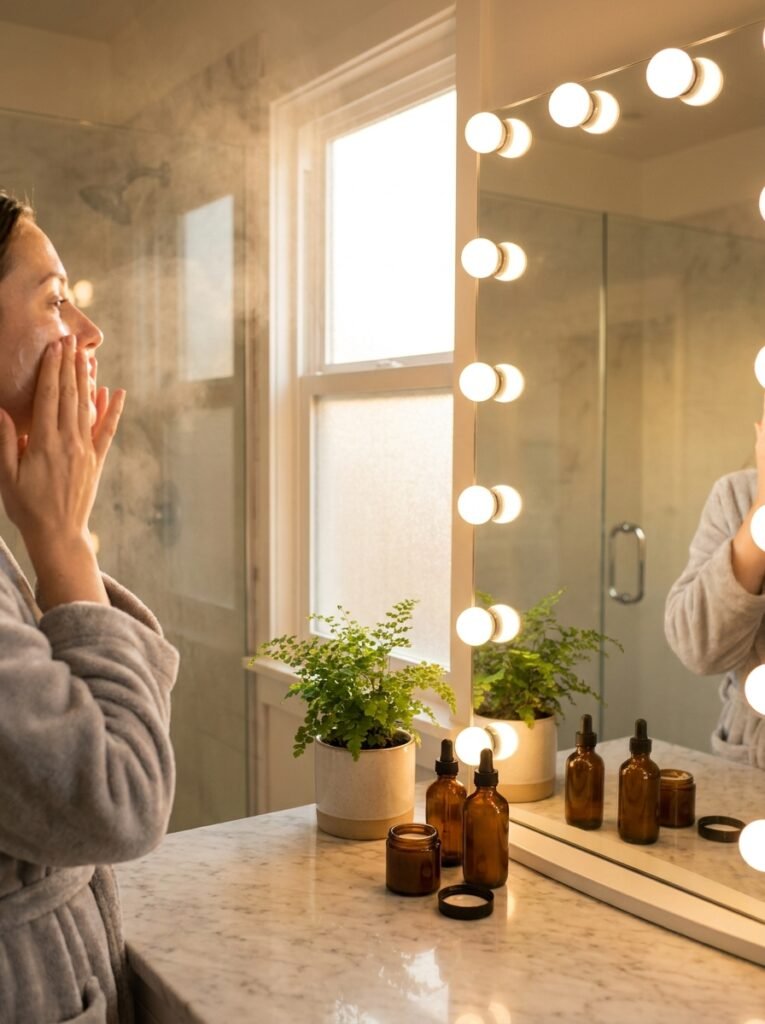
Ultimately, all of this — the tiles, the lighting, the plants, the scent — serves a single purpose: creating a space where the act of getting ready feels less like a task and more like a ritual you actually want to inhabit.
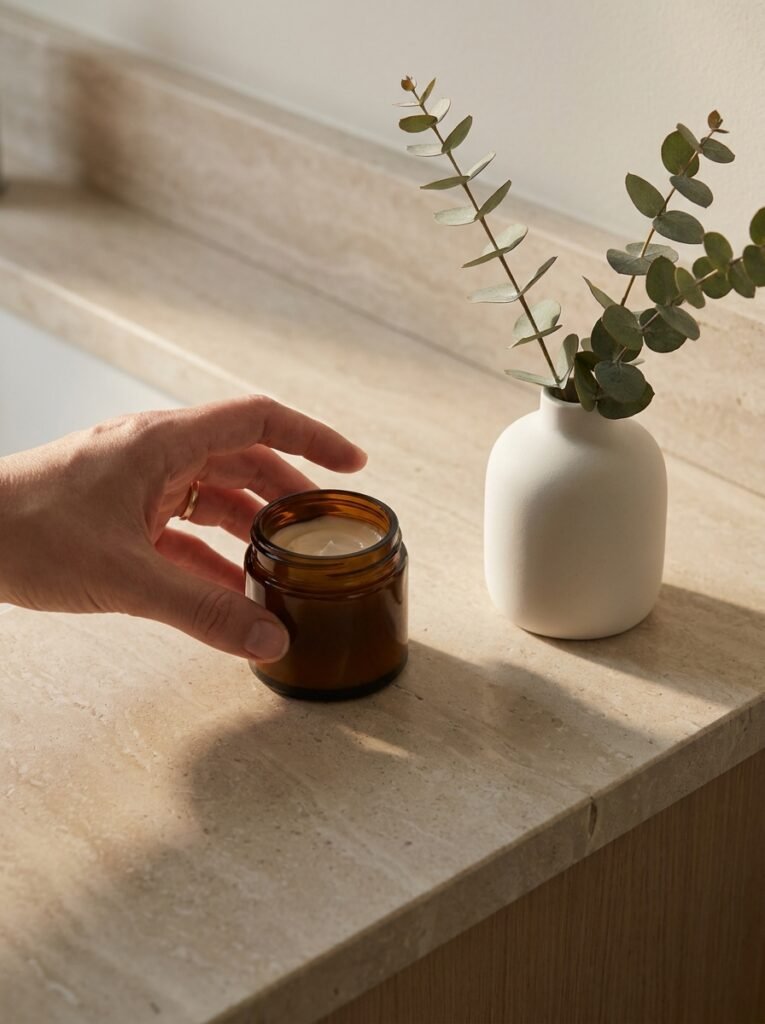
When a washroom is designed thoughtfully, something subtle but significant happens to the people who use it. The morning rush eases, just slightly. There’s a moment of pause — maybe just ten seconds standing in front of a beautifully lit mirror, reaching for a well-organized skincare product, breathing in a scent that signals the start of a new day — that grounds you before the world gets loud.
Rituals need containers. The best rituals happen in spaces that have been designed to support them. A morning routine in a washroom that is cluttered, poorly lit, and coldly functional feels like something to escape. A morning routine in a washroom that is calm, organized, and genuinely beautiful feels like something to savor.
That shift — from escape to savor — is the entire point of designing your washroom with intention. It doesn’t happen overnight. It happens tile by tile, towel by towel, detail by thoughtful detail. But when it does happen, you feel it every single morning of your life.
“The washroom you design today becomes the quiet ritual you return to every single morning — make it one worth returning to.”
—
🌿 How to Take Care of Your Washroom Interior
Keeping a thoughtfully designed washroom looking its best is less about deep cleaning and more about consistent, gentle maintenance. Here are five practical things that make all the difference.
Seal your grout and natural stone annually. Unsealed grout absorbs moisture, soap residue, and bacteria — it discolors quickly and becomes very difficult to clean. A quality penetrating sealer, applied once a year, prevents this almost entirely and keeps tile looking fresh for decades.
Ventilate daily and deliberately. The biggest enemy of any washroom — beautiful or otherwise — is sustained moisture. Run your extractor fan for at least 15–20 minutes after every shower or bath. If you have a window, open it regularly. This prevents mold, protects your grout, and keeps the air genuinely fresh rather than just deodorized.
Edit what lives in your washroom seasonally. Every three to four months, pull everything out of your cabinets and drawers, discard anything expired or unused, wipe down shelves, and reassess what deserves to be there. A curated washroom is much easier to keep clean than a cluttered one.
Care for your textiles properly. Wash towels and bath mats at a high temperature (60°C or above) every week or two to prevent bacteria buildup, and avoid fabric softener — it coats the fibers and reduces absorbency over time. Line-dry or tumble-dry on a low heat to preserve the softness of quality towels.
Treat your plants with the same attention you give the rest of the room. Wipe dust from large leaves. Remove any yellowing leaves promptly. Check soil moisture before watering rather than watering on a schedule — most washroom plants prefer to dry out slightly between waterings and will struggle if kept consistently wet.
—
❓ FAQ
Q: What is the best color for a small washroom interior? A: Soft, light tones — warm whites, pale greiges, soft sage, or light aqua — work best in small washrooms because they reflect light and create a sense of openness. Large-format tiles in a light color with matching grout dramatically reduce visual interruption and make the space feel noticeably larger than it is. That said, dark colors can work beautifully in small washrooms with excellent artificial lighting — the key is ensuring the space is well lit regardless of the color you choose.
Q: How can I make my washroom look expensive without spending a lot? A: The highest-impact, lowest-cost upgrades are consistently the same: replace hardware with a coordinated metal finish, invest in quality towels in a cohesive color palette, add a large mirror or extend your existing mirror to the full width of the vanity, and introduce a plant or two. Decluttering costs nothing and has an immediate, transformative effect. Good lighting — specifically replacing a harsh overhead bulb with warm-toned globes at face level — is another investment that pays enormous visual dividends for a modest outlay.
Q: What plants are best for a washroom with no natural light? A: Several plants genuinely thrive in low-light, high-humidity conditions that describe most washrooms. Pothos is nearly indestructible and grows happily in low light. Cast iron plants (Aspidistra) live up to their name and tolerate near darkness. ZZ plants are drought-tolerant, low-light champions with beautiful glossy leaves. Peace lilies are another excellent choice — they prefer indirect light, love humidity, and produce elegant white flowers. All of these will add life to a washroom even without a natural window, provided you use a grow light occasionally or rotate them to brighter areas of your home periodically.
—
💭 Final Thought
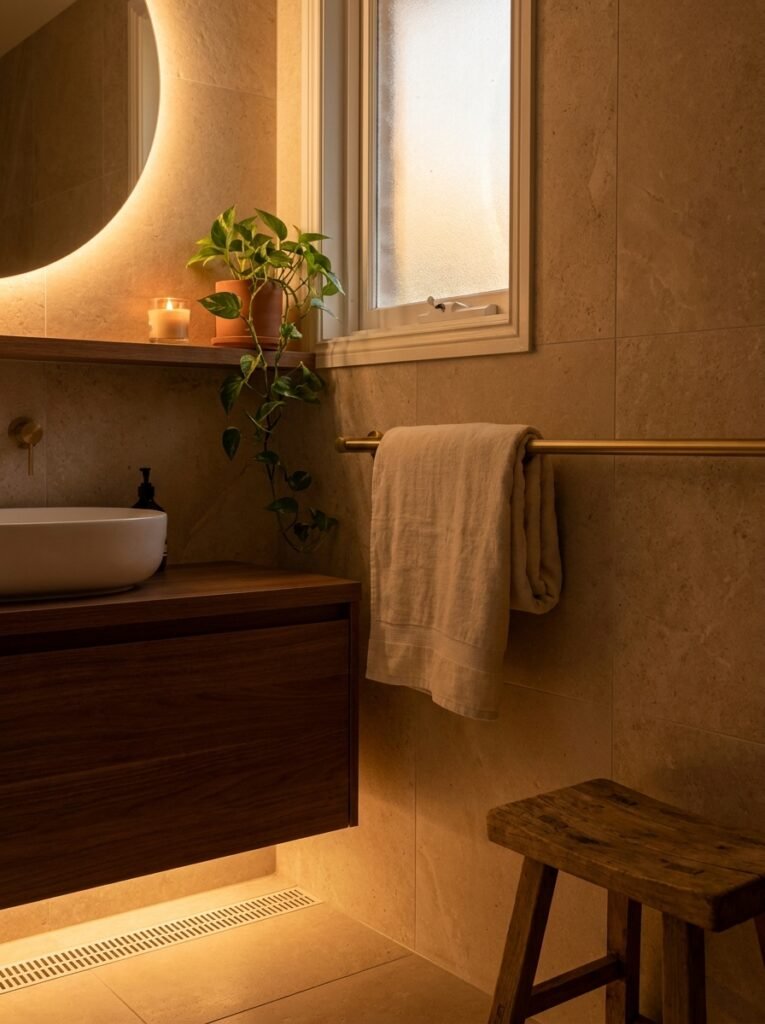
A washroom is such a small room. And yet, it holds such a disproportionately large part of your daily life — your mornings, your evenings, your private moments of transition between who you are at home and who you become when you step out into the world. Designing it with care isn’t an indulgence. It’s an act of genuine self-respect.
Every thoughtful choice you make in that room — the warm light that flatters instead of harshes, the plant that softens the hard edges, the scent that tells your nervous system it’s time to begin — those choices compound into something that shapes how you feel about your home, about your mornings, about yourself.
So here’s the question worth sitting with: what is your washroom currently telling you about how much you value your daily rituals — and what do you want it to say instead?