
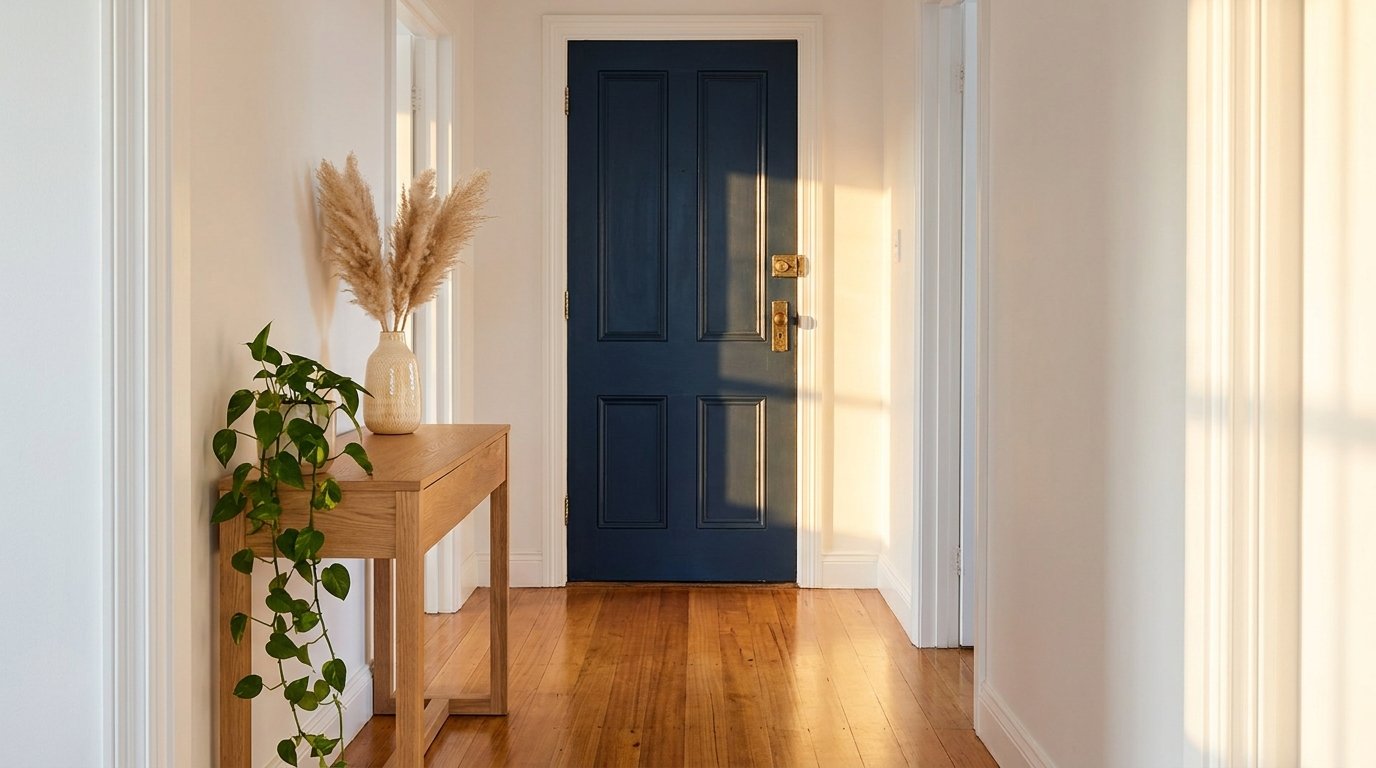
The Blue Door Moment: Why a Single Door Color Is Quietly Transforming Homes — and the People Inside Them
There’s something almost cinematic about opening your eyes to a blue door inside your home. It stops you — not loudly, not dramatically, but in that quiet, reverent way that only truly beautiful things can. If you’ve been scrolling through interior design inspiration lately and keep landing on images of moody navy entryways, soft coastal teal pantry doors, or dusty French blue bedroom doors, you’re not alone. Blue interior doors have become one of the most searched, saved, and emotionally charged design choices of this decade — and once you understand why, you’ll never look at a plain white door the same way again.
—
1. The Psychology Behind Why Blue Doors Make You Feel So Much at Home
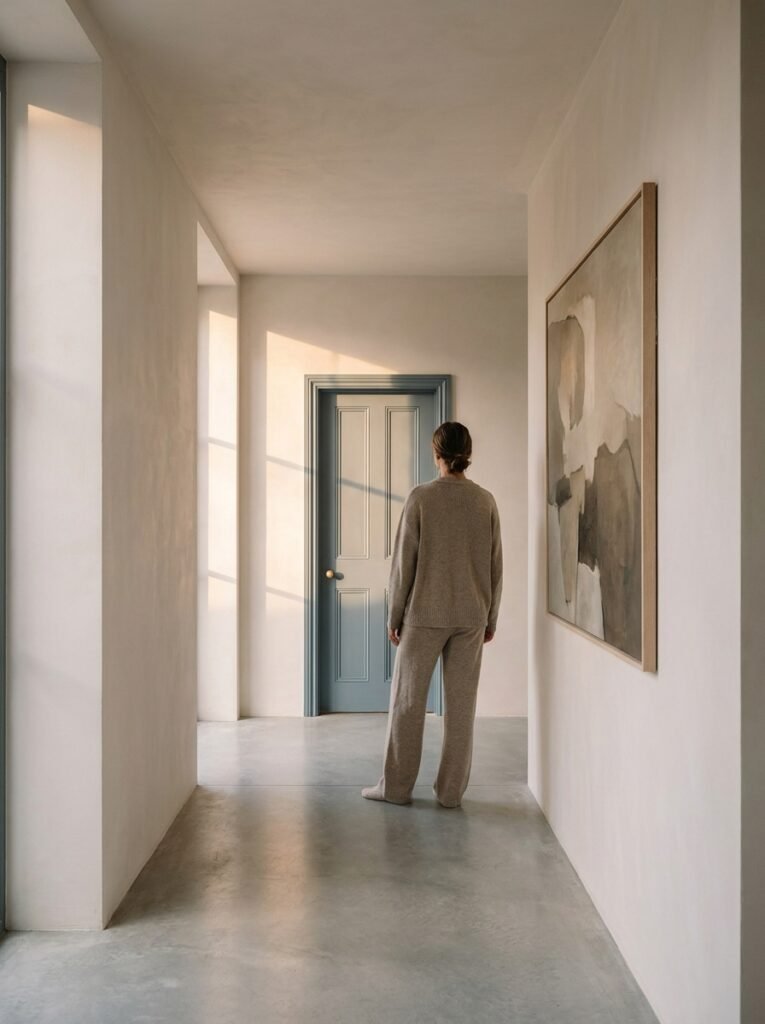
Before you ever pick up a paintbrush, it’s worth understanding what blue actually does to the human mind — because it does a lot. Blue is the color most consistently associated with calm, trust, and emotional safety across virtually every culture on earth. It’s the color of deep water, clear sky, and dusk settling over a quiet landscape. When we encounter it indoors, our nervous systems respond almost automatically: heart rate slows, breath deepens, the mental chatter quiets just a little.
Interior designers have known this for decades, but what’s shifted recently is the willingness to bring that psychological power inside — not just in cushion accents or artwork, but in permanent architectural features like doors. A painted door isn’t wallpaper you can swap out on a whim. It’s a commitment. And that commitment signals to every person who moves through your home that this space is intentional, layered, and lived in by someone who pays attention to the details that actually matter.
The particular magic of blue is its flexibility. Depending on the shade you choose, a blue door can whisper or speak — it can feel like a library in a Georgian townhouse or like a beach cottage with the windows flung open. That range is what makes it so endlessly pinnable, so universally beloved, and so worth understanding deeply before you dive in.
“A blue door doesn’t just change how your room looks — it changes how your room feels to be in.”
—
2. Navy Blue Doors: The Sophisticated Choice That Ages Like Fine Wine
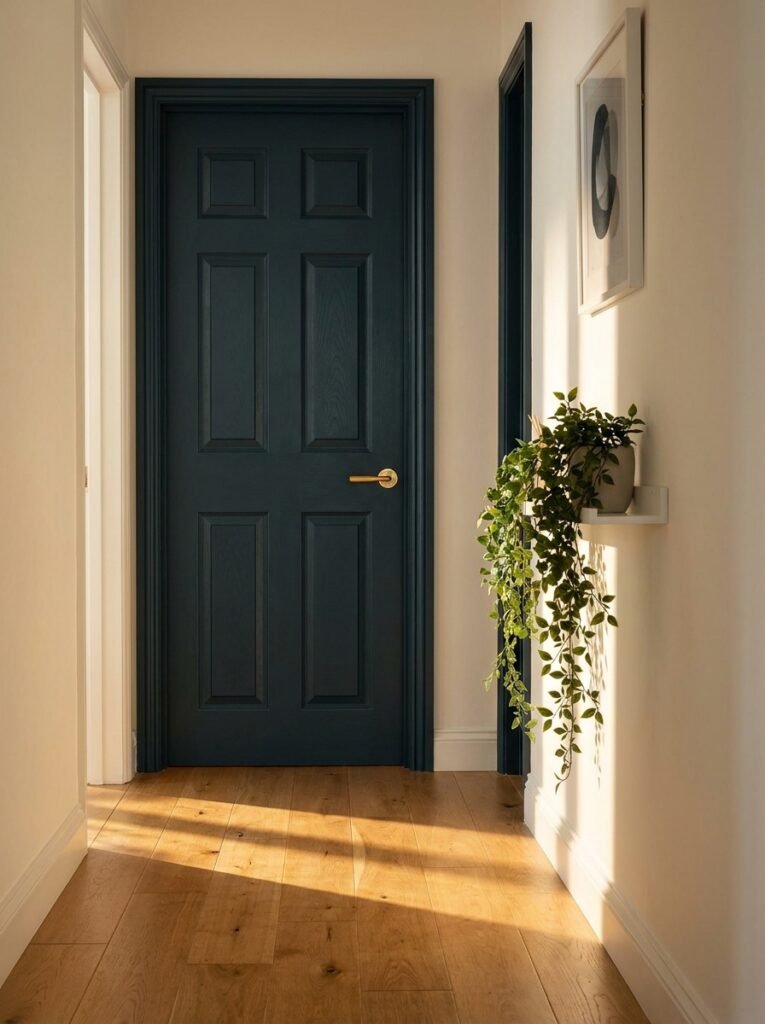
If you’ve ever walked into a room with a deep navy blue door and felt an inexplicable sense of being held — like the room had arms — you’ve experienced what designers call “enveloping depth.” Navy is the darkest member of the blue family, and when applied to an interior door, it creates an almost architectural effect. It adds weight, gravitas, and a kind of quiet authority that lighter shades simply can’t achieve.
Navy doors work particularly well in rooms that already have a lot of natural light, where the contrast between the bright walls and the dark door creates a visual rhythm that feels sophisticated without feeling cold. Think of a white-walled hallway with honey-toned hardwood floors and a navy door at the end — it acts like a focal point, pulling the eye gently forward and making even a simple corridor feel designed.
Paint colors to explore: Benjamin Moore’s “Hale Navy,” Sherwin-Williams’ “Naval,” or Farrow & Ball’s “Hague Blue.” Each has its own undertone — Hague Blue leans slightly green-grey, which gives it an aged, European quality that photographs absolutely beautifully in golden hour light.
—
3. Soft Dusty Blue: The Color for Rooms That Want to Breathe
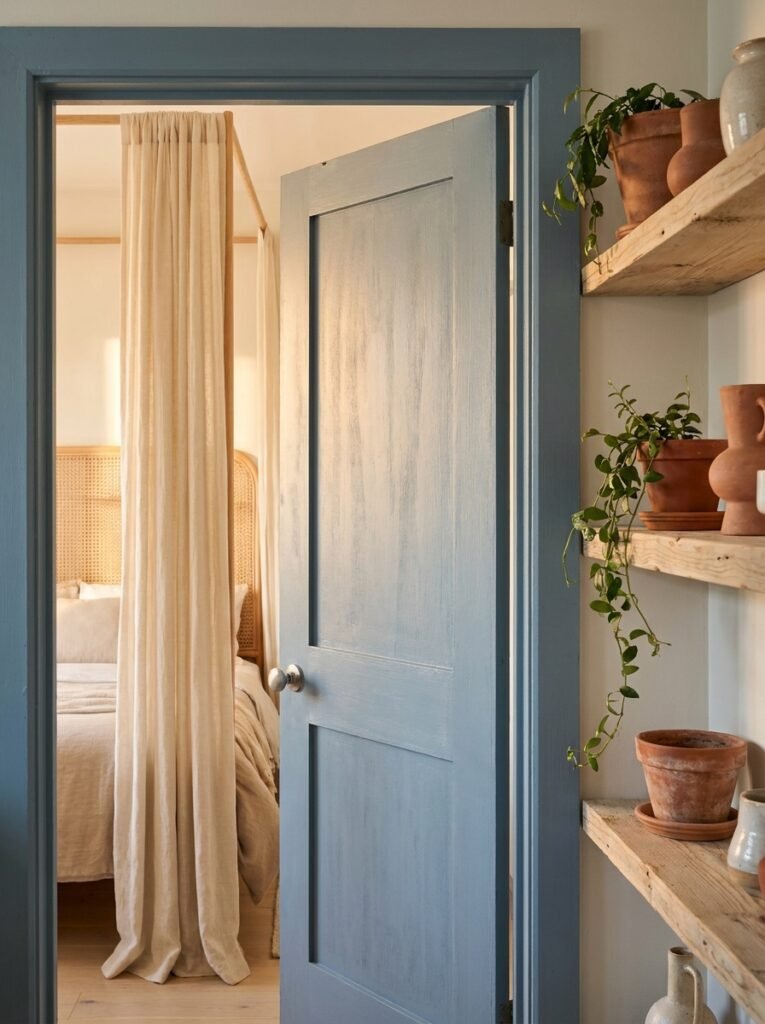
Not every space needs drama. Some rooms are asking for something gentler — a color that feels like a long exhale, like linen drying in afternoon sun, like the sky twenty minutes after sunrise when it hasn’t quite decided what shade it wants to be yet. That’s dusty blue — and it’s having a moment that shows absolutely no signs of slowing down.
Dusty blue doors are the interior design equivalent of a perfectly worn-in denim jacket: casual enough to feel effortless, considered enough to feel intentional. They work beautifully in bedrooms, where the softness of the hue supports rest and relaxation. They’re equally stunning in home offices, where the muted tone reduces visual stimulation without making the space feel flat or uninspiring.
What makes dusty blue genuinely special is how it interacts with natural materials. Pair a dusty blue door with rattan furniture, linen curtains, raw wood shelving, or terracotta accents and the result is something that feels genuinely alive — like the room grew organically rather than being styled from a catalog.
—
4. French Blue Doors: Borrowed from Provence, Perfect for Any Room
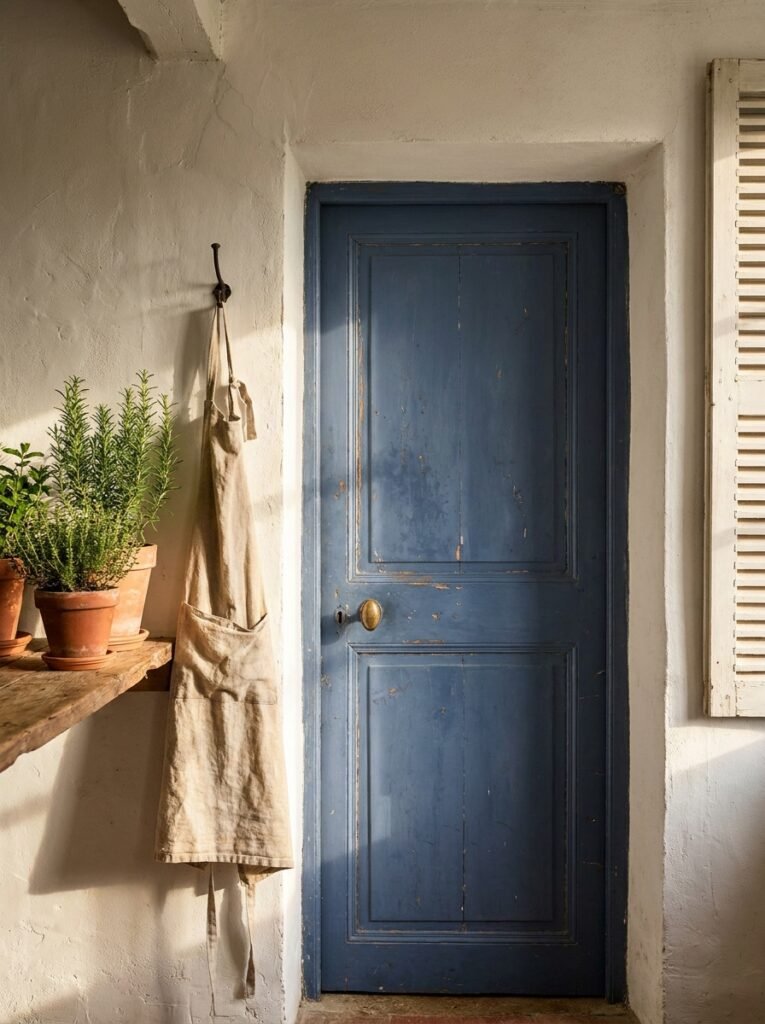
Close your eyes for a moment. Imagine a farmhouse somewhere in the south of France — sunlight pouring through old shuttered windows, lavender in the courtyard, a long wooden table set for lunch. The doors in that farmhouse are painted in what we now call French blue: warm, slightly faded, somewhere between cobalt and slate, carrying the patina of generations.
French blue as an interior door color is one of the most historically rich choices you can make. It draws from a tradition of European painted woodwork that spans centuries — this wasn’t a design trend, it was a way of life. Bringing it into a modern home creates that rarest of interior design achievements: a space that feels both timeless and current.
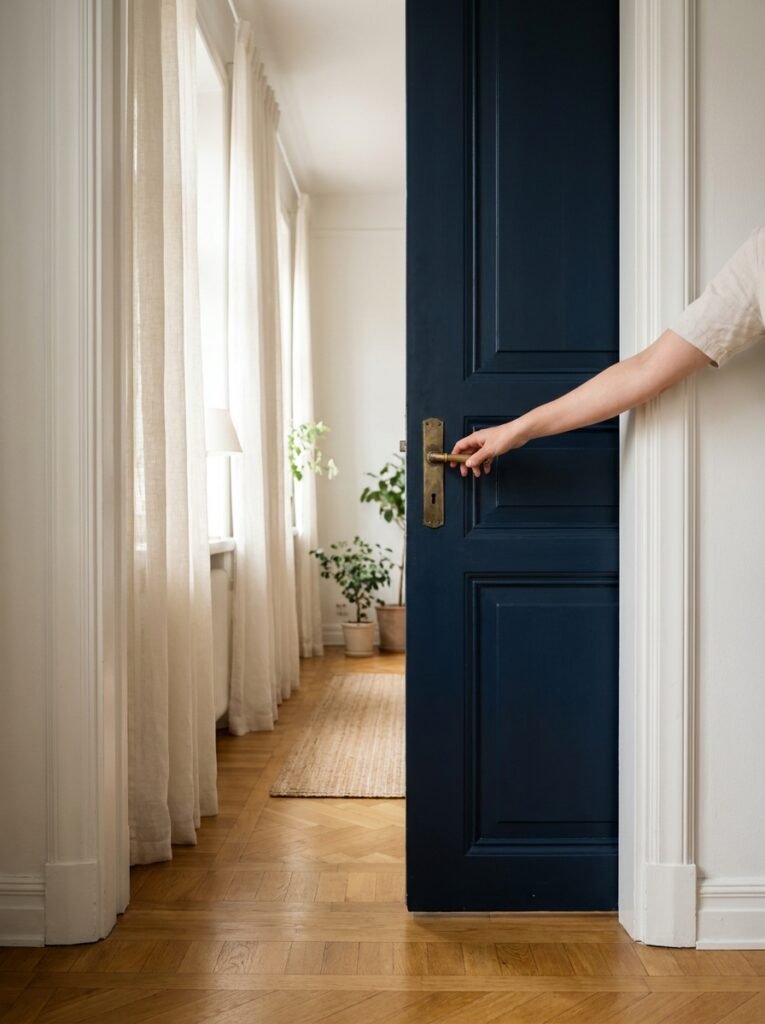
French blue doors pair especially well with aged brass hardware — the warm metal against the cool-warm blue creates a tension that feels luxurious and collected. Add white or cream walls, some weathered wood accents, and a few terracotta pots of herbs on a nearby shelf, and you’ve created something that doesn’t just look like a Pinterest board — it feels like a home with a story.
“French blue carries the memory of sun-warmed stone walls and lavender fields — bring it inside and watch your room tell a story.”
—
5. Teal Blue Interior Doors: The Bold, Joyful Middle Ground
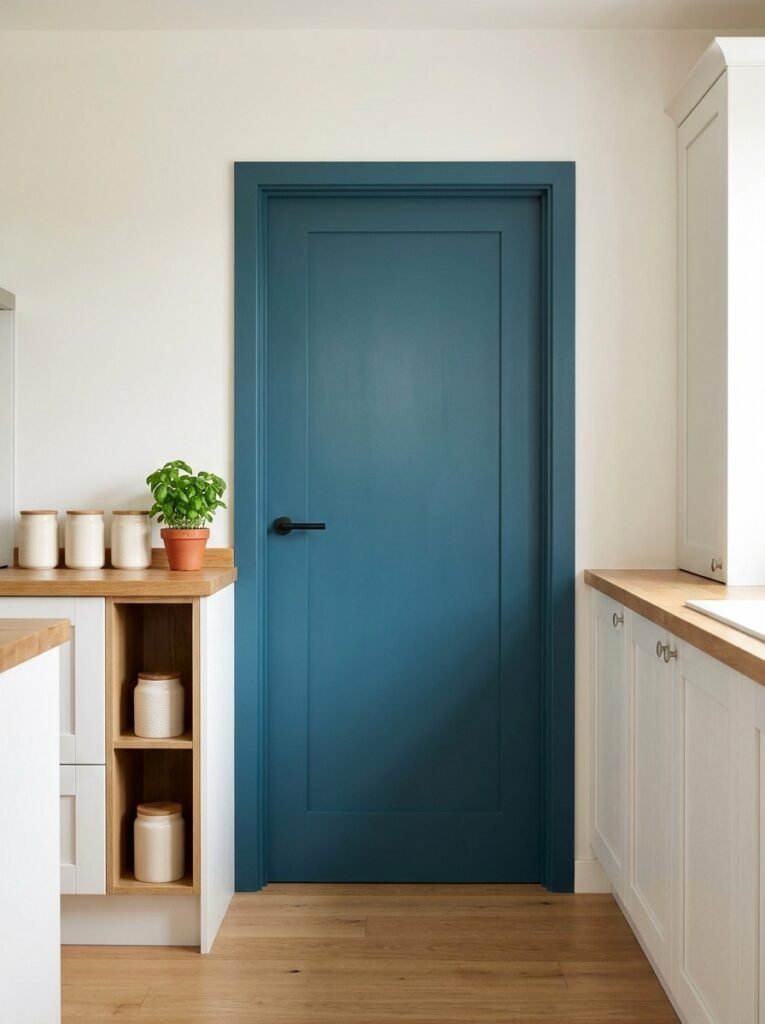
Somewhere between blue and green lives teal — and on an interior door, it is absolutely electric. Teal blue doors are the choice of the confident decorator: someone who has moved past playing it safe and discovered that the rooms we remember most are the ones that surprised us. Teal brings energy without aggression, color without chaos, personality without noise.
In a kitchen, a teal pantry door can transform a purely functional element into the most photographed corner of your home. In a bathroom, a teal door adds a spa-like quality — something reminiscent of deep water and cool tile. In a child’s bedroom, it’s playful and vibrant without being overwhelming.
The key to making teal work beautifully as a door color is keeping the surrounding elements relatively neutral. Let the door be the star. White walls, natural wood floors, simple hardware — these act as a stage, and the teal door performs.
—
6. The Hardware Question Nobody Talks About (But Should)
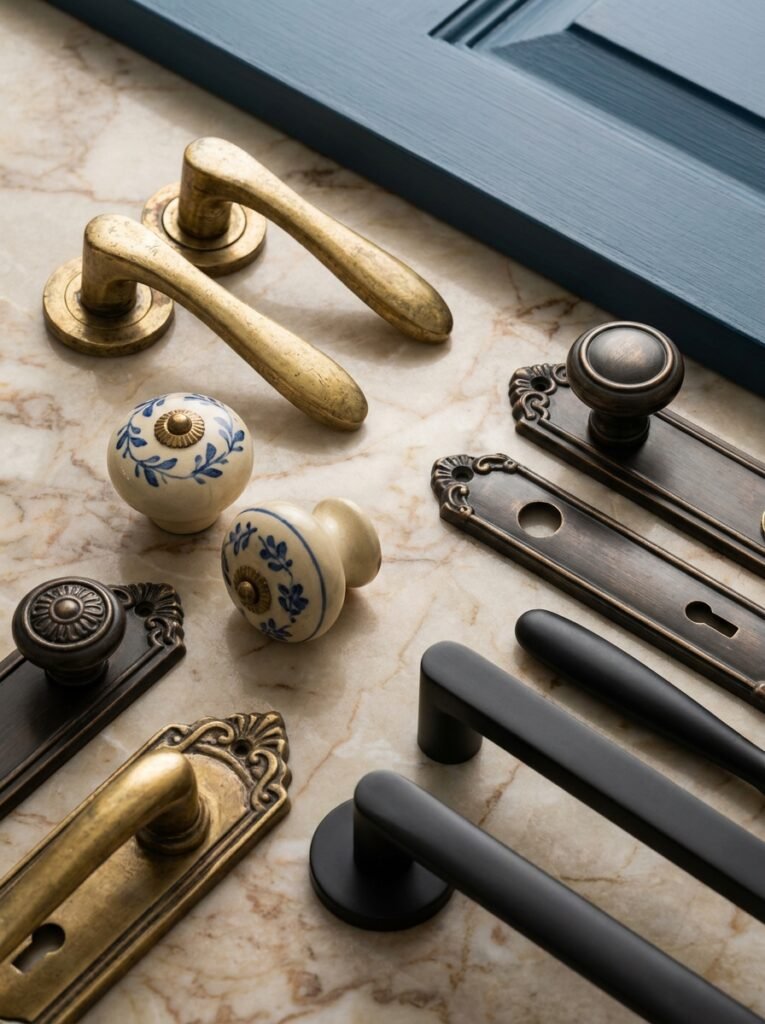
Here’s a truth that experienced interior designers know but rarely spell out: the hardware on a painted door matters almost as much as the paint color itself. The wrong knob or handle can make even the most beautifully chosen blue look incomplete — like a sentence without its final word.
For navy and deep blue doors, aged brass and unlacquered brass handles are exceptional. The warm gold tones create a contrast that feels rich and considered. For softer dusty blues, brushed gold or antique bronze offer a gentler complement. For teal and brighter blues, matte black hardware creates a crisp, modern tension that feels genuinely chic.
Ceramic knobs — white, cream, or hand-painted — work with almost every shade of blue and add a handcrafted, artisanal quality that is deeply on-trend right now. They’re also incredibly affordable, making them one of the highest-impact, lowest-cost updates you can make to an already-painted blue door.
—
7. Painting Interior Doors Blue: The Practical Step-by-Step You Actually Need
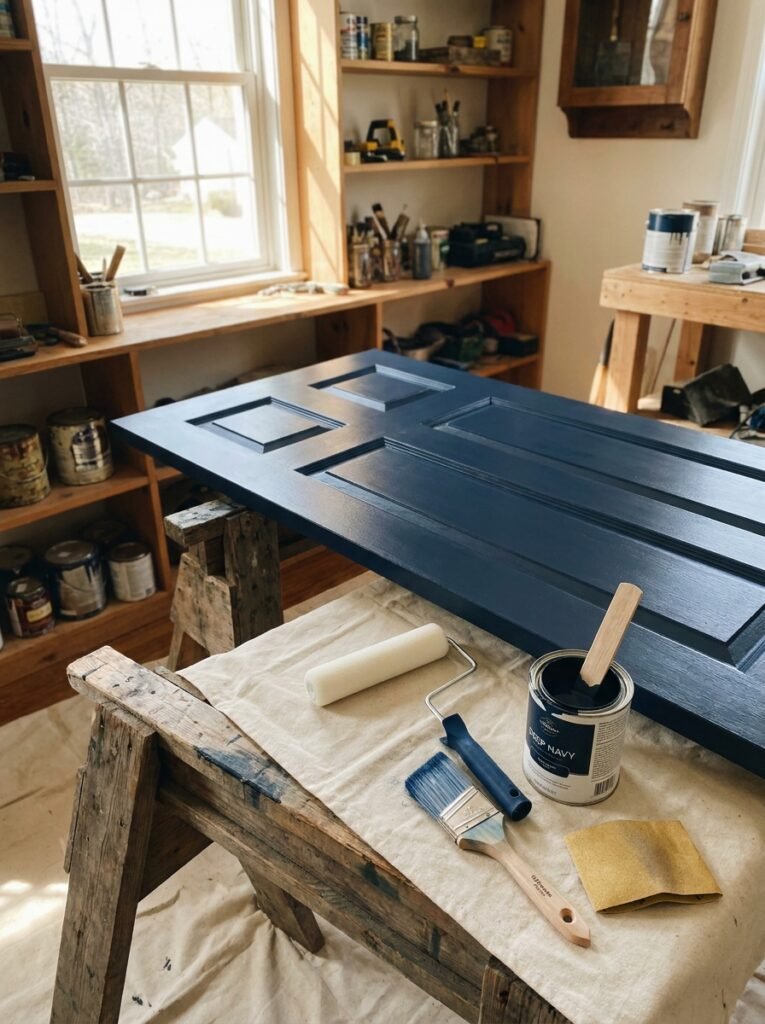
The idea of painting an interior door sounds simple. The execution, done properly, is slightly more involved — but completely manageable for anyone willing to be patient. First: always remove the door from its hinges if possible. Painting a door flat, horizontally on sawhorses, gives you a dramatically smoother, more professional result than trying to paint it vertically while it’s still hanging.
Sand the door lightly before you begin, especially if it’s been painted before, to give the new paint something to grip. Use a high-quality primer — this step is non-negotiable for deep, saturated colors like navy or French blue, which require excellent coverage to avoid streaking or uneven tone.
Apply paint in thin, even coats using a foam roller for the flat panels and a small angled brush for the edges and recessed details. Two to three coats is standard for a deep blue. Between coats, sand lightly with fine-grit sandpaper (around 220 grit) and wipe clean before applying the next layer. The difference in finish quality between one rushed coat and three patient ones is the difference between a door that looks painted and a door that looks designed.
—
8. Blue Doors in Small Spaces: The Counterintuitive Design Move That Works
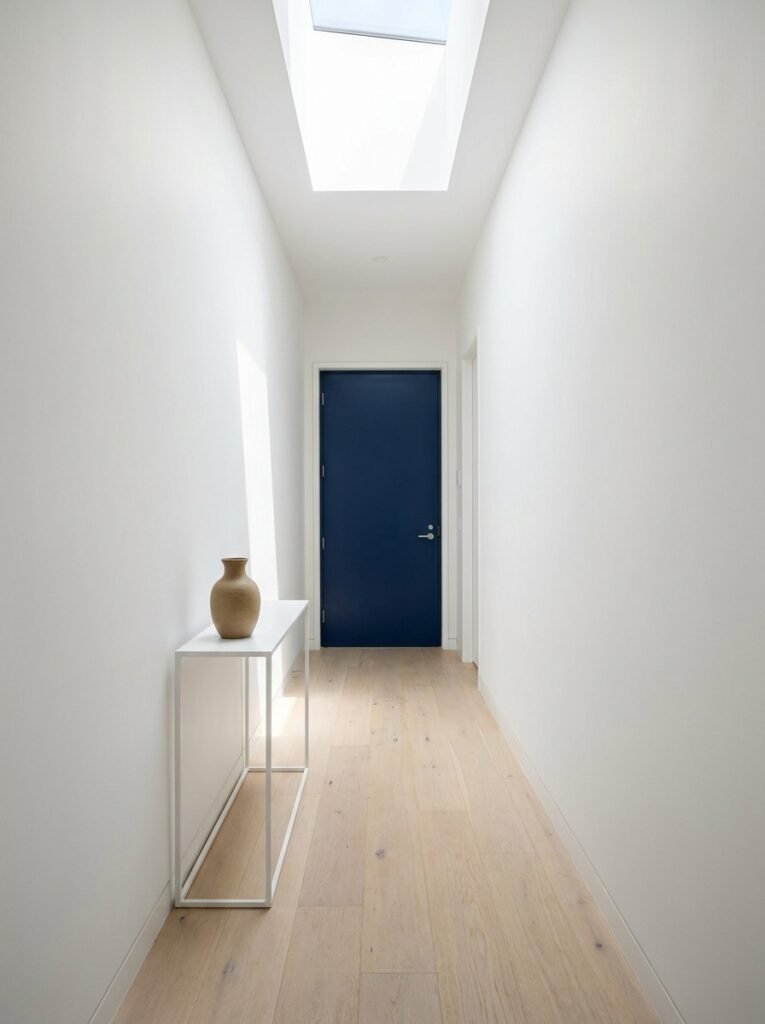
There’s a persistent myth in interior design that small spaces should only use light, neutral colors — that anything dark or bold will make a room feel smaller and more claustrophobic. Blue interior doors, particularly in deeper shades, challenge this assumption beautifully.
In a narrow hallway, a navy blue door at the far end creates something called a “terminus” — a visual endpoint that actually makes the hallway feel longer and more purposeful. In a small bedroom, a dusty blue door adds depth and dimension without visually eating floor space. In a tiny bathroom, a bold teal door becomes the design decision that makes the whole room feel curated rather than cramped.
The real secret is contrast and intention. A dark blue door in a small space works when everything around it is light and uncluttered. It’s the visual equivalent of a period at the end of a sentence — it gives the eye somewhere to land, and in doing so, it gives the room a sense of completion.
“In a small room, a blue door doesn’t shrink the space — it gives the eye somewhere beautiful to rest.”
—
9. Mixing Blue Door Shades Throughout Your Home: The Collected, Curated Look
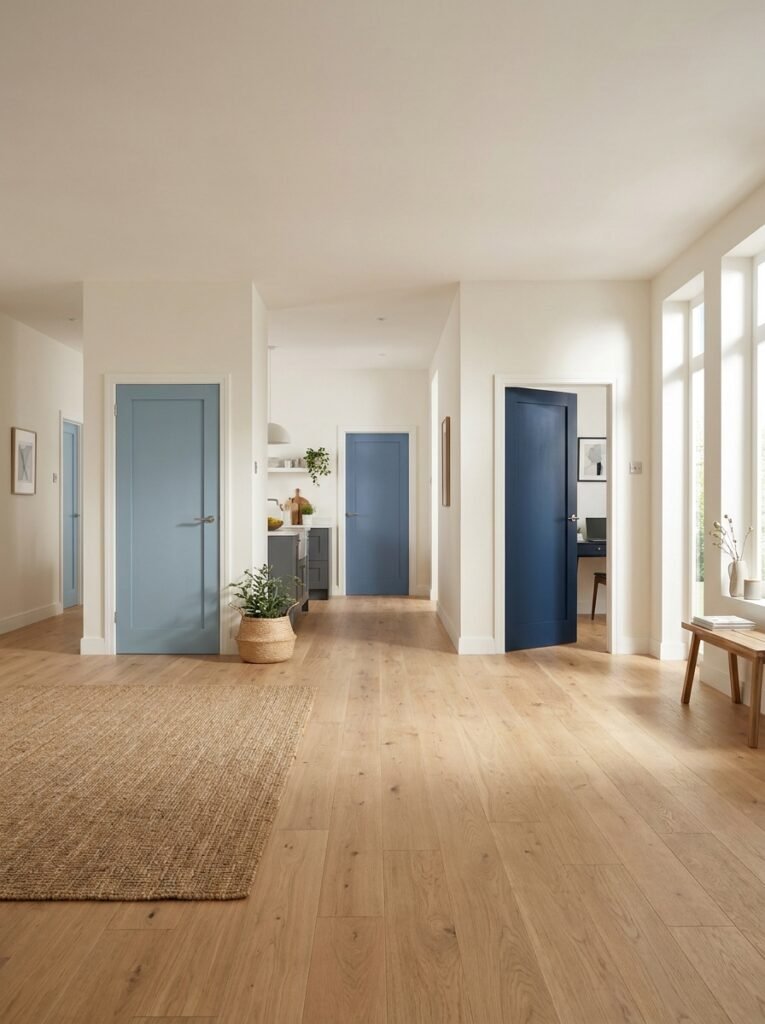
One of the most sophisticated interior design moves you can make is using different shades of blue on different doors throughout your home — a design approach sometimes called “color drifting.” The idea isn’t to match every door exactly, but to allow them to feel like they belong to the same family, the way siblings resemble each other without being identical.
Imagine: a soft dusty blue on the bedroom door, a slightly deeper French blue on the bathroom door, and a rich navy on the study door. Each room feels individual and considered, but the whole home feels coherent — like the work of someone who thought deeply about color rather than simply choosing the first shade they liked.
The key is to stick within the same undertone family. Blue shades with grey undertones (like dusty blue and slate) live beautifully together. Blue shades with green undertones (like teal and French blue) form another harmonious family. Mixing undertones — a warm teal next to a cool grey-blue — is where the look can start to feel accidental rather than intentional.
—
10. What to Put Around a Blue Door: The Styling That Makes It Sing
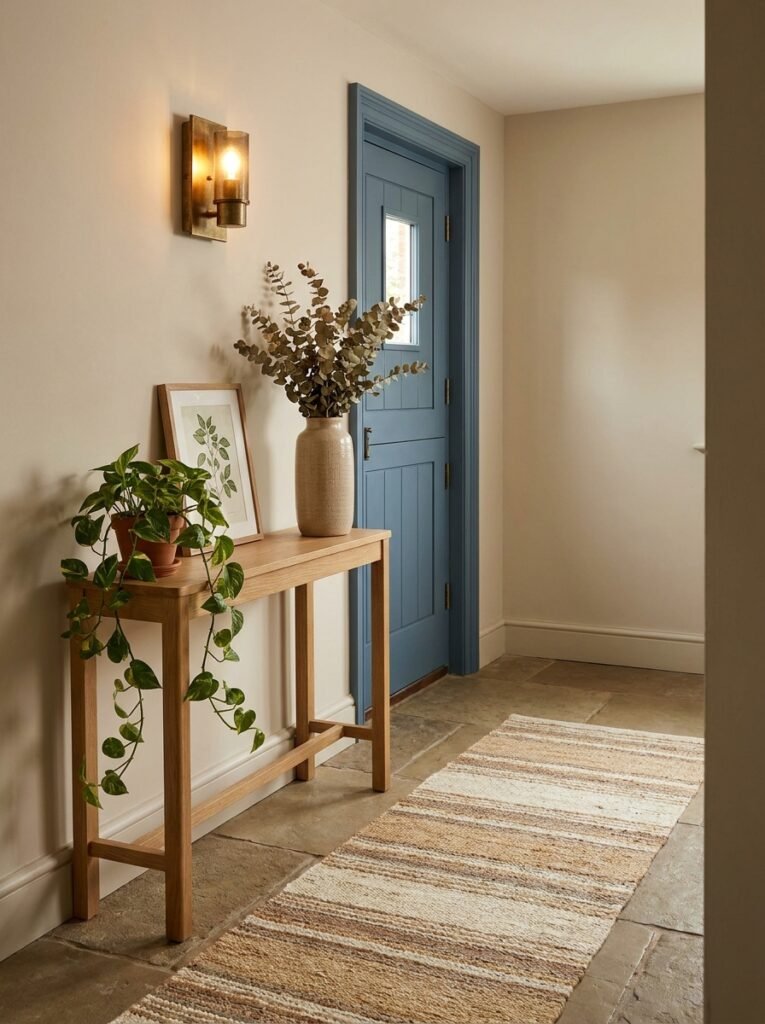
A blue door is a design statement. What surrounds it is the context that makes that statement land beautifully — or fall a little flat. Styling the wall, floor, and immediate environment around a blue door is one of the most creative and satisfying parts of the whole process.
For a hallway or entryway with a blue door: consider adding a simple console table in natural wood or painted white beneath or beside it, topped with a ceramic vase, a small framed print, and perhaps a trailing plant like pothos or ivy. A simple runner in a warm neutral tone on the floor anchors the space. Suddenly, the door isn’t just a door — it’s the centerpiece of a vignette.
For bedroom doors: keep the surrounding walls simple and uncluttered. The beauty of a blue bedroom door is enhanced by restraint. One or two pieces of art nearby, a sconce if the layout allows, and clean, calm walls let the door speak without competition.
—
11. The Seasonal Mood of Blue Interior Doors
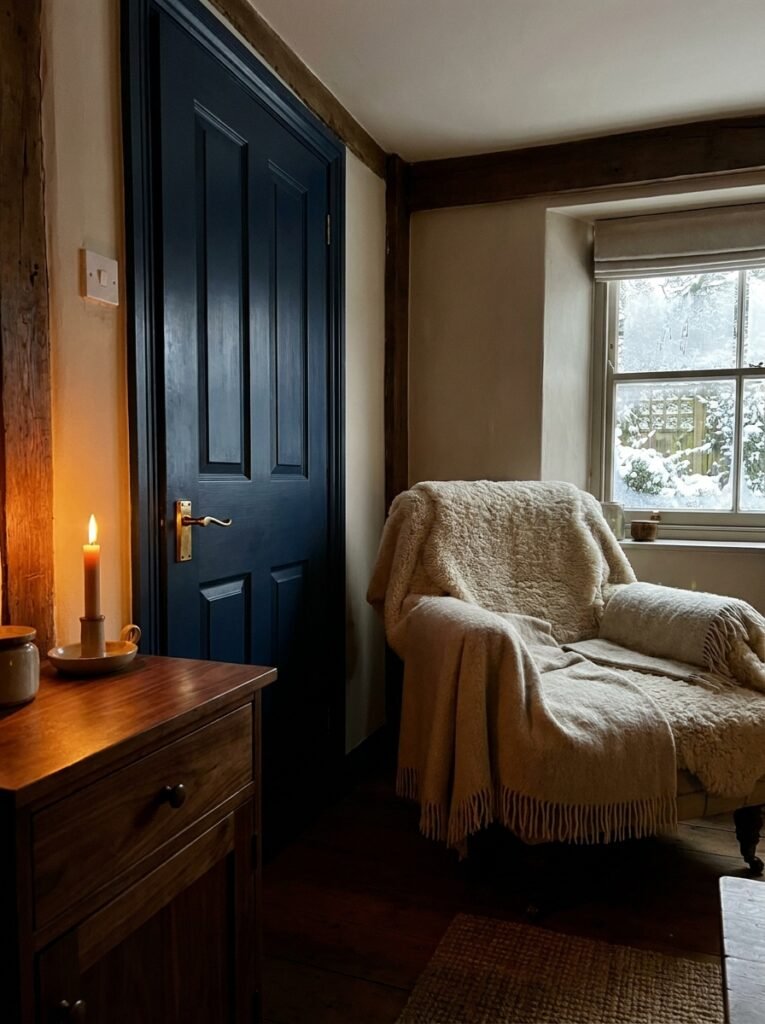
One of the quietly magical things about living with a blue interior door is how differently it feels across the seasons — and how it seems to shift its personality to match the light. In summer, when golden afternoon light fills the room, a dusty blue door takes on a warmth that feels almost Mediterranean — sunlit, effortless, alive. In winter, when the light turns silver-grey and cool, that same door deepens into something moodier, more introverted, like a room that has turned inward and found itself content there.
Navy doors, in particular, are extraordinary in winter interiors. Paired with warm candlelight, thick wool throws, and the smell of something slow-cooking in the kitchen, a navy door becomes the visual anchor of a home that has fully committed to cozy. It’s the design equivalent of a heavy curtain drawn against the cold — shelter made visible.
This seasonal responsiveness is part of what makes blue such a livable color choice. It doesn’t hold one note. It evolves with you, with the year, with the changing quality of light through your windows.
—
12. Blue Interior Doors and the Stories They Tell About Who You Are
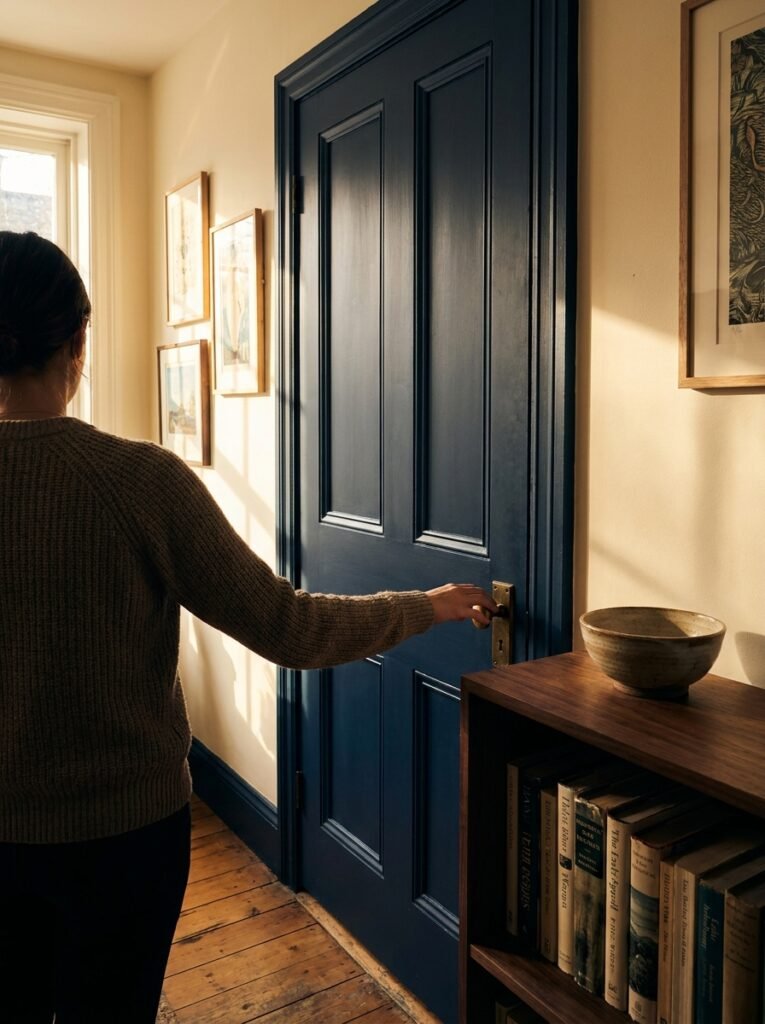
Here’s the most interesting thing about choosing to paint your interior doors blue — and it’s something that goes beyond design theory and color psychology and step-by-step painting guides. A blue door is a declaration. It says: the person who lives here is not afraid of color. It says: this home was chosen deliberately, arranged with care, and loved with attention.
Interior design at its most meaningful is never really about aesthetics alone. It’s about the story a home tells — to the people who live in it every single day, and to the guests who walk in for the first time and feel, before they’ve said a word, that this place has a soul. A thoughtfully painted blue door contributes to that story in a way that is genuinely disproportionate to the effort it takes to create it.
You spend one weekend, perhaps two afternoons, and the transformation is so complete that people who’ve known your home for years will walk in and feel that something has fundamentally shifted — that the home has become more itself. That’s the particular power of a commitment made in color. That’s what a blue door does.
—
🌿 How to Take Care of Your Blue Interior Door
Painted interior doors are more durable than most people expect, but a little regular attention keeps them looking as fresh and beautiful as the day you finished painting.
Wipe down the door every few weeks with a slightly damp microfiber cloth — this removes the daily accumulation of fingerprints, dust, and cooking residue that can dull the finish over time. Avoid harsh chemical cleaners, which can strip or fade the paint, particularly on matte and eggshell finishes. A mild dish soap diluted in warm water is genuinely all you need.
Pay particular attention to the areas around the handle and the lower half of the door, which absorb the most contact. If you notice small chips or scratches — completely normal in a lived-in home — keep a small jar of your original paint color for touch-ups. A fine artist’s brush applied carefully to a chip, sanded lightly when dry, and left to cure makes the repair nearly invisible.
For longevity, choose a semi-gloss or satin finish for interior doors — these finishes are more scrubbable than matte, which matters enormously on a surface that gets touched multiple times a day. And finally: let your freshly painted door cure fully before closing it repeatedly. Most interior paints need at least 30 days to reach full hardness, and closing the door too firmly before then can cause sticking or surface damage.
—
❓ FAQ
Q: What is the most popular shade of blue for interior doors right now? A: Navy blue and dusty blue are currently the most searched and saved shades for interior doors. Navy — particularly Benjamin Moore’s Hale Navy and Farrow & Ball’s Hague Blue — appeals to those wanting drama and sophistication. Dusty blue is the go-to for a softer, more relaxed aesthetic that works beautifully in bedrooms and living spaces.
Q: Will a dark blue door make my room feel smaller? A: Not necessarily — and often the opposite is true. A dark blue door used as a terminus at the end of a hallway can actually make the space feel longer and more purposeful. The key is keeping surrounding walls light and uncluttered so the door has contrast to work against. Depth of color adds architectural interest, not visual weight, when used thoughtfully.
Q: What paint finish is best for interior doors? A: Satin or semi-gloss are the best finishes for interior doors because they’re durable, easy to clean, and hold up well to daily contact. Matte finishes are beautiful but harder to maintain on high-touch surfaces like doors. For deep blue colors especially, a satin finish gives the color richness and depth while remaining practical enough for everyday life.
—
💭 Final Thought
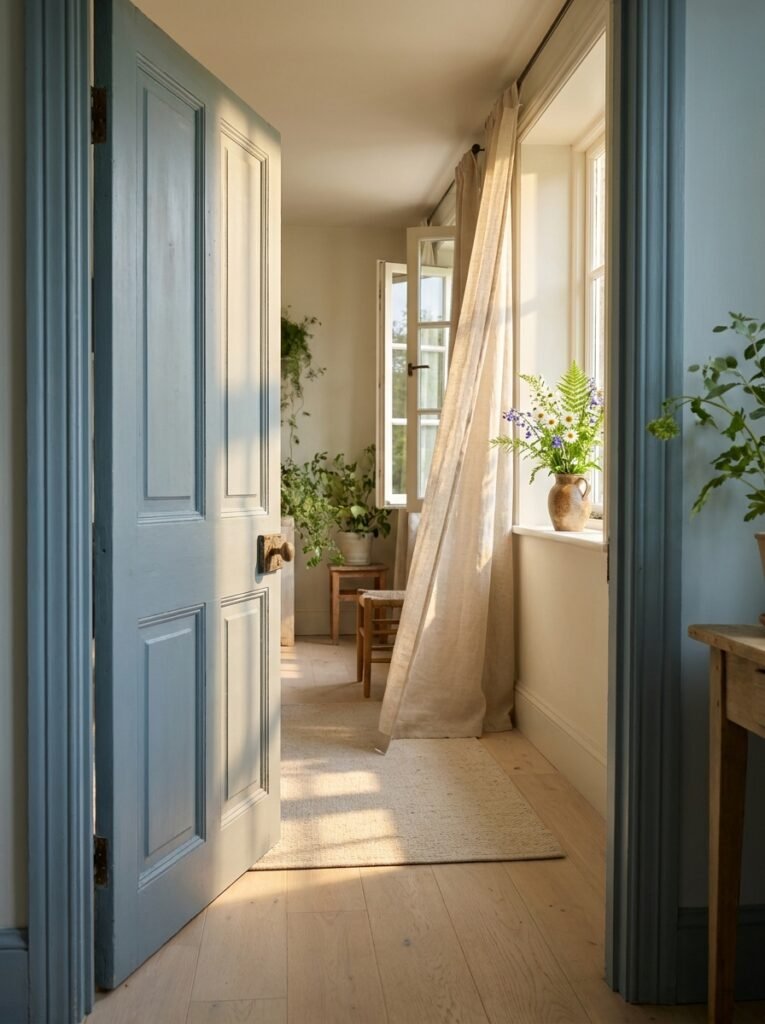
A blue door is one of those rare design choices that gives back more than it takes — more beauty, more mood, more quiet daily joy than you ever quite expect when you’re standing in the paint aisle trying to decide between shade cards. It’s a small act of creative courage that changes something real about how a home feels to live in. And perhaps that’s the most compelling case for it: not the aesthetics, not the Pinterest saves, not the compliments from guests — but the way you feel every single time you walk through it, every ordinary day, for years to come.
So here’s the question worth sitting with: if a single door color has the power to change how you feel inside your own home, what have you been waiting for?