
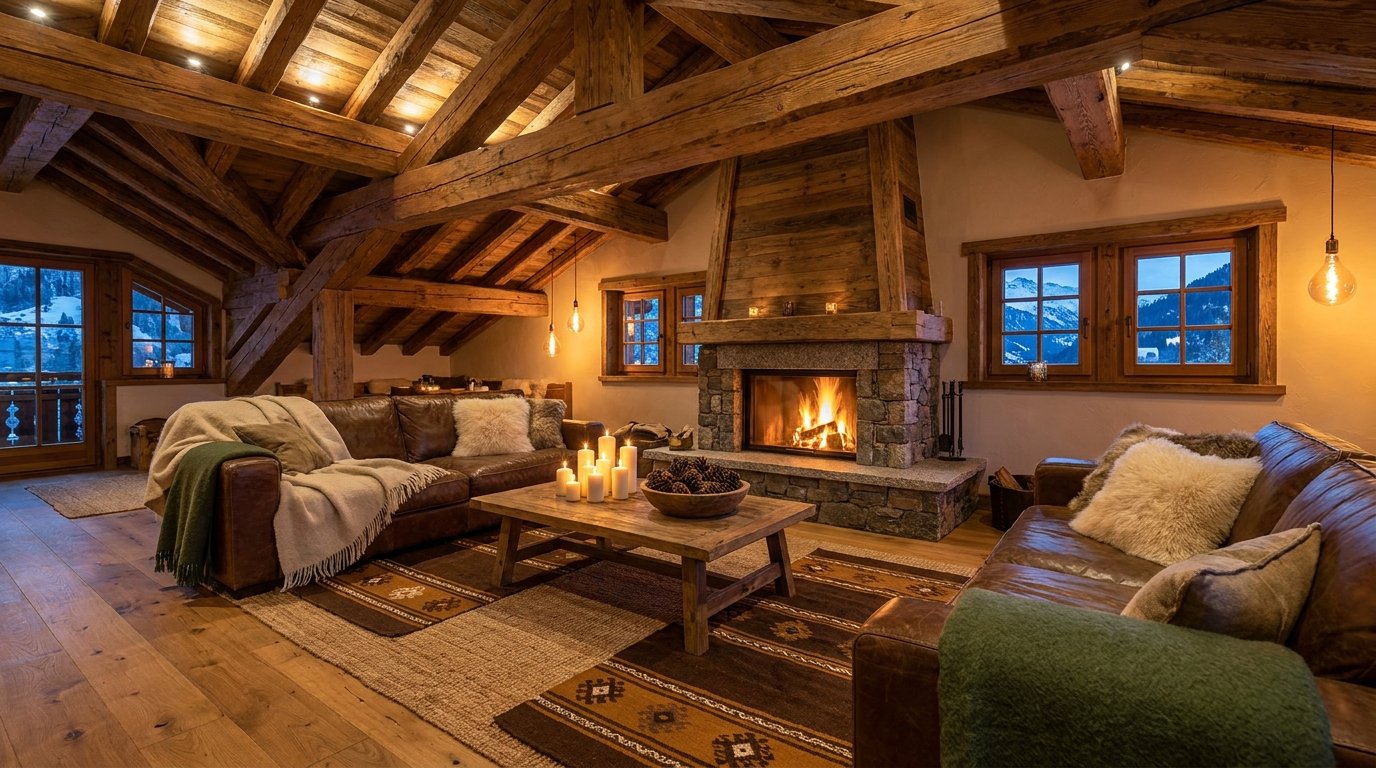
The Chalet Interior That Feels Like a Warm Hug — And How to Recreate It in Your Own Home
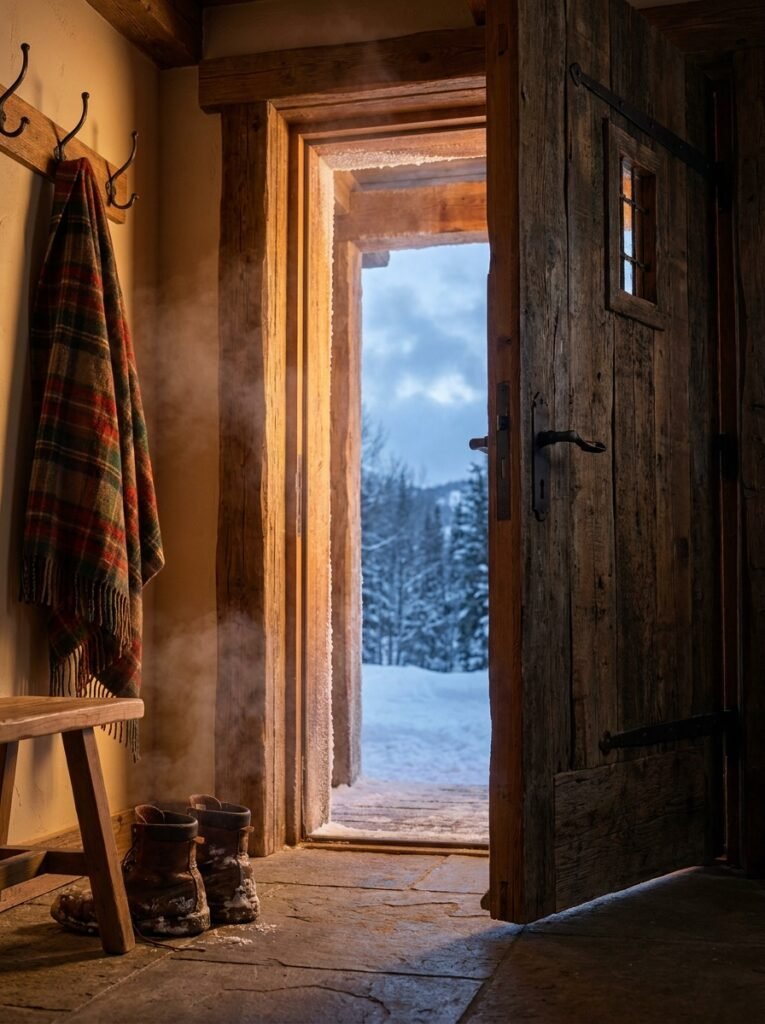
There’s a particular moment that happens inside a mountain chalet — when you push open the heavy wooden door, step out of the cold, and feel the warmth wrap around you like something alive. That feeling isn’t accidental. It’s designed, layer by layer, material by material, with intention. And the good news? You don’t need a ski resort address to bring it home.
—
1. Why Chalet Interiors Have Captured the World’s Imagination
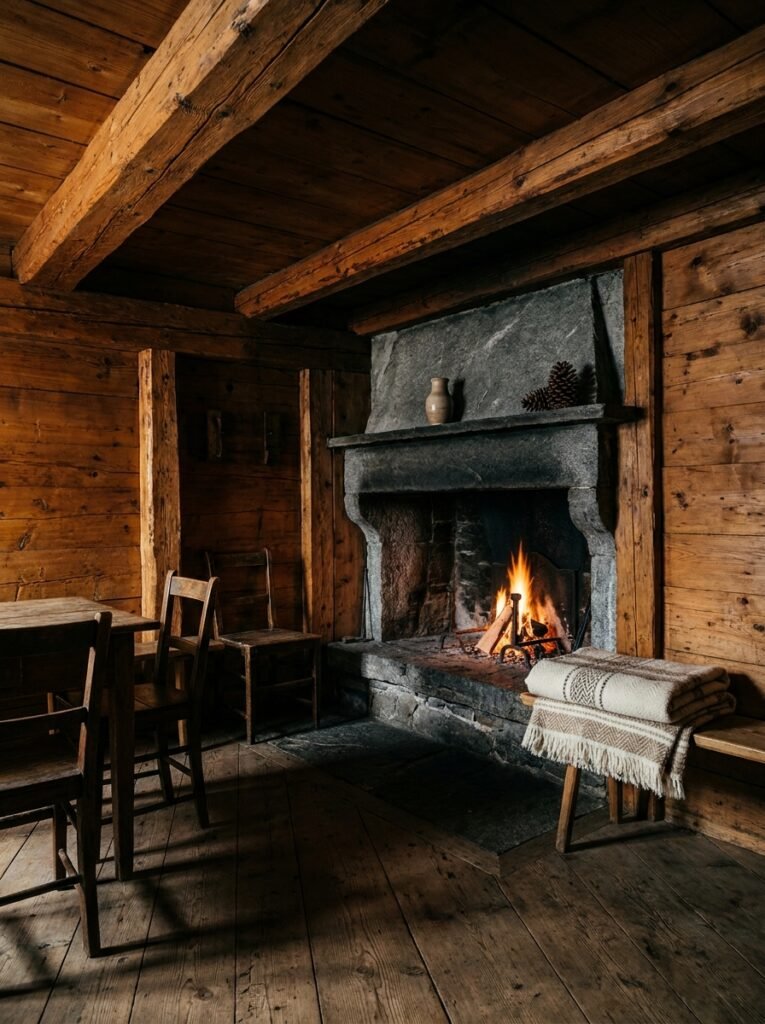
Pinterest boards are overflowing with chalet interior inspiration — and it’s not hard to understand why. There’s something deeply primal about the chalet aesthetic. It speaks to a part of us that craves shelter, warmth, and a place that feels like it was built with love rather than a floor plan. The original Swiss and Alpine chalets were working farmhouses — sturdy, practical, unpretentious. Everything inside served a purpose. The thick timber walls insulated against brutal winters. The wide stone hearths were the social and physical heart of the home. The wool blankets weren’t decorative — they kept families alive on frozen nights.
What makes the chalet interior so enduringly appealing in modern design is this honest history. Every element has a story. Every material has earned its place. In a world of fast furniture and disposable décor, the chalet reminds us what it feels like to be surrounded by things that are meant to last.
“A chalet interior isn’t just a style — it’s a philosophy of warmth, permanence, and belonging.”
2. The Soul of It: Exposed Wood and What It Actually Does to a Room
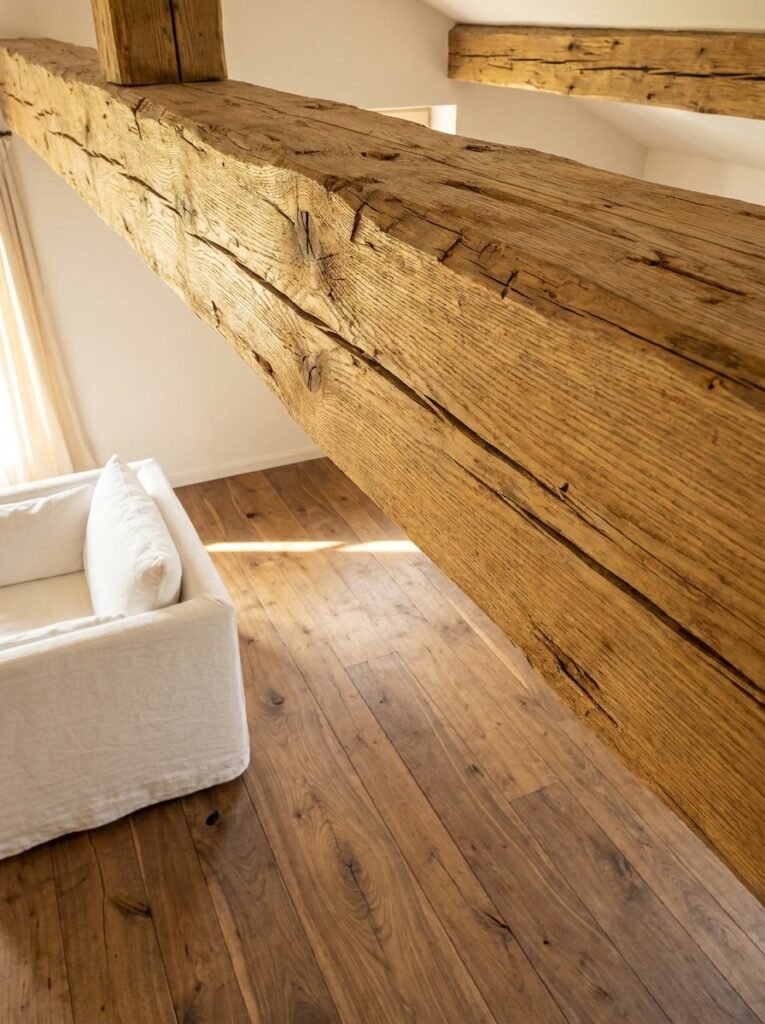
If there’s one non-negotiable feature of authentic chalet design, it’s wood — and lots of it. Exposed wooden beams running across the ceiling. Wide-plank timber floors with the knots still visible. Paneled walls in aged pine or reclaimed oak. But here’s what most people don’t fully appreciate: the wood isn’t just aesthetic. It fundamentally changes the emotional temperature of a room.
Studies in environmental psychology consistently show that natural wood surfaces reduce stress hormones and increase feelings of relaxation. When you walk into a room lined with warm timber, your nervous system responds. You soften. You breathe more slowly. The chalet designers of the Alps understood this intuitively long before scientists had the language to explain it.
When incorporating wood into your own space, don’t be afraid of going bold. A single exposed beam across a white ceiling can anchor an entire room. Wide-plank floors in a honey or walnut tone will make any space feel grounded. And if your budget doesn’t stretch to real structural beams, high-quality faux wooden beams have become remarkably convincing — and they’re a Pinterest favorite for good reason.
3. The Fireplace as the Room’s True Center of Gravity
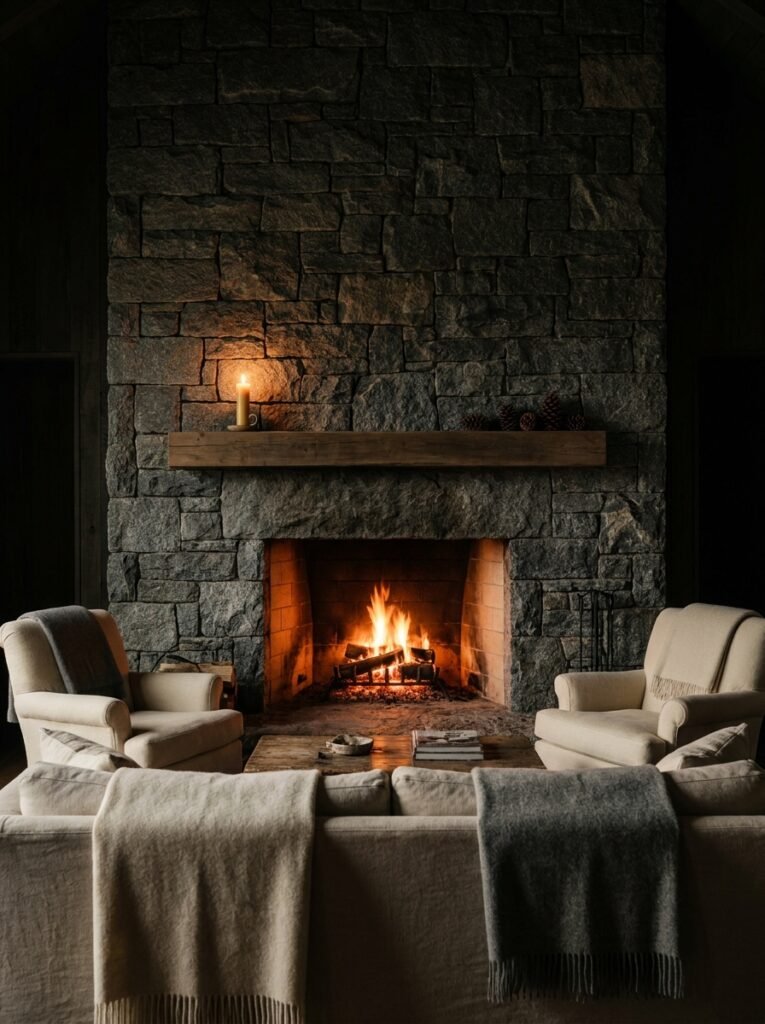
Imagine this: it’s a Tuesday evening in February. Outside, the temperature has dropped below freezing. Inside the chalet, a fire is going in the stone hearth, and everything — the furniture, the lighting, the conversation — seems to orbit around it like planets around a sun. That’s what a fireplace does in chalet design. It isn’t just a heat source. It’s the room’s emotional axis.
Traditional chalet fireplaces were built from local stone — granite, limestone, slate — rough-hewn and imposing. The mantel might hold a single candle, a ceramic vase, a cluster of pine cones gathered from the forest path. Nothing excessive. The fireplace itself was enough.
In contemporary chalet-inspired interiors, the fireplace remains central — but it now comes in many forms. A grand stone surround with a roaring log fire is the dream, of course. But a well-designed electric fireplace set into a stone-clad alcove can achieve a remarkable approximation of that same emotional atmosphere. What matters is that the fireplace — real or designed — is given space to breathe and room to be noticed. Never crowd it. Never diminish it with clutter.
4. A Color Palette That Feels Like a Winter Morning
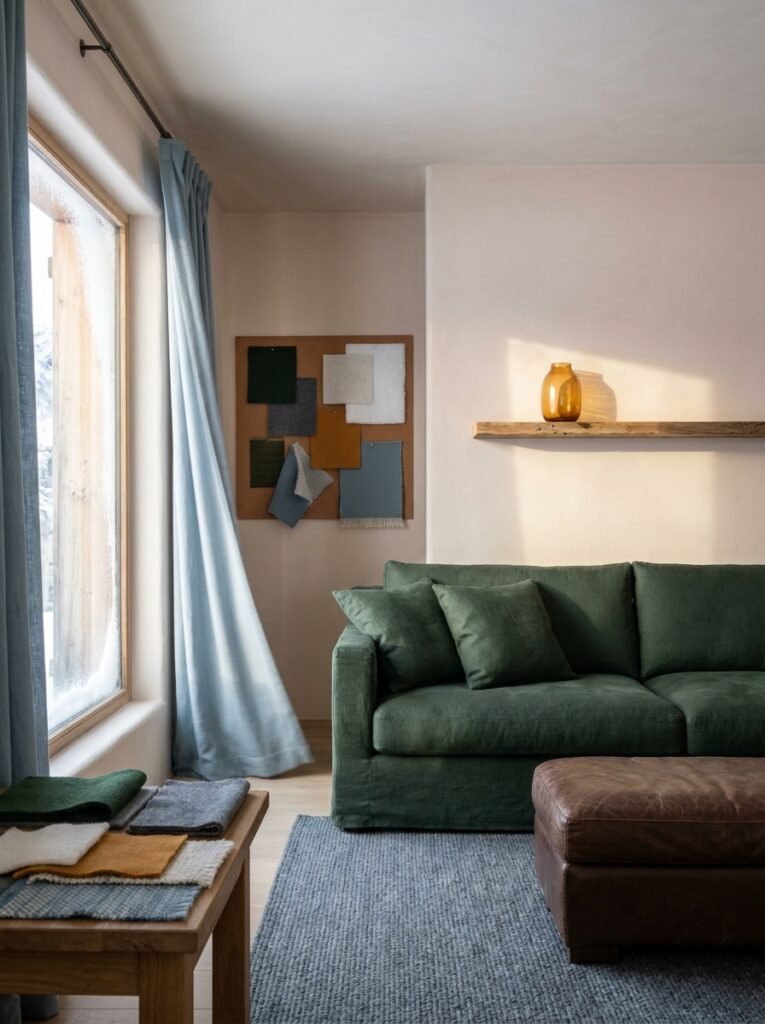
The chalet color palette is one of the most thoughtful in all of interior design — and it’s more nuanced than most people initially assume. Yes, there is white. But it’s not the cold, clinical white of a modern minimalist apartment. It’s the white of thick snow, of old linen, of the lime-washed plaster walls of an Alpine farmhouse. It carries warmth in its undertones — cream, ivory, the faintest blush of stone.
Paired with this foundational warmth are the deep, grounding tones that bring the Alpine landscape inside: forest green, slate grey, chocolate brown, the rust-red of old terracotta tiles. These colors don’t shout. They anchor. They provide a visual weight that makes the space feel settled and secure.
Accent colors in chalet interiors lean toward nature — the dusty blue of mountain sky, the amber of aged whiskey, the muted burgundy of dried berries. When choosing your palette, think about the moment just after sunrise on a snow-covered mountain. That precise balance of soft white, deep shadow, and golden warmth is your guide.
5. Textiles That Invite You to Sit Down and Stay Awhile
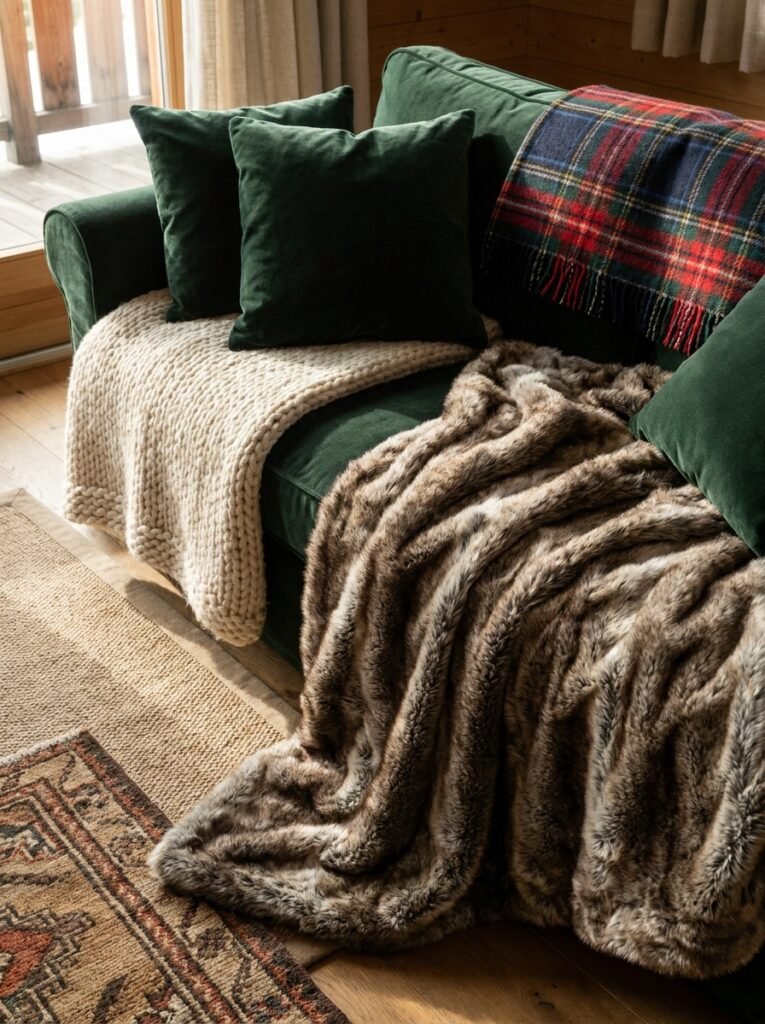
Run your hand across a proper chalet sofa and you’ll understand immediately. The texture — whether it’s a chunky knit throw, a shearling cushion cover, or a heavy wool blanket in a tartan pattern — communicates one simple message: stay. This is the genius of chalet textile design. It makes leaving feel like a small act of cruelty.
Layering is everything. A single wool throw draped over an armchair is pleasant. Three textures layered across a sofa — velvet cushions, a waffle-weave blanket, a faux fur accent — creates something that feels genuinely irresistible. The key is to vary texture while keeping the color palette cohesive. You can mix plaid with solid, rough-knit with smooth velvet, as long as the tones remain harmonious.
“The best chalet interiors feel like they’re asking you to take your shoes off and stay forever.”
Don’t overlook the floor either. Layered rugs — a neutral jute base under a smaller patterned wool rug — are a hallmark of the style, creating visual warmth and literal cushioning underfoot on those cold mornings.
6. Lighting That Makes Every Hour Feel Like Golden Hour
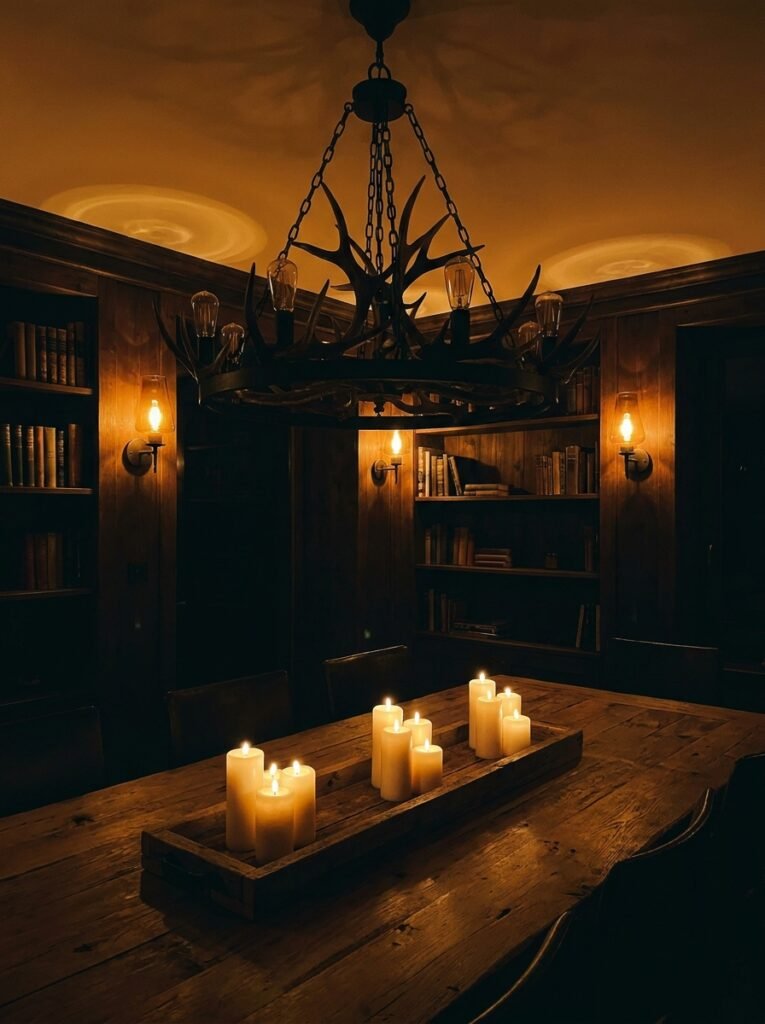
Chalet lighting is never harsh. There are no overhead fluorescents, no cold LED strips, no lighting design that prioritizes brightness over mood. Instead, chalet interiors work with layers of warm, low-level light that mimics the glow of candles and oil lamps — the only light sources available to original Alpine homesteaders.
Antler chandeliers are perhaps the most iconic chalet lighting fixture — dramatic, organic, and undeniably atmospheric when dimmed low over a dining table. But the aesthetic extends far beyond a single statement piece. Think: warm Edison bulbs in wrought iron pendants, clusters of pillar candles in varying heights on the coffee table, wall sconces with amber shades tucked between bookshelves. The goal is to never have one bright source of light, but rather many smaller, warmer ones scattered throughout the room.
Candles deserve special mention. In a chalet interior, candles are not decorative afterthoughts — they are functional atmospheric tools. Grouping three to five candles of varying heights on a wooden tray creates an instant focal point and an unmistakable sense of occasion, even on an ordinary Wednesday night.
7. The Unexpected Role of Vintage and Antique Pieces

Nothing kills the chalet aesthetic faster than a room that looks too new. Authenticity is built through age — through objects that show evidence of a life lived. This is where vintage and antique hunting becomes one of the most rewarding parts of curating a chalet-inspired home.
A wooden sled mounted on the wall. A pair of worn leather ski boots repurposed as a bookend. An old cast iron pot hung from a kitchen hook. Framed black-and-white photographs of mountain peaks from another century. These are the kinds of details that transform a chalet interior from a style exercise into something that feels genuinely alive.
You don’t need to spend a fortune. Markets, estate sales, and second-hand apps are rich hunting grounds for the kind of weathered, characterful objects that chalet interiors love. The patina of age — the small dents and scratches that tell a story — is not a flaw in chalet design. It is the entire point.
8. Nature Brought Indoors: Botanicals, Pine Cones, and Stone
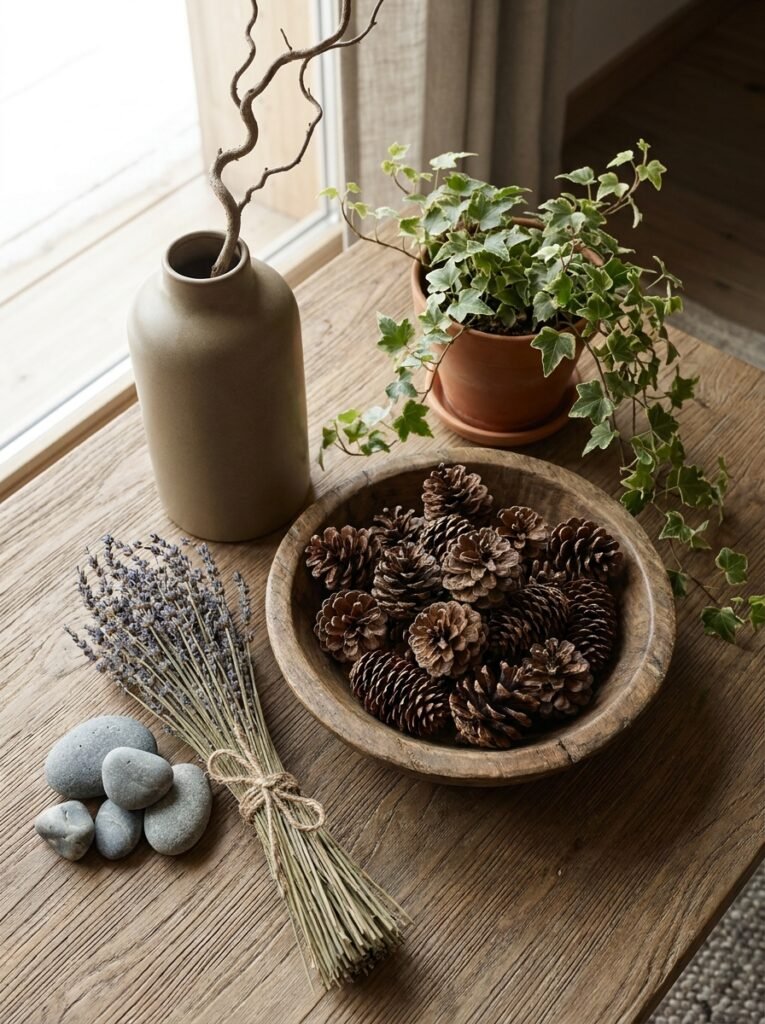
The original chalet was never fully separated from the landscape around it. The mountains, the forests, the rivers — they were always close, always visible, always present in the materials and objects inside the home. Modern chalet interiors honor this relationship by actively bringing the outside in.
This means dried botanicals rather than fresh flowers — preserved eucalyptus, dried lavender bundles, wheat stalks tied with twine. It means a wooden bowl filled with pine cones on the coffee table. It means smooth river stones arranged on a bathroom shelf. It means a single dramatic branch displayed in a tall ceramic vase. These are natural objects that cost almost nothing and yet communicate an entire design philosophy.
Houseplants, too, belong in the chalet interior — particularly those with a wild, unfussy quality. Trailing ivy, a sculptural fig tree, ferns with their ancient prehistoric energy. The goal is always to feel as though nature has been welcomed in rather than tamed or contained.
9. The Chalet Kitchen: Where Warmth Is Literally Made
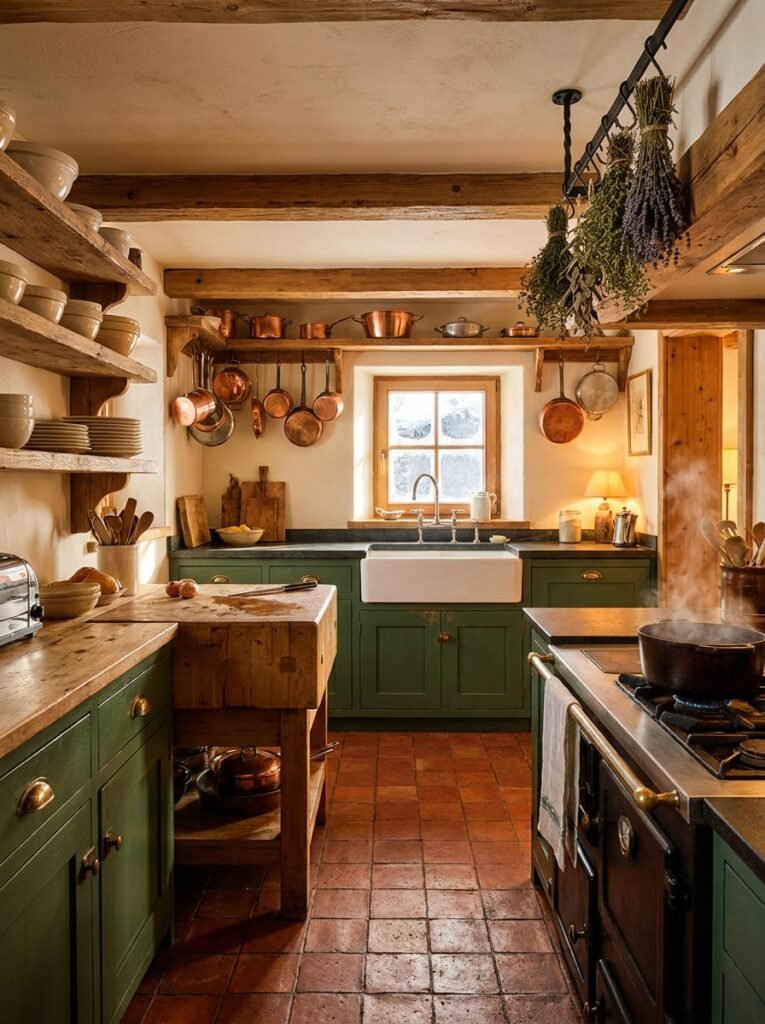
If the living room is the emotional heart of the chalet, the kitchen is its physical one. This is where the warmth is generated — in every sense. Alpine kitchens were built for serious cooking: game stews slow-simmering all afternoon, bread baking in the stone oven, pots of mulled wine sending clouds of spiced steam through the house.
“A chalet kitchen should smell as good as it looks — and it should look like food is always being made.”
In design terms, this translates to a kitchen that prioritizes warmth over sleekness. Open wooden shelving instead of upper cabinets — so your beautiful ceramic bowls and copper pots are always visible, always part of the room’s story. A farmhouse sink in white porcelain or fireclay. Cabinet doors in forest green or a warm navy, with aged brass hardware. A rough-hewn butcher block island that shows its use proudly. Terracotta floor tiles or wide-plank wood underfoot.
The chalet kitchen is not trying to hide the fact that cooking happens here. It celebrates it. Every scratch on the butcher block, every drip of batter on the wooden shelf — these are marks of a kitchen that is genuinely, joyfully used.
10. Bedrooms That Feel Like a Retreat From Everything
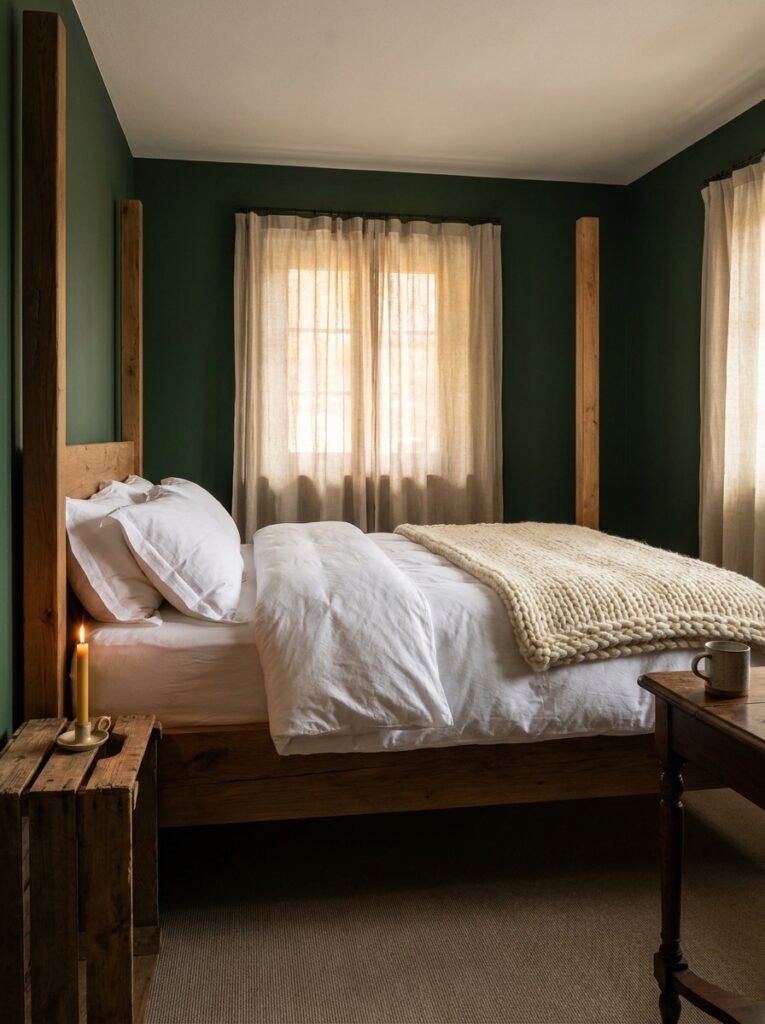
A chalet bedroom has one primary job: to make you feel completely held. The weight of the duvet. The softness of the pillow. The way the morning light comes through unlined linen curtains. Everything is calibrated toward deep, surrendered rest.
The bed is always the undisputed centerpiece — substantial, high-set, often dressed in white linen with layers of blankets and a chunky knit throw folded at the foot. Bedside tables might be mismatched — a wooden crate on one side, a small antique table on the other — because in a chalet bedroom, character matters more than symmetry.
Dark walls in a bedroom can feel dramatically cozy rather than oppressive — a deep forest green or a warm charcoal paired with white bedding creates a cave-like sense of shelter that makes falling asleep feel like an event rather than just an ending.
11. Small Chalet Spaces: The Power of Getting It Right in Tight Quarters
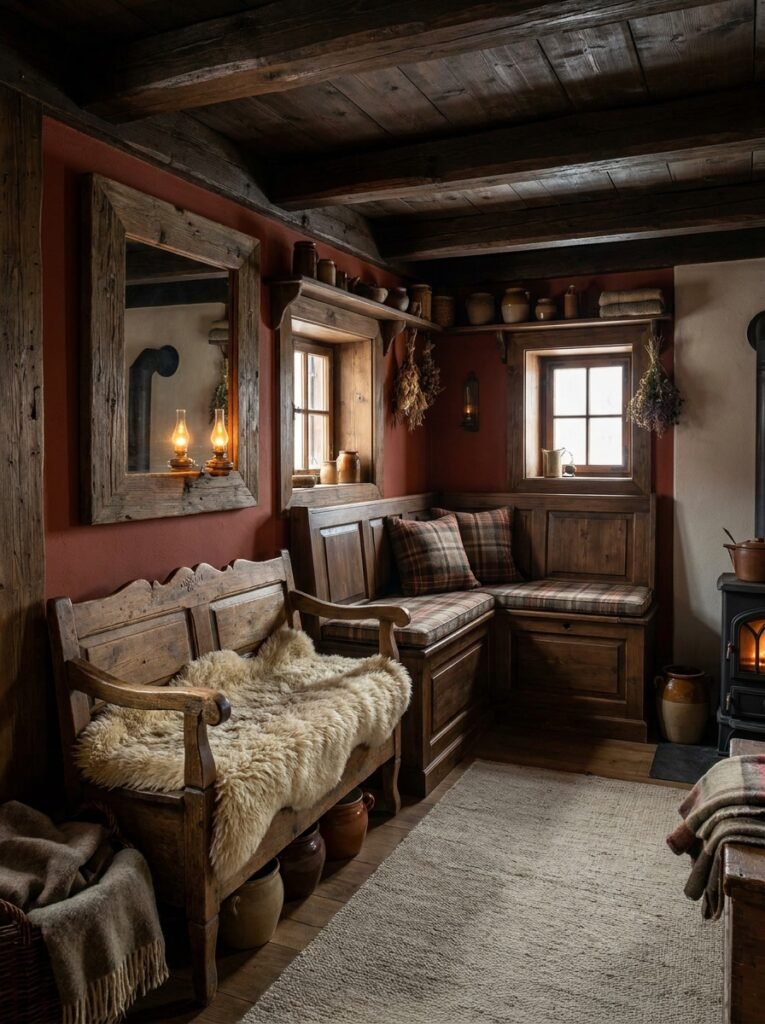
Not everyone has a soaring vaulted ceiling and a great room to work with — and that’s actually fine, because some of the most memorable chalet interiors are small ones. A compact mountain cabin with low ceilings, tiny windows, and a single main room can feel more intensely atmospheric than a sprawling luxury lodge, precisely because the warmth and detail are so concentrated.
In small chalet spaces, every design choice matters more. A single statement piece — a hand-carved wooden bench, a dramatically textured rug, a deep-toned wall color — can define the entire room’s personality. Built-in storage in the style of old Alpine benches with lift-up seats keeps clutter hidden without sacrificing character. And mirrors in aged wooden frames can expand the visual space without breaking the aesthetic.
The rule in small chalet interiors is not to minimize — it’s to curate. Choose fewer things, but choose them with much greater care.
12. The Chalet Interior in Summer: A Style That Doesn’t Need Snow
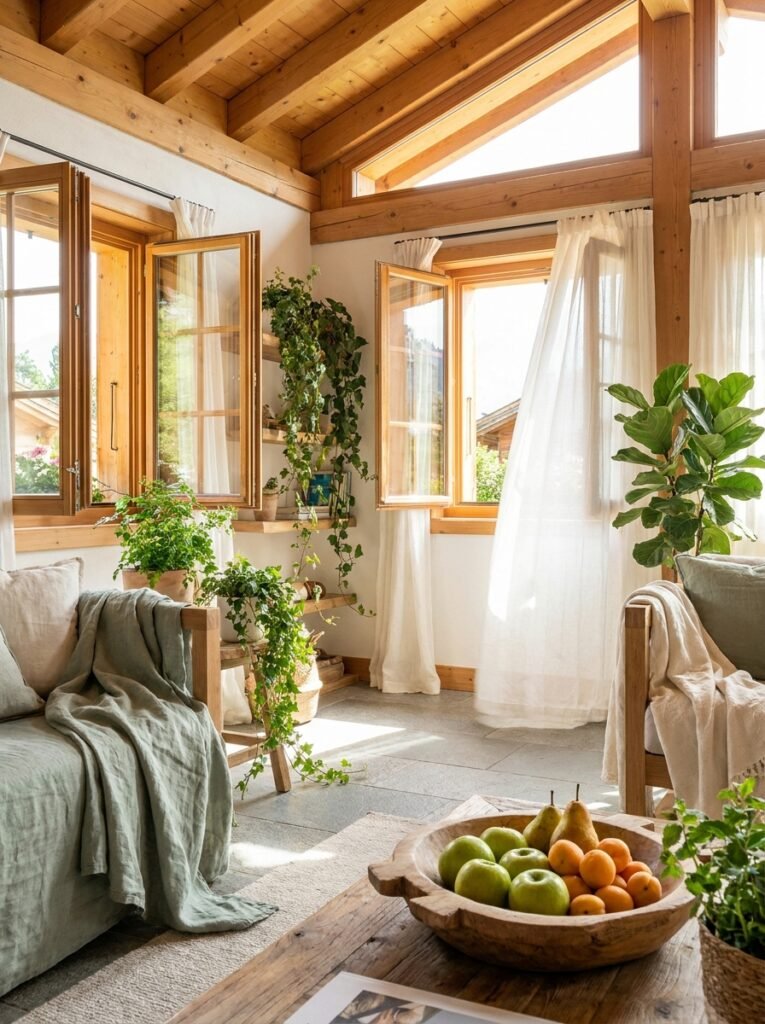
Here’s something people often overlook: the chalet aesthetic is not exclusively winter design. In summer, a chalet interior takes on a completely different but equally beautiful quality. The same wooden beams and stone floors that felt so cozy under snow feel cool and grounding in the heat. The linen textiles breathe. The baskets and botanical details feel fresh and earthy rather than festive.
The adjustment is subtle — swap the chunky wool throws for lighter linen blankets, bring in more green botanicals, let the natural light pour in unfiltered through clean windows. The bones of the design remain entirely unchanged. This is one of the great strengths of the chalet interior: it is a year-round philosophy, not a seasonal trend. It works in January and it works in July, because it is built on materials and emotions that don’t expire.
—
🌿 How to Begin Building Your Chalet Interior
Starting can feel overwhelming — especially when your current home looks nothing like an Alpine lodge. Here’s how to approach it in a way that feels manageable and genuinely enjoyable.
Begin with wood, because it’s the foundational material of the entire aesthetic. Even one wooden element — a reclaimed wood coffee table, a set of wooden picture frames, a wooden tray on the kitchen counter — starts to shift the feeling of a room. From there, layer in textiles. A chunky knit throw and a couple of wool cushion covers can transform a sofa over a single afternoon.
Next, address your lighting. Swap any cold white bulbs for warm-toned ones (look for 2700K on the packaging) and add at least two additional light sources beyond your overhead light — a floor lamp, a cluster of candles, a table lamp with a warm shade. The difference will be immediate and remarkable.
Finally, bring in one or two natural objects from outside — pine cones, smooth stones, a branch, dried botanicals. These cost almost nothing but they communicate everything about the design philosophy you’re building toward. Take your time. The best chalet interiors are never finished all at once. They grow, accumulate meaning, and deepen over years.
—
❓ FAQ
Q: Do I need to live in a cold climate to pull off a chalet interior? A: Not at all — the chalet aesthetic is built on materials, textures, and atmosphere rather than actual climate. Plenty of homes in warm regions successfully carry the chalet style by leaning into the wood, stone, and textile layers while adjusting the seasonal decorating slightly. The warmth the style creates is emotional as much as physical.
Q: Is chalet interior design expensive to achieve? A: It can be done at almost any budget. While some elements — real stone fireplaces, structural wooden beams, hardwood floors — represent significant investment, the overall aesthetic leans heavily on vintage finds, natural objects, and layered textiles, all of which are very accessible. Thrift stores and markets are your best friends here, and the worn, imperfect quality of second-hand objects actually suits the style perfectly.
Q: How is chalet interior different from rustic or farmhouse style? A: The three styles share DNA but have distinct characters. Farmhouse style is typically brighter, airier, and more American in its references. Rustic design leans raw and unfinished. Chalet interior sits in a specific Alpine tradition — denser, darker, more dramatically textured, with a particular emphasis on the interplay of wood, stone, and fire. It carries a European mountain heritage that gives it a very specific and recognizable emotional quality.
—
💭 Final Thought
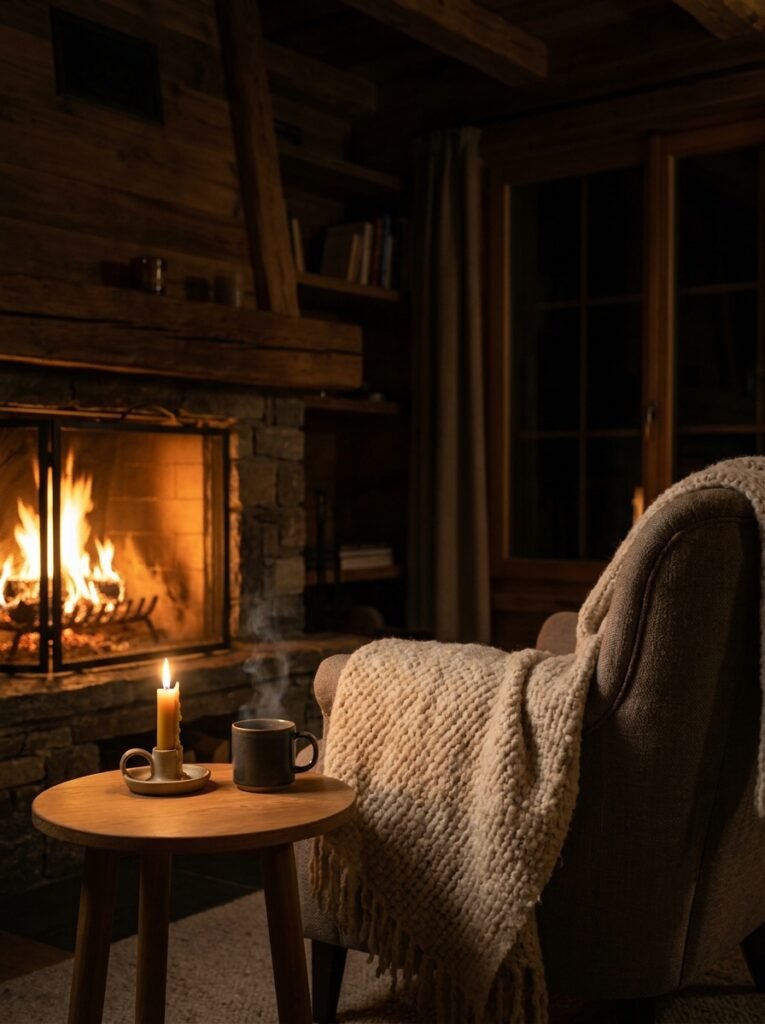
A chalet interior isn’t about achieving a look — it’s about creating a feeling. The feeling that you are safe, warm, and somewhere that genuinely cares about your comfort. In a world that moves faster every year, designing a home that makes you want to slow down isn’t a luxury. It’s a quiet, essential act of self-preservation.
So here’s the question worth sitting with today: what would your home feel like if every single room made you want to stay just a little longer?