
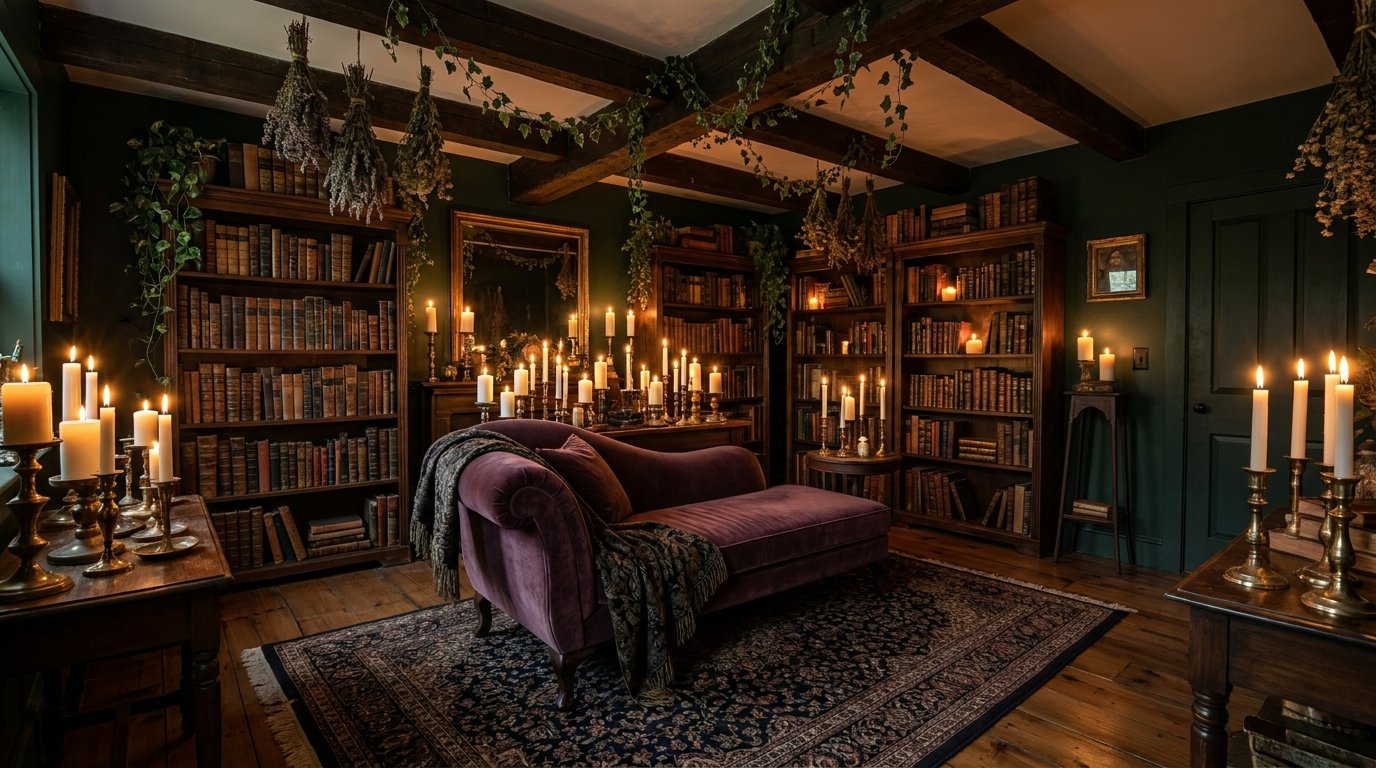
Witch House Interior: The Moody, Magical Design Style You Didn’t Know You Needed
There’s a room somewhere in your imagination — dark walls, flickering candlelight, shelves lined with curiosities, and a sense that the space itself has a story to tell. That room has a name now, and it’s called witch house interior design. If you’ve ever felt drawn to the dramatic, the mysterious, and the deeply cozy all at once, this guide was written for you.
—
1. What Exactly Is Witch House Interior Design — And Why Is Everyone Suddenly Obsessed?
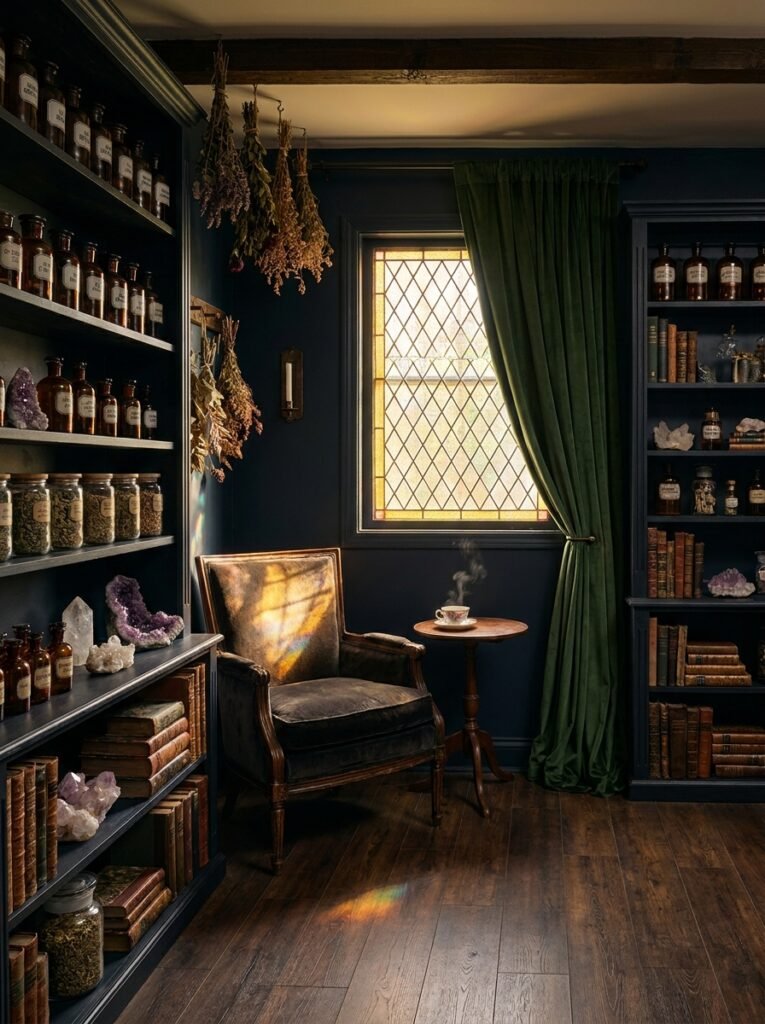
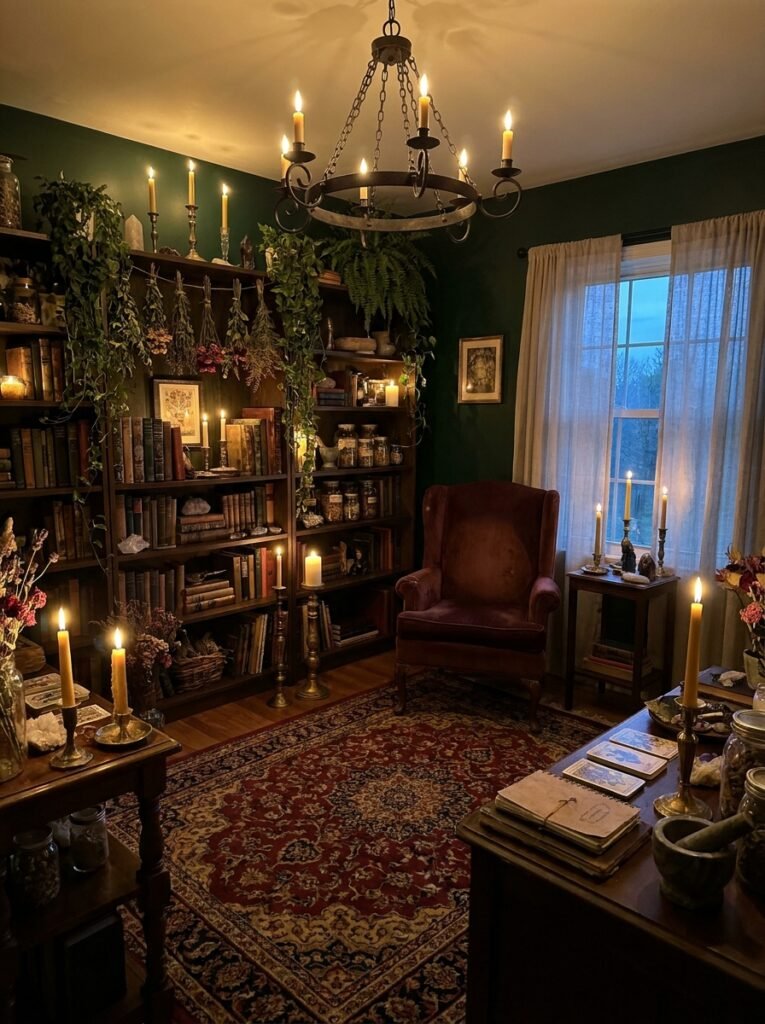
Witch house interior design is not a Halloween decoration scheme. Let’s get that out of the way immediately. It’s a full, richly developed aesthetic movement that draws from Victorian Gothic architecture, dark academia, cottage-core maximalism, and old-world apothecary styling. The result is a home that feels like it exists somewhere between a medieval library, an herbalist’s cottage, and a candlelit sanctuary.
The style has been quietly growing on Pinterest for years, but it surged in popularity as more people began seeking interiors that felt emotionally layered rather than minimalist and cold. Clean lines and all-white spaces certainly have their place — but for a growing number of decorators, that approach leaves something essential out. Warmth. Mystery. Soul.
Witch house design answers that hunger with dark, moody color palettes, natural materials, meaningful objects, and an intentional sense of atmosphere. Every corner of a witch house interior has been considered, curated, and — in the best possible way — slightly overfilled with things that matter.
“A witch house interior doesn’t just look beautiful — it makes you feel something the moment you walk through the door.”
2. The Color Palette That Sets the Entire Mood

Color is the foundation of this aesthetic, and the witch house palette is both specific and surprisingly versatile. Deep forest greens, midnight blacks, plum purples, burgundy reds, dusty mauves, and aged bronze tones form the backbone. These aren’t garish or overwhelming when applied thoughtfully — they’re deeply sophisticated and extraordinarily cozy.
The secret is layering. A room painted in a rich charcoal or deep forest green won’t feel cave-like if it’s balanced with warm amber lighting, natural wood tones, and plenty of textile softness. Think of the color like a stage set — it creates depth and atmosphere, and everything else performs on top of it.
Benjamin Moore’s “Black Forest Green,” Farrow & Ball’s “Railings,” and Sherwin-Williams’ “Caviar” are all excellent starting points. If full dark walls feel like a leap, start with a single accent wall, a painted bookcase, or a deeply colored ceiling — often called a “fifth wall” in interior design — which creates drama without overwhelming the room.
3. The Role of Natural Light — and How to Work With It, Not Against It

Here’s a misconception worth addressing: witch house interiors don’t mean dark rooms. They mean deliberately managed light. There’s a difference, and understanding it is the key to making this style feel magical rather than oppressive.
South-facing rooms with abundant natural light can carry the deepest, darkest wall colors beautifully because the daylight constantly refreshes the space. North-facing rooms, which receive cooler, more diffused light, may need to compensate with warmer artificial lighting sources — think amber-toned Edison bulbs, salt lamps, and candlelight at every opportunity.
Leaded glass windows, stained glass panels, and gauzy dark curtains in charcoal linen or velvet are iconic within this aesthetic. They soften and filter natural light into something that feels ancient and golden rather than harsh. If you can’t change your windows, window film that mimics leaded glass patterns is an affordable and effective alternative.
4. Furniture That Looks Like It Has a History
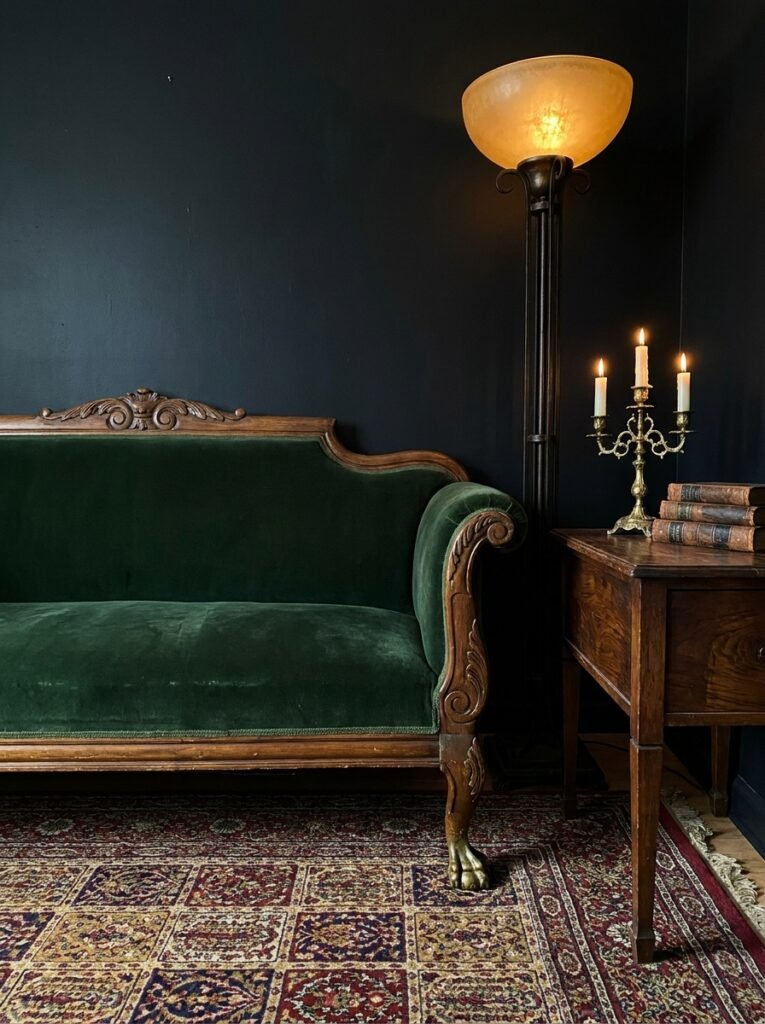
One of the most defining elements of a witch house interior is furniture that carries weight — visual weight, emotional weight, historical weight. Clean-lined, mass-produced furniture from flat-pack stores will fight against this aesthetic at every turn. What you want instead is pieces that look like they’ve survived something.
Victorian-era settees with carved wooden frames and velvet upholstery, antique armoires with aged brass hardware, heavy farmhouse tables with visible grain and knots, wrought iron bed frames, and wingback chairs in deep jewel tones — these are the furnishings that belong here. Estate sales, antique markets, secondhand stores, and online resale platforms are your greatest allies in sourcing them affordably.
You don’t need to be wealthy to achieve this look. A simple wooden chair becomes a witch house piece the moment it’s painted in a deep, matte black and reupholstered in a small-scale tapestry fabric. Context transforms objects — and in this style, context is everything.
5. Textiles, Layers, and the Art of the Moody Cozy
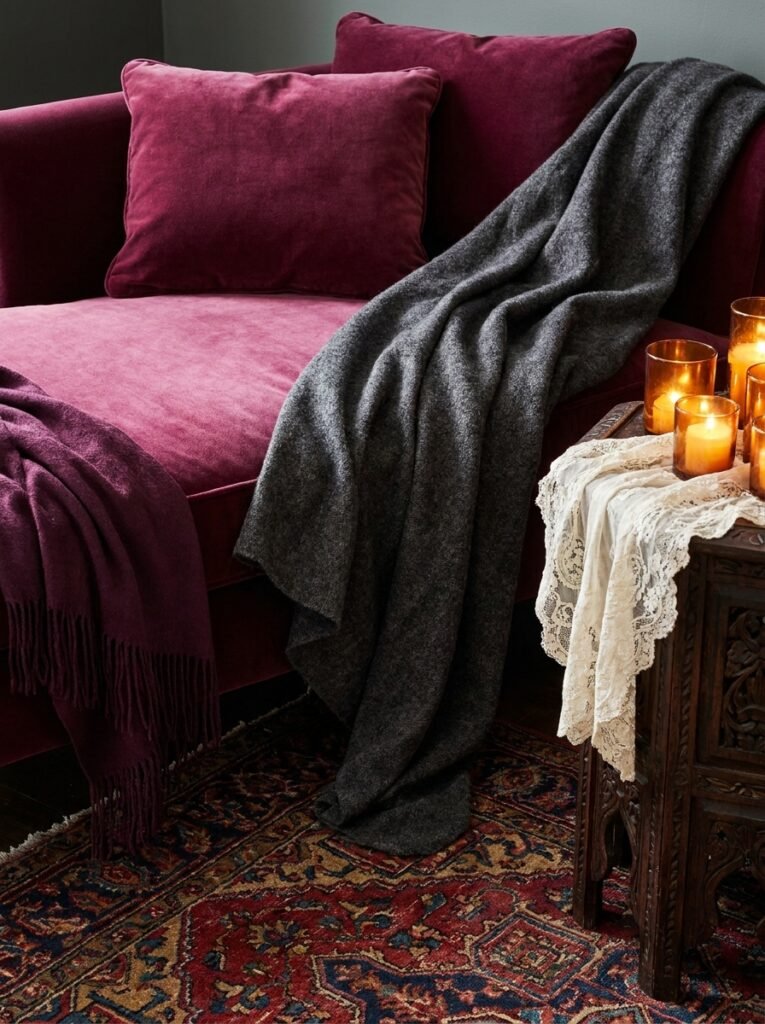
If witch house furniture is the skeleton of the aesthetic, then textiles are its nervous system — they transmit warmth, sensation, and emotional atmosphere throughout the entire space. This is not a style that involves a single throw pillow on a bare linen sofa. This is a style that invites layering, and then layering again.
Velvet is the ruling textile here. Deep berry velvet cushions, forest green velvet drapes that pool on the floor, a plum velvet chaise in the corner — velvet absorbs light in a way that makes a room feel intimate and rich without trying. Combine it with heavy wool throws in heathered grays and blacks, fringed shawls draped over furniture arms, and rugs with intricate, aged-looking patterns like Persian or kilim designs.
“Comfort and mystery aren’t opposites — in a witch house interior, they’re the same thing.”
Lace is another textile that appears throughout this aesthetic — particularly antique or vintage lace layered over dark surfaces as a table runner, draped across a dresser, or hung as a sheer curtain over a window. The contrast between delicate lace and a deep, moody backdrop is quietly stunning.
6. Shelving as Storytelling: The Art of the Curated Shelf
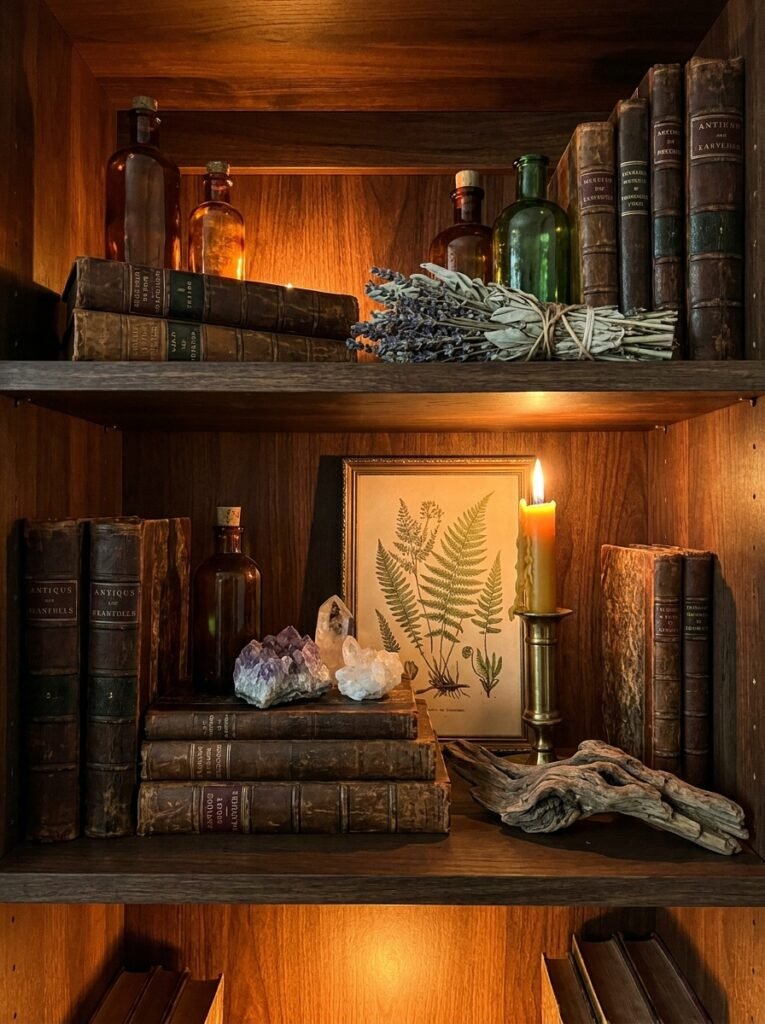
In a witch house interior, shelving is not just storage — it’s one of the most powerful decorative elements in the space. A well-curated shelf in this style tells a story, creates a sense of discovery, and rewards close attention. It’s the opposite of the minimalist “one plant, one book, and nothing else” approach that dominated interiors for the past decade.
Think about building shelves that layer height, texture, and intention. Stacks of antique books with beautiful spines sit beside small glass apothecary bottles, dried herb bundles, clusters of crystals or stones, a framed botanical illustration, a single pillar candle in a tarnished brass holder, and perhaps a small piece of sculptural driftwood or an interesting dried seed pod.
Nothing on a witch house shelf should feel accidental. Every object should be something you genuinely love or find genuinely fascinating. That sense of personal meaning is what makes the difference between a shelf that looks like a Pinterest board and a shelf that makes guests stop and stare.
7. The Apothecary Aesthetic: Plants, Dried Herbs, and Living Things
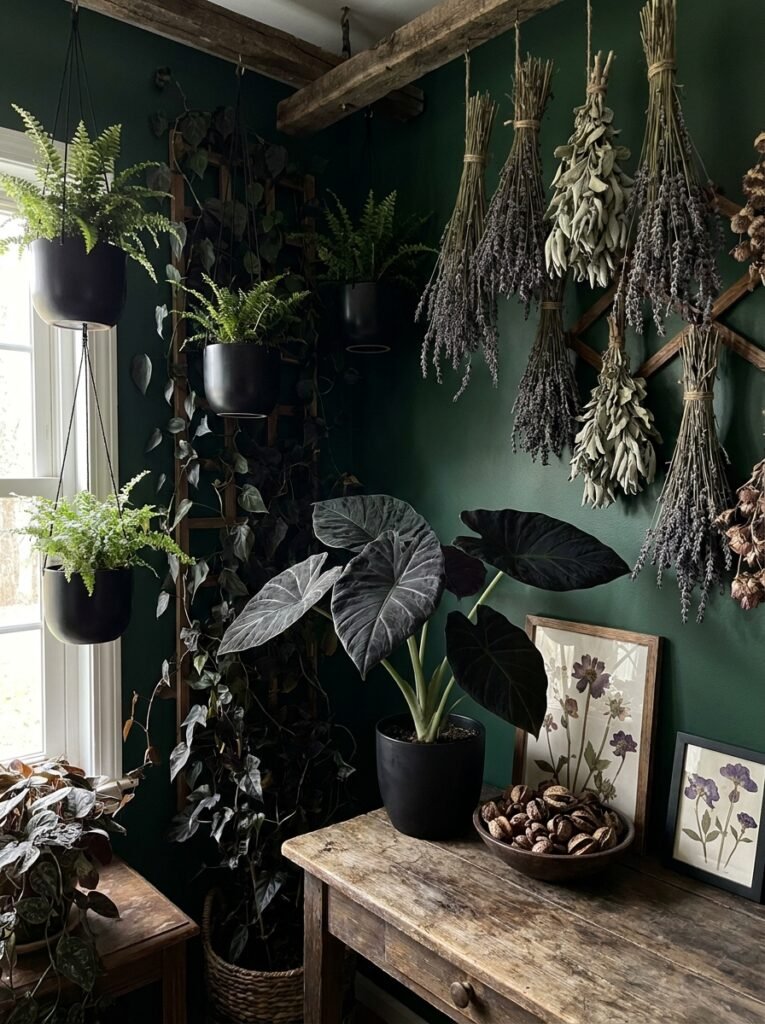
Plants are absolutely essential in this design style — but perhaps not the plants you’d expect. While trailing pothos and bright fiddle leaf figs are at home in many modern interiors, witch house design gravitates toward plants with a more dramatic, ancient, or wildly abundant quality.
Dark-leaved plants are particularly beloved here: Black Velvet Alocasia, deep burgundy Calathea, black mondo grass, or the dramatic Bat Plant. Ferns in abundance are welcome — particularly in hanging baskets or spilling out of dark ceramic pots. Trailing ivy climbing a trellis on a dark wall is extraordinarily effective.
Beyond living plants, dried botanicals play a significant role. Bundles of lavender, dried rosemary, sage, and mugwort hung from ceiling beams or kitchen hooks bring fragrance, texture, and a deeply rooted sense of connection to the natural world. Pressed flowers framed under glass, dried seed pods in wooden bowls, and gnarled branches in tall vases all carry the aesthetic forward beautifully.
8. Candlelight and Atmospheric Lighting: The Single Most Important Design Element
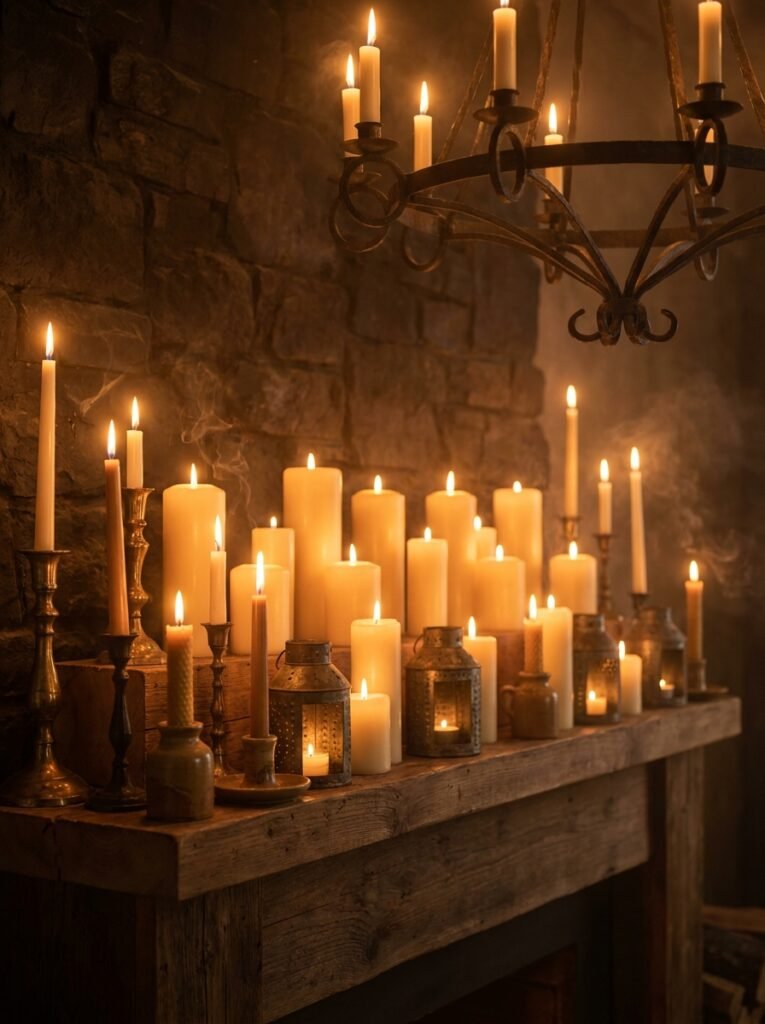
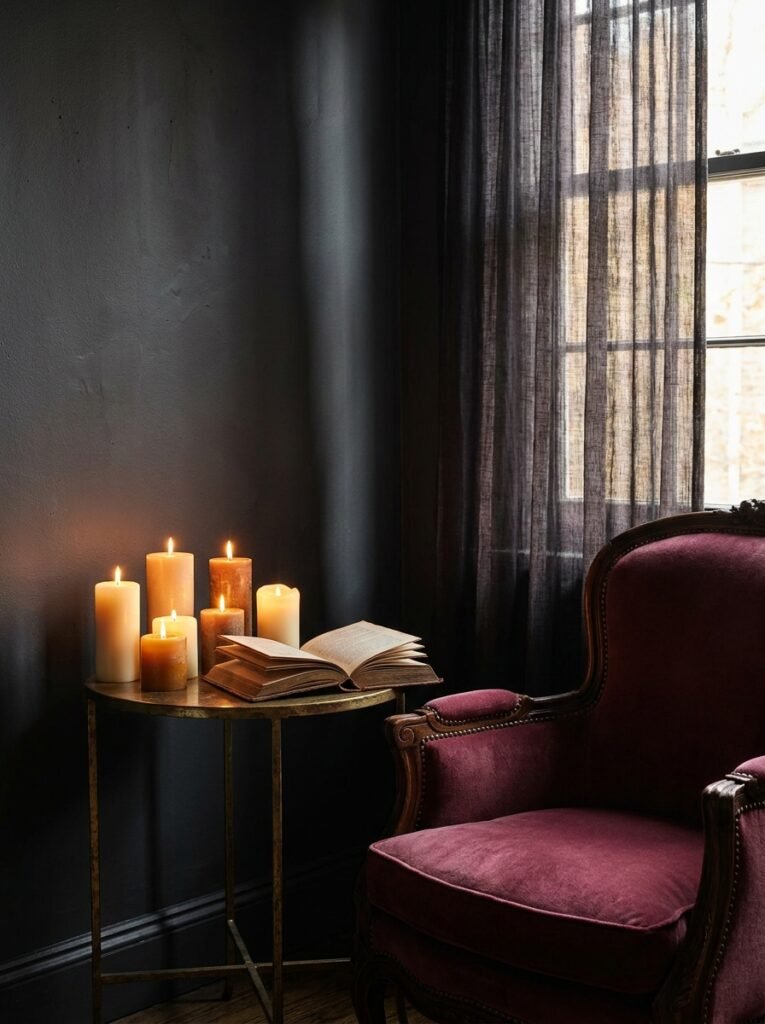
No element transforms a space more immediately and dramatically than lighting — and in witch house design, candlelight is king. The warm, flickering, imperfect quality of candlelight does something that no electric bulb can fully replicate: it makes a room feel alive.
Pillar candles in varying heights grouped on a tray or a mantel, taper candles in iron or brass candlesticks, beeswax candles in ceramic holders, tea lights inside small lanterns hung at varying heights — these are the lighting tools of this aesthetic. If open flames aren’t practical in your space, high-quality LED candles with a realistic flicker setting are a genuinely effective alternative.
For permanent lighting, look for fixtures that carry vintage or Gothic sensibility: wrought iron chandeliers, Edison bulb pendants, Moroccan-style lanterns, or candelabra-style ceiling fixtures. Avoid cool, blue-toned LED bulbs entirely. Warm-toned bulbs in the 2200K to 2700K range are essential for achieving the amber, firelit glow this aesthetic requires.
“Light is the most powerful decorating tool in any room — and in a witch house, it’s nothing short of transformative.”
9. The Kitchen as Apothecary: Where Cooking Becomes Ritual
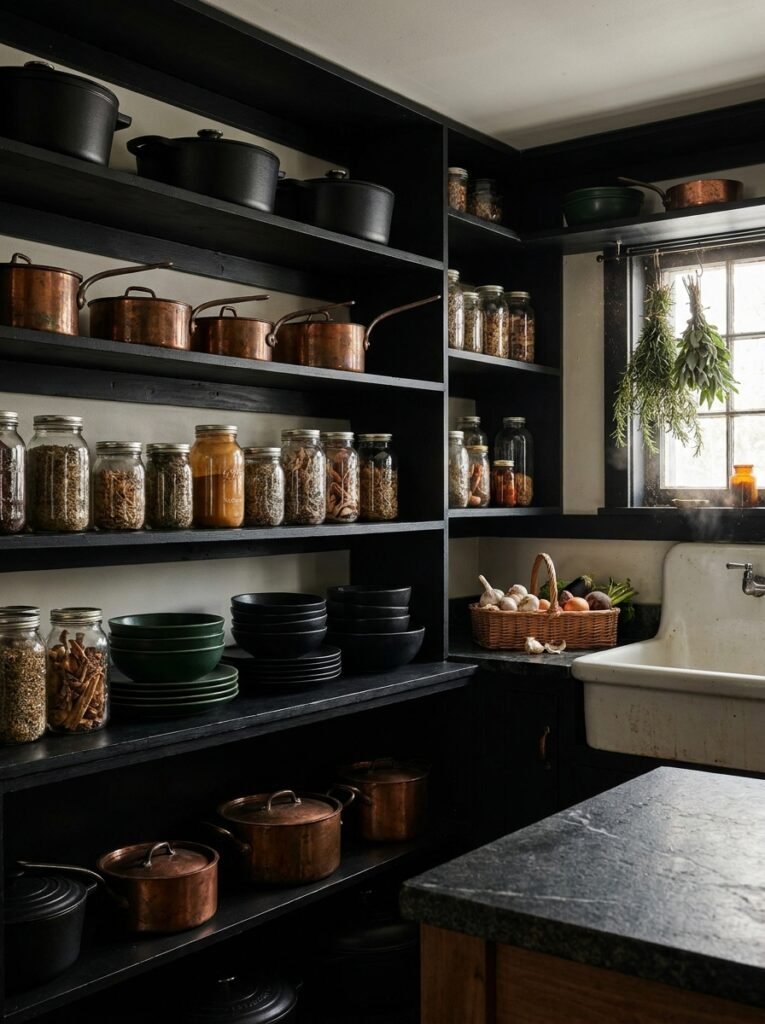
The witch house kitchen is one of the most beloved and achievable expressions of this design style — and for food lovers, it’s where the aesthetic becomes genuinely joyful. This is a kitchen that treats cooking not as a chore but as a form of craft.
Open shelving in black-painted wood displays cast iron cookware, copper pots with a soft patina, dark ceramic crockery, and labeled glass jars of dried herbs and spices. A heavy farmhouse sink in black or aged porcelain is a dream element. Dark countertops in honed black granite, soapstone, or even sealed concrete ground the space beautifully.
A hanging herb rack above the kitchen island — or above a kitchen window where the light catches the dried bundles — is both practical and deeply atmospheric. Baskets of garlic, onions, and seasonal vegetables sitting in open view bring the apothecary energy forward in a completely edible, completely functional way.
10. Small Space Witch House: How to Achieve the Aesthetic in an Apartment
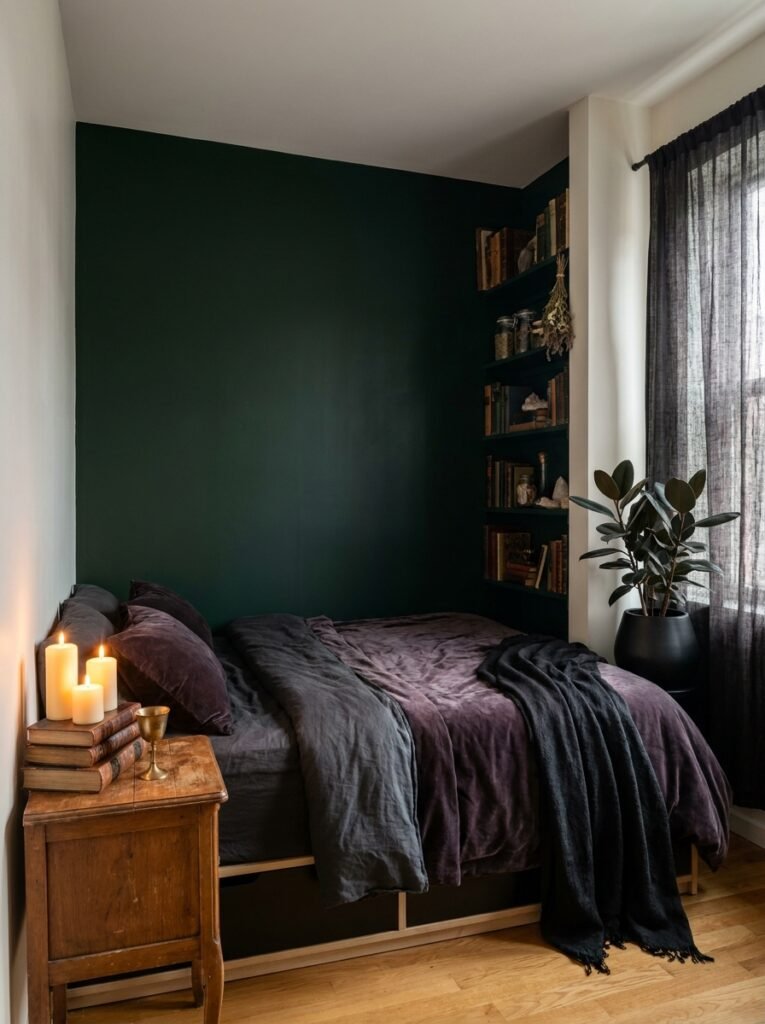
You don’t need a Victorian manor to create a compelling witch house interior. In fact, some of the most successful versions of this aesthetic exist in compact apartments — because small spaces actually benefit from the cozy, layered, intimate quality that defines the style.
In a small bedroom, a single wall painted in deep forest green or midnight black with amber candlelight and layered dark textiles will create a sleeping sanctuary that feels genuinely restorative. In a small living room, a deeply colored velvet sofa, an overstuffed bookshelf, and good candlelight will do most of the heavy lifting.
Vertical space is your best friend in small witch house interiors. Floor-to-ceiling bookshelves, hanging plants, stacked botanicals, and tall candle groupings all draw the eye upward and create the sense of abundance and depth that makes the aesthetic sing.
11. Budget-Friendly Witch House: Getting the Look Without a Major Investment
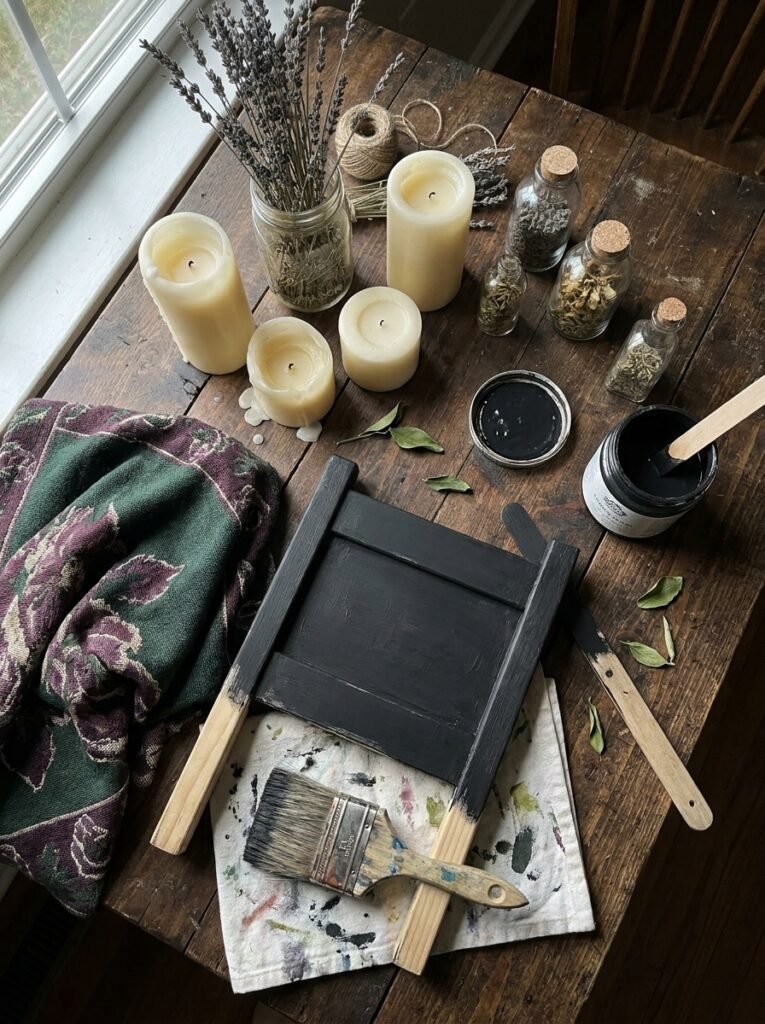
The witch house aesthetic is genuinely one of the more budget-friendly design styles available — because it is, at its heart, a style that values the secondhand, the handmade, and the slowly gathered. This is not a look you achieve by purchasing a complete furniture set from a catalog. It’s a look you build over time, and that process is part of its joy.
Thrift stores and estate sales are your primary shopping destinations. A coat of black or forest green chalk paint can transform an inexpensive piece of furniture entirely. Fabric by the yard from a craft store can reupholster a chair seat or create new curtain panels for very little cost. Mason jars filled with dried herbs or colored oils make beautiful apothecary-style displays from the kitchen pantry.
Candles are one of the most cost-effective tools in this entire aesthetic. A collection of pillar candles in varying heights, gathered from a dollar store or craft store, can transform a mantel, a shelf, or a dining table for under ten dollars.
12. Making It Feel Personal, Not Performative: The Soul of Witch House Design
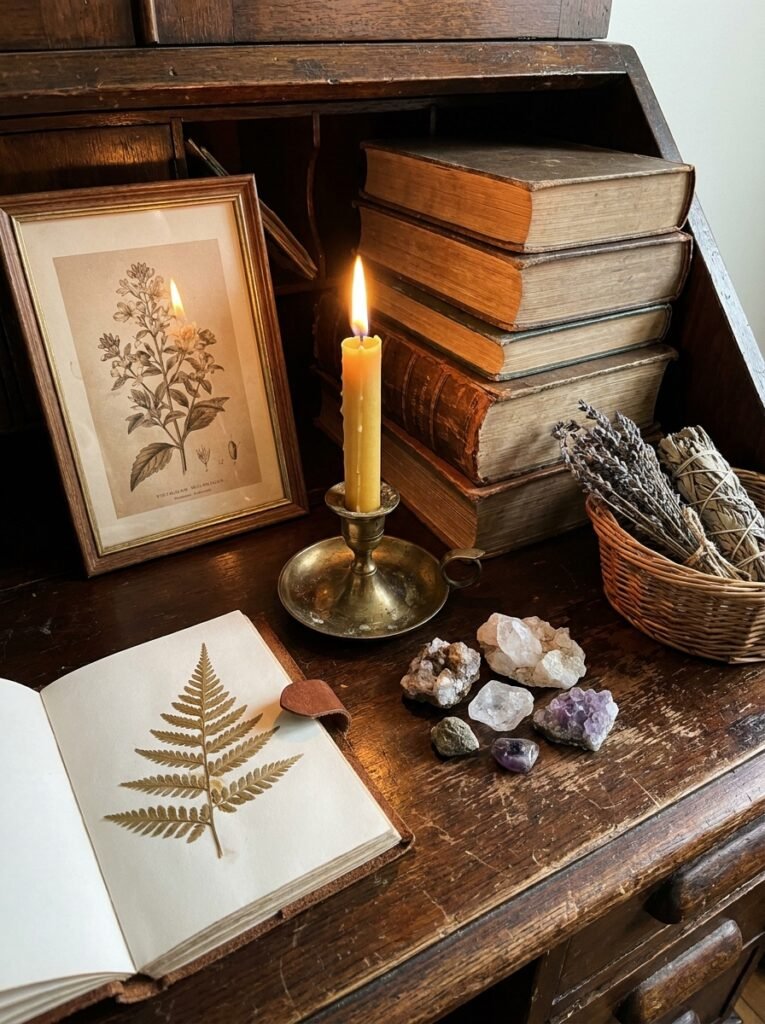
This is the most important section — and perhaps the one most often overlooked. Witch house interior design can look stunning in photographs, but it only truly succeeds when it feels genuinely personal. The difference between a beautiful aesthetic and a home with a soul is the presence of objects and choices that are meaningful to the specific person living there.
What are you genuinely fascinated by? Is it the history of botanical illustration? The geology of crystals and minerals? The craft of bookbinding? The folklore of specific herbs? The art of Victorian portraiture? Whatever it is, that’s the thread that should run through your witch house interior and make it irreplaceable — because no one else will curate around exactly the same passions you have.
The witch house aesthetic is, ultimately, a design philosophy that gives you full permission to fill your home with everything you love most deeply — as long as it’s beautiful, intentional, and layered with meaning. That’s not a decoration style. That’s a way of living.
—
🌿 How to Start Building Your Witch House Interior
Beginning this aesthetic can feel overwhelming if you try to tackle everything at once. The best approach is room by room, layer by layer, and object by meaningful object. Start with your wall color — even a single painted wall in a deep, moody tone will immediately shift the atmosphere of a room. Then build your lighting situation: replace any cool-toned bulbs with warm amber equivalents and add at least one grouping of candles to your primary living space. From there, begin visiting secondhand shops with intention, looking specifically for pieces with age, texture, and character. Add one plant with dramatic foliage. Build one shelf that tells a story. Rest, observe, and then add the next layer only when it feels genuinely right. A witch house interior should never feel rushed — it should feel found.
—
❓ FAQ
Q: Is witch house interior design the same as Gothic design? A: They overlap significantly but aren’t identical. Gothic interior design tends to be more architectural in focus — pointed arches, cathedral detailing, stone-inspired surfaces — while witch house design is warmer, more maximalist, and incorporates natural elements like dried herbs, botanicals, and earthy textures alongside the dark palette. Witch house feels like a lived-in, human space; Gothic can lean more formal and austere.
Q: Can witch house interior design work in a bright, modern home? A: Absolutely. The key is working with what you have rather than fighting it. In a bright, modern space, focus on furniture and textiles to carry the aesthetic — a velvet sofa in a deep jewel tone, layered rugs with intricate patterns, a curated shelf, and warm candlelight can transform even a white-walled apartment into something with genuine moodiness and depth.
Q: What’s the best room to start with when trying the witch house aesthetic? A: Most designers recommend starting with the bedroom or a reading nook because these spaces are smaller, more personal, and easier to transform completely without a major investment. A dark accent wall, layered dark bedding, some candlelight, and a few meaningful objects on a nightstand shelf can make a bedroom feel dramatically different — and gives you a private space to live with the aesthetic before expanding it further.
—
💭 Final Thought
A witch house interior is, at its core, a declaration that your home should feel like a sanctuary for your most authentic self — mysterious, layered, warm, and full of things that genuinely matter to you. It’s a rejection of the idea that spaces must be spare to be beautiful, and an embrace of the deep human desire to be surrounded by meaning. As you look around your own home today, which corners are waiting to become something more intentional, more alive, and more truly yours?