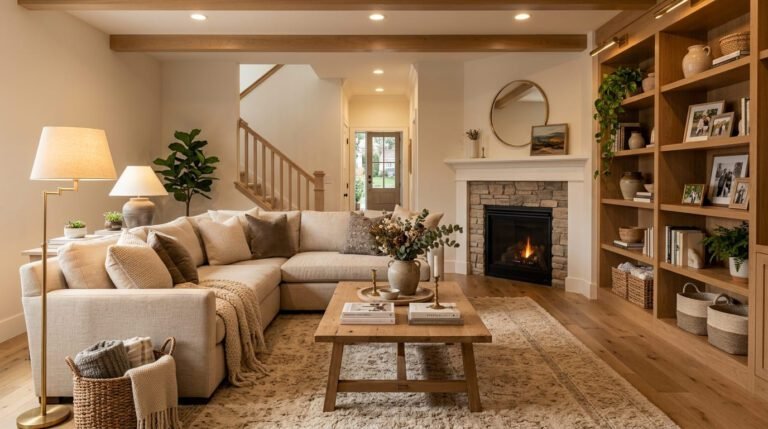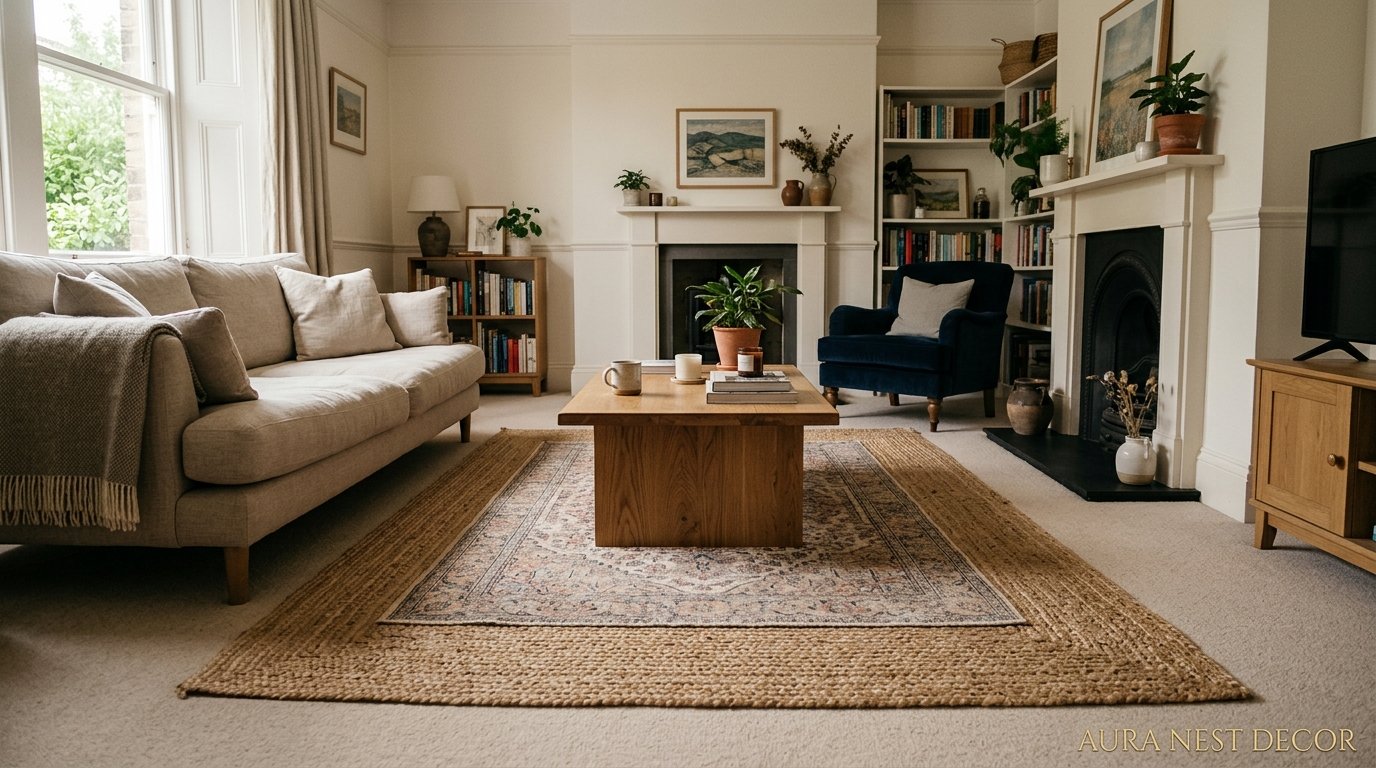
Yes, You Can Put a Rug on Carpet — And It Can Look Really, Really Good
You’ve been staring at that beige wall-to-wall carpet for three years and honestly? You’re over it. But ripping it out isn’t in the budget, or maybe you’re renting, or maybe the underlay is perfectly good and you just want the room to feel different. Here’s the thing nobody tells you: a rug on top of carpet, done right, doesn’t look like a mistake. It looks intentional.
—
1. Why Every Interior Designer Has Done This at Some Point
Let’s get the embarrassment out of the way first. Because I know what you’re thinking — “isn’t that a bit… much? Two layers of floor covering?” And I get it, I really do. But here’s what’s actually true: layering rugs over carpet is something designers have been doing for decades, and not because they had no other option.
It started, I think, with rental apartments. You move into a place with flat, sad, contractor-grade carpet and you need to make it feel like yours without leaving any permanent marks. So you throw down a beautiful vintage kilim or a chunky jute and suddenly the room has a focal point. Has a soul.
But it didn’t stay in rentals. Look at any high-end interior on Pinterest right now and you’ll find at least some version of this — a cozy reading nook, a sectional sofa with a plush rug underneath, all sitting on top of low-pile carpet. The designers doing this aren’t settling. They’re layering on purpose.
The reason it works comes down to zones. A rug tells the eye where a room begins and ends. On bare hardwood, it anchors furniture. On carpet, it does the exact same job — it just has a slightly softer landing pad underneath, which isn’t the worst thing in the world. Especially in a living room where you’re sitting on the floor watching films or letting the kids sprawl out.
“A rug doesn’t need bare floor underneath it to do its job. It needs the right room around it.”
2. The Carpet Type That Makes or Breaks the Whole Thing
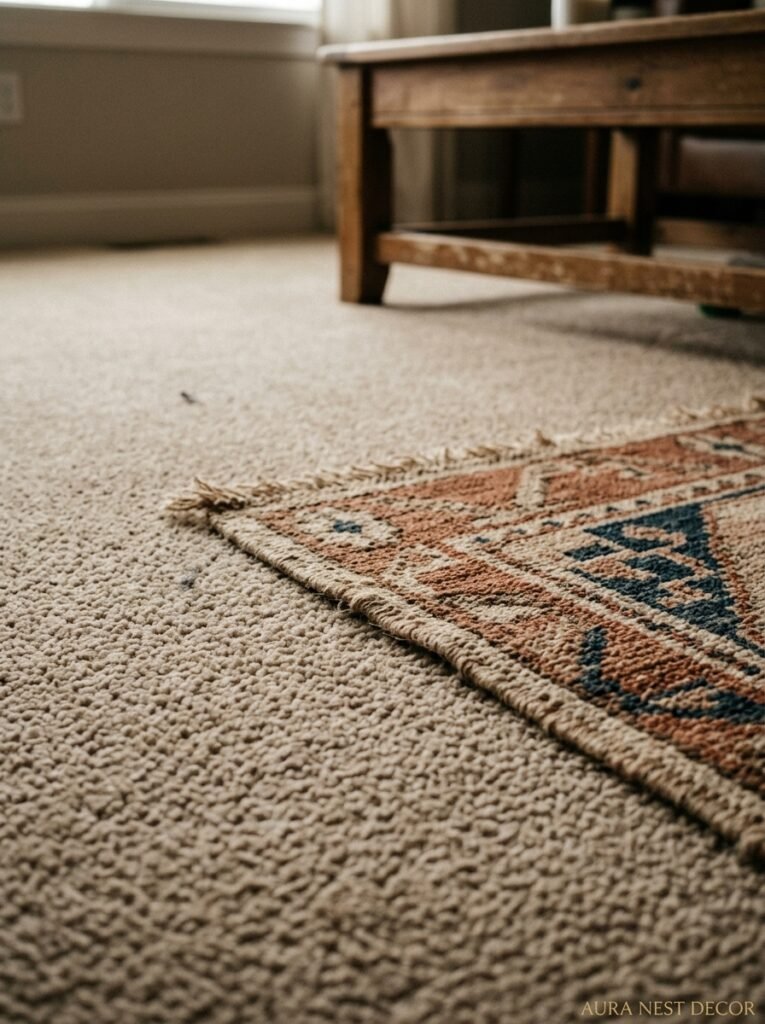
Okay, this is the part people skip and then wonder why their rug looks weird. Not all carpet is created equal when it comes to layering.
Low-pile carpet — think the kind you’d find in most newer builds or rental properties, that short, tight weave — is basically the perfect base. The rug sits flat, it doesn’t shift around much, and the transition between carpet and rug edge is clean. This is your best-case scenario.
Medium pile is fine too, honestly. Most standard living room carpets fall into this category and they work well. The rug will have a tiny bit more movement but nothing you can’t manage with a good rug pad.
High-pile carpet — the fluffy, shaggy stuff — is where things get tricky. Putting a rug on top of deep shag carpet is like stacking two soft things and hoping neither one moves. They will both move. Together. In different directions. So if your carpet is the thick, sink-your-feet-in kind, I’d either reconsider the layering approach or choose a very sturdy, flat-weave rug and invest in the stickiest rug pad you can find.
Berber carpet, the looped kind that’s common in British homes especially, sits somewhere in the middle. It’s relatively flat so a rug on top can look good, but the texture is more visually “busy” so you’ll want to pick a rug with a cleaner, simpler pattern to avoid visual chaos on the floor.
The bottom line: run your hand across your carpet. If it barely moves, you’re golden. If your hand sinks in past your knuckles, plan accordingly.
3. Size Is the Conversation Nobody Wants to Have
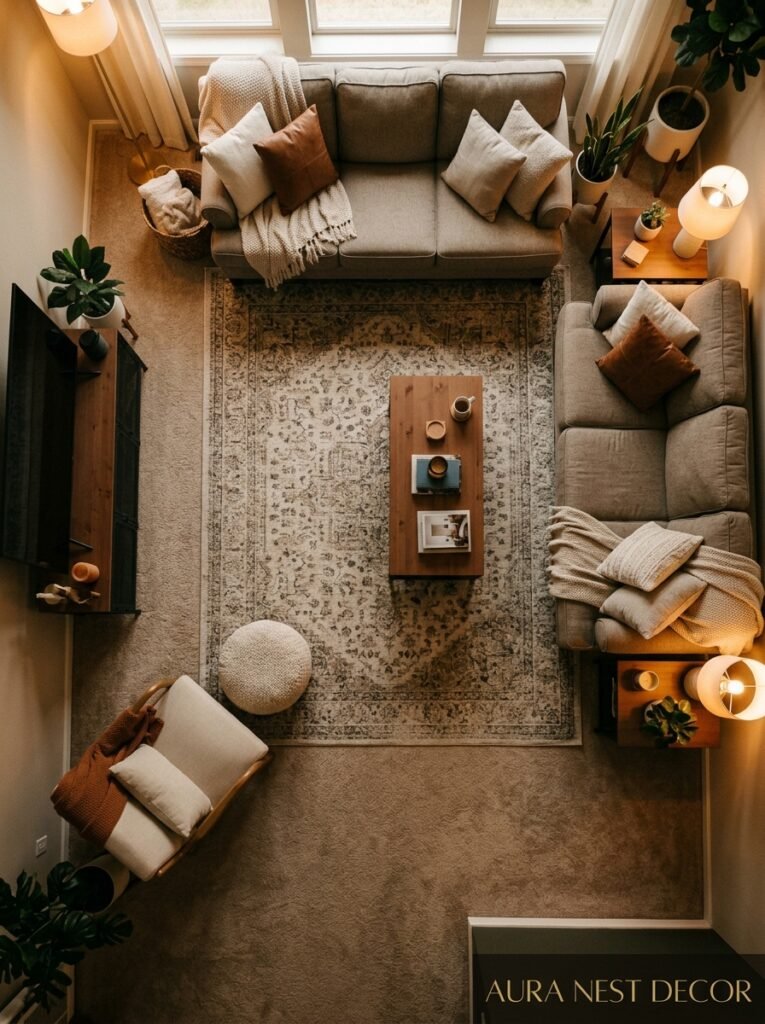
I’m going to be blunt. Most people buy rugs that are too small. Way too small. And on carpet, an undersized rug doesn’t just look a bit off — it looks like someone left a bathmat in the middle of the room.
The standard rule is that your rug should be big enough so that at least the front two legs of every sofa and chair in your seating arrangement sit ON the rug. If you can afford to have all four legs on — even better. But the front two legs minimum. This is not optional.
For a typical American or British living room, this usually means you’re looking at a 8×10 or 9×12 rug. Maybe a 6×9 if your room is genuinely small. Not a 5×7. Almost never a 5×7. I don’t care how “perfect” it looks in the product photo.
Here’s a trick that saves people a lot of money and regret: buy a roll of kraft paper or use newspaper, and tape out the exact dimensions of the rug you’re considering on your carpet floor. Live with it for a day. Sit on the sofa. Walk around. Does it feel right? Does it look right? Then buy it.
And on carpet specifically, going bigger has an extra benefit — a large rug with generous edges creates a much cleaner visual break from the surrounding carpet. It reads as a deliberate choice. A small rug just sits there looking confused.
4. The Colors That Actually Work (And the One Combination to Avoid)
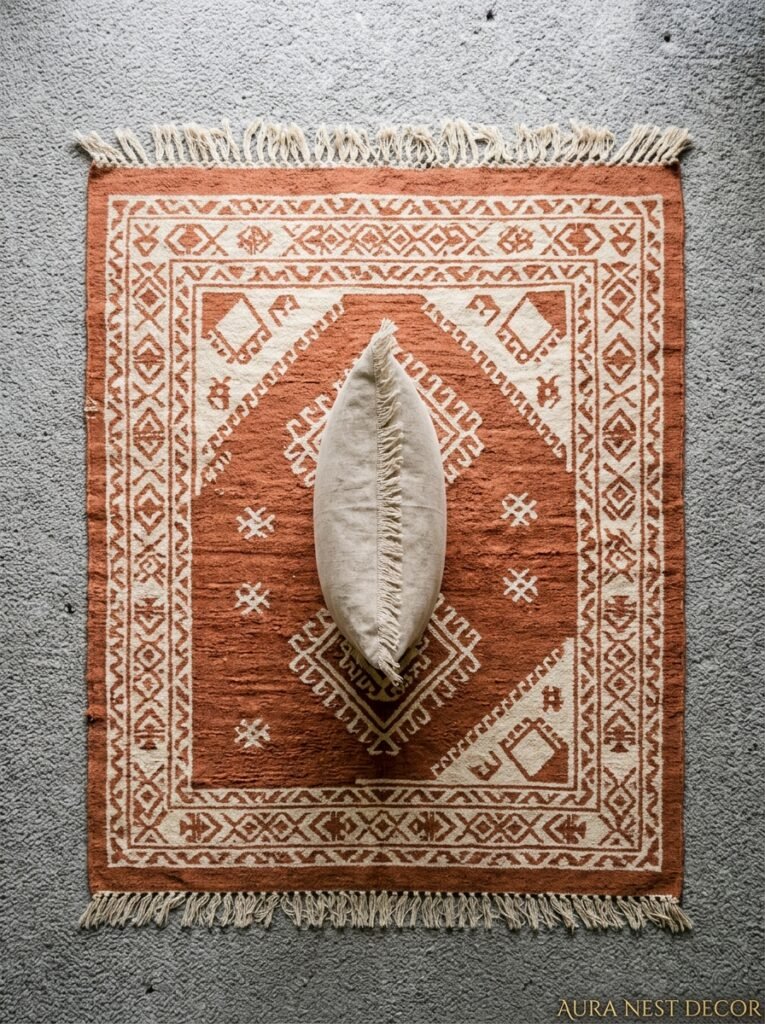
Here’s where it gets fun. Choosing a rug color when you’re placing it on carpet isn’t the same as choosing one for a hardwood floor. You’ve got an extra layer of color and texture already in the room, so you’re making decisions on top of decisions.
The easiest approach? Go darker than your carpet. If you’ve got beige or cream carpet — very common in both American homes and British new-builds — a rug in warm terracotta, dusty navy, forest green, or even a deep rust is going to pop beautifully. The contrast creates that clean visual boundary you need.
Conversely, very light rugs on very light carpet tend to blend in. Not always bad, but it requires intentionality. If both are pale, you’re going for a tonal, layered-neutrals look and you need texture to save it — think a chunky cream boucle rug on cream carpet. The pattern won’t do the work but the texture will.
Now, the combination I’d avoid: a carpet with a strong pattern under a rug with a strong pattern. I know someone out there wants to try it. Don’t. Or do, but know that it’s a very advanced move and most rooms don’t have the breathing room to handle competing floor patterns.
A bold geometric rug on a plain carpet? Gorgeous. A floral rug on a subtle, tone-on-tone carpet? Can work. Two loud, clashing patterns fighting it out at floor level while your furniture tries to mind its own business? Exhausting for the eye.
“Your carpet is the background. Your rug is the sentence you actually want people to read.”
5. The Rug Material Question — And Why Jute Is Everywhere Right Now
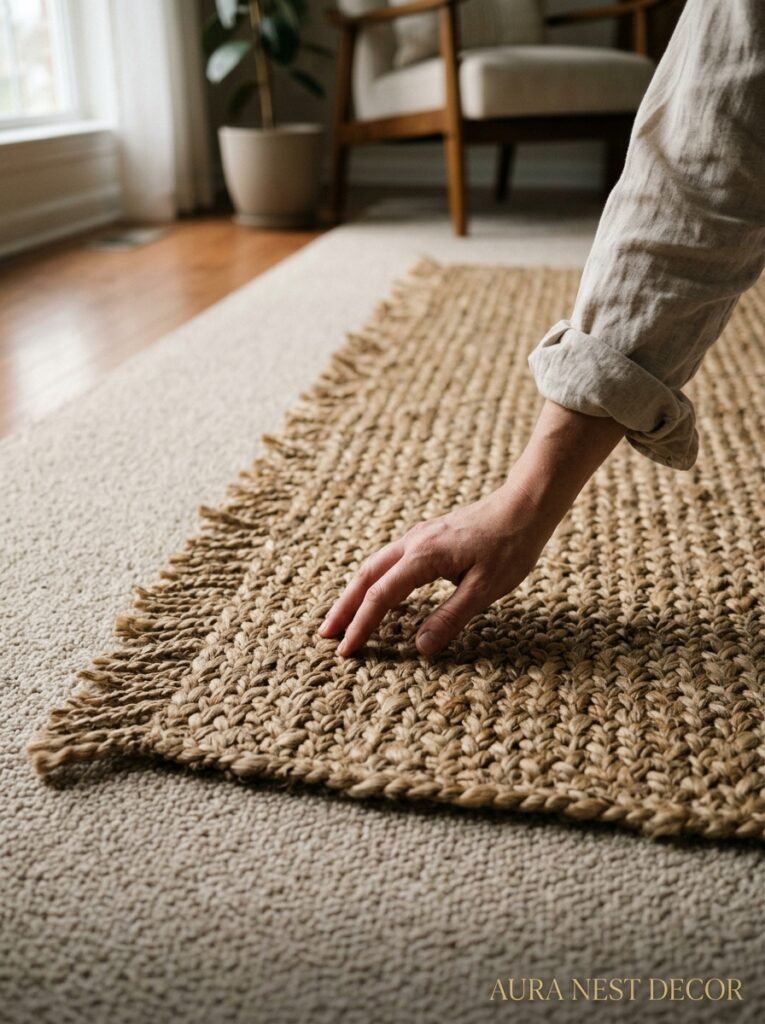
Jute rugs are having a serious moment and honestly I think I understand why. They’re natural, they’ve got that warm, earthy texture, and they sit relatively flat which makes them brilliant for carpet layering. They’re also, compared to wool or silk, genuinely affordable.
But here’s the thing about jute — it’s not soft. At all. It’s kind of scratchy underfoot, especially if you’re someone who likes to sit on the floor. And on carpet, where there’s already some cushion, you might not notice as much. But if you’ve got kids who sit on the floor for hours, jute might not be your most comfortable choice.
Wool rugs are, in my opinion, the gold standard. Thick enough to feel luxurious, durable enough to handle real life, and they come in every pattern and color you can think of. They sit well on carpet because they’ve got some weight to them. The downside is the price. A good wool rug in a size that actually works — we’re talking 8×10 — is going to cost you.
Flatweave cotton rugs are brilliant for bedrooms and kids’ rooms but in a living room on carpet, they can feel a bit thin. Like they’re not quite committing. Side note — if you’re in the UK and you’ve been looking at those beautiful Turkish kilims, they’re technically flatweave and they’re the exception. They bring so much pattern and color that the thinness doesn’t matter.
Polypropylene and synthetic rugs are the underrated option. They’ve gotten so much better in the last few years. You can find really convincing wool-look synthetics that are stain-resistant, water-resistant, and pet-friendly. For a living room with heavy foot traffic? Sometimes the practical choice is the smart one.
6. Rug Pads — The Boring Thing That Actually Saves Your Sanity
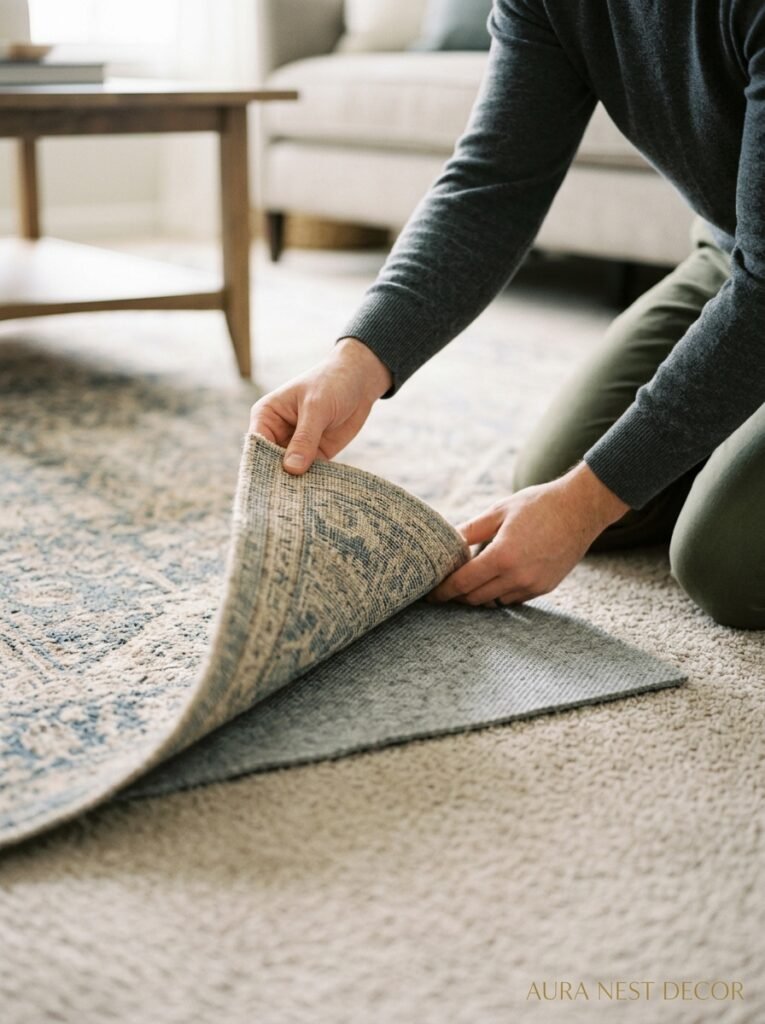
Nobody wants to talk about rug pads. I get it. They’re not exciting. But I’m going to talk about them anyway because life is too short for a rug that keeps bunching up and becoming a trip hazard.
On bare floor, rug pads prevent slipping. On carpet, they do something different — they grip the carpet fibers and stop the rug from migrating across the room over time. Because it WILL migrate. Give it two weeks without a pad and your beautiful rug will have crept three feet to the left.
The type of pad matters here. You want a pad that’s specifically designed for carpet-to-rug use. They tend to have a different grip texture on each side — one side for gripping the carpet, one side for holding the rug. A standard non-slip pad designed for hard floors won’t give you the same results.
Cut your pad slightly smaller than your rug — about an inch in on all sides. This way the pad stays completely hidden and the rug edges sit cleanly on the carpet without bunching.
In the UK, these are sometimes called “rug grippers” or “rug anchors” and you can find them at most home stores. In the US, most rug retailers sell them, or you can pick them up at Target or HomeGoods. Just don’t skip this step. You’ll thank me.
7. The Furniture Arrangement Trick That Makes the Layered Look Feel Expensive
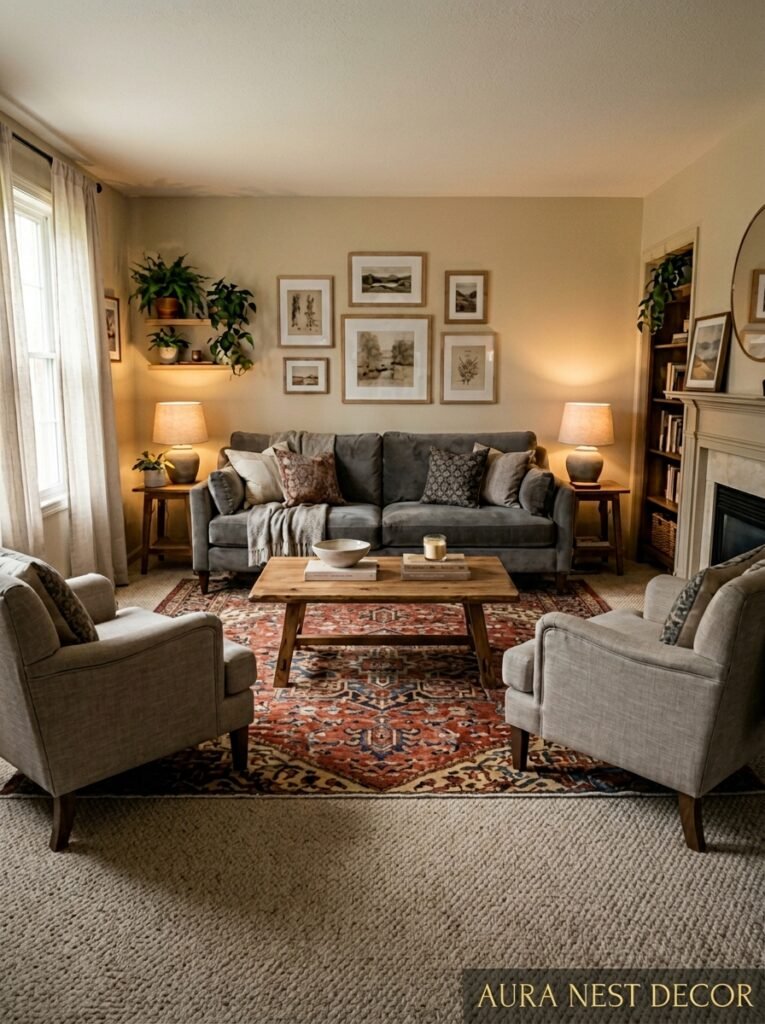
Here’s something I don’t see people talk about enough. The way you arrange your furniture around a rug-on-carpet setup has more impact on the final look than almost anything else.
The goal is to make the rug look like it BELONGS. And the fastest way to achieve that is to treat it the same way you’d treat a rug on hardwood. Anchor it with furniture. Don’t leave it floating.
Your coffee table should sit centered on the rug. Your sofa’s front legs should be on it. If you have a loveseat or two armchairs across from the sofa, those front legs should also hit the rug. This turns the rug into the center of a defined conversation zone, which is exactly what a living room needs.
“Furniture that touches the rug ties the whole room together in a way you’ll feel before you can explain it.”
What you want to avoid is the “island” situation — a rug in the middle of the room with every single piece of furniture pushed back against the walls and the rug sitting alone in the center like it got there by accident. This is the most common layout mistake in living rooms and it looks especially stark when there’s carpet underneath, because there’s suddenly this rug-island surrounded by carpet and it looks marooned.
Pull everything in. Closer than feels comfortable at first. You’ll adjust.
8. The Pattern That’s Working in Living Rooms Right Now — Specifically
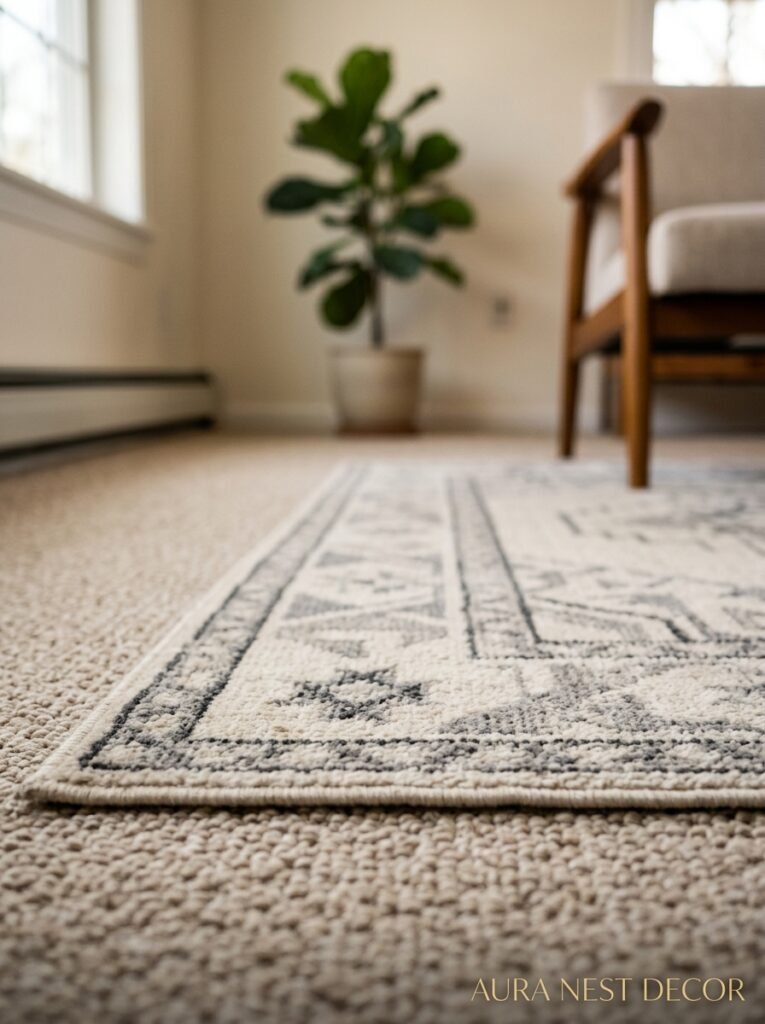
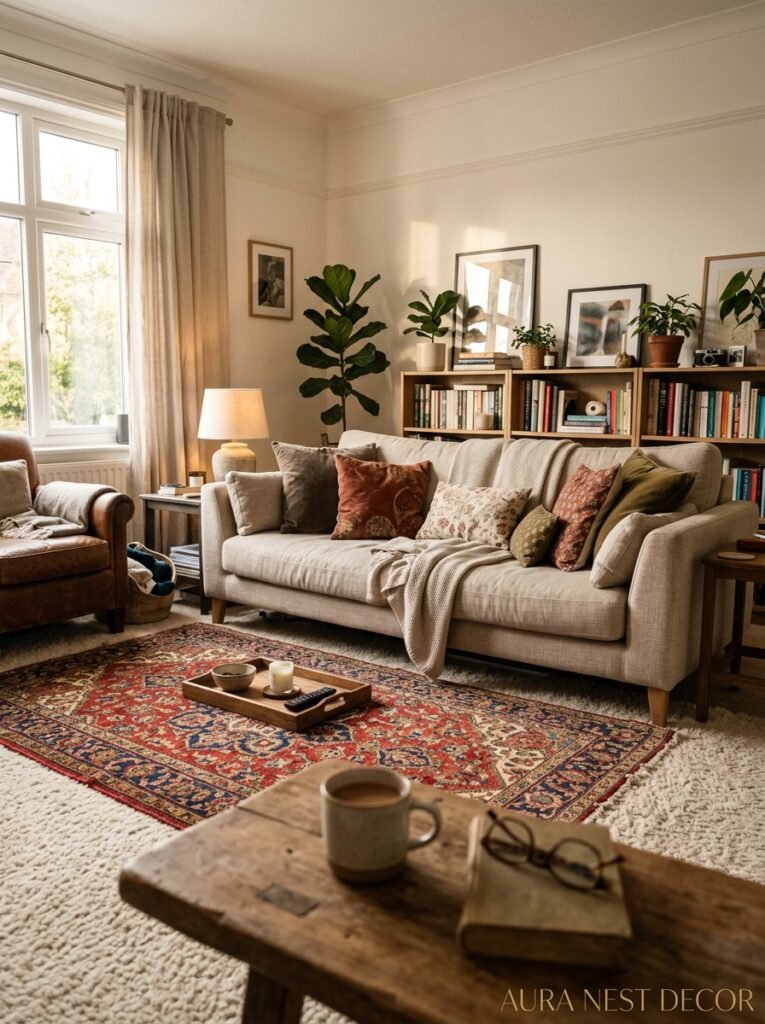
If you’ve been scrolling Pinterest or Instagram in the last year and a half you’ve probably noticed one thing: the vintage or vintage-inspired Persian rug is absolutely everywhere. And not just on hardwood. It’s appearing on carpet too, in living rooms that are otherwise pretty minimal or neutral.
I think the reason is contrast. A worn, slightly faded Persian rug with its reds and blues and creams brings warmth and age to a room that might otherwise feel a bit new or characterless. And on beige or grey carpet, that contrast is even stronger. The rug feels like it has history. The room feels like it’s been lived in.
The other pattern having a real moment is the abstract, hand-tufted rug — blobs of color, asymmetrical shapes, that sort of “modern art on your floor” energy. These look particularly good layered on neutral, low-pile carpet because the carpet just disappears and the rug gets to be the whole conversation.
Stripes are reliable. Moroccan lattice prints are reliable. Plaid, interestingly, is coming back — especially in US living rooms with a cozy, cabin-ish vibe.
What’s feeling a bit tired right now? Highly symmetrical medallion patterns in safe, predictable colors. Not because they’re bad, but because there are more interesting choices.
9. How to Pull This Off in a Small Living Room Without It Looking Crowded
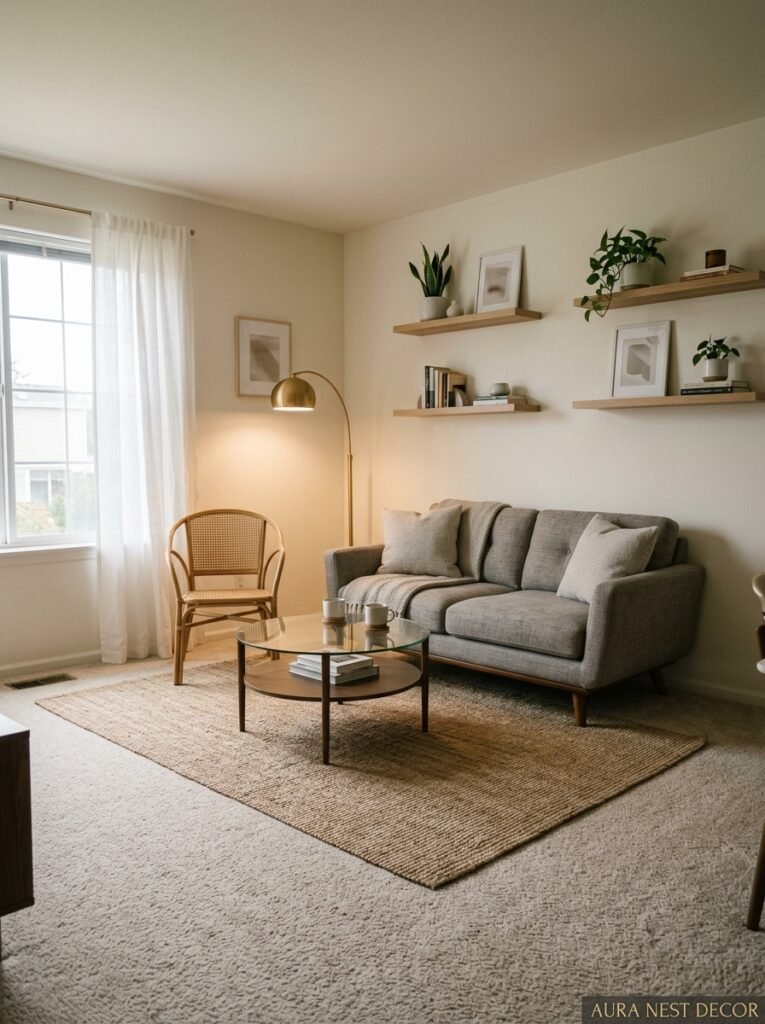
Small rooms are actually where rug-on-carpet can work REALLY well, if you follow one principle: edit everything else.
In a smaller room, the layered floor look reads busiest. So to compensate, you simplify everything above the floor. Minimal furniture. Neutral walls. Don’t fight the floor with a complicated gallery wall AND a patterned rug AND a heavily patterned sofa. One of those things has to be the star.
Also — counterintuitive, but — a larger rug in a small room can actually make it feel bigger. It creates the impression of a defined, complete space. A too-small rug in a small room makes everything look cramped and accidental.
Keep the color palette tight. Two or three colors max. Let the rug do its thing.
10. The Renting Reality — Making It Work Without Touching Anything
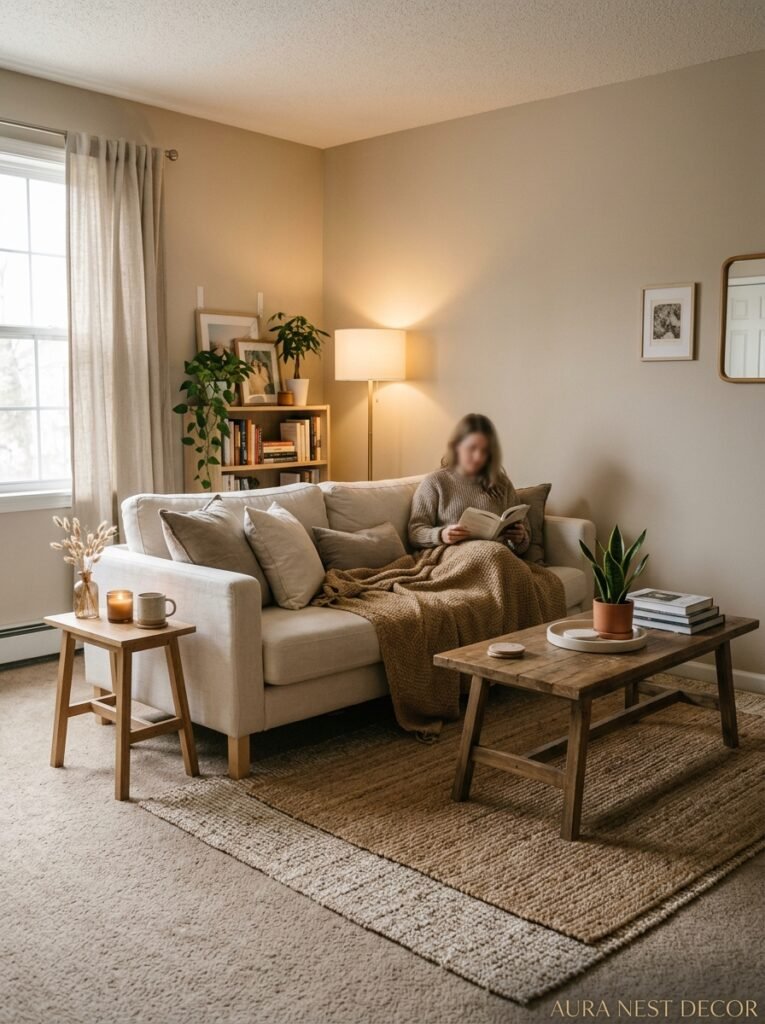
You’re renting. The carpet is beige and boring. You cannot change it. You cannot paint the walls anything interesting without getting permission. This is where the rug-on-carpet trick genuinely changes things.
A good rug is one of the few moves a renter has that’s completely reversible and completely impactful. You pick up the rug when you leave, the landlord doesn’t know it existed, and for the duration of your tenancy you get to live in a room that actually feels considered.
In the UK especially, where wall-to-wall carpet in rentals is incredibly common and almost always some shade of beige or mushroom, this is basically essential styling knowledge.
The only thing to watch: make sure your rug pad isn’t leaving any marks on the carpet underneath. Most quality pads won’t, but worth checking every few months. The last thing you want is to lose your deposit over a discolored patch.
11. What’s Going on in British Homes Specifically Right Now
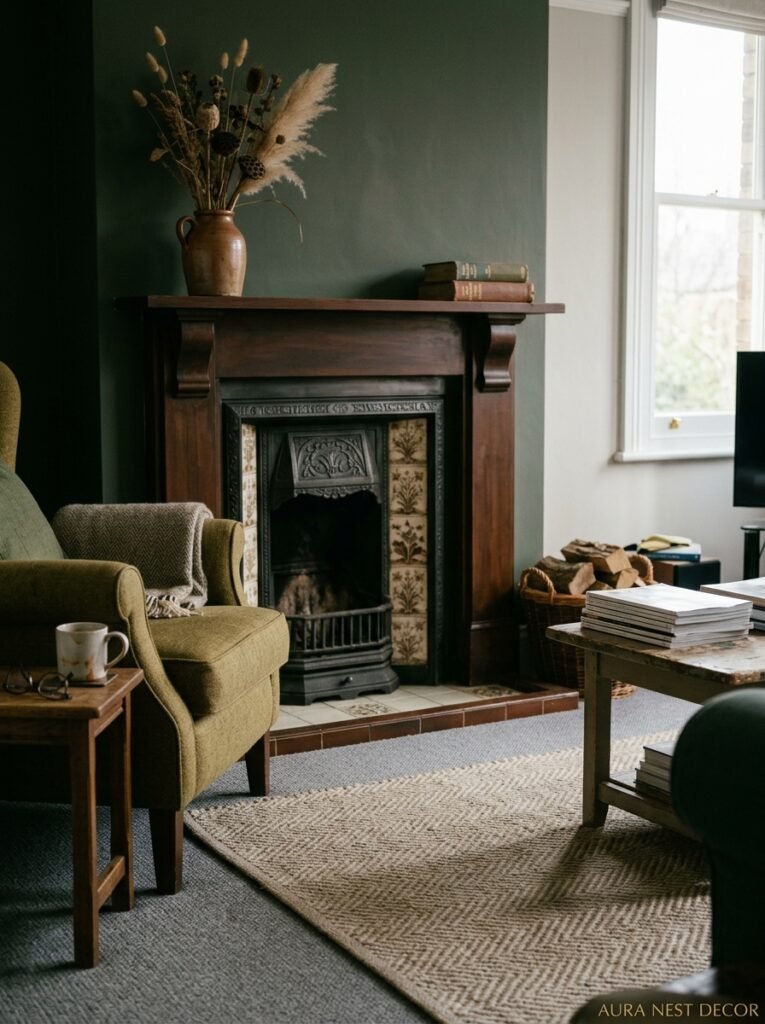
I want to address UK readers specifically here because the conversation around rugs on carpet is slightly different in Britain than in the US, and it comes down to the carpet situation.
British homes — especially older ones, semis and terraces and Victorian conversions — very often have carpet throughout the ground floor as standard. It was the norm for decades and a lot of homes haven’t been updated. Which means a huge proportion of British living rooms are starting from a carpeted base.
The trend I’m noticing in UK Pinterest boards right now is warm-toned, textured rugs over neutral carpet. Think boucle, wool, or woven cotton in warm whites, oat, and caramel. It’s giving that kind of cozy, Scandi-influenced softness that works perfectly with the greyish north light that a lot of British rooms are dealing with.
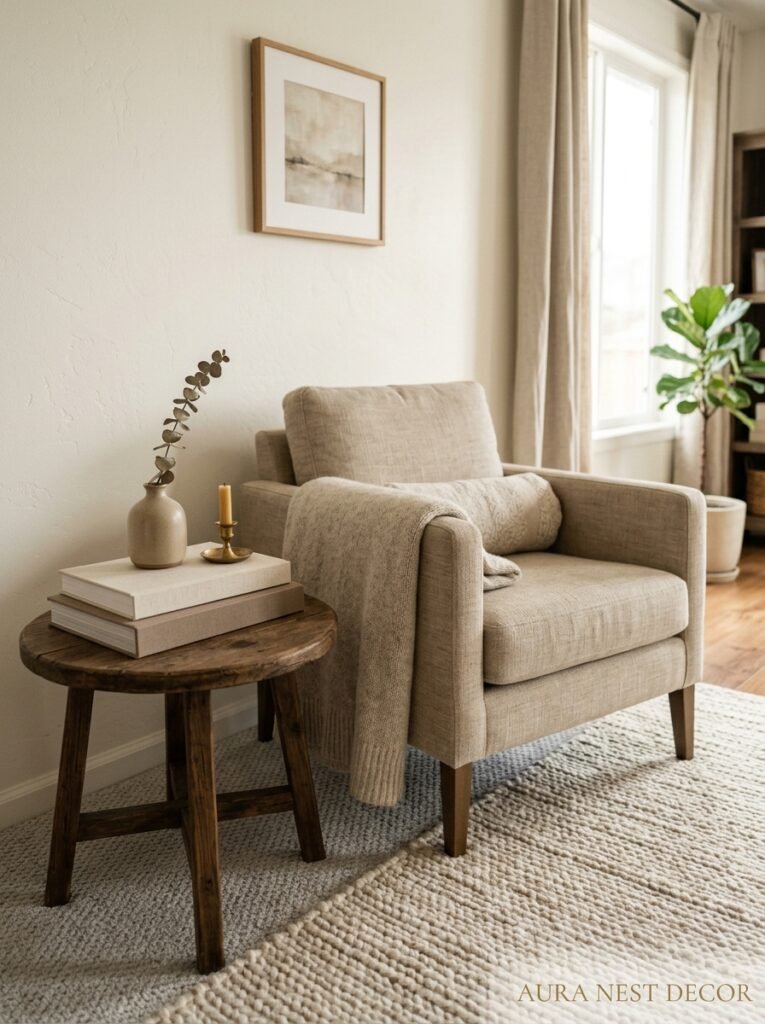
Also popular in the UK: smaller format rugs used in specific areas rather than one giant statement rug. A rug under a reading chair by the window, for instance, rather than under the whole seating arrangement. More casual, a bit more eclectic.
12. The One Thing That’ll Make You Commit to This Look Forever
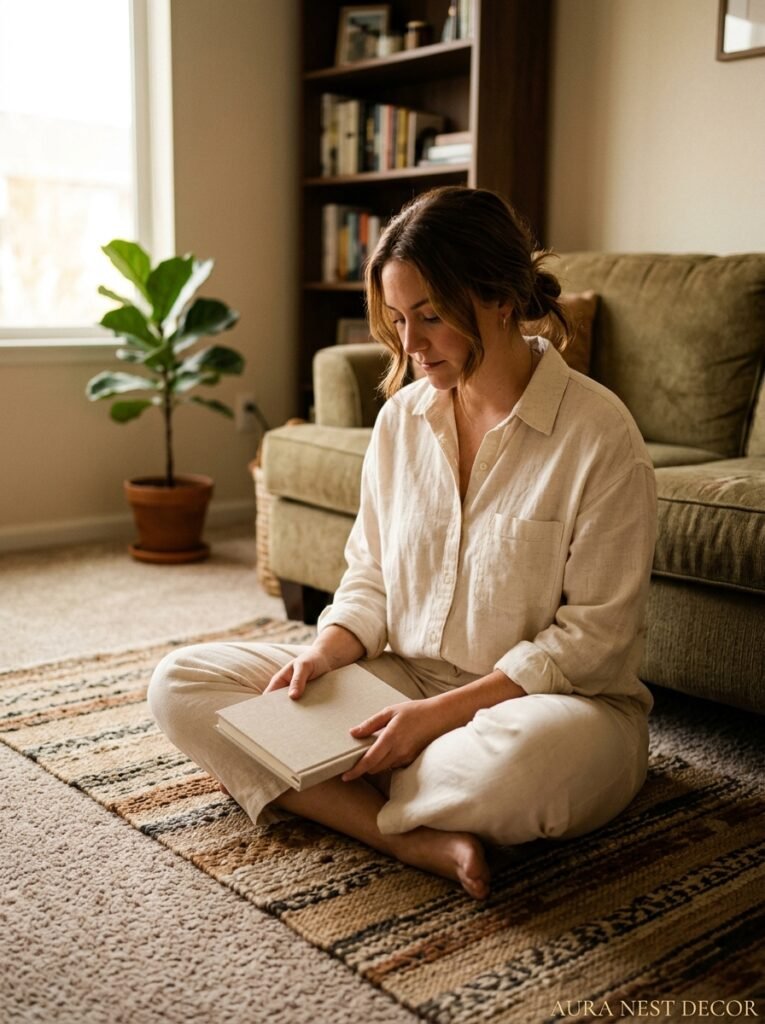
Honestly? It’s the first time someone walks into your living room and says “oh, I love your rug” — not knowing it’s sitting on carpet. Not noticing, not caring, just responding to the room feeling warm and put-together and like someone who loves their home lives there.
That’s it. That’s the whole thing.
You don’t need to renovate. You don’t need to replace the carpet. You just need one good rug, the right size, with at least your sofa’s front legs sitting on it, and a rug pad underneath doing its quiet, unglamorous job.
Rooms don’t feel intentional because everything in them is expensive or perfect. They feel intentional because every choice has been made. Even the choice to put a rug on top of carpet.
—
❓ FAQ
Q: Will a rug on carpet look cheap or messy? A: Not if you follow the sizing rules and anchor it properly with furniture. The most common reason this look goes wrong is using a rug that’s too small — it ends up looking like it got lost. Go bigger than you think you need, and make sure the furniture sits on it.
Q: Do I really need a rug pad if it’s going on carpet? A: Yes. On carpet, the rug will shift and migrate over time without a pad. Get one specifically designed for carpet-to-rug use, cut it about an inch smaller than your rug on all sides, and your rug will stay put.
Q: What types of rugs work best on carpet? A: Low-pile and flatweave rugs tend to sit the most cleanly on carpet. Wool, jute, and quality synthetics all work well. Very thick or shaggy rugs on top of plush carpet is the one combination I’d approach carefully — it can feel unstable and look bulky.
—
💭 Final Thoughts
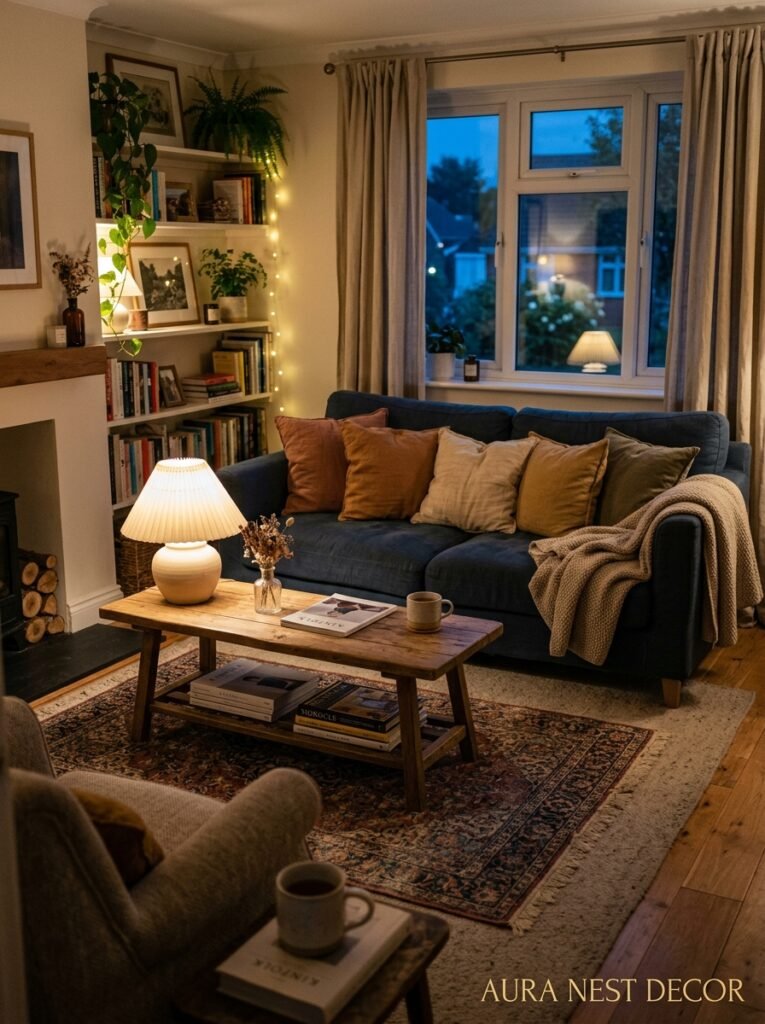
Your living room deserves to feel like yours, even if the floor underneath isn’t the one you’d have chosen. A rug is one of the most powerful things you can introduce to a space — it changes the temperature of a room, anchors the furniture, and gives the eye somewhere to land. Carpet underneath doesn’t disqualify any of that. If anything, it just softens the whole thing a little. So if you’ve been holding off because it felt like too much, or too weird, or like a style rule you’d be breaking — this is your sign to just go get the rug. What would you put in that space if you weren’t second-guessing it?